Peace Board, Prison Yard: Gaza’s Handover Trap

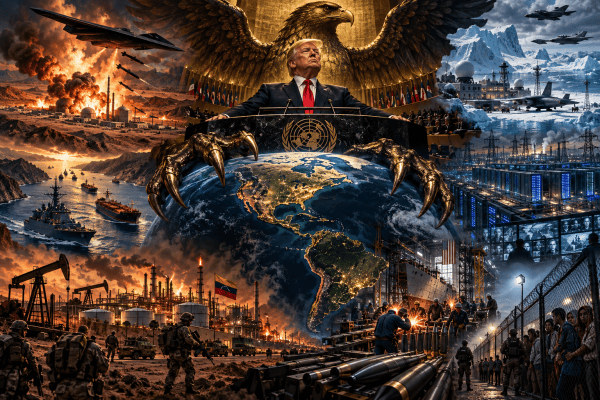
The Guardian frames Hamas’s offer to hand over Gaza’s civil administration as a possible opening in a stalled peace process, but its article launders U.S.-backed governance as neutral transition. The buried facts show a Board of Peace built through U.S. command, Israeli security conditions, Gulf logistics capital, legal immunity, and reconstruction leverage. The real story... Continue Reading →

Communists and Patriots: The Flag, the Class, and the Lie of Imperial Nationalism

Trump says you can be a communist or a patriot—but not both. This essay exposes the historical fraud buried inside that slogan. By reconstructing the nation through historical materialism, it shows that nationalism has never possessed a fixed political content. In oppressed nations, communists repeatedly became the truest patriots because the struggle for national liberation demanded the overthrow of colonialism, imperialism, and comprador rule. In imperialist nations, however, nationalism serves the opposite function: binding workers to the ruling class and its global system of domination. The real contradiction is not between communism and patriotism, but between imperial patriotism and the liberation of the people.

One Colony, Two Ships: How Liberal History Splits What Capitalism Built

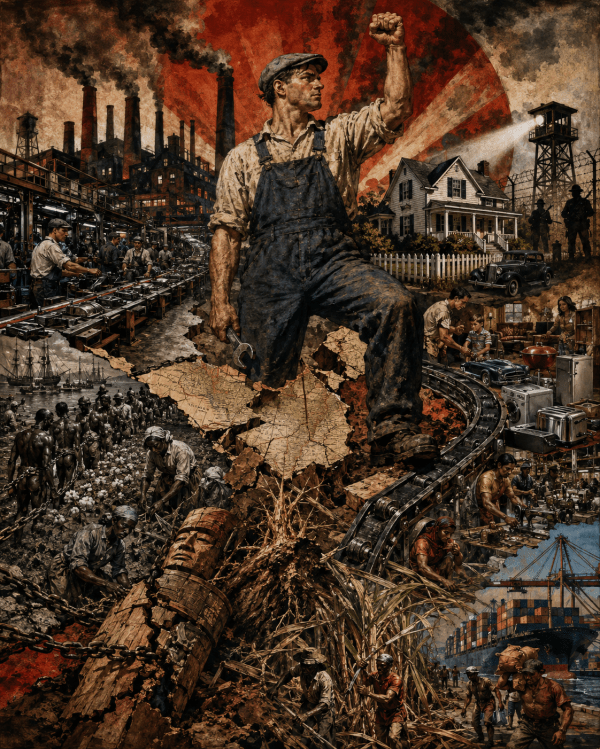
James Traub's exploration of America's dual origins through the Mayflower and the White Lion is dangerously simplistic. He perpetuates a narrative of moral dichotomy, ignoring the harsh reality that both journeys fueled a settler-capitalist machine built on land theft and enslavement. The framing minimizes Indigenous dispossession and reduces oppressed voices to mere historical subjects. This liberal attempt at reconciliation fails to confront the brutal interdependence between North and South, leaving unchallenged the systemic inequities rooted in conquest and exploitation. Rather than embracing a flawed myth of unity, America must confront its history to dismantle the ongoing consequences of its oppressive foundations.

Cop City Is the Counterinsurgency Campus: How “Antifa” Became the New Name for the Old Domestic Enemy

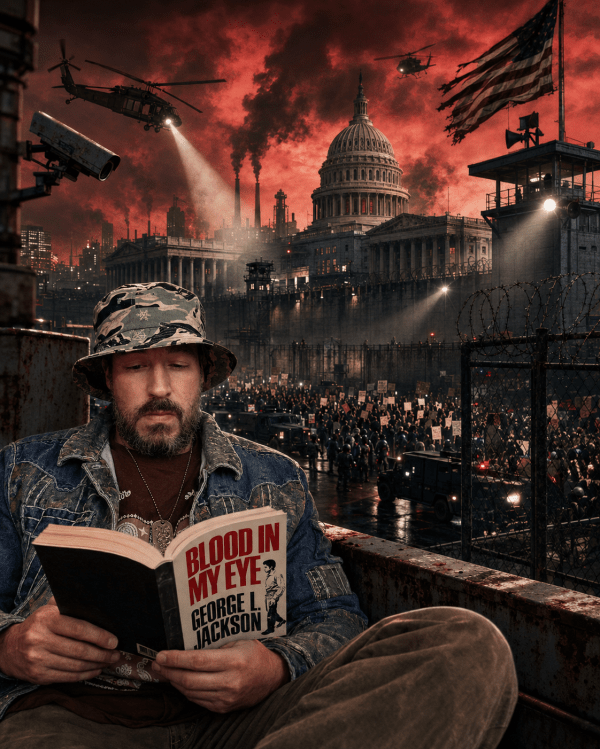
The Guardian's coverage of Trump's "antifa" prosecutions highlights a covert escalation of systemic repression rather than the emergence of a new threat. While it depicts the federal indictment against Cop City protesters as a shocking maneuver, this is merely the latest play in a long history of state-sponsored violence rooted in colonialism, slavery, and counterinsurgency tactics. The narrative frames Trump as the villain while obscuring the entrenched architecture of oppression that transcends his administration. The real battle lies in organizing effective resistance, connecting various social justice movements, and building robust defense mechanisms amidst a climate poised for increasing militarization and legislative warfare against dissent.

The Rolling Conquest: When Empire Calls Itself Democracy

The alarm over Trump’s so-called “rolling coup” misses the mark, framing it as a betrayal of democracy rather than recognizing it as a byproduct of a long-standing imperial legacy. The machinery wielded now—surveillance, detention, repression—has deep roots in American history, not just Trump’s era. The danger extends beyond authoritarianism; it’s about an empire shifting to open coercion as it faces crisis. The solution isn’t to restore a flawed system but to cultivate organized, anti-imperialist solidarity. It's time for the oppressed to reclaim their agency, defend against state violence, and dismantle the architecture of oppression that fuels this mechanized repression.

The Empire’s Cheapest Deputies: How Liberal Media Turns White-Worker Disillusionment Into Political Defeat

The Guardian correctly rejects the liberal fantasy that MAGA is merely “economic anxiety,” but it turns a crack in the settler bargain into a locked door. Trump 2.0 is not the grassroots program of white workers but the ruling-class recalibration of labor discipline, border terror, tariff nationalism, and imperial decline. The racial wage remains real,... Continue Reading →

The World Was Not Discovered: Genocide, Slavery, and the Birth of Capitalist Empire

History is often told from the perspective of conquerors, romanticizing imperialism as a noble endeavor of “discovery.” However, this narrative ignores the vibrant, complex societies that existed long before European arrival; civilizations rich in culture and knowledge prepared to resist. The so-called “Age of Discovery” merely facilitated violent conquest, genocide, and exploitation. Colonialism and capitalism are intertwined, with wealth extracted through enslavement and land theft, while underdevelopment in colonized regions resulted from this systematic violence. Today, the consequences of colonialism persist, as neo-colonial strategies manipulate economies and suppress sovereignty. To reclaim the future, societies must confront this history, recognize the pain of oppression, and organize for a just world, free from the chains of empire.

From the Amerikan Dream to the Amerikan Nightmare: Malcolm X, Revolution and the New Human Being

Malcolm X reshaped my understanding of America’s racial dynamics, revealing it not as a flawed democracy but as a colonial project steeped in oppression. His teachings led me beyond the shallow understanding of leftist politics to a deeper comprehension of the intertwined struggles against imperialism and capitalism. Each encounter with his work pushed me toward recognizing humanity in the oppressed and the global context of their struggles. Through Malcolm, I learned that true liberation requires a conscious break from inherited identities tied to empire. His evolution mirrors a broader human struggle, challenging us to embrace revolutionary love as an act of transformation, not mere rhetoric.

Stars, Stripes, and Holy Water: How a Dying Empire Learned to Pray Again

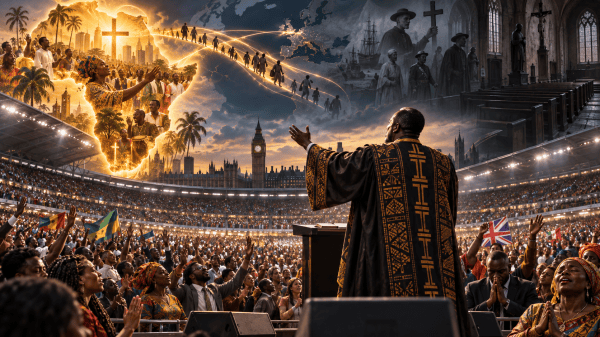
The Rededicate 250 rally manifests an America grappling with its imperial decline, revealing the ruling class’s desperation to fuse nationalism with spirituality. Beneath the spectacle of Christianity cloaked in patriotism lies a profound social crisis fueled by economic insecurity and political fragmentation. This event serves as a liturgy for a faltering empire, seeking to stabilize itself through divine deception, while conveniently ignoring the historical injustices it thrives upon. Critics alarmingly diminish the event's significance, merely framing it as religious overtone, while the deeper threat is a political theology exacerbating class power dynamics and moralizing imperial oppression. As the empire crumbles, the call for authentic solidarity becomes paramount.

The Devil’s Republic: Illuminati Panic and the Hidden Architecture of American Repression

The American ruling elite has a long history of morphing political dissent into a narrative of demonic threat, consolidating their power through fear tactics akin to those seen during the Illuminati panic of the 18th century. This episode illuminated how conspiracy theories, fueled by elite anxieties, have criminalized immigrants and suppressed dissent. The manipulation of societal fears allows the state to transform opposition into an existential threat, justifying repression and surveillance. Today's conspiracism, though often dismissed as irrational, reveals a deeper urgency: a misdirected anger at real systemic injustices commodified into scapegoating narratives, obscuring the true architecture of capitalist power while paralyzing collective political action.

Website Powered by WordPress.com.

Up ↑