The Confederal Bank for Investment and Development is more than finance—it’s a blueprint for liberation beyond the CFA and IMF
By Prince Kapone | Weaponized Information | July 27, 2025
The Bank That Should Not Exist
In a world ruled by bankers who have never tilled a field or fixed a pipe, the idea that three of the poorest countries on Earth—Burkina Faso, Mali, and Niger—could build their own development bank must seem like heresy. Worse than heresy, actually: it’s a declaration of war against the financial order forged in the crucible of colonial theft and protected today by sanctions, drones, and white papers. The Confederal Bank for Investment and Development (BCID‑AES), spearheaded by the Alliance of Sahel States, is precisely that. A weapon. Not the kind the Pentagon sells to your enemies, but the kind that lets you stop buying in the first place.
The bank is not just an institution—it’s a line in the sand. Drawn not by suits in Geneva, but by men and women who have spent the last year dodging coups plotted in Paris, blockades enforced by ECOWAS, and the soft‑power sermons of IMF technocrats whose only God is compound interest. The ministers who gathered in Niamey this week were not improvising—they were accelerating. They agreed to release capital, finalize legal frameworks, and launch operations. The message is clear: the AES isn’t playing. It’s building.
Burkina Faso’s revolutionary leadership under Ibrahim Traoré has already made it clear that sovereignty isn’t a slogan—it’s a construction site. Mali and Niger, for their part, are not waiting for permission slips from ECOWAS, an institution now exposed as little more than a gendarme of French neocolonialism in West African drag. This isn’t just a withdrawal—it’s an exodus. And at the center of it stands a bank. A bank that dares to answer a question long buried under development jargon and structural adjustment plans: what happens when Africans finance Africa? Their break from ECOWAS wasn’t a tantrum—it was strategy.
Of course, Western media won’t say any of this. For them, the AES bank is either a fantasy of junta regimes, or worse, a dangerous precedent that might inspire others to stop begging for loans with colonial strings. They’ll warn about “professional standards,” the “need for transparency,” and “regional stability”—the same dog whistles used to justify overthrowing governments that don’t kneel to Western finance. But the truth is simpler: when the colonized control the purse, the empire panics.
Mali’s Finance Minister, Alousséni Sanou, put it plainly: this bank is not just a vault for money—it’s the foundation for strategic transformation. He emphasized that it must serve as an “instrument of sovereignty”. It is the economic equivalent of a barricade. A shield raised by peoples who have long been told they are too poor to be free, too unstable to govern, too backward to plan. But let’s be honest—what these nations lack is not capacity, but permission. And now they’ve decided they don’t need it.
The BCID‑AES will fund infrastructure, yes. It will redirect investment into local energy, agriculture, education—yes. But more fundamentally, it will reduce reliance on donors who always ask for too much, offer too little, and send consultants instead of solidarity. It will mobilize resources rooted in the land, not the euro. And it will allow the people of the Sahel to determine, for the first time in centuries, what development means on their own terms. That is not just banking. That is resistance with a balance sheet.
Let the headlines mock. Let the “experts” warn. History already knows how this story begins: with a handful of farmers, soldiers, and thinkers deciding that their destiny will not be auctioned off to financiers with golden pens and bloody hands. And somewhere, deep in the vaults of the World Bank, someone just broke into a cold sweat.
Breaking the Chains of the CFA Franc
There’s a reason the BCID‑AES terrifies the lords of liberal capitalism—it threatens to bury the last remains of France’s colonial currency graveyard. For over seven decades, the CFA franc has stood as both symbol and shackle: a currency “guaranteed” by Paris, managed in Paris, and ultimately designed to drain African wealth back to Paris. It was never about stability. It was about control. Monetary colonialism by other means. A parasitic umbilical cord disguised as fiscal cooperation.
Since the CFA’s creation in 1945, the French Treasury has kept a vice‑grip on the external reserves of West and Central African nations. Member states were—and in many cases still are—forced to deposit up to half of their foreign exchange holdings into vaults not of their own choosing. This hidden structure ensured African wealth served French interests. This system has persisted since the colonial era and maintains 50% reserve requirements.
But that old playbook is wearing thin. The AES states—led by revolutionary military governments not beholden to elite comprador classes—have taken the boldest step yet: not just breaking from ECOWAS, but building an entirely new financial architecture. One that does not kneel before the Brussels Consensus or beg for recognition from Paris. One that speaks the language of Sankara and Nkrumah—not Lagarde and Macron.
Make no mistake: this is not the first attempt to escape the financial plantation. Sankara himself called for a pan‑African bank that would fund agriculture and industry without the cancer of foreign debt. Gaddafi went further—proposing a gold‑backed dinar for all of Africa. For that, he was bombed into a sewage drain while Hillary Clinton laughed about it on live television. The lesson was brutal, but clear: build your own currency, and they’ll build you a coffin.
And yet, here we are again. The AES countries, written off as military outlaws by the “international community,” are reactivating the ghost of those earlier visions. They aren’t asking for inclusion. They’re designing an exit. Not just from the CFA franc, but from the entire coercive machinery of Bretton Woods: the IMF’s structural adjustment scams, the World Bank’s privatization doctrine, the SWIFT sanctions regime. AES leaders are now openly discussing a new regional currency.
The Confederal Bank for Investment and Development is not pretending to be neutral. It doesn’t want to be another “regional partner” giving seminars on entrepreneurship while billions flow out in illicit capital flight. It wants to be what no African bank has dared to become since the assassinations of the 1980s: a mechanism for delinking. A bank that pulls the plug on dependency and lights the fuse on genuine autonomy.
That’s why it matters that the finance ministers of Mali, Burkina Faso, and Niger didn’t meet in Brussels, or Washington, or at Davos with a photo op and a begging bowl. They met in Niamey. And they spoke of sovereignty not as a metaphor but as a budget line. They’re not building credit ratings—they’re building barricades. And behind those barricades, the continent is watching.
When They Say “Junta,” They Mean “Disobedient”
No sooner had the ink dried on the bank’s founding documents than the usual choir of imperial pundits began their hymn of hysteria. “Junta regimes,” they scoffed. “Authoritarian governments,” they lamented. “Unqualified leaders,” they warned. Of course, what they really meant was: these governments aren’t playing by our rules. The crime isn’t dictatorship. The crime is defiance.
For decades, the West has propped up dictators across Africa—as long as they kept the debt flowing, the currency fixed, and the markets open. Mobutu was never called a “junta.” Kagame isn’t described as a “military ruler.” Why? Because they know their role. But the AES broke the script. These are leaders who rose from the ranks of their own armed forces, declared their countries independent of neocolonial alliances, and then had the gall to start building institutions not sanctioned by Paris, Brussels, or Langley. They coordinated diplomatic action, created an AES investment bank and stabilization fund, and withdrew from ECOWAS. The Alliance of Sahel States is no longer just rhetoric—it’s institutional reality.
That’s when the media dogpile began. Words like “illegitimate,” “populist,” and “destabilizing” started appearing as labels—while ECOWAS, once a forum of postcolonial cooperation, became a proxy battering ram for Western financial interests. They threatened military invasion, sanctions, and blockades against member states—all for the crime of seeking autonomy. Mali declared it would not follow the bloc’s one-year withdrawal notice, citing ECOWAS’s own violations. Nigerian sabers rattled in coordination with Western handlers—despite insurgency raging at home.
The Confederal Bank for Investment and Development entered this storm not as a neutral institution, but as a deliberate act of economic noncompliance. Its creation followed a direct withdrawal from ECOWAS, which had become indistinguishable from a Western enforcement arm. It was an announcement: “We are not just leaving your club—we’re building our own house.” At a summit in Ouagadougou, ministers confirmed a pact to withdraw immediately, coordinate under the Alliance, and form a tri-state federation.
But legitimacy doesn’t come from a press pass or a credit rating. It comes from the people. And in the streets of Ouagadougou, Bamako, and Niamey, the people have already spoken. They are not fooled by Western double-speak. They know that “democracy” means whatever protects European capital, and “instability” means any rupture in that protection. When ECOWAS froze Niger’s assets and threatened war, no one mistook it for concern—just colonial panic.
So yes, they will keep calling it a “junta bank.” And yes, they will warn of “inexperience,” “corruption,” and “institutional risk.” But behind those phrases lies a deeper fear—the fear that if Africans can govern themselves, finance themselves, and defend themselves, then the entire imperial order begins to crumble. The AES is not just off-script. It’s off-grid. And in a world where every loan comes with a leash, that kind of freedom is unforgivable.
Finance as a Front Line
In the chessboard of empire, finance is never just finance—it’s the first move, the hidden hand, the velvet glove over the iron fist. Before the bombs fall, the loans are issued. Before the troops land, the conditions are set. That’s why the Confederal Bank for Investment and Development is not merely a bureaucratic experiment—it’s a rearming of the Sahel. Not with weapons, but with the one thing every colonized nation has been systematically denied: the power to decide.
Mali’s Finance Minister, Alousséni Sanou, understands this better than most. That’s why he insisted the bank must not be seen as a “mere financial institution,” but as an “instrument of economic sovereignty focused on productive investment, job creation, and the structural transformation of our economies.” That isn’t technocratic fluff—it’s revolutionary code. He’s telling us: we are building something that can outlast coups and parliaments, something that can finance irrigation canals and manufacturing plants without begging Washington for permission or Brussels for approval. He’s telling us: this isn’t a reform. It’s a rupture.
Every time the Global South has tried to escape the chokehold of Western finance, it has been punished. The Bandung Conference was smeared. The Non-Aligned Movement was sabotaged. The New International Economic Order was buried. Even today, BRICS gets the side-eye unless it promises to play nice with the dollar. But the AES isn’t waiting for consensus. It isn’t asking for a seat at the old table. It’s flipping the table and building a new one—hammer, nails, and all.
And the beauty is in the design: this is not a bank created by decree of a foreign donor. It is being built through coordinated ministerial planning, popular mobilization, and a shared commitment to sovereignty that transcends borders. Its capital will come from the people, its priorities set by the region’s own governments—not imposed by colonial currencies or conditionality traps. The very act of coordinating investment across these nations—mobilizing local savings, independent of IMF conditionality—is a frontal assault on the idea that Africa must always borrow from those who once enslaved it.
The BCID-AES is poised to invest in the arteries of real independence: infrastructure, agriculture, energy. It will finance roads that connect markets, irrigation that ends hunger, and local industries that employ workers without shipping profits abroad. This isn’t about catching up to the West—it’s about outgrowing it. And the West knows it.
That’s why they’re scrambling to contain it. Sanctions, media ridicule, diplomatic isolation—they’ve tried it all. But the calculus is changing. With the AES’s political unity and the bank’s financial vision, they are building the core of a post-neocolonial economy. One where wealth doesn’t leak to Europe in the form of raw materials and loan repayments, but circulates within the region, fueling transformation from the inside out.
And here’s the kicker: they’re asking the people to back it. Not just as beneficiaries, but as co-builders. Sanou called on citizens to support the bank—not to donate spare change, but to recognize it as their own infrastructure. This is people’s planning. Development as defense. Capital as counterstrike. The AES didn’t just start a bank. They opened a front line.
The Empire Fears a Good Example
There’s an old rule in the empire’s playbook: crush the first ones who make it work. Because nothing is more dangerous to imperial order than a working model of independence. A functioning system of self-reliance. A counterexample that proves the whole “end of history” fairy tale was just that—a bedtime story for bourgeois academics and NATO generals. That’s why the Western corporate Media and governments have met this initiative with utter silence. It threatens to become a prototype, and prototypes spread.
Across Africa and the wider Global South, leaders are watching closely. Guinea, Chad, even disillusioned ECOWAS states are taking notes. If these three so-called “isolated” countries can pool capital, coordinate development, and do it all without Western intermediaries, what excuse remains for the rest? If sovereignty is possible in Ouagadougou, why not in Lomé or Banjul? This is what truly frightens the stewards of the imperial economy: the contagion of courage.
Because this isn’t just a regional event. It’s part of a global tremor. BRICS is expanding. China and Russia are bypassing SWIFT. Iran is trading in barter and resistance. Venezuela is running on resilience. And now the Sahel is building a bank. These are not disconnected facts—they are coordinates in a new map of multipolar insurgency against the financial dictatorship of the West. A dictatorship built first on guns and now sustained on debts. From troops to trade terms. From decolonization to neocolonialism.
For decades, the ruling class of the West has told its own workers, “We must dominate them so you can eat.” That’s the deal. That’s the silence behind the flag. But the cracks are widening. The Global South is not waiting for permission anymore, and the empire is running out of carrots. All that’s left are sticks, sanctions, and slander. But even those are losing power when people see countries like Burkina Faso rejecting NGOs, booting French troops, and still refusing to starve.
This is why the BCID-AES matters—not just to Africans, but to everyone suffocating under the boot of neoliberalism. It tells the working classes of the West: the problem is not Africa’s struggle, it’s your ruling class. It tells the colonized of the world: your dreams are not naive—they’re necessary. And it tells the financiers in Paris and Washington: you can’t stop history. You can delay it, distort it, detain it—but you can’t stop it.
So let them scoff. Let them threaten. Let them posture like emperors in denial. Because in the back rooms of their ministries and think tanks, they know what this bank really means. It means that the fiction is breaking. That the South is organizing. That what they dismissed as chaos was really prelude. And that the most dangerous thing in a collapsing empire isn’t rebellion—it’s an example.
Sovereignty Is a Construction Project
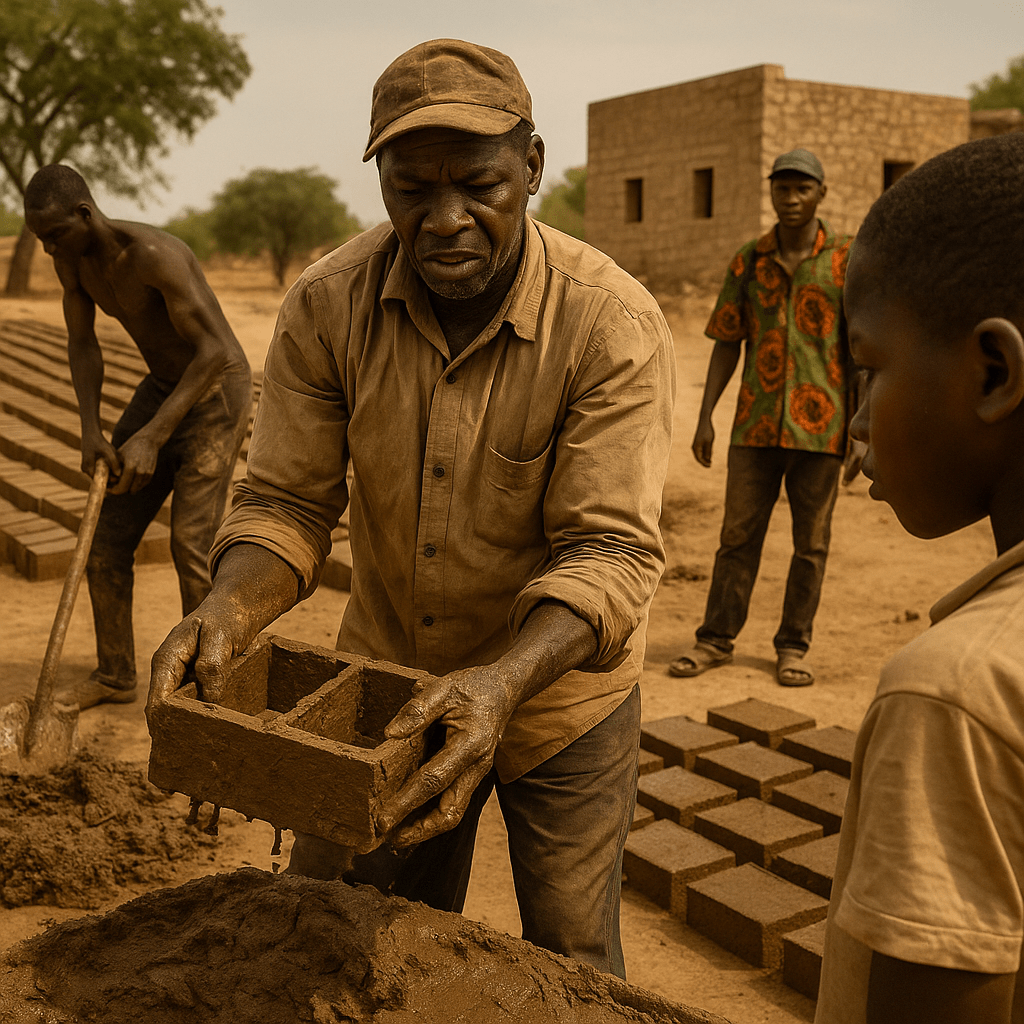
In the end, sovereignty isn’t a speech—it’s scaffolding. It’s not a flag in the wind but a trench dug for irrigation, a grain silo stocked with local harvest, a school built with bricks not debts. The Confederal Bank for Investment and Development is not some abstract symbol of pride—it’s a material declaration of war against dependency. And that’s what scares them most. Not the rhetoric, not the uniforms, not even the broken ties with ECOWAS—but the fact that these governments are actually doing the thing. They’re building.
And building is contagious. It gives form to faith. It dares others to imagine: what if we didn’t have to beg? What if development wasn’t a synonym for foreign aid, but for production, planning, and people’s control? What if the South stopped being a donor graveyard and became a laboratory of liberation? These are the questions the AES is now forcing into the global conversation—questions that terrify bureaucrats in Washington and Paris, precisely because they were never supposed to be asked, let alone answered.
The West spent centuries extracting gold from this region, and now it trembles at the sight of a bank. Because this isn’t about finance—it’s about power. Who plans. Who decides. Who owns. The BCID-AES represents a seismic break in the logic of post-colonial submission. It says: we will organize our own economy, fund our own priorities, and link our peoples not by chains of debt, but by circuits of solidarity. It’s not perfect. It’s not finished. But it’s moving. And that movement is the future.
Clarity, not comfort, is the task of our time. And the AES is providing it in spades. They are showing us what revolutionary sovereignty looks like—not in theory, but in budgets, in plans, in decisions made at home rather than handed down from abroad. They are proving that real independence is not declared on national holidays—it’s financed, managed, and defended every single day.
So let the empire rage. Let the experts condescend. Let the sanctions fly. Because somewhere between Bamako and Ouagadougou, a worker lays bricks for a new future. A minister signs off on a homegrown infrastructure plan. A child drinks from a well funded by a bank that should not exist. And across the world, the colonized are watching—and learning.
The era of waiting is over. The age of construction has begun.
📚 Bibliography of Cited Texts
The Bank That Should Not Exist
- Africa News Agency. “AES: $10 Billion Regional Investment Bank Announced.” May 2025.
- Xinhua News. “Alliance of Sahel States Ministers Urge Faster Operationalization of Regional Investment Bank.” 25 July 2025.
- Reuters. “Junta-Led Sahel States Rule Out Return to West African Economic Bloc.” 6 July 2024.
- Business Insider Africa. “Alliance of Sahel States Advance Plans for Regional Development Bank.” July 2025.
Breaking the Chains of the CFA Franc
- Brookings Institution. “How the France-Backed African CFA Franc Works as an Enabler and Barrier to Development.”
- Tax Justice Network. “The CFA Franc as a Vivid Symbol of Colonial Continuities in Francophone Africa.” 22 Mar. 2021.
- Reuters. “Niger, Mali, Burkina Faso Move Toward Monetary Alliance, Niger Leader Says.” 11 Dec. 2023.
- Africanews. “AES: Is a New Sahel Currency on the Horizon?” 29 May 2025.
- APA News. “Sahel Alliance Creates Joint Bank.” May 2025.
- Xinhua News. “Finance Ministers of Mali, Burkina Faso, and Niger Advance Bank Plans.” 25 July 2025.
When They Say “Junta,” They Mean “Disobedient”
- IOL Opinion. “How US Nurtured Dictators – To Africa’s Detriment.” 2 Nov. 2018.
- Reuters. “Mali Says It Will Not Respect ECOWAS Treaty’s Withdrawal Notice Period.” 7 Feb. 2024.
- Crisis Group. “ECOWAS, Nigeria and Niger Coup Sanctions: Time to Recalibrate.” Feb. 2024.
- Reuters. “Junta-Led Sahel States Confirm Plan to Form Tri-State Confederation.” 15 Feb. 2024.
- Wikipedia. “Alliance of Sahel States.”
- Black Alliance for Peace. “ECOWAS as a Western Enforcement Arm.”
Finance as a Front Line
- Sputnik Africa. “Sahel States Say Regional Bank to Boost Economic Sovereignty.” 25 July 2025.
- Talia Whyte. “Bandung, Identity and Media Perception.” 8 Apr. 2015.
- Monthly Review. “The Rise and Fall of the Third World.” Mar. 2009.
- Green European Journal. “The Non-Aligned Movement: Then and Now.”
- CryptoRank. “The Mighty BRICS Folds Under Pressure.” 2024.
- UNU-WIDER. “From Empire to Aid: The Colonial Roots of Global South Debt.” 2024.
- Al Jazeera. “Burkina Faso, Mali, and Niger Debate Exiting CFA Zone.” 23 Feb. 2024.
- France 24. “West Africa Juntas Tighten Screws on Foreign Mining Firms.” 23 Jan. 2025.
- Instagram. “Sanou Calls for Popular Backing of Sahel Bank.” 2025.
Sovereignty Is a Construction Project
- Capmad. “The Future Sahel Bank Takes Shape.” May 2025.
- State Council Information Office of China. “Development as Sovereignty: China’s South-South Blueprint.” 27 Mar. 2022.
- Rozenberg Quarterly. “Gold: The True Motor of West African History.”
- ResearchGate. “Beyond Financialisation: The Longue Durée of Finance in the Global South.”
 Weaponized Information
Leave a comment