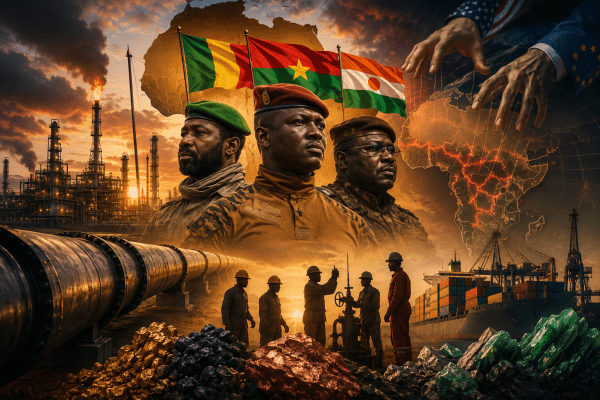
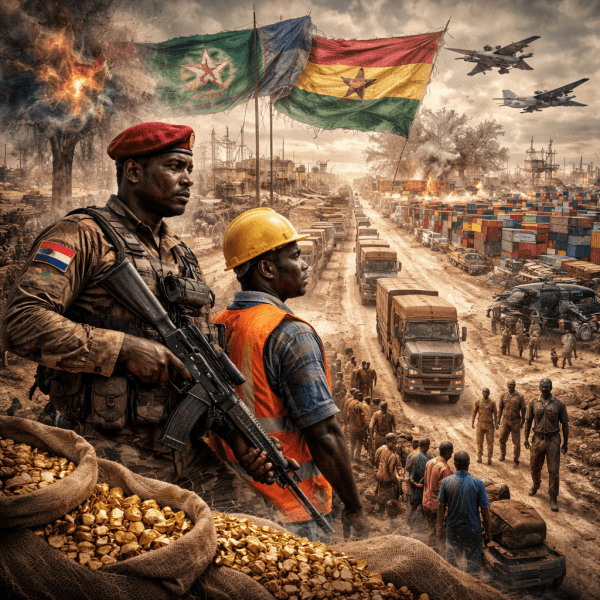
Africa is sitting on a treasure trove of critical minerals vital for the future of technology and energy, yet continues to be stymied by outdated infrastructure and foreign control. McKinsey’s report highlights the potential for $40 billion in mining value, but fails to confront the core issue: Africa’s continued subjugation as a resource mine rather than a sovereign player. This narrative masks Africa’s political struggles and reinforces colonial patterns under a veneer of opportunity. The necessity for a continental strategy emerges as a means to reclaim economic power and transform the mineral wealth from a tool of exploitation into a foundation for self-determination and industrial capability. The danger lies not in missed opportunities, but in repeating the same historical mistakes that have kept Africa relegated to mere supplier status.
From Yan’an to Shenzhen: How China Forged Socialism Through Concrete Contradiction
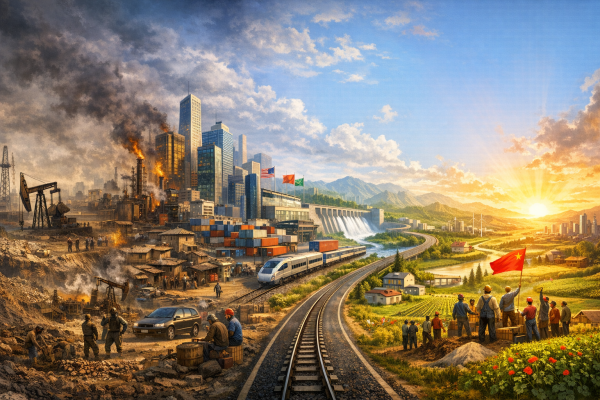
China’s revolutionary saga obliterates the Cold War illusion of socialist states as mere Soviet puppets. Through peasant uprisings and intricate political maneuvers, China redefined socialism amidst imperial oppression, transforming from a colonial victim to a technological titan without abandoning Communist rule. The narrative that constraints socialism to a Soviet mold collapses under China’s rich history of adaptation to its unique tumultuous reality. China’s evolution showcases socialism as a living pursuit aimed at sovereignty and rejuvenation, not dogmatic adherence. The experiences of struggle, experimentation, and resilience reflect a deep understanding: socialism thrives on continuous reimagining, not imitation.
The Roads Remember Túpac Amaru: Jacobin Calls Popular Power a Vacuum
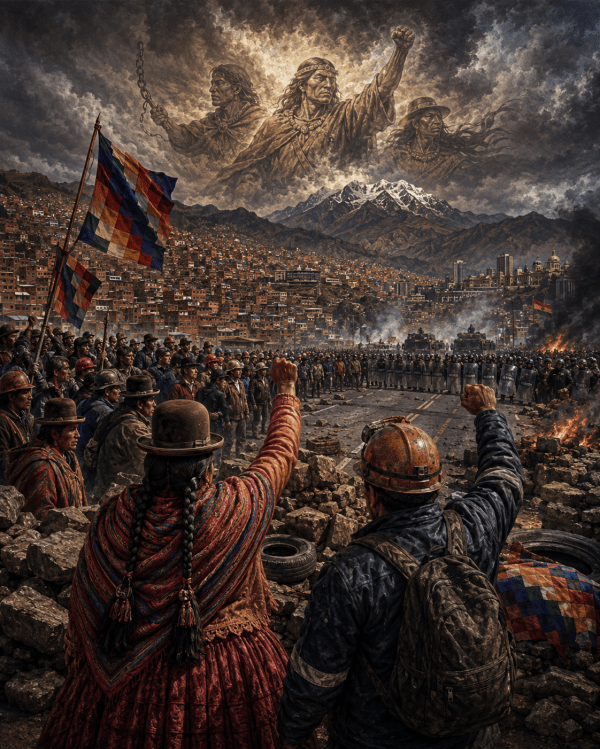
Bolivia is experiencing a seismic shift, as the indigenous and working-class masses rise against a government they see as complicit with imperial interests and corporate power. Jacobin's portrayal of this struggle as chaotic “political vacuum” fails to grasp the reality: the people are not absent from politics; they are reclaiming agency. While the ruling class laments blocked roads and instability, they ignore the genuine political force being forged by those occupying them—workers, campesinos, and indigenous communities asserting power where previously silenced. The barricades are not just obstacles; they symbolize resistance against commodification and repression, signaling a reawakening of history in the fight for sovereignty and justice.
Black Gold, Broken Chains: The AES, China, and the Sahel’s Revolt Against Empire
The recent oil agreements between Niger and Chinese firms aren't just another business deal; they expose a seismic shift in Africa's political landscape. As Western powers cling to outdated neocolonial frameworks, Niger is bargaining fiercely for sovereignty over its vast resources, rejecting mere extraction in favor of local control. This isn't a clean break; it’s messy and contradictory, revealing the power struggle over who governs the circulatory systems of wealth. The Sahel countries are navigating a new reality where they challenge traditional dependency and assert their agency. History is shifting beneath our feet—can Africa carve out a new path, or will old patterns reassert themselves?
From Imperial Plunder to Socialist Possibility: Capitalism, Dependency, and the Road to Sovereign Development
Development is not a neutral path but a historical process forged through conquest, extraction, and domination. Underdevelopment is not a failure to advance, but the condition produced by integration into a world system structured by imperial power. As the crisis of global capitalism deepens and the space for sovereign maneuver widens yet destabilizes, nations are... Continue Reading →
The Origins of the Korean War: From Colonial Rupture to Contained Revolution
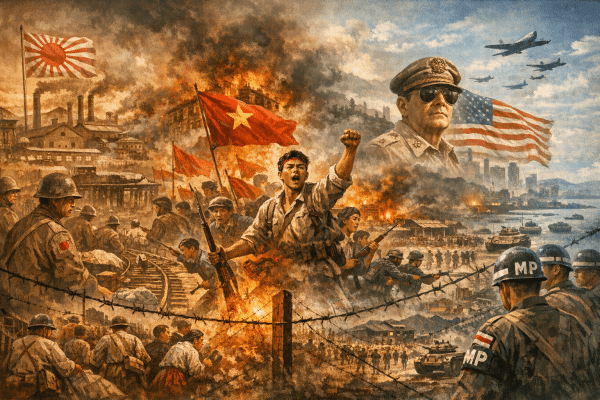
This review reconstructs the Korean War not as a sudden conflict in 1950, but as the culmination of colonial transformation, revolutionary struggle, and imperial intervention between 1945 and 1947. Drawing on Bruce Cumings, it reveals how liberation opened a radical possibility that was contained, divided, and ultimately reshaped into two opposing systems—making war not accidental,... Continue Reading →
Burkina Faso, Ghana, and Business Insider Africa: Corridor Cooperation in the Shadow of Uneven Sovereignty
Business Insider Africa frames the Ghana–Burkina agreements as a pragmatic security and trade reset, and we begin by excavating how that cooperation is narrated. We then map the documented terrain beneath the headline: ECOWAS rupture, AES consolidation, French military withdrawal, AFRICOM continuity, gold extraction circuits, CFA monetary tether, IMF discipline, and multipolar infrastructure competition. From... Continue Reading →
An Act of State: Martin Luther King Jr., Political Assassination, and the Crime of Empire
William F. Pepper’s An Act of State dismantles the myth of a tragic killing and exposes the assassination of Martin Luther King Jr. as a deliberate act of governance—carried out to halt a revolutionary convergence of anti-imperialism, class struggle, and mass organization inside the United States. This MLK Day intervention refuses memorialization and restores King... Continue Reading →
Understanding the Venezuelan Revolution: Power, Rupture, and the Discipline of Governing Under Siege
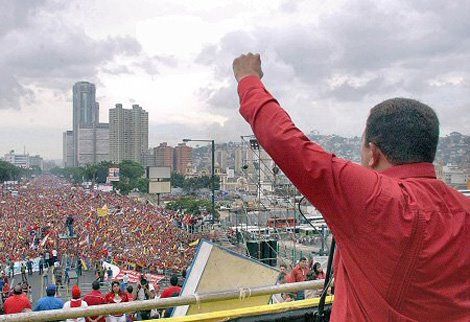
A Weaponized Intellects excavation of Understanding the Venezuelan Revolution: Hugo Chávez Talks to Marta Harnecker, tracing how popular rupture collides with institutions, empire, class power, and the unfinished task of building a revolution that can survive its own victories By Prince Kapone | Weaponized Information | January 18, 2026 A Revolution That Refuses the Script... Continue Reading →
Message to MAGA: Wall Street’s Fake Rebellion and the War on the Working Class
This essay is a direct political intervention into the crisis of working-class consciousness inside a settler-colonial empire in decline. It argues that the anger animating the MAGA movement is real—rooted in decades of deindustrialization, wage stagnation, debt, farm foreclosure, and the slow collapse of social life—but that this anger has been deliberately misdirected by monopoly... Continue Reading →