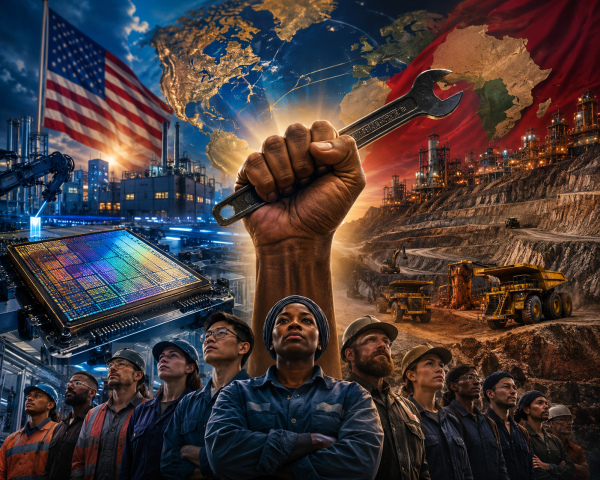
Washington's recent equity stakes in key corporations like Intel signal capitalism's failure rather than a shift towards socialism. While the government assumes control over critical industries, it simultaneously excludes workers from labor and decision-making roles. The stated objective is national security, but this forms part of a broader imperial strategy that intertwines military needs with corporate interests. The public funds the industrial system while remaining marginalized, illustrating a profound contradiction: social production is maintained under corporate control. As America grapples with its economic decline, the push for a more equitable structure is vital. It's time for public investment to translate into worker empowerment and community authority.
Sovereignty with Interest: The Sahel Bank That Defies Empire
The Confederal Bank for Investment and Development is more than finance—it’s a blueprint for liberation beyond the CFA and IMFBy Prince Kapone | Weaponized Information | July 27, 2025The Bank That Should Not ExistIn a world ruled by bankers who have never tilled a field or fixed a pipe, the idea that three of the... Continue Reading →
Markets of Empire: Manchester, Colonial Plunder, and the Arithmetic of Global Capitalism
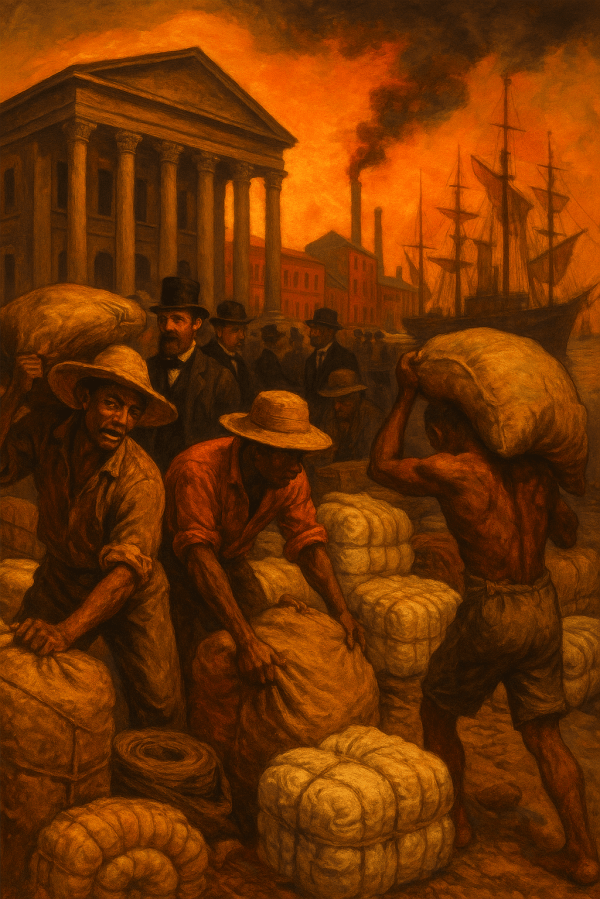
From the cotton of Bengal to the sugar of Jamaica, the wealth of the City was not born of free exchange—but of forced extraction.By Prince Kapone | Weaponized InformationJuly 24, 2025The Architecture of CatharsisOn July 22, 2025, The Guardian published an article by Chris Osuh titled “Manchester’s Royal Exchange rooted in slavery and colonialism, research... Continue Reading →
When Russia Seizes, the U.S. Screams: Property, Power, and the Panic of a Fading Empire
Reuters’ latest smear piece on Russia’s Glavprodukt isn’t journalism—it’s financial warfare disguised as reporting, written to delegitimize multipolar sovereignty and defend imperial property norms.By Prince Kapone | Weaponized Information | July 11, 2025Empire’s Canned Narrative On July 10, 2025, Reuters published a short dispatch that, on its face, looks like business news: a U.S.-founded food... Continue Reading →