The New York Times calls it “handling” when Venezuela has to ask Washington to release its own oil money. After U.S. forces kidnapped Nicolás Maduro and Cilia Flores, Washington used the threat of another attack to dictate payment terms and open Venezuela’s oilfields to favored firms. The money can come back while the power to... Continue Reading →
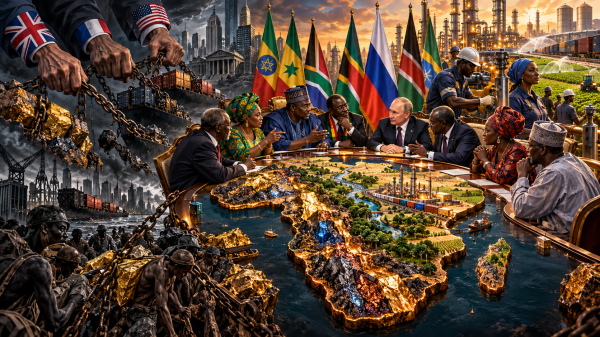
Putin “Woos,” the West Robs: Reuters Writes Africa Out of Its Own Liberation
Putin's charm offensive in Moscow, showcased by forty-eight African delegations, hardly veils the reality that African leaders exist merely as props in a grand stage play. While Russia pitches economic promises, it's the West's narrative that dominates, portraying Africa as a passive recipient. Yet, beneath the political theater, African ambitions for self-sufficiency simmer, illustrated by the African Union's strong call for industrialization and local production. This counter-narrative reveals a continent striving to wrest control from neocolonial shackles, challenging a status quo predicated on dependency. The struggle isn’t merely for trade; it's a fierce reclamation of agency long denied. Africa’s narrative is reshaping, and the stakes are higher than ever.
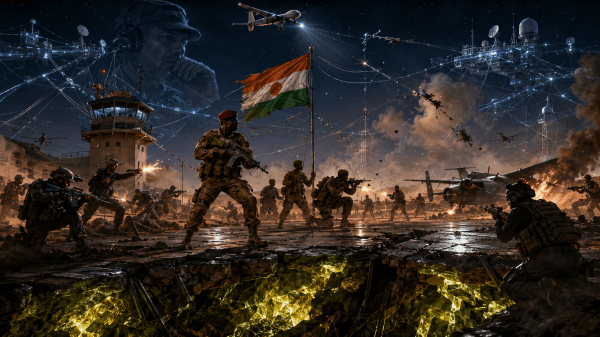
The Coup Didn’t Come From Nowhere: Niger, Base 101, and the Empire Inside the State
BBC framed Niger’s August 29 Base 101 uprising as a story about mutinous soldiers and a frightening weapons cache. The deeper record reveals something far more consequential: a fractured special-operations apparatus, credible evidence of Bazoum-linked and foreign contacts, an inherited Western security system, and a state still fighting to reclaim control over its military, uranium, and foreign relations. As France and the United States adapt to lost bases through smaller footprints, partner forces, and strategic networks, Niger is building alternative relationships through the AES, Russia, and Algeria. The coup didn’t come from nowhere—and neither did the empire trying to survive its retreat.
The Deed Stays in Caracas: How Washington Commands Oil It Doesn’t Own
Delcy Rodríguez's shocking pivot from anti-imperialist rhetoric to endorsing U.S. oil agreements is less a political betrayal and more an unveiling of Venezuela's fractured sovereignty. The narrative is explosive: as Washington tightens its grip, national ownership of oil assets becomes a hollow claim, with real power shifting to private capital and American influence. The illusion of control is shattered—Venezuelans are left to wrestle with a new reality where contracts dictate who profits from their resources. The stakes are high, as demands for transparency and public scrutiny grow louder; will the oil wealth truly benefit the people, or simply reinforce the power structures in play?
Sovereignty Built on Foreign Steel: Indonesia’s Industrial Rise and the Fight Over Who Commands It
Indonesia is ensnared in a web of foreign capital and corporate power, straddling the interests of Beijing and Washington while striving for autonomy. Its dependency on Chinese investment for industrial growth is creating complex struggles over resource control and worker rights. While the state seeks to regulate foreign involvement in its burgeoning industries, genuine sovereignty hinges on who truly reaps the benefits. Rhetoric about maintaining balance belies a troubling reality: as the nation builds industrial capacity, the power dynamics increasingly favor foreign interests, leaving local workers and communities grappling for their rightful share in this economic transformation.
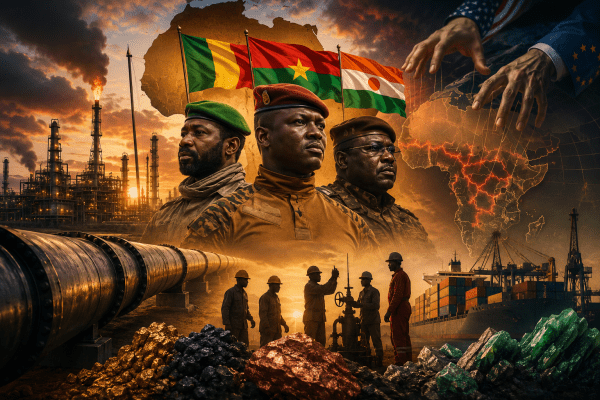
Black Gold, Broken Chains: The AES, China, and the Sahel’s Revolt Against Empire
The recent oil agreements between Niger and Chinese firms aren't just another business deal; they expose a seismic shift in Africa's political landscape. As Western powers cling to outdated neocolonial frameworks, Niger is bargaining fiercely for sovereignty over its vast resources, rejecting mere extraction in favor of local control. This isn't a clean break; it’s messy and contradictory, revealing the power struggle over who governs the circulatory systems of wealth. The Sahel countries are navigating a new reality where they challenge traditional dependency and assert their agency. History is shifting beneath our feet—can Africa carve out a new path, or will old patterns reassert themselves?
Axel Springer, the Africa Finance Corporation, and the Vault: Gold, Monetary Anxiety, and the Battle Over Who Controls the Chain
A trillion dollars in untapped gold is sold as opportunity in an age of financial instability. The numbers glitter, but the narrative abstracts extraction from labor, land, and history. Reserve accumulation rises alongside illicit outflows, smuggling networks, and toxic exposure. The real struggle is not over gold in the vault, but over who governs the... Continue Reading →
Fortress Empire and the American Pole
The Pentagon’s draft defense strategy is no retreat from global confrontation—it is the reassertion of hemispheric domination. Behind the language of “homeland security” lies Monroe Doctrine 2.0, technofascist consolidation at home, and the attempt to weld the Americas into a captive pole of power in a multipolar world.By Prince Kapone | Weaponized Information | September... Continue Reading →
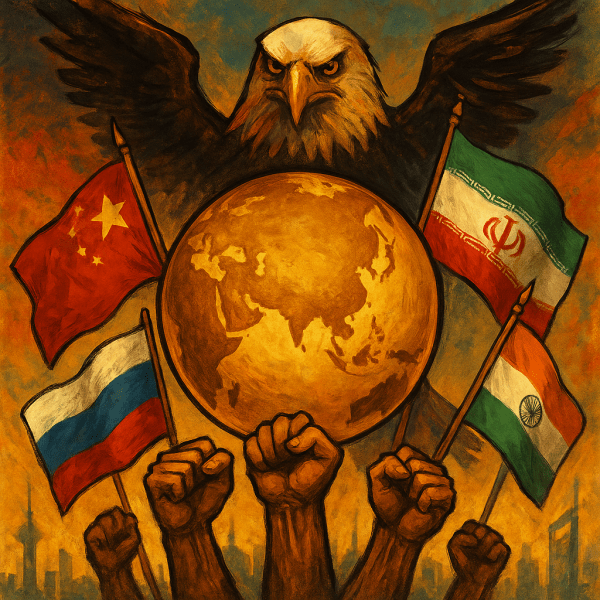
SCO vs. Empire: Multipolar Horizons in a Time of Imperial Decline
From Tianjin to Tehran, the Shanghai Cooperation Organization emerges as a counterweight to U.S. hegemony, exposing the crisis of imperialism and the birth of a multipolar world order. By Prince Kapone | Weaponized Information | September 1, 2025 Dissecting the Wire Service of Empire Christopher Bodeen’s piece for the Associated Press, published on September 1,... Continue Reading →
From Yellowcake to Sovereignty: Niger Turns France’s Theft into Russia’s Opening
The BBC paints Niger’s sovereignty as a fantasy, erasing African agency in favor of imperial rivalry. The record shows decades of colonial plunder and neocolonial extraction that lit France while Niger stayed dark. In the crisis of imperialism, Niger turns to multipolar recalibration, opening cracks in the world system. Our task in the Global North... Continue Reading →