The Crime Is Development: Friedman’s Factory Tour and the New Cold War Against China
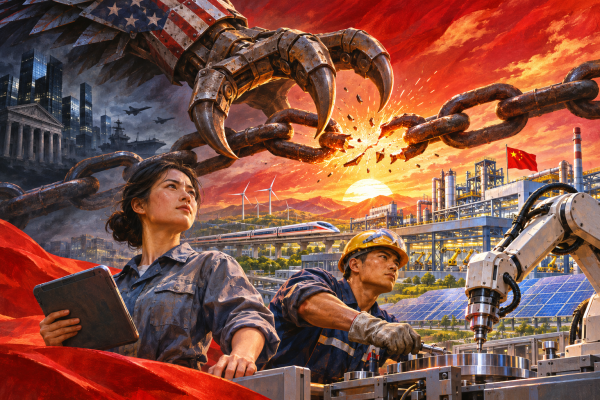
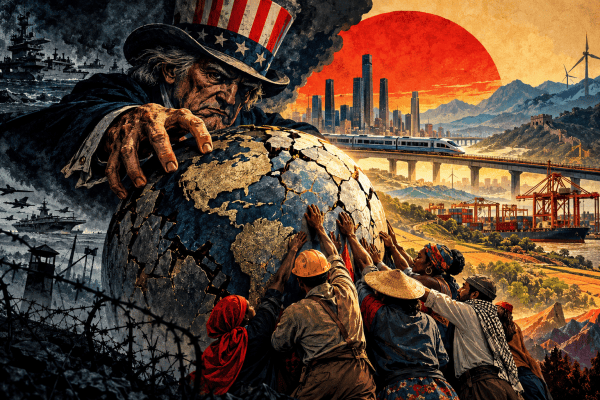
Thomas Friedman tours China’s factories, admires what he sees, and calls for rebuilding Western power to compel Beijing’s obedience. Behind the machinery stands a revolutionary history of socialist construction that’s helped break the imperial centers’ grip on advanced production. Washington’s technological restrictions defend the power to decide who develops, on whose terms, and for whose... Continue Reading →

The Empire Lost Its Monopoly: Multipolarity, Class War, and the Fight to Own the Future

The imperialist façade is cracking as formerly colonized nations wield newfound agency, emboldened by China's socialist rise and BRICS collaboration. However, the narrative masks a grim reality: national sovereignty does not guarantee liberation from domestic exploiters. The struggle continues within, where local elites may replace imperial masters but retain the chains of economic subordination. This interplay reveals that power dynamics hinge on who decisively controls production and profits. As multipolarity expands possibilities, the essential question looms—will the working class finally seize genuine control over the fruits of their labor, or remain spectators in their own liberation? The era demands they reclaim agency—no more invitations.

Humanity Built Civilization: Empire Claims the Title Deed

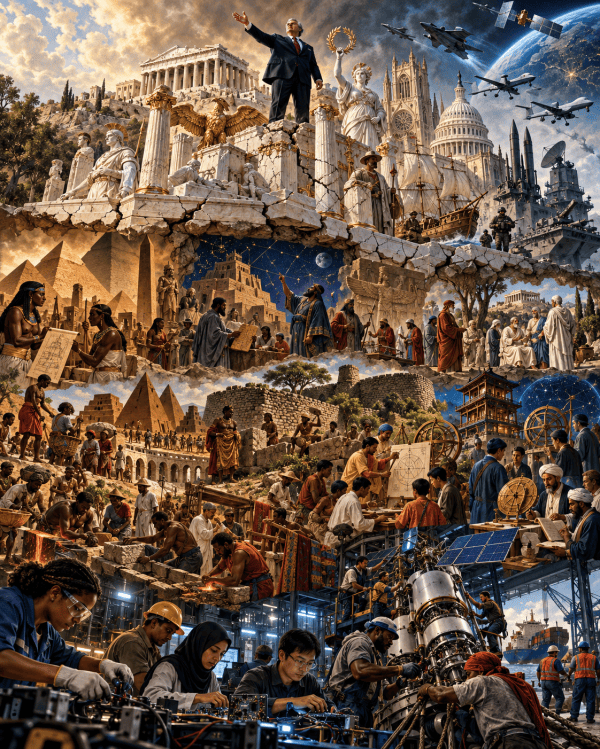
Marco Rubio's celebration of Western civilization conceals a history written through African and Asian scientific achievement, colonial conquest, capitalist exploitation, and revolutionary resistance. From ancient Greece to modern NATO, his manufactured civilizational inheritance transforms imperial domination into historical destiny while erasing the peoples whose labor built the world. Drawing on anti-colonial and Marxist scholarship, this investigation exposes how the political West was constructed through imperial rivalry, socialist revolutions, and struggles for national liberation. Beneath Rubio's mythology lies an American-led imperial bloc seeking renewed command over technology, finance, resources, and military power—and a continuing struggle to reclaim humanity's future.

The Flag Is Sovereign, the Account Isn’t: UNGA 81 and the Power Beneath the Podium

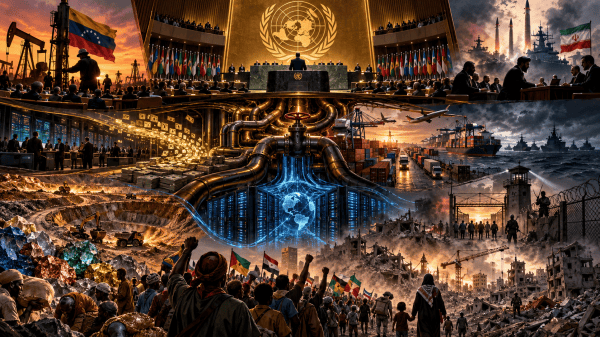
UNGA 81 looked like a week of separate crises: Palestine, Iran, Venezuela, artificial intelligence and China. Beneath the speeches, however, each exposed the same unfinished contradiction between formal sovereignty and the unequal material power needed to make sovereignty real. Gaza’s reconstruction, Venezuela’s oil revenues, Iran’s negotiations under coercion, and the Global South’s struggle for technological capacity all reveal how finance, property, military force and infrastructure shape what legal equality can actually deliver. The summit’s real story wasn’t only what leaders said from the podium, but who still controls the machinery that gives those words weight.

The Rear Grew Teeth: Europe Rearms the Empire and Builds the Means to Defy It

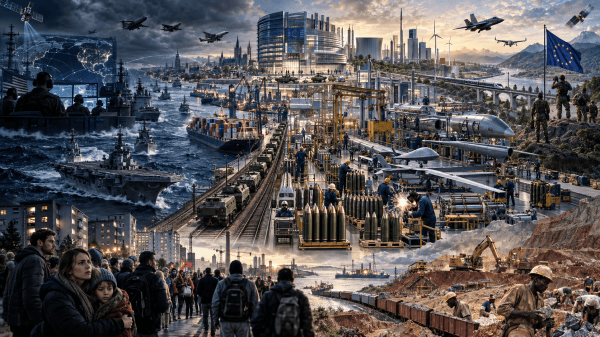
Europe stands at a crossroads, teetering between aspiration and disillusionment. While citizens envision a unified continent brimming with strength, their faith in existing structures crumbles under the weight of slow responses and dependency on America. With rising defense spending and manufacturing capacities, the stakes are high: will this newfound power serve the elite monopolies or empower the working class? The far-right feeds on feelings of decline, masking deeper questions about control and ownership. The real issue isn't a lack of imagination but the dire need for command: who controls Europe’s burgeoning power? The fight for true sovereignty—socially and politically—has only just begun.

Containment Makes Its Own Escape Routes: China, Iran, and the Rare-Earth Contradiction

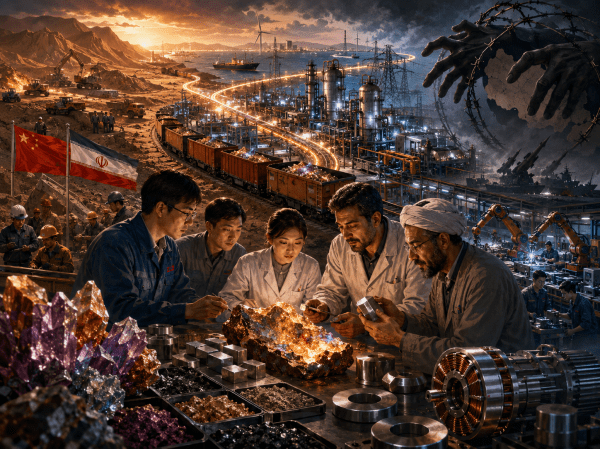
The narrative surrounding a modest scientific workshop between China and Iran is sensationalized into a geopolitical crisis, primarily through the lens of U.S. concerns. It's ironic: while Washington frantically condemns this cooperation, the real battle revolves around who controls the rare-earth supply chain. Both countries face sanctions that push them to create independent scientific and industrial pathways. The focus should pivot from mere diplomatic theatrics to whether this partnership enhances Iran's productive capacity or merely perpetuates dependency. Ultimately, this cooperative effort holds the potential to disrupt traditional power dynamics—unless it devolves into another avenue for exploitation under foreign dominance.

The Crime of Making Too Much: China and the Empire’s Monopoly on Abundance

The Economist's recent critique of China's industrial prowess reveals a deeper hypocrisy within Western narratives. While it acknowledges China's efficiency, it vilifies state-driven competition when it disrupts Western hegemony. The real issue is not overproduction but an imbalance of purchasing power, presenting an ugly tableau of warehouses filled with goods while people lack access. As China strives for self-reliance, the West's response is to impose tariffs and sanctions, prioritizing monopoly over equitable distribution. This conflict isn’t a mere economic dispute; it’s a struggle for who controls productive capacity. The question is whether to align production with human need or maintain the status quo of inequality.

Website Powered by WordPress.com.

Up ↑