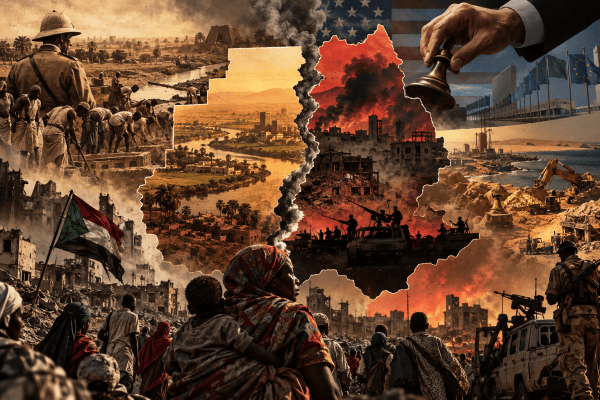
The War Built the Border: Sudan’s Partition Before the Ceasefire This essay argues that Sudan’s threatened partition didn’t begin with Washington’s latest ceasefire proposal. It traces the crisis through British colonial extraction, unequal development, Western creditor power, military accumulation, and the unfinished struggle opened by the December Revolution. As SAF and RSF turned on each other, war hardened front lines into rival economies, institutions, and systems of rule. The ceasefire therefore confronts a division already being built rather than creating it from nothing. Beneath the armies and foreign diplomacy, Sudanese civilian networks continue defending another basis for sovereignty rooted in the people who keep the country alive.
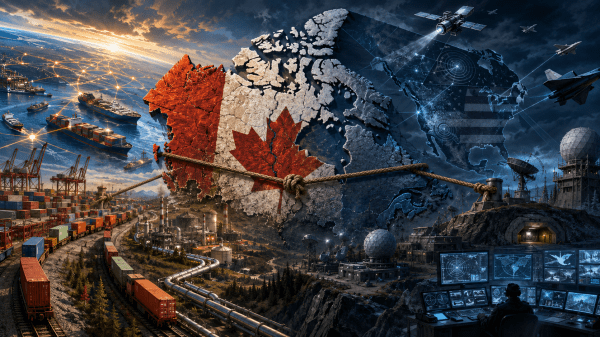
The Empire Built the Exit: Canada, Europe, and the Roads Around Fortress America
The New York Times' report on Canada's potential "associate membership" in the EU presents a simplistic narrative of geopolitical shifts. Yet, the truth is far more complex and gritty. Canada and Europe have long cultivated ties in defense and industry, reacting to escalating U.S. pressures that threaten their autonomy. As Washington tightens its grip, Canada seeks alternatives—not merely new collaborators but also a platform to reclaim control over its resources and industrial capabilities. The relationship is riddled with contradictions, as Indigenous rights and labor demands challenge who truly holds power in this emerging landscape. The gears of change are in motion, but the question lingers: who will govern this uncharted territory?
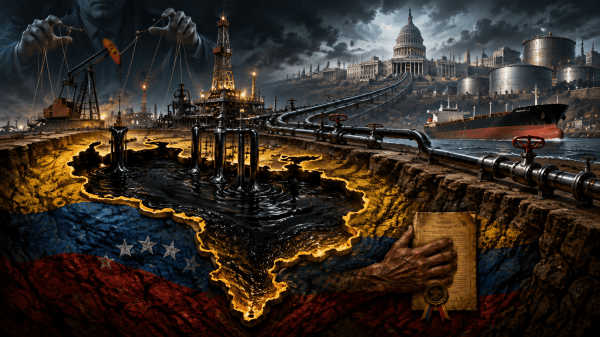
The Deed Stays in Caracas: How Washington Commands Oil It Doesn’t Own
Delcy Rodríguez's shocking pivot from anti-imperialist rhetoric to endorsing U.S. oil agreements is less a political betrayal and more an unveiling of Venezuela's fractured sovereignty. The narrative is explosive: as Washington tightens its grip, national ownership of oil assets becomes a hollow claim, with real power shifting to private capital and American influence. The illusion of control is shattered—Venezuelans are left to wrestle with a new reality where contracts dictate who profits from their resources. The stakes are high, as demands for transparency and public scrutiny grow louder; will the oil wealth truly benefit the people, or simply reinforce the power structures in play?
The Freight Is Moving, the Guns Aren’t: Canada Between Multipolar Markets and Atlantic Command
Canada’s century-old continental bargain with the United States built factories, pipelines, profits, and military integration into the same structure that Washington can now turn into leverage. Yet Canada was never merely an American dependency: its banks, mining firms, pension funds, and corporations grew into a secondary imperial power capable of exercising domination abroad even while... Continue Reading →
Sovereign Enough to Steal From: How American Law Turns Conquest Into Governance
Ward Churchill’s Perversions of Justice exposes the legal machinery through which Indigenous sovereignty is recognized just enough to legitimize treaties, land cessions, resource extraction and colonial administration—then restricted whenever it threatens settler possession or state power. Following that contradiction from conquest and property into uranium mining, blood quantum, AIM repression and U.S. imperial expansion, this review tests both Churchill’s strongest insights and his strategic limits. His final wager—that the colonizer’s own law can be weaponized to fracture legitimacy and withdraw consent—remains powerful. But the deeper revolutionary question is what turns that rupture into organized material counter-power.
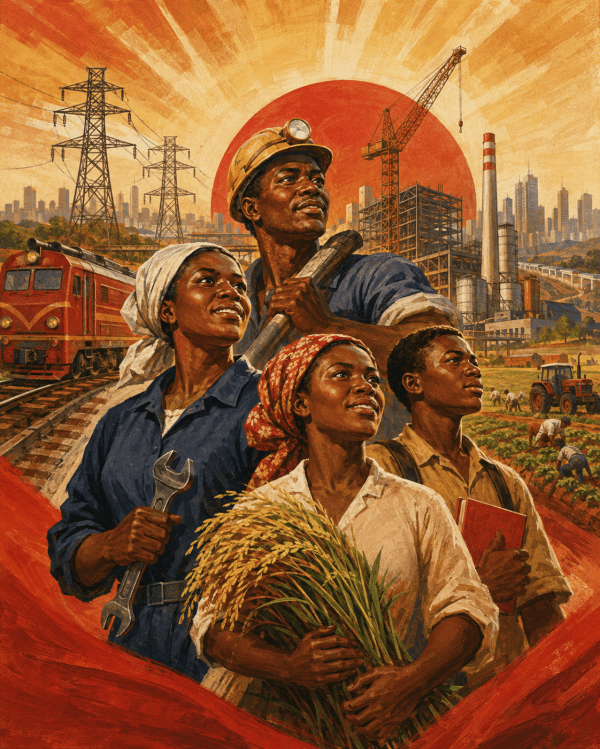
The Dividend Is Human: Africa’s Population Boom and the Battle Over Production
The Financial Times provocatively flips the Malthusian narrative on its head, arguing Africa's plight stems from a historical lack of population rather than excess. This revisionist tale criticizes the colonial legacy that stripped Africa of its labor and infrastructure, while the current swell of population, cities, and markets struggles against debt and underdevelopment. The real challenge isn't merely a growing populace; it's whether Africans can seize control of factories, technology, and continental markets. As density increases, the push for organized labor and investment in industrial capacity becomes crucial—otherwise, Africa risks becoming a mere market for foreign goods, trapped in a cycle of dependency despite its demographic potential.
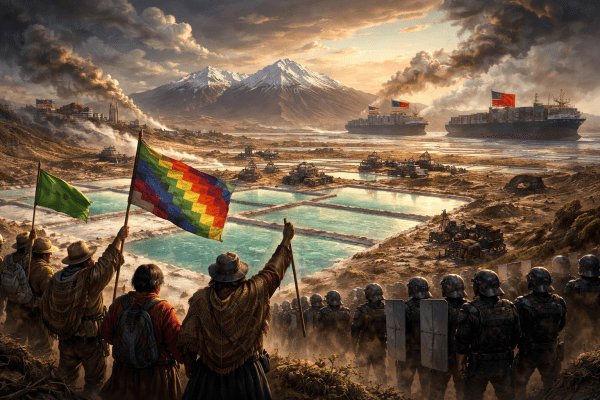
The Lithium Frontier: Empire, Oligarchs, and the Struggle for the Salt Flats of the Andes
Beneath the investor narratives of strategic minerals and geopolitical competition lies a deeper struggle over land, labor, and sovereignty. As the global economy reorganizes itself around electrification and battery technology, the salt flats of the Andes have become a new frontier in the long history of resource extraction in Latin America — where communities, states,... Continue Reading →
Axel Springer, the Africa Finance Corporation, and the Vault: Gold, Monetary Anxiety, and the Battle Over Who Controls the Chain
A trillion dollars in untapped gold is sold as opportunity in an age of financial instability. The numbers glitter, but the narrative abstracts extraction from labor, land, and history. Reserve accumulation rises alongside illicit outflows, smuggling networks, and toxic exposure. The real struggle is not over gold in the vault, but over who governs the... Continue Reading →
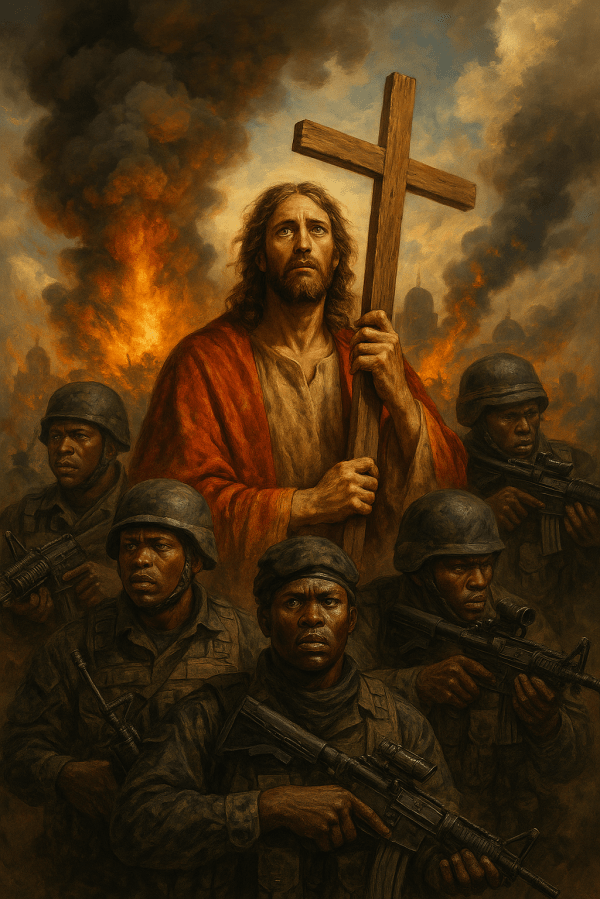
The Christian Genocide That Wasn’t: How Empire Manufactures Moral Panic to Invade Nigeria
Trump’s threat to “save Nigerian Christians” is not a humanitarian mission — it is a geopolitical power grab, a resource war masquerading as moral duty, and the latest chapter in a centuries-long imperial script that uses race and religion to sanctify domination. By Prince Kapone | Weaponized Information, | November 20, 2025 The Empire Cries... Continue Reading →
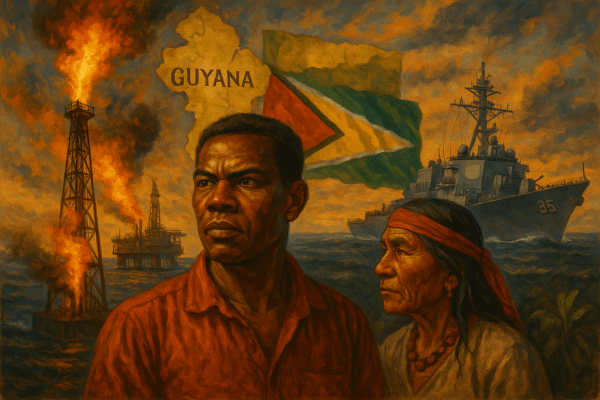
Guyana at the Crossroads: Oil, Empire, and the Struggle for Sovereignty
How CNN launders Exxon’s contracts, Washington’s warships, and the new cold war into “stability” — and why Guyana is a chokepoint in the fight for a multipolar futureBy Prince Kapone | Weaponized Information | September 3, 2025Oil, War, and the Consent Factory: Excavating CNN’s Guyana Frame The target under excavation is CNN’s “Oil, threat of... Continue Reading →