They Called It Ego: Jacobin, Chris Smalls, and the Policing of Black Anti-Imperialist Labor

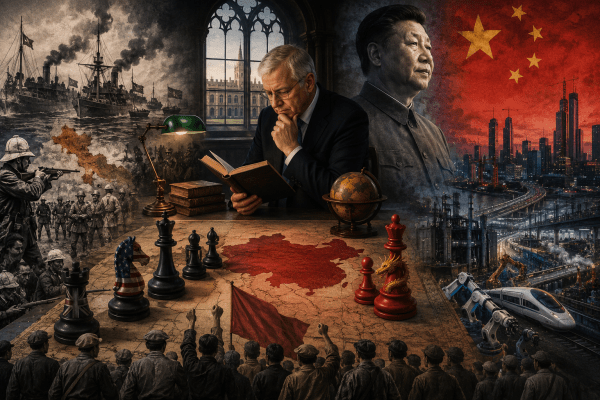
Chris Smalls, once heralded as a labor hero, now finds himself a casualty of overblown ego in the eyes of Jacobin. Yet, this portrayal dangerously obscures a deeper truth: his evolution from solely confronting Amazon to advocating for Palestinian and Cuban solidarity reveals an unsettling fear among the respectable Left. They're comfortable with labor militancy as long as it remains contained and domesticated; once it branches into anti-imperialism, they recoil. Smalls symbolizes a challenge to the status quo, an unfiltered confrontation with empire that threatens to redefine labor politics as an international struggle. In essence, the fear of a Black worker embracing a global perspective exposes the fragile backbone of contemporary Leftist thought.

Françafrique 2.0: Macron, Multipolarity, and the Quiet Reassembly of Empire

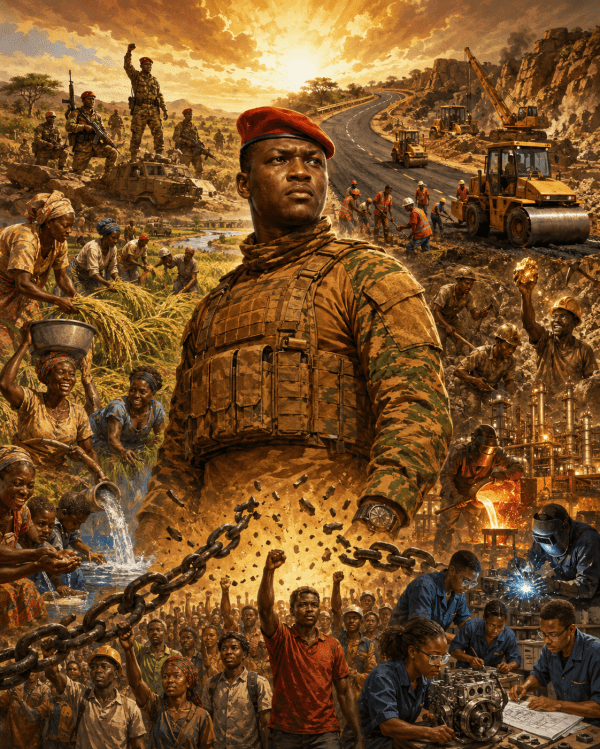
French President Emmanuel Macron's interruption at a Nairobi summit starkly reveals the hypocrisy behind France's so-called partnership with Africa. Masked in the rhetoric of mutual respect and development lies an insidious struggle for neocolonial influence amid a backdrop of declining French authority. As African nations increasingly assert sovereignty, aiming to break free from debt and military dependency, Macron's actions embody centuries of colonial entitlement. While Paris attempts to rebrand its influence through climate and technological initiatives, a new wave of Pan-African movements challenges these narratives, demanding genuine autonomy over the façade of partnership. The true legacy of imperialism endures, evolving but never vanishing.

Empire’s Digital Panic: China, Xinjiang, and the War Over Who Controls the Future

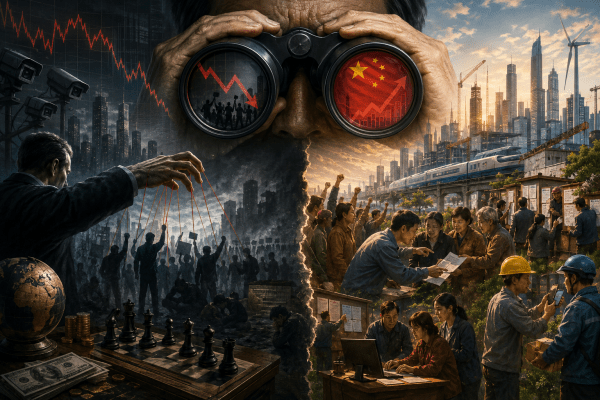
The Associated Press investigation reveals a shocking truth: Silicon Valley's complicity in building the surveillance apparatus that the West now demonizes in China. While framing China as a "digital police state," the report subtly shields the very imperial system enabling such technologies. It highlights a deeper confrontation—one where the U.S. grapples with losing its monopoly on development and technology. As the New Cold War intensifies, the true danger emerges: not the surveillance itself, but the realization that a socialist-oriented state can achieve modernization and stability without Western control. The empire's fear lies in losing its grip over a future it desperately seeks to define and dominate.

Freedom Trucks and Forgotten Crimes: Trump, PragerU, and the Rolling War Over America’s Past

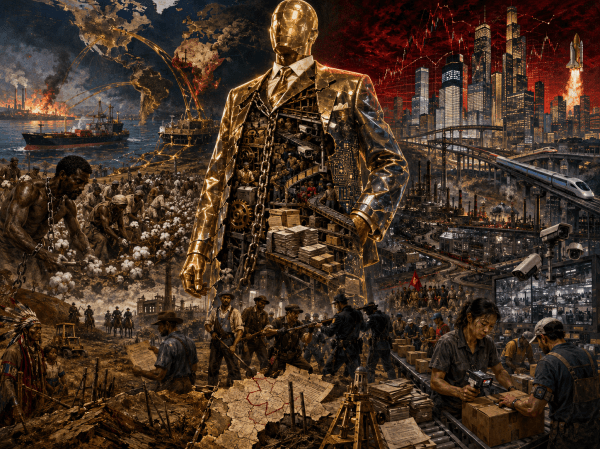
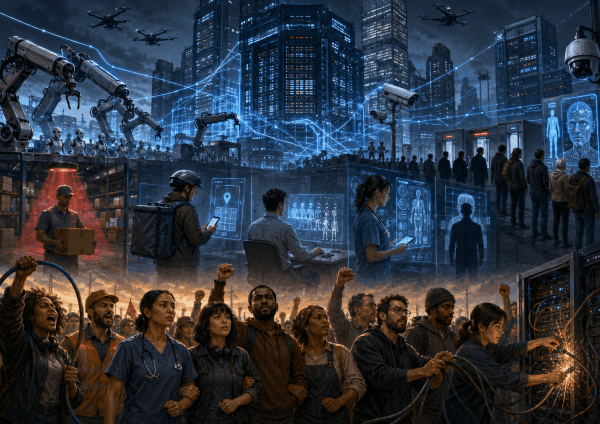
The Freedom Trucks, a mobile spectacle promoted by Trump’s campaign and supported by federal and corporate funding, embody a calculated effort to sanitize American history. Behind the facade of patriotic education lies a strategic apparatus that whitewashes the nation's origins: the triumph of freedom inescapably intertwined with slavery and genocide. As kids engage with AI-enhanced exhibits glorifying historical figures, the truth becomes obscured within a mythic narrative designed for obedience, not inquiry. In response, educators and activists are building a counter-history rooted in truth, pushing back against this historical manipulation. As the ruling class desperately rewrites the past, the need for authentic resistance grows ever urgent.

The World System Before European Hegemony: How the West Hijacked a System It Did Not Build

Janet Abu-Lughod's "Before European Hegemony" ruthlessly dismantles the myth that Europe rose to global prominence due to inherent superiority or brilliance. Instead, it reveals a pre-existing world economy crafted by diverse, thriving civilizations from which Europe, late to the game, benefited through exploitation and rupture. By tracing this narrative, Abu-Lughod forces us to confront uncomfortable truths: Europe did not create history; it emerged through the erosion of powerful systems created by others. History wasn’t predestined; it was violently reshaped.

Starve the Island, Blame the Victim: How Empire Turns Siege into “Defiance”

The New York Times repackages economic warfare as diplomatic tension, presenting Cuba’s resistance as irrational defiance rather than a response to material coercion. A reconstruction of the facts reveals a deliberate strategy of energy strangulation, financial restriction, and calibrated pressure designed to destabilize Cuban society from within. When these conditions are placed back at the... Continue Reading →

From Ceasefire Spectacle to Open Threat: How U.S. Power Reveals Its Limits in Iran and the Emerging Multipolar Order

The media narrative frames the war through the language of objectives and outcomes, masking how imperial violence is normalized and depoliticized. A reconstruction of the facts reveals a deeper reality: sanctions, covert operations, chokepoint control, and historical intervention form the material architecture of this conflict. What emerges is not policy failure but a system in... Continue Reading →

The Big Payback: Settling Accounts with the Paid Piper of Western Marxism (Part 1)

A ruthless chapter-by-chapter assault on Herbert Marcuse’s Soviet Marxism: A Critical Analysis, exposing it not as some noble “immanent critique” of actually existing socialism, but as a polished work of Cold War Western Marxist sabotage—an effort to sever Marx from Lenin, dialectics from revolution, and theory from the hard, blood-soaked labor of building socialism under... Continue Reading →

Politico and the Art of Imperial Whispering: How Narrative Manages Crisis, War, and a Fracturing Western Bloc

What presents itself as sober reporting reveals, on closer inspection, a carefully arranged narrative that fragments reality into isolated claims while obscuring the material ground beneath them. A close reading exposes the specific devices through which uncertainty is manufactured, alliances are subtly disciplined, and strategic tensions are recast as manageable intrigue. When the missing historical,... Continue Reading →

Website Powered by WordPress.com.

Up ↑