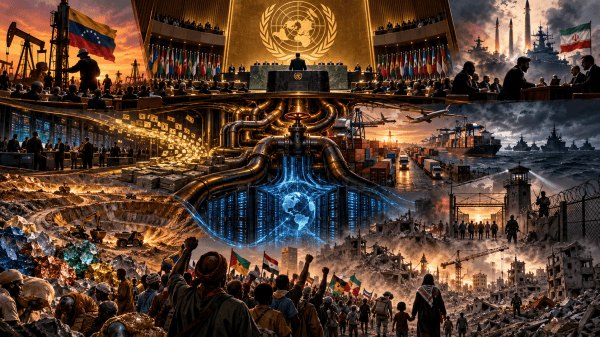
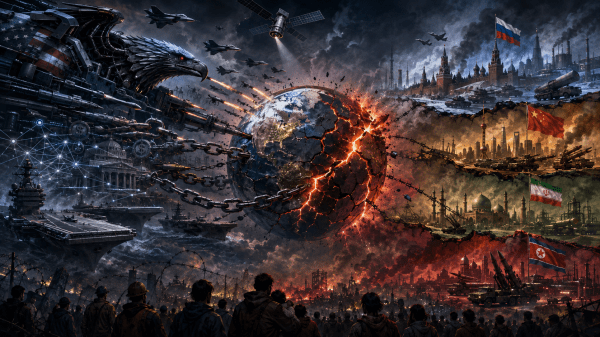
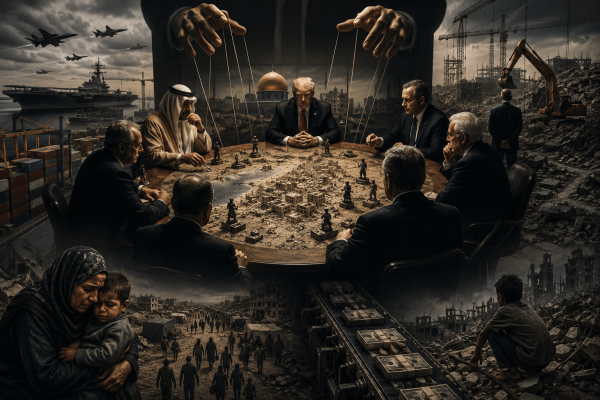
The rhetoric around a so-called "authoritarian axis" of Russia, China, Iran, and North Korea is dangerously misleading. This narrative stems from a long history of U.S. military expansion and interventionism that has fostered the very hostilities it claims to combat. Instead of viewing these nations as a monolithic threat, we must recognize that their alliances are responses to decades of American aggression and coercion. Bosco's portrayal of these entities as simple villains obscures the deeper dynamics at play, namely that U.S. actions have directly contributed to their convergence. To prevent a World War III scenario, we must dismantle the war machinery perpetuating this cycle of escalation and educate the public on these historical nuances.
The Palestine Exception: Why Washington Is Trying to Break the ICC
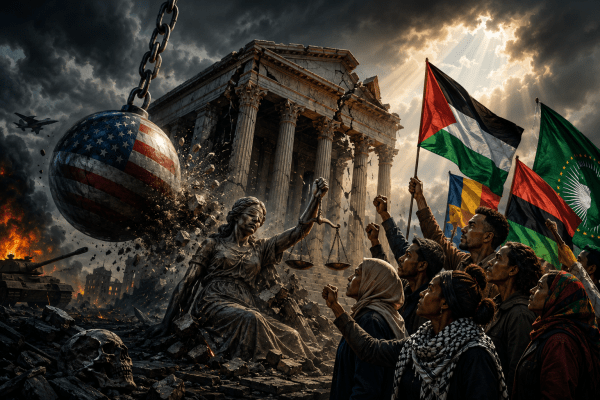
The Guardian's coverage of Marco Rubio's claim that the International Criminal Court (ICC) threatens U.S. sovereignty highlights the deeper issue of imperial exemption rather than genuine sovereignty. The U.S. has long opposed ICC jurisdiction that could implicate American or allied personnel, reacting strongly against Palestinian efforts to document crimes under occupation. The article critiques the liberal institutionalism of the response, noting a lack of representation for affected parties. It underscores that U.S. sanctions targeting Palestinian organizations and ICC officials are a means to maintain impunity. Oppressed nations seek accountability, using available legal systems to challenge the dominance of imperial powers and protect their sovereignty against external coercion.
Peace Board, Prison Yard: Gaza’s Handover Trap
The Guardian frames Hamas’s offer to hand over Gaza’s civil administration as a possible opening in a stalled peace process, but its article launders U.S.-backed governance as neutral transition. The buried facts show a Board of Peace built through U.S. command, Israeli security conditions, Gulf logistics capital, legal immunity, and reconstruction leverage. The real story... Continue Reading →
Immunity for the Occupiers: Gaza and the Peace Board of Empire
The Guardian's exposure of a leaked immunity draft serves as just the tip of a colossal iceberg: the Board of Peace governing Gaza masquerades as a humanitarian initiative but is an elaborate facade for hyper-imperialism. Rather than delivering justice or sovereignty to the Palestinian people, this foreign administration seeks legal immunity, converting public facilities into operational bases and redefining colonial rule as a technocratic management process. The real scandal lies not just in their legal shield but in the fact that Gaza is being stripped of autonomy and treated as a problem to be managed. Resistance isn’t merely an option; it’s a necessity against this colonial resurrection disguised as peace.
They Called It Ego: Jacobin, Chris Smalls, and the Policing of Black Anti-Imperialist Labor
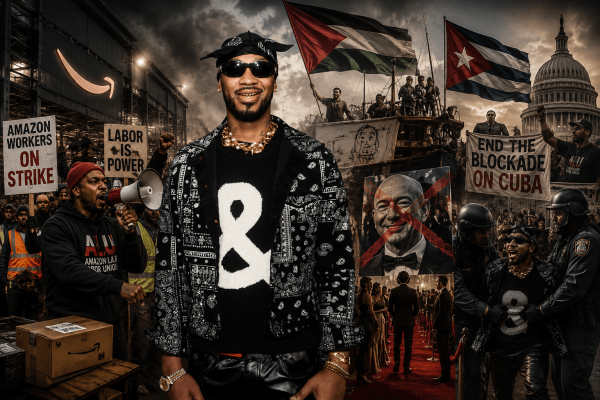
Chris Smalls, once heralded as a labor hero, now finds himself a casualty of overblown ego in the eyes of Jacobin. Yet, this portrayal dangerously obscures a deeper truth: his evolution from solely confronting Amazon to advocating for Palestinian and Cuban solidarity reveals an unsettling fear among the respectable Left. They're comfortable with labor militancy as long as it remains contained and domesticated; once it branches into anti-imperialism, they recoil. Smalls symbolizes a challenge to the status quo, an unfiltered confrontation with empire that threatens to redefine labor politics as an international struggle. In essence, the fear of a Black worker embracing a global perspective exposes the fragile backbone of contemporary Leftist thought.
Settlers in the Wreckage: J. Sakai, Technofascism, and the War for the Future
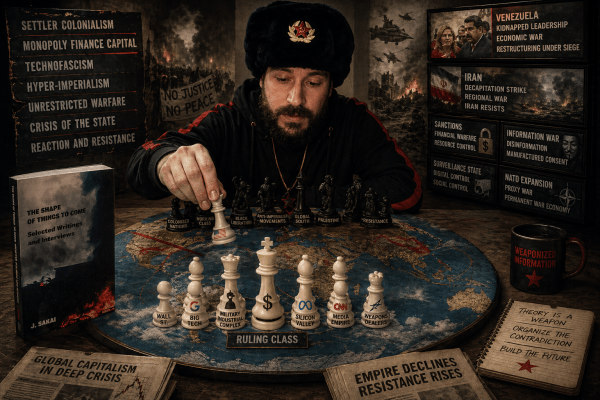
J. Sakai’s interviews force the U.S. left to confront the settler-colonial foundations it has spent generations avoiding. His analysis exposes the myth of the revolutionary white proletariat, the collapse of liberal illusions, and the expansion of war into every domain of life. But Weaponized Information pushes further, grounding his insights in monopoly finance capital, technofascism,... Continue Reading →
Rahm Emanuel, AIPAC, and the Cracking Consensus: When Empire Can No Longer Subsidize Its Own Legitimacy
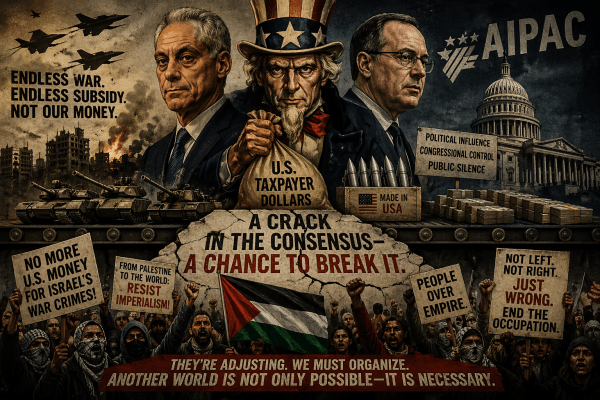
When a man of the system starts changing his tune, it’s not because he found his conscience—it’s because the system itself is under strain, and the machinery that bankrolls and justifies this violence is starting to grind and show its cracks. Look past the campaign chatter and you see the real thing: U.S. power, public... Continue Reading →
Endless Holocausts, Endless Empire: Excavating the Violent Logic of American Power
This Weaponized Intellects Book Review dismantles the myth of American innocence by tracing a continuous line from settler genocide and racial slavery to industrial exploitation and global war. It argues that these are not separate injustices but interconnected expressions of a single imperial system, one that reproduces itself through organized violence, ideological cover, and the... Continue Reading →
Reparations, Resistance, and the Ledger of Empire: Excavating the Guardian’s Colonial Amnesia
A Weaponized Propaganda Excavation of How Corporate Media Sanitizes Colonial Crimes, Buries Trillions in Stolen Wealth, and Obscures Africa’s Renewed Fight for Justice and Sovereignty By Prince Kapone | Weaponized Information | December 1, 2025 How the Guardian Turns Colonial Crimes into a “Debate” About Recognition The piece we’re excavating, “African leaders push for recognition... Continue Reading →
When Empire Weeps for the Law
The Guardian’s defense of “international legality” masks a deeper truth: the old legal order was never about justice, only the management of global inequality. Its collapse is not chaos—it is liberation struggling to be born. By Prince Kapone | Weaponized Information | November 12, 2025 The Law of Empire and the Empire of Law The... Continue Reading →