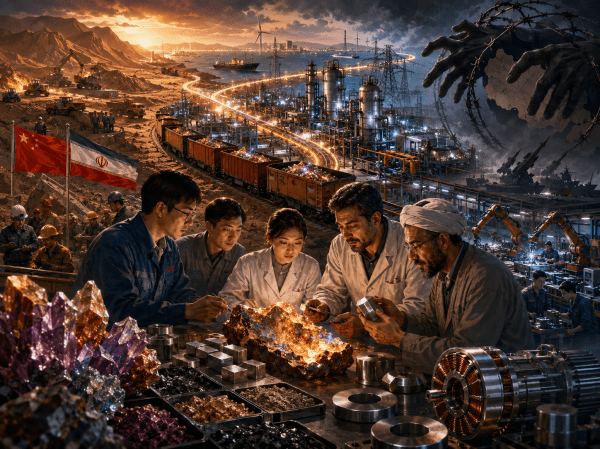
Jacobin's critique of Chinese worker Xiao Hai's memoir misrepresents the entire Chinese Revolution as a failed experiment based on exploitation. While Xiao Hai's story merits recognition, the narrative frames the factory's plight as representative of the whole nation, ignoring China's transformation from a colonial past into a sovereign socialist state. The real conflict lies not between the state and its workers, but rather over how the fruits of development serve the people's dignity versus capital's control. Exploitation exists, but it's the state that counters this with public power, proving not every wound validates Western perspectives of failure. Thus, the critique deflects from recognizing China's unique developmental trajectory amid global capitalism's inequities.
The Empire Calls Its Bombs Peace: Xi’s Silence, North Korea’s Deterrent, and the Unfinished War Washington Refuses to End
The Associated Press's portrayal of Xi Jinping's silence on North Korea's nuclear status obscures the underlying realities of imperial power dynamics. Instead of examining the broader context of the ongoing Korean War, the article sensationalizes rhetoric to favor U.S. perspectives, framing Xi as tacitly supporting Kim Jong Un. This selective narrative overlooks the long-standing military presence of the U.S., the unresolved conflict, and the historical injustices faced by North Korea. By fostering a culture of fear, the media perpetuates a skewed understanding of sovereignty and security, leaving out the pivotal truth: peace cannot stem from disarmament when historical grievances and military pressure remain intact.
Empire in Denial: The Telegraph, the New Cold War Against China, and the Crisis of Unipolar Power
The Telegraph's portrayal of China as a weakening power is nothing more than imperial propaganda, designed to comfort an anxious Western audience. Underneath such narratives lies a complex reality where the U.S. struggles to maintain its grip on a transforming world order fraught with geopolitical tensions. China’s economic performance, rather than signalling decline, reveals strategic resilience amidst U.S. encirclement. The article strategically omits critical historical context and nuances of international relations, twisting narratives to fit a moral superiority that inaccurately paints adversaries as threats. What emerges is not China's downfall but an empire grappling with its loss of unchallenged authority in a rapidly evolving global landscape.
The Red Menace Strikes Back: Vietnam, the DPRK, and the Collapse of Imperial Isolation
In May 2026, Vietnam's Foreign Minister met with North Korean officials, a significant yet underreported event that challenges the Western narrative of the DPRK as isolated and irrational. This meeting signifies the resurgence of socialist internationalism and the resilience of anti-imperialist relations against a U.S.-dominated order. Vietnam asserts its independence by maintaining ties with a historically aligned state despite pressures to conform to U.S. interests, illustrating a defiance of binary political expectations dictated by Western powers. As these two nations deepen cooperation, they expose cracks in imperial control, revealing that sovereignty endures in the face of sanctions and coercion.
Empire at the Table: Trump, Xi, and the Crisis of Unipolar Power
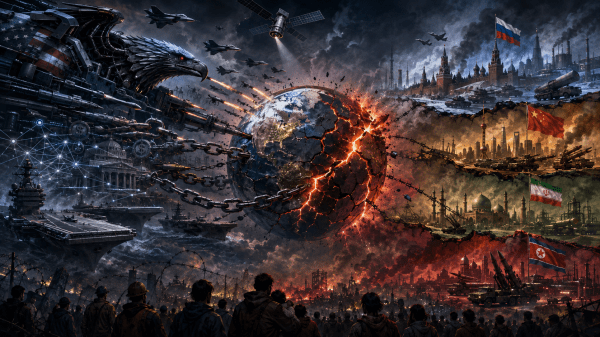
The Beijing summit is not merely a high-stakes poker game between Trump and Xi; it’s a façade hiding an imperial crisis where U.S. dominance falters amid technological decay and geopolitical strife. France 24’s framing turns complex geopolitical tensions into trivial personal confrontations, ignoring the deeper struggles over resources and sovereignty that threaten global order. As globalization erodes, emerging anti-imperialist movements ripple through nations, rejecting the casino logic of empire. The real question isn’t who holds the cards, but whether an imperial system so reliant on exploitation and coercion can adapt to a world increasingly seeking self-determination and resistance.
Empire on Extension Cord: Big Tech, Cold War 2.0, and the AI Grid Crisis of American Capitalism
The Harvard policy brief on AI and the electric grid inadvertently exposes the contradictions of a decaying American empire desperate to maintain technological supremacy through monopolistic control. Beneath the façade of innovation lies a stark energy crisis, with the rising demand from AI data centers straining an already fragile grid. As the U.S. grapples with fragmented privatization while competing against China’s centralized planning, the notion of the “clean cloud” is shattered by its heavy reliance on fossil fuels and depleted resources. This crisis symbolizes an empire’s struggle, revealing a society entangled in a web of profiteering that prioritizes corporate gain over public need, leaving ordinary citizens to pay the price for elite ambition.
Empire’s Digital Panic: China, Xinjiang, and the War Over Who Controls the Future
The Associated Press investigation reveals a shocking truth: Silicon Valley's complicity in building the surveillance apparatus that the West now demonizes in China. While framing China as a "digital police state," the report subtly shields the very imperial system enabling such technologies. It highlights a deeper confrontation—one where the U.S. grapples with losing its monopoly on development and technology. As the New Cold War intensifies, the true danger emerges: not the surveillance itself, but the realization that a socialist-oriented state can achieve modernization and stability without Western control. The empire's fear lies in losing its grip over a future it desperately seeks to define and dominate.
The Wound They Refuse to Heal: Taiwan, Empire, and the War Against Chinese Sovereignty
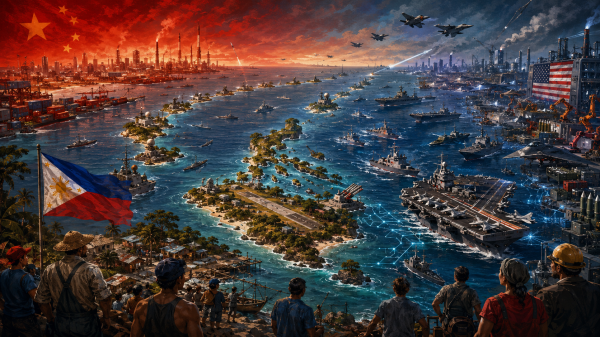
Reuters doesn’t just report events—it organizes reality through an imperial lens that disciplines how China is seen and understood. Beneath the surface, the Taiwan question reveals a dense structure of civil war legacy, U.S. militarization, legal contradictions, and economic interdependence. The truth is not “cross-strait tension,” but an unfinished revolutionary contradiction weaponized by empire to... Continue Reading →
The Independent’s Imperial Blindness: How North Korea and Belarus Refuse Isolation and Build Under Siege
The Independent recasts the DPRK–Belarus treaty as suspicious alignment while obscuring sanctions, war, and coercion shaping both states. The actual record shows concrete agreements across food, healthcare, industry, and education built through ongoing diplomatic coordination. These developments emerge from Korea’s imposed partition, Belarus’s post-Soviet Western pressure, and their shared positioning alongside Russia in the Ukraine... Continue Reading →
Fortress America: From “Operation Total Extermination” to the Consolidation of the American Pole
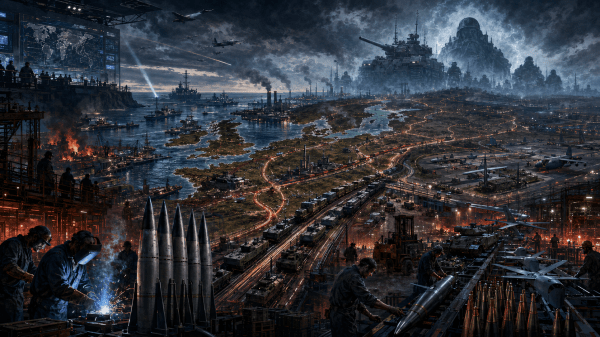
The Intercept’s reporting reveals a widening U.S.-aligned war across Latin America, exposing a moment where imperial language begins to outpace its own ideological cover. The documented facts—cross-border strikes, coalition warfare, regime change operations, and indefinite escalation—align directly with official doctrine and emerging hemispheric war architecture. When situated within the crisis of imperialism and the rise... Continue Reading →