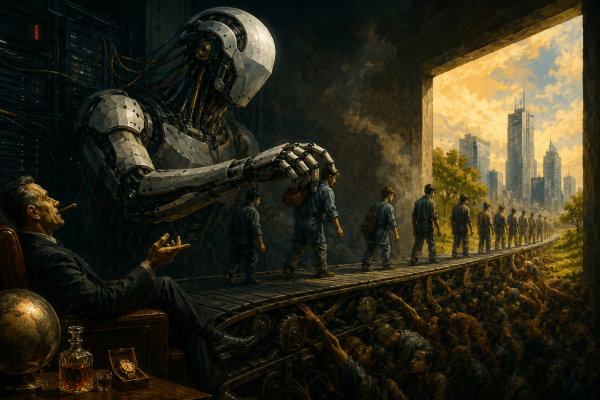
The Worker Becomes Optional: The Wage Still Demands Your Life

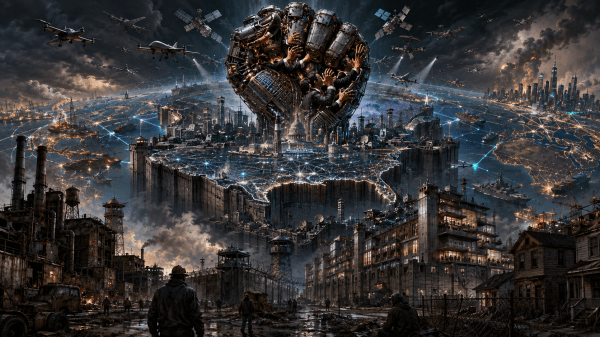
Bill Gates has finally acknowledged a truth that capitalists prefer to ignore: as AI and automation advance, corporations can reduce their reliance on human workers, yet those workers still need jobs to survive. This dystopian paradox manifests as corporations accumulate vast fixed capital while employing fewer people, leading to increasing labor insecurities. The state, ostensibly aiding automation's growth, is simultaneously crafting systems to manage this emerging class of excess workers. Gates proposes measures to protect jobs, but under capitalism, preserving employment becomes essential simply for survival, distorting the very essence of technological progress into a means of perpetuating exploitation rather than liberating humanity from labor.

The Divided Empire: Prashad, Buze and the Contradiction Between Hyper-Imperial Unity and Capitalist Rivalry

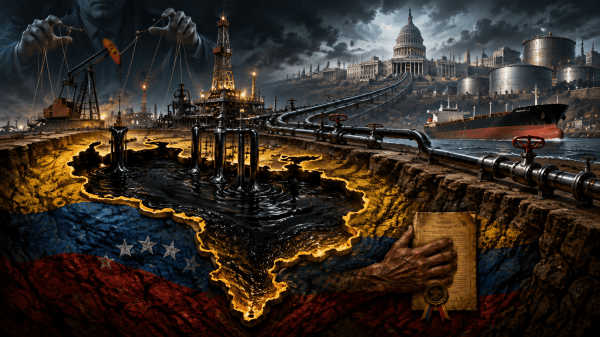
In a time when U.S.-led imperialism tightens its grip, nuanced debates emerge about the new American Pole—a daunting fusion of military, financial, and technological power that suppresses dissent while promising security. Vijay Prashad argues for a hyper-imperialism consolidating state control and aggressiveness against external defiance, while Özcan Buze highlights lingering national rivalries within the empire’s core. As cities devolve into ghost towns stripped of industry and sovereignty is commodified, the left is urged to unite struggles for worker power, national liberation, and social ownership. The empire’s contradictions must fuel a revolutionary response—a call to dismantle the machinery that perpetuates exploitation, rather than aspiring for a mere return to past privileges.

Strategic Stability or Strategic Pause: The Trump–Xi Summit and the Fracturing of the American Century

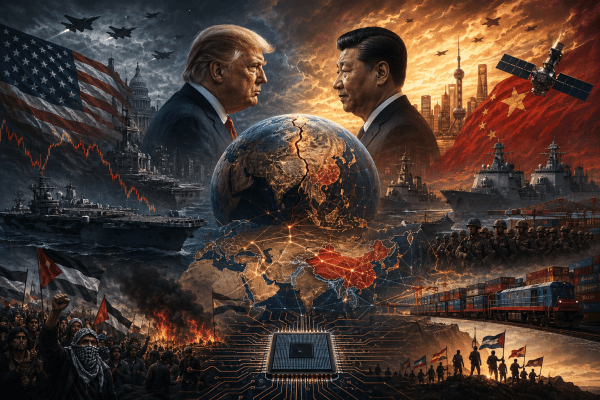
The Beijing summit epitomizes the unraveling of American supremacy, as Donald Trump arrived not merely as a president, but as a messenger of an empire in disarray. The spectacle of diplomatic niceties belied a crumbling global landscape, where the U.S. seeks containment while its capital cravenly craves access to China's vast markets. The summit revealed profound contradictions: America, armed yet impotent, involved in a tech war while reliant on the very infrastructure it seeks to undermine. As the Atlantic order falters, a multipolar era teeters on the edge, with ideological fractures foreshadowing a future fraught with uncertainty—yet, fertile for revolutionary possibilities.

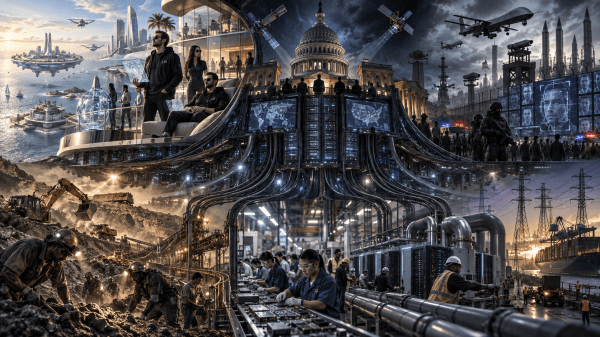
Empire on Extension Cord: Big Tech, Cold War 2.0, and the AI Grid Crisis of American Capitalism

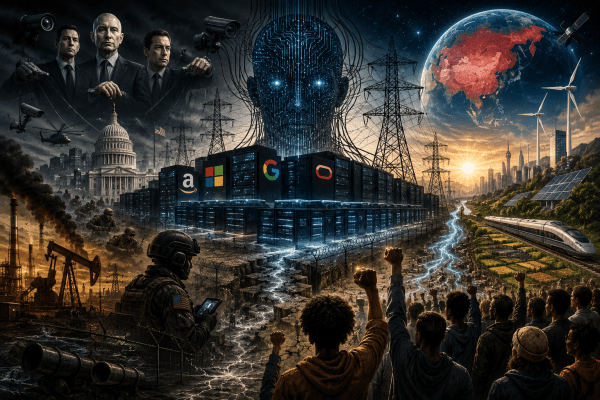
The Harvard policy brief on AI and the electric grid inadvertently exposes the contradictions of a decaying American empire desperate to maintain technological supremacy through monopolistic control. Beneath the façade of innovation lies a stark energy crisis, with the rising demand from AI data centers straining an already fragile grid. As the U.S. grapples with fragmented privatization while competing against China’s centralized planning, the notion of the “clean cloud” is shattered by its heavy reliance on fossil fuels and depleted resources. This crisis symbolizes an empire’s struggle, revealing a society entangled in a web of profiteering that prioritizes corporate gain over public need, leaving ordinary citizens to pay the price for elite ambition.

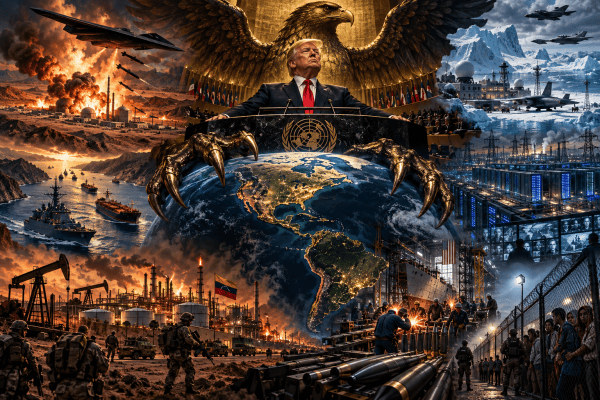
The Declaration of Hyper-Imperialist Recalibration: Trump 2.0’s 2025 National Security Strategy and the Consolidation of the American Pole

Trump’s 2025 National Security Strategy reveals a wounded empire abandoning global supremacy for hemispheric domination, fusing militarized industrial policy, border fascism, and digital control into the blueprint for a fortified American Pole. By Prince Kapone | Weaponized Information | December 8, 2025 When an Empire Starts Explaining Itself Every once in a while, an empire... Continue Reading →

Website Powered by WordPress.com.

Up ↑