Marx in the Witness Box: How Jacobin Turns a Chinese Worker’s Wounds Against the Revolution

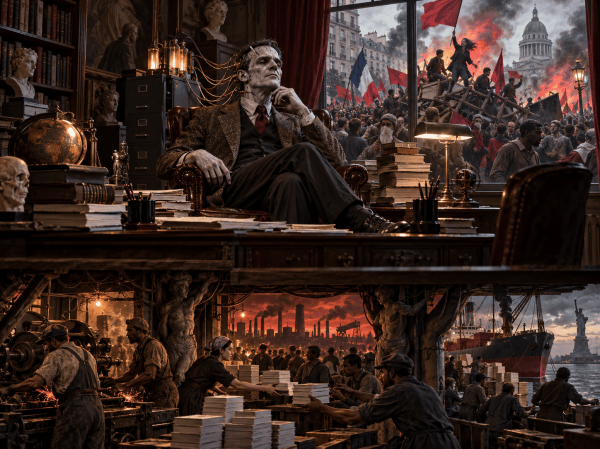
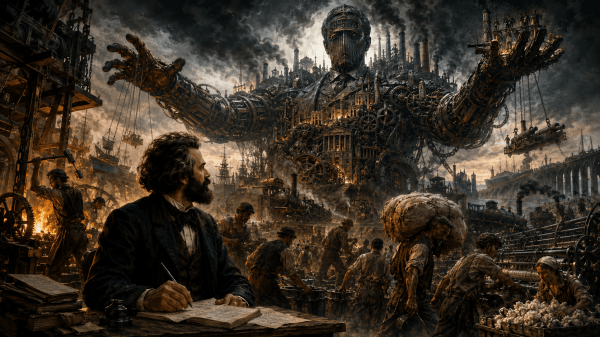
Jacobin's critique of Chinese worker Xiao Hai's memoir misrepresents the entire Chinese Revolution as a failed experiment based on exploitation. While Xiao Hai's story merits recognition, the narrative frames the factory's plight as representative of the whole nation, ignoring China's transformation from a colonial past into a sovereign socialist state. The real conflict lies not between the state and its workers, but rather over how the fruits of development serve the people's dignity versus capital's control. Exploitation exists, but it's the state that counters this with public power, proving not every wound validates Western perspectives of failure. Thus, the critique deflects from recognizing China's unique developmental trajectory amid global capitalism's inequities.

They Called It Ego: Jacobin, Chris Smalls, and the Policing of Black Anti-Imperialist Labor

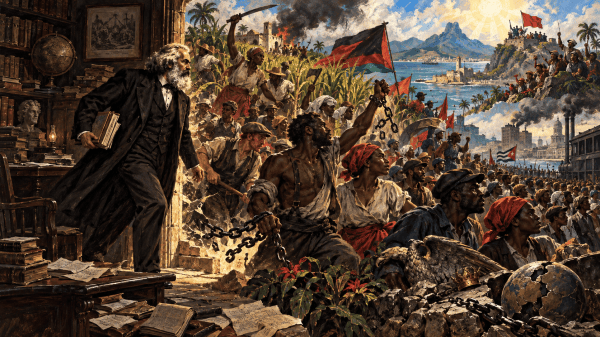
Chris Smalls, once heralded as a labor hero, now finds himself a casualty of overblown ego in the eyes of Jacobin. Yet, this portrayal dangerously obscures a deeper truth: his evolution from solely confronting Amazon to advocating for Palestinian and Cuban solidarity reveals an unsettling fear among the respectable Left. They're comfortable with labor militancy as long as it remains contained and domesticated; once it branches into anti-imperialism, they recoil. Smalls symbolizes a challenge to the status quo, an unfiltered confrontation with empire that threatens to redefine labor politics as an international struggle. In essence, the fear of a Black worker embracing a global perspective exposes the fragile backbone of contemporary Leftist thought.

Bull Market, Broke People: The Stock Market’s Good News Is the Working Class’s Bad Joke

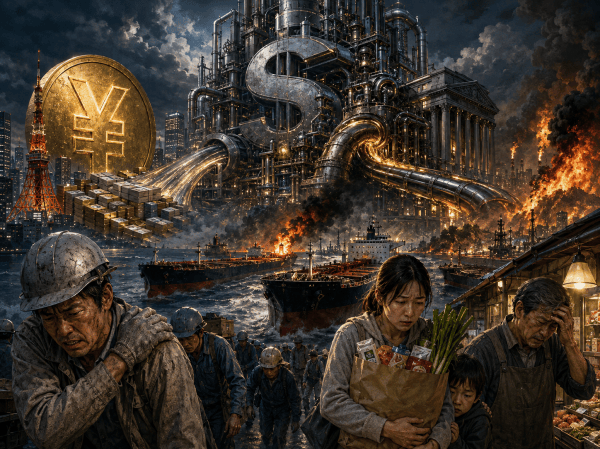
As markets soar, the majority of households are trapped in economic despair, cutting back on spending as essential prices rise and wages stagnate. The AP's analysis of "consumer confidence" reveals a grotesque class divide—where the wealthy thrive and the working class suffers under burdens of debt and inflation. This narrative cleverly masks the structural inequalities, framing economic distress as mere sentiment rather than a blatant symptom of a system rigged in favor of capital. The urgent call to action is clear: workers must unify and transform their economic plight into organized class power, recognizing that genuine change requires confrontational strategies, not empty optimism.

Cocaine Cowboys and Lithium Indians: Bolivia, the Monroe Doctrine, and the Return of the Colonial Republic

Bolivia is ablaze, but The New York Times misses the mark, framing protests as mere chaos ignited by a presidential betrayal. The truth is far more profound: a collision of historical projects poised for supremacy. Behind the unrest lies a struggle against neocolonial forces, with President Paz's agrarian reforms threatening Indigenous and campesino sovereignty. The culprits are not just disenfranchised voters but a systematic push toward resource extraction and imperialism. The uprising is a collective cry not just for policy change but for self-determination, land rights, and a unified front against re-colonization. The narrative must shift from superficial crisis to deep-rooted rebellion.

RED MACHINES, BLACK MIRRORS: AI, EMPIRE, AND THE NEW LONG MARCH AGAINST CAPITALISM

China's transformation from a mere assembly line to a powerhouse of intelligent manufacturing signals a seismic shift that threatens to dismantle the Atlantic monopoly on industrial command. As the U.S. responds with sanctions and technological blockades, the real battle unfolds over who controls the future of AI and automation. This is not merely an economic transition; it's a clash of ideologies. The West fears a new geopolitical order where technological sovereignty empowers the Global South, undermining imperial hierarchy. While intelligent manufacturing holds the potential for collective liberation, unchallenged monopoly control risks deepening exploitation. The future demands that humanity wrests command from corporate hands, reshaping technology for collective progress.

Stars, Stripes, and Holy Water: How a Dying Empire Learned to Pray Again

The Rededicate 250 rally manifests an America grappling with its imperial decline, revealing the ruling class’s desperation to fuse nationalism with spirituality. Beneath the spectacle of Christianity cloaked in patriotism lies a profound social crisis fueled by economic insecurity and political fragmentation. This event serves as a liturgy for a faltering empire, seeking to stabilize itself through divine deception, while conveniently ignoring the historical injustices it thrives upon. Critics alarmingly diminish the event's significance, merely framing it as religious overtone, while the deeper threat is a political theology exacerbating class power dynamics and moralizing imperial oppression. As the empire crumbles, the call for authentic solidarity becomes paramount.

Strategic Stability or Strategic Pause: The Trump–Xi Summit and the Fracturing of the American Century

The Beijing summit epitomizes the unraveling of American supremacy, as Donald Trump arrived not merely as a president, but as a messenger of an empire in disarray. The spectacle of diplomatic niceties belied a crumbling global landscape, where the U.S. seeks containment while its capital cravenly craves access to China's vast markets. The summit revealed profound contradictions: America, armed yet impotent, involved in a tech war while reliant on the very infrastructure it seeks to undermine. As the Atlantic order falters, a multipolar era teeters on the edge, with ideological fractures foreshadowing a future fraught with uncertainty—yet, fertile for revolutionary possibilities.

The Red Menace Strikes Back: Vietnam, the DPRK, and the Collapse of Imperial Isolation

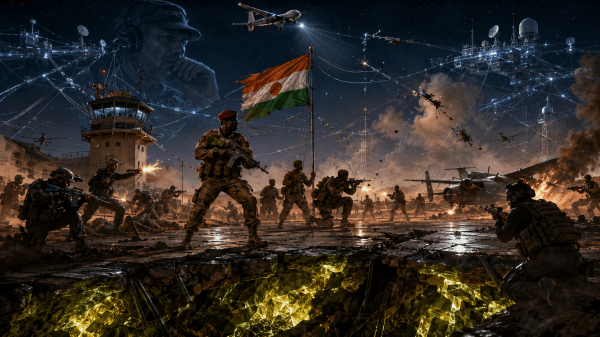
In May 2026, Vietnam's Foreign Minister met with North Korean officials, a significant yet underreported event that challenges the Western narrative of the DPRK as isolated and irrational. This meeting signifies the resurgence of socialist internationalism and the resilience of anti-imperialist relations against a U.S.-dominated order. Vietnam asserts its independence by maintaining ties with a historically aligned state despite pressures to conform to U.S. interests, illustrating a defiance of binary political expectations dictated by Western powers. As these two nations deepen cooperation, they expose cracks in imperial control, revealing that sovereignty endures in the face of sanctions and coercion.

From Alliance to Containment: How Anglo-American Power Engineered the Cold War

The essay provocatively dismantles the myth that the Cold War was merely a reaction to "Soviet aggression." Instead, it reveals it as America's calculated strategy to reinforce a capitalist world order post-World War II, driven by anxieties over rising leftist movements and anti-colonial uprisings. It highlights how the U.S. initiated a campaign of political warfare and economic reconstruction through the Marshall Plan, effectively shaping Europe and other regions under its imperial influence. To Washington, the real danger was not communism but the threat of genuine independence that challenged capitalist dominance. The Cold War was less about ideological battles and more about inter-imperialist struggles to determine global economic control.

Workers of the New World: BRICS+, Platform Capital, and the Class Struggle Inside Multipolarity

The Atlantic neoliberal order is disintegrating, revealing the ravages inflicted on workers and the environment by a relentless pursuit of profit. As BRICS+ nations seek to reclaim industrial sovereignty and labor rights, they face a chaotic multipolar reality where exploitation continues under different guises. Amid profound instability, the laboring class must transition from mere instruments of production to conscious political actors capable of reshaping development. This moment offers a critical opportunity: to reclaim the narrative and construct a world centered on human dignity and ecological balance. The question now is whether history will be rewritten by workers or remain dominated by elites.

Website Powered by WordPress.com.

Up ↑