The Collateral of Empire: Debt, Power, and the Future

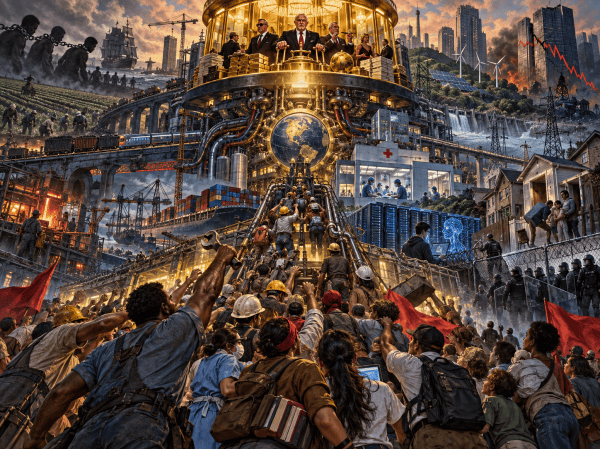
America's staggering $81.9 trillion debt is more than just a number; it's a complex web of financial claims overshadowing the real economic landscape. The nation's ability to issue dollars grants it a unique power, allowing it to leverage future incomes to accommodate debt—while the average worker grapples with mortgages, credit cards, and student loans. This contradictory system—where public power fuels private finance—disguises the inequality at play. As lenders profit, households struggle, further entrenching societal divides. The U.S. isn’t just a massive debtor; it’s a realm where debt serves as both a lifeline and a constraint, revealing the capitalist dance between ownership and obligation.

The Worker Becomes Optional: The Wage Still Demands Your Life

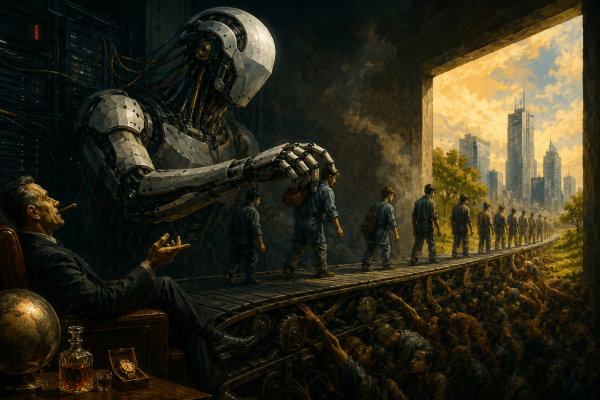
Bill Gates has finally acknowledged a truth that capitalists prefer to ignore: as AI and automation advance, corporations can reduce their reliance on human workers, yet those workers still need jobs to survive. This dystopian paradox manifests as corporations accumulate vast fixed capital while employing fewer people, leading to increasing labor insecurities. The state, ostensibly aiding automation's growth, is simultaneously crafting systems to manage this emerging class of excess workers. Gates proposes measures to protect jobs, but under capitalism, preserving employment becomes essential simply for survival, distorting the very essence of technological progress into a means of perpetuating exploitation rather than liberating humanity from labor.

Website Powered by WordPress.com.

Up ↑