The so-called manufacturing rebound lauded by CNBC is a deceptive mirage masking an imperial crisis. Beneath flashy growth numbers lie the ruins of a deindustrialized America, where financial extraction and reliance on foreign inputs have left vital sectors like semiconductors and military production at risk. Tariffs inflate costs, wars disrupt essential supply chains, and the resulting economic strain is shifted onto workers and marginalized communities. Capital demands industry without meaningful investment in labor or infrastructure, turning factories into fortresses of control rather than engines of prosperity. This isn't a renaissance; it's an imperial scramble desperately attempting to reclaim dominance amid its own financial decay.
The Backdoor Empire: When Chinese Sensors Expose U.S. Cyber Hypocrisy
In a provocative take on CNBC’s coverage of Chinese AI models in the U.S., the article uncovers a treacherous narrative. Rather than celebrating technological advancements, it highlights the U.S. elites' panic over losing control in an imperial market. While U.S. firms grapple with high AI costs, their pivot to cheaper Chinese alternatives reveals a failing monopoly. This shift isn’t about competition; it’s a crack in the empire’s intelligence enclosure. As monopoly rents crumble, a reckoning looms. The essence of the matter extends beyond corporate rivalries to a fight for who ultimately controls artificial intelligence's future. It's a high-stakes battle for power and access.
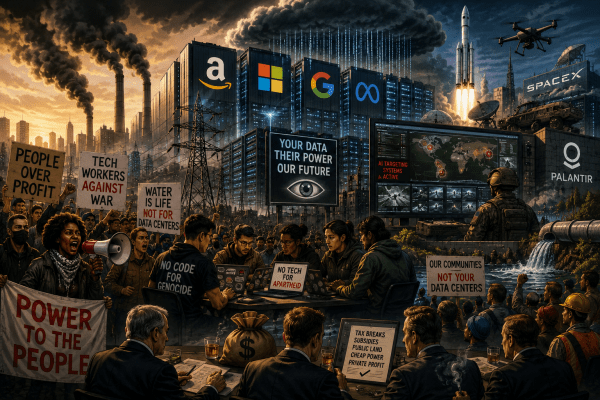
The Cloud Has Teeth: Big Tech, SpaceX, and the Casino of Technofascism
The Financial Times might report a stock market tremor as a mere sell-off, but beneath this facade lies a damning truth: Big Tech’s AI boom and SpaceX’s bubble float atop public resources, military contracts, and labor exploitation. This crisis isn't just an investor's blip; it reveals the rot of monopoly capitalism, where clouds obscure heavy debts to the state and imperialism. As SpaceX’s stocks drop, they signify a broader collapse of illusion, exposing the grim reality of military dependency and energy consumption. The future shouldn’t be left to financiers, but redirected to the people, demanding public ownership and accountability in the face of an engineered technological dystopia.
Code and Conquest: The Technological Republic and the Blueprint for a New Imperial Order
In Weaponized Intellects' scathing review of The Technological Republic, Karp and Zamiska unveil a chilling trajectory where Silicon Valley's crisis morphs into a blueprint for imperial tech dominance. They argue for an alliance between state power and engineering prowess to reinforce U.S. supremacy, shedding liberalism in favor of militaristic ingenuity. What transpires is a dissection of consumer capitalism’s futility, advocating for weaponized AI to restore glory. This critique masquerades as patriotic duty while advocating technofascism—a seamless marriage of capital and state. In rejecting this, the revolution must neither accept imperial myths nor a hollow liberalism, but fight for a world where tech serves humanity, not dominance.