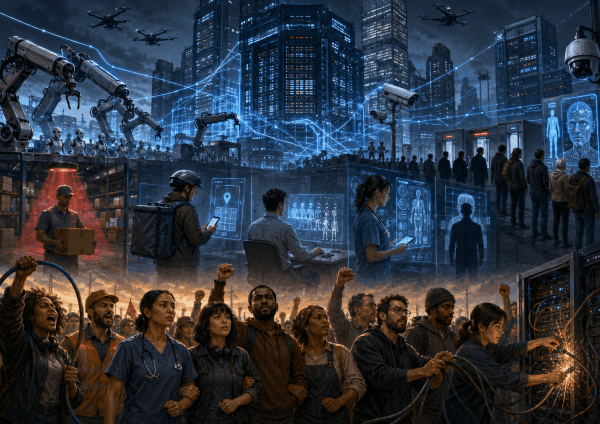
Hundreds of economists warn that artificial intelligence could displace millions of workers, but their petition mistakes a ruling-class offensive for a technical oversight. AI is already being used to reduce workforces, intensify surveillance, automate discipline, exclude applicants, restrict public benefits, and strengthen military and counterinsurgency systems. The real danger is not that machines may escape human control, but that monopoly capital is using them to reduce its dependence on labor while expanding the apparatus needed to manage those it renders surplus. Against this technofascist future, workers are organizing to seize control over deployment, data, productivity, and power.
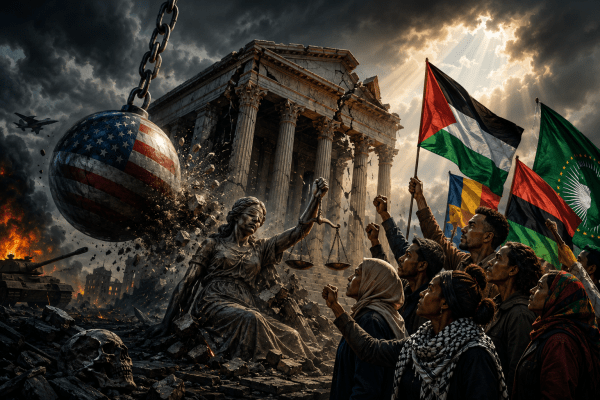
The Palestine Exception: Why Washington Is Trying to Break the ICC
The Guardian's coverage of Marco Rubio's claim that the International Criminal Court (ICC) threatens U.S. sovereignty highlights the deeper issue of imperial exemption rather than genuine sovereignty. The U.S. has long opposed ICC jurisdiction that could implicate American or allied personnel, reacting strongly against Palestinian efforts to document crimes under occupation. The article critiques the liberal institutionalism of the response, noting a lack of representation for affected parties. It underscores that U.S. sanctions targeting Palestinian organizations and ICC officials are a means to maintain impunity. Oppressed nations seek accountability, using available legal systems to challenge the dominance of imperial powers and protect their sovereignty against external coercion.
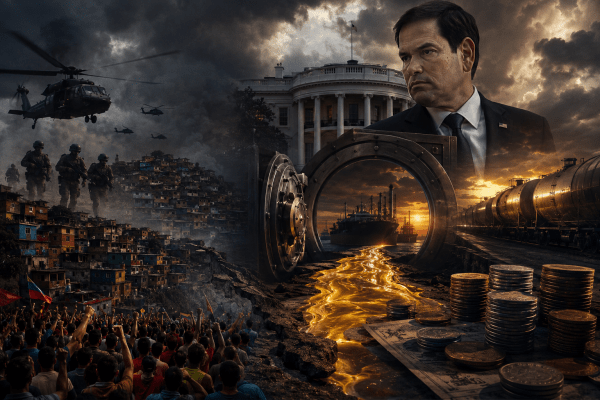
The Viceroy’s Ledger: How Washington Seized Venezuela’s Present and Mortgaged Its Future
The New York Times paints Marco Rubio as Venezuela's imperial viceroy, wielding control over its government through military force, financial manipulation, and a façade of diplomacy. This orchestrated colonial domination, disguised as governance, reveals a grotesque power dynamic where a nation’s sovereignty is traded for political tapestries spun by Washington. While Rubio's grip tightens, the real resistance lies among Venezuelans and anti-imperialist allies in the U.S. They must dismantle U.S.-imposed sanctions and return Venezuela’s wealth to its people. The struggle against colonial rule continues, as the masses can't be merely passive subjects in the rewriting of their national story.
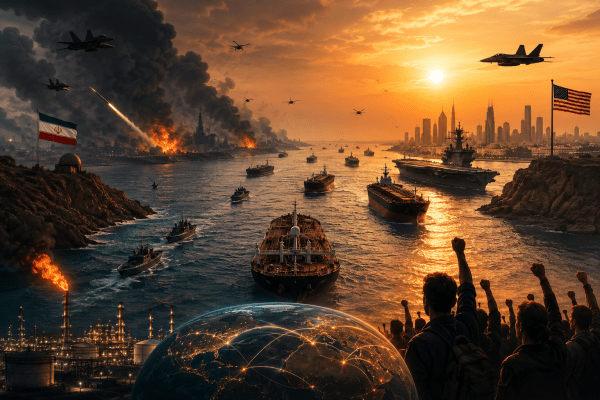
The Tollbooth at the Edge of Empire: Washington Sets Fire to Hormuz and Charges the World for Water
The Trump administration claims it is defending freedom of navigation in the Strait of Hormuz, yet its latest policy reveals something very different: a naval blockade of Iran, a bid to control one of the world's most strategic waterways and a proposed 20 percent charge on global commerce passing through it. Excavating the BBC's coverage, this essay reconstructs the chronology buried beneath the headlines, exposing how a war launched by the United States and Israel has been repackaged as a story of Iranian aggression. Behind the rhetoric of maritime security lies a deeper struggle over sovereignty, imperial power and who has the right to govern the world's vital arteries of trade.
The Lawyers of the Counterrevolution: How Nicaragua Is Dismantling the Infrastructure of Imperial Power
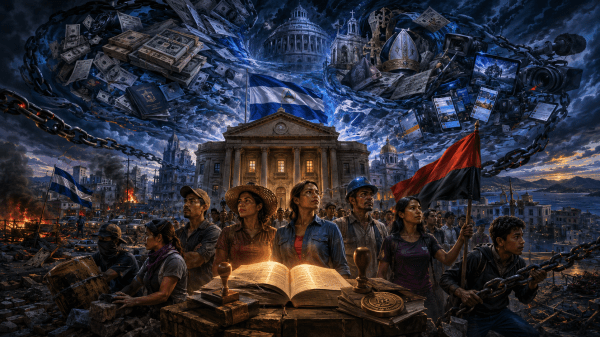
The Associated Press presents Nicaragua’s removal of lawyers from the professional registry as another unexplained authoritarian crackdown. This essay reconstructs the deeper reality: a post-2018 Sandinista counter-subversion campaign aimed at the foreign-funded NGO, media, ecclesiastical, expatriate, financial, and legal networks the government believes helped organize the attempted coup. Lawyers and notaries matter because they give those networks legal continuity through contracts, properties, associations, donations, and powers of attorney. Nicaragua has the right to dismantle imperial infrastructure, but revolutionary sovereignty must still distinguish proven subversion from ordinary legal practice through transparent evidence and popular accountability.
The Market Came Armed: Sven Beckert and the World Capital Built by Conquest
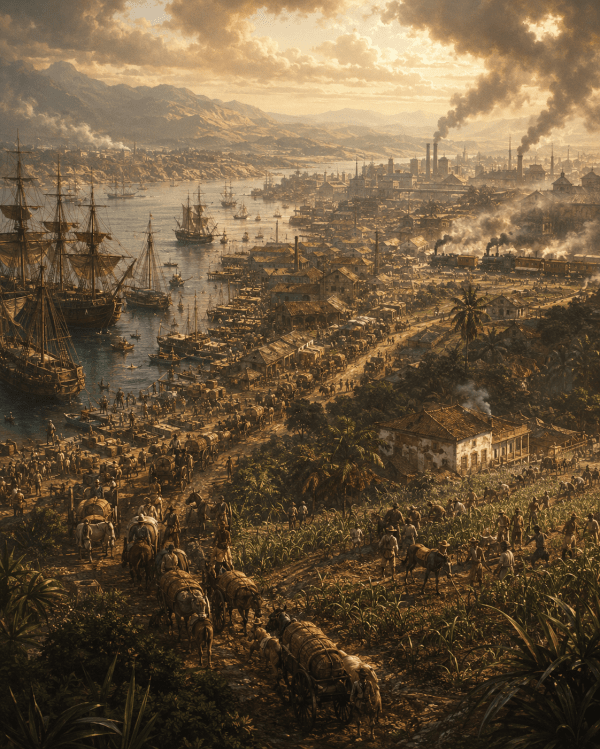
Sven Beckert demolishes capitalism’s favorite myth: that it emerged from free markets, innovation, and peaceful exchange. His global history shows a system built through conquest, slavery, colonial dispossession, state power, coerced labor, and repeated counterrevolution. Yet Beckert repeatedly turns rebellions, socialist revolutions, and anticolonial victories into episodes in capitalism’s adaptation. This review seizes his historical arsenal while rejecting that retreat, arguing that a world made through organized class and colonial power can be remade only through the organized power of workers and oppressed peoples.
The Backdoor Empire: When Chinese Sensors Expose U.S. Cyber Hypocrisy
In a provocative take on CNBC’s coverage of Chinese AI models in the U.S., the article uncovers a treacherous narrative. Rather than celebrating technological advancements, it highlights the U.S. elites' panic over losing control in an imperial market. While U.S. firms grapple with high AI costs, their pivot to cheaper Chinese alternatives reveals a failing monopoly. This shift isn’t about competition; it’s a crack in the empire’s intelligence enclosure. As monopoly rents crumble, a reckoning looms. The essence of the matter extends beyond corporate rivalries to a fight for who ultimately controls artificial intelligence's future. It's a high-stakes battle for power and access.
NATO’s Plantation Ledger: When Spain Refused the War Chain
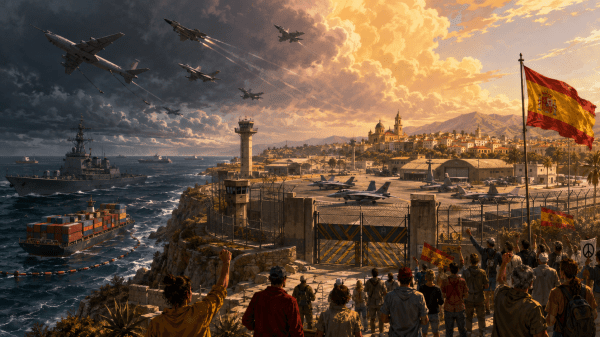
Trump’s threat to cut trade with Spain was not a diplomatic feud. It was imperial discipline. TIME reported the spectacle, but the real story sits beneath the headline: Spain refused to let Rota, Morón, and its airspace become automatic instruments of the U.S. war on Iran, while rejecting NATO’s demand to raise military spending to 5 percent of GDP. Washington’s response exposed the alliance for what it is: a command system that turns allied territory into launchpads, public budgets into war tribute, and dissent into a target for economic coercion.
Peace Board, Prison Yard: Gaza’s Handover Trap
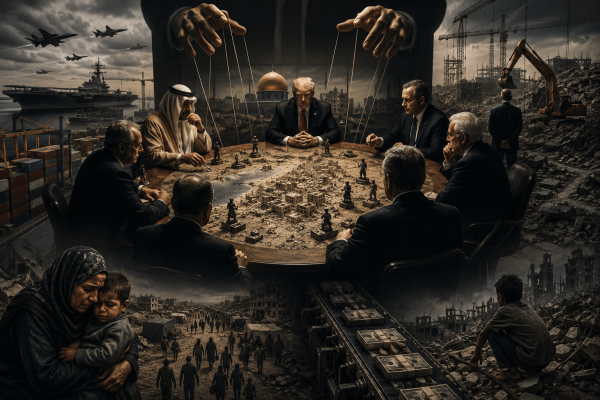
The Guardian frames Hamas’s offer to hand over Gaza’s civil administration as a possible opening in a stalled peace process, but its article launders U.S.-backed governance as neutral transition. The buried facts show a Board of Peace built through U.S. command, Israeli security conditions, Gulf logistics capital, legal immunity, and reconstruction leverage. The real story... Continue Reading →
The Mercy Department: How USAID Laundered Empire Through the NGO-Industrial Complex
USAID did not simply deliver humanitarian aid—it institutionalized a model of empire that fused relief, civil society, media, governance, and development into the machinery of U.S. foreign policy. Excavating an NPR interview with former USAID Administrator Samantha Power, this essay exposes how liberal narratives of compassion obscure the agency's role inside the broader NGO-industrial complex. Drawing on anti-imperialist scholarship and Global South perspectives, it argues that the real choice is not between aid and no aid, but between imperial dependency and sovereign development. The struggle ahead is to defend the people harmed by aid cuts while dismantling the donor architecture that transforms solidarity into supervision.