Surrender as Relief: Rubio’s War on Cuba’s Means of Survival

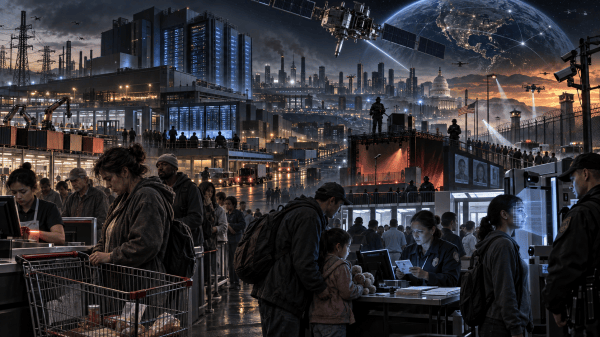
Marco Rubio’s new sanctions do not merely target Cuban military procurement. They strike the institutions, banking channels, suppliers, repair systems, and foreign relationships through which Cuba survives a blockade designed to manufacture deprivation and political surrender. Washington restricts fuel, finance, technology, and trade, then presents the resulting hardship as proof of socialist failure. As Cuba turns toward China, Russia, and other partners to preserve its sovereignty, those lifelines are recast as threats. Behind the language of security lies the old imperial objective: isolate the island, weaken its defenses, deepen popular suffering, and force the Cuban Revolution to kneel.

Factories for the Fortress, Austerity for the People: America’s Imperial Reconstruction

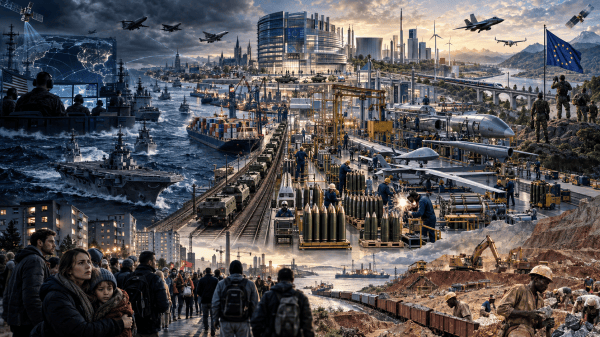
The so-called manufacturing rebound lauded by CNBC is a deceptive mirage masking an imperial crisis. Beneath flashy growth numbers lie the ruins of a deindustrialized America, where financial extraction and reliance on foreign inputs have left vital sectors like semiconductors and military production at risk. Tariffs inflate costs, wars disrupt essential supply chains, and the resulting economic strain is shifted onto workers and marginalized communities. Capital demands industry without meaningful investment in labor or infrastructure, turning factories into fortresses of control rather than engines of prosperity. This isn't a renaissance; it's an imperial scramble desperately attempting to reclaim dominance amid its own financial decay.

The Crime of Making Too Much: China and the Empire’s Monopoly on Abundance

The Economist's recent critique of China's industrial prowess reveals a deeper hypocrisy within Western narratives. While it acknowledges China's efficiency, it vilifies state-driven competition when it disrupts Western hegemony. The real issue is not overproduction but an imbalance of purchasing power, presenting an ugly tableau of warehouses filled with goods while people lack access. As China strives for self-reliance, the West's response is to impose tariffs and sanctions, prioritizing monopoly over equitable distribution. This conflict isn’t a mere economic dispute; it’s a struggle for who controls productive capacity. The question is whether to align production with human need or maintain the status quo of inequality.

NATO’s Self-Fulfilling Prophecy; How Encirclement Forged the Russia–China Alliance

DER SPIEGEL's investigation into military cooperation between Russia and China is more than just a mere report; it's an embodiment of the West's narrative that casts these nations as the new "axis of evil." This framing is less about honesty and more about justifying aggressive military posturing and sanctions against perceived threats. The true danger lies not in an orientation towards war, but in an imperial system that, in its quest for domination, fuels the very alliances it fears. The article critiques this perspective, urging a grassroots movement to challenge militarism and push for a redirection of resources towards societal needs instead of war machinery.

The Billionaire Is a Receipt: America’s Stolen Ledger of Wealth

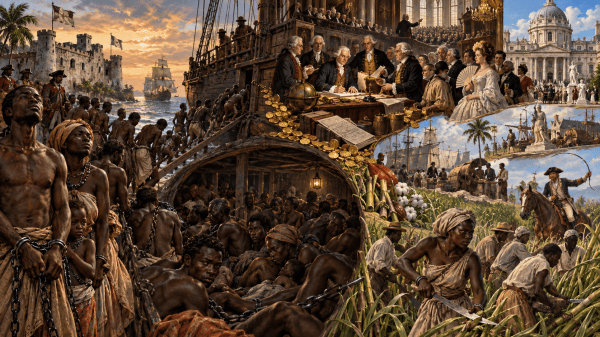
The Wall Street Journal tells a fairy tale in which billionaires create wealth while workers, enslaved people, Indigenous nations, Black farmers, public institutions, and the Global South disappear from the ledger. This excavation restores the buried history beneath American fortunes: conquest, slavery, land theft, union-breaking, financial extraction, digital surveillance, and unequal exchange. The real divide is not between innovators and envious socialists, but between the masses who collectively produce social wealth and the minority whose property claims grant them command over it. The answer is organization—from the shop floor to the wider struggle for collective control over humanity’s abundance.

The Dream on Layaway: How Capital Repossessed American Adulthood

The "Great Postponement" isn't just about delayed dreams; it signals a devastating structural collapse for young adults trapped in a never-ending cycle of dependency and disempowerment. Despite holding jobs, many remain shackled to their parents' homes, unable to participate fully in adulthood due to spiraling rents and crippling inequality. The system deliberately obscures the true nature of this crisis, homogenizing individual struggles into mere statistics while upholding a status quo drenched in inherited privilege and racial disparity. The solution lies in organizing tenant unions and collective action—because waiting for change is no longer an option. The American Dream is not postponed; it's been stolen.

Wrong Map, Right Empire: Washington’s Blueprint for African Dependency

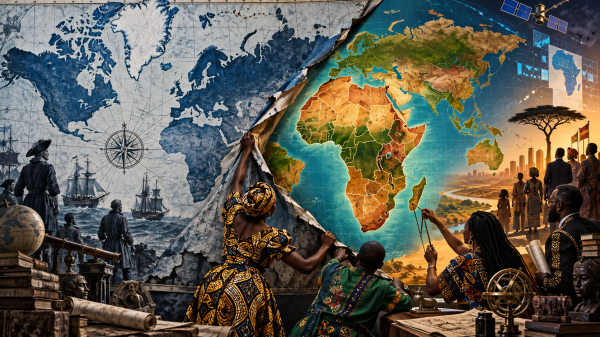
A State Department map mislabeled every country in Africa during a presentation on new U.S. health agreements. The blunder went viral as a joke about AI incompetence, but the deeper scandal was buried beneath the laughter. Washington may not know where African nations are on a map, yet it knows exactly how to reach their clinics, databases, laboratories, mineral corridors and security systems. Behind the humanitarian language lies a harder imperial architecture built on shrinking aid, conditional funding, data access, military cooperation and investment pressure. The map was wrong. The hierarchy was not.

The World Got Richer, You Didn’t: Capitalism’s Quadrillion-Dollar Balance-Sheet Lie

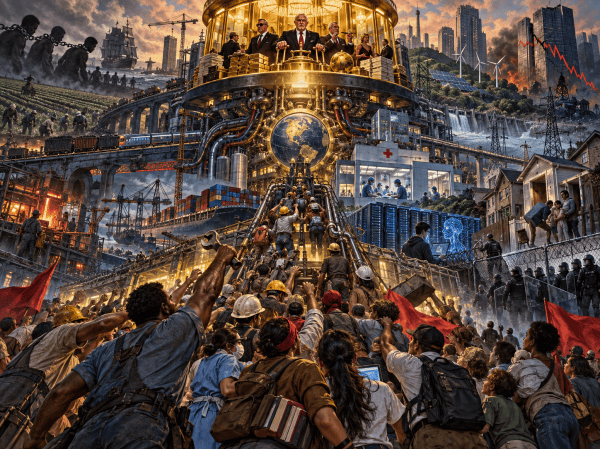
Fortune says “global households” became $40 trillion richer in 2025. But when the richest 10 percent already own three-quarters of the world’s wealth, that headline is less a report than a magic trick. The new abundance came largely from rising equities, inflated asset values and expanding financial claims—not from productive investment or improved living standards. Behind the quadrillion-dollar balance sheet lies a system where private fortunes swell while public wealth stagnates, workers lose power, tenants lose security and the Global South services the debts of the imperial core. This is not shared prosperity. It is class power written in the language of accounting.

The Thieves Opened the Vault: From Comprador Corruption to Imperial Receivership in Venezuela

The betrayal of Pedro Binaggia, a Venezuelan informant for U.S. authorities, is just a microcosm of a much larger imperial drama. While Binaggia recorded evidence of a $1.2 billion oil fraud, he found the American government he served turned its back on him after extracting what it needed. This tale is framed as his personal tragedy but obscures the broader context of imperial overreach. The U.S. not only investigates and prosecutes alleged crimes but assumes control over Venezuela’s oil revenue, reducing a sovereign state to a pawn in a power game. The theft of national wealth is cleaned up by a facade of legality, while corrupted officials and foreign interests conspire in the shadows. It's a grim reminder: in this twisted narrative, the real crime lies in the extraction, not just the theft.

White Bricks, Yellow Gold: Noboa’s Banana Empire and the Drug War That Never Looks Up

Ecuador's banana industry is a tangled web of legal commerce and illicit narcotics, illustrated starkly by the recent discovery of nearly 770 kilograms of cocaine hidden in a banana shipment. The narrative spins a tale of heroic law enforcement battling malevolent traffickers, all while evading deeper scrutiny of who truly profits. President Daniel Noboa, emerging from a powerful banana-exporting family, faces criticism for militarizing the drug war without addressing the oligarchic structures underpinning the trade. This contradiction exposes a class-selective drug war where the state fights the visible enemy at the bottom while shielding corporate interests. The demand? Unmask the hidden players and dismantle the system that links both bananas and cocaine.

Website Powered by WordPress.com.

Up ↑