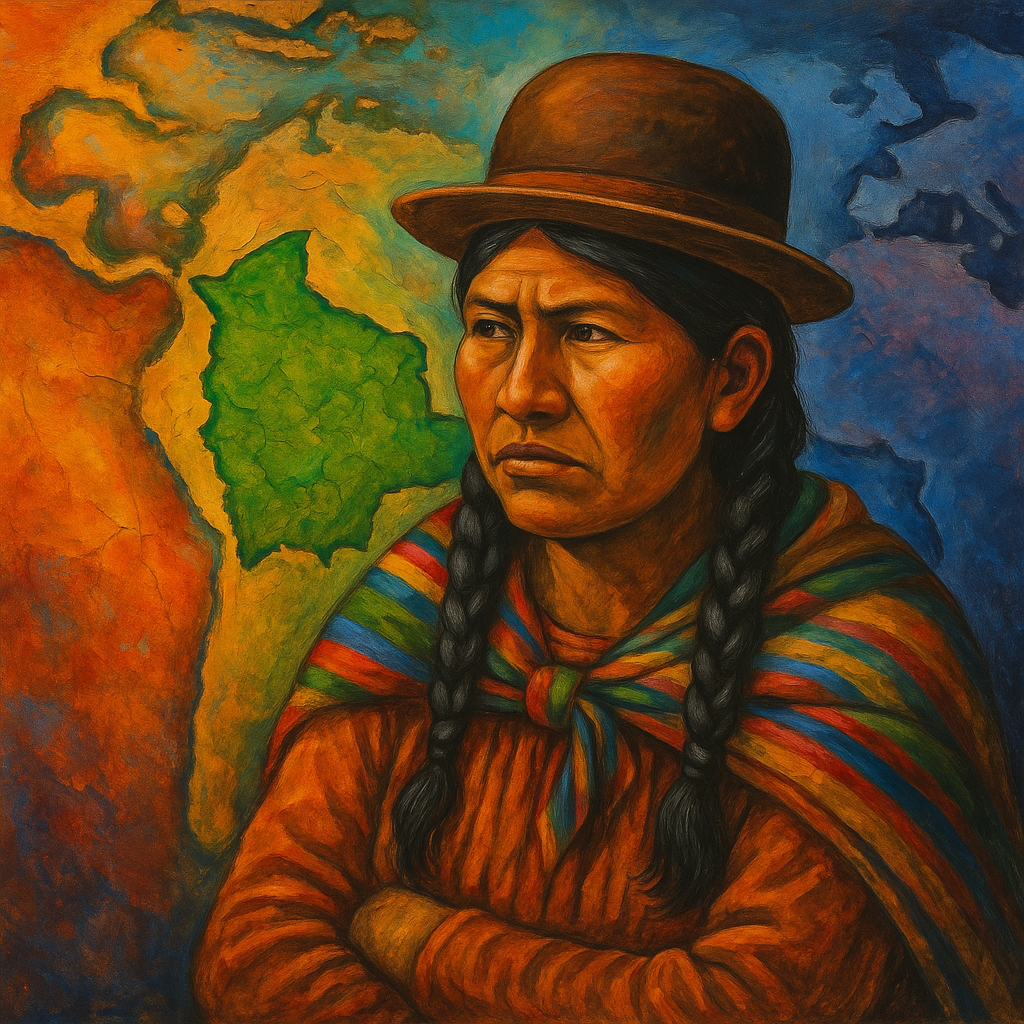
The court approved Andronico, but shut the door on Evo. But this isn’t just a legal reshuffling—it’s a political rupture. Beneath the robes lies a deeper battle over who holds power in Bolivia: the state, or the people who built the revolution from below.
By Prince Kapone | Weaponized Information
June 6, 2025June 7, 2025
From Courtrooms to Crossroads: Reading Between the Rulings
This teleSUR article lays out the facts with clarity: Bolivia’s Constitutional Court has confirmed the presidential candidacy of Andronico Rodríguez while disqualifying Evo Morales. At the same time, the Arce government is pressing charges against Morales—accusing him of terrorism, incitement, and obstructing the electoral process. The official story is tidy. But anyone who’s watched empire work through “neutral” institutions knows better. Nothing about this moment is neutral.We say this with love and respect: teleSUR is a comrade. It has long served the camp of anti-imperialism, giving voice to movements and leaders that the Western press silences or smears. But even fraternal media can fall into the trap of state logic—especially when the contradiction is internal. What we’re dealing with here isn’t just MAS vs. the opposition. It’s MAS vs. itself. And behind that: a much older battle between the state and the people, between compromise and rupture.Let’s name the actors without ceremony. Justice Minister César Siles is filing charges. Government Minister Roberto Ríos says Morales is out for chaos. And Constitutional Court Dean Yván Espada delivered the ruling that cemented Andronico’s candidacy while locking Evo out of the race. These aren’t just functionaries doing paperwork. They’re operators in a system trying to contain a process that long ago spilled beyond the borders of legality.That system is feeling the heat. Not just from Morales or the MAS rank and file—but from the deeper class forces that have never accepted the limits of electoral politics as the endgame of liberation. Morales didn’t fall out of the sky. He rose from El Alto and Chapare—birthed by rebellion, blockade, and memory. And what’s happening now isn’t just about stopping him. It’s about stopping the re-emergence of that insurgent base.Andronico’s candidacy isn’t the issue—not yet. He’s young, Indigenous, and forged in the same struggle that brought MAS to power. But the timing of his ascent, paired with Morales’ exclusion and the criminalization of dissent, is too clean to ignore. The ruling class isn’t afraid of Evo the man. They’re afraid of Evo as symbol—of what he might unleash if the masses decide the revolution isn’t over and the ballot isn’t enough.So let’s be clear. This is not about constitutionalism. This is lawfare—the same playbook used across the Global South to sanitize coups and exile rebels. It’s not a Bolivian anomaly—it’s part of empire’s recalibration. In the age of multipolarity, coups don’t need tanks. They just need judges, lawyers, and “evidence.”This is why we do what we do. Not to criticize comrades, but to keep the line sharp. Because when the gavel drops, it echoes in the hills. And when the courts speak in measured tones, the streets answer in fire and tire smoke. History in Bolivia has never been made from the bench. It’s been made in rebellion. And that history hasn’t ended—it’s being rewritten now, from below.
Empire Doesn’t Sleep—It Recalibrates
On paper, it all looks like a routine electoral process. The court affirms one candidate, disqualifies another. The government presses charges. Protesters take to the streets. But no revolutionary worth their salt should take this surface for the whole. Because when a movement born from uprising begins to fracture at the top, we don’t just ask what’s happening—we ask why. And who benefits.Let’s start with the facts. The Constitutional Court cleared Andronico Rodríguez to run for president under the Third System Movement. It shut the door on Evo Morales, citing party registration technicalities. Meanwhile, the Arce government—flanked by ministers with clean shirts and dirty hands—has charged Morales with everything from terrorism to disobedience. In the streets, Morales’ base—Indigenous, militant, organized—is holding firm. Roadblocks have paralyzed highways. Cities are under pressure. This isn’t chaos. It’s clarity.Now zoom out. This didn’t come from nowhere. As we exposed in “From Sovereignty to Subordination”, the Arce administration has quietly reopened the door to the IMF. Once proud to be expelled, the Fund is now slithering back in—with lithium deals on the table, austerity baked into policy, and foreign capital eager to carve Bolivia into energy blocks. Morales—love him or hate him—was in the way.And that’s the point. This isn’t about democracy. It’s about lithium. And class. And sovereignty. The same Morales who expelled the DEA and IMF is now being painted as a criminal for backing roadblocks. But those roads aren’t just logistical chokepoints. They’re memory lanes—reminders of a time when the people stopped governments cold and forced the state to listen. Empire remembers that. And it doesn’t forgive.This is the new face of recolonization. Not tanks. Not coups. But robes, lawsuits, and “stability.” As we argued in “Strangled in the Cradle”, the U.S. and its proxies no longer need to occupy territory. They just need to neutralize movements. Use legal jargon like barbed wire. Hide imperial interests inside national institutions. Wrap the sword of capital in the flag of due process.And what about Andronico? That’s the contradiction. He’s no puppet. He’s got roots in the struggle, credibility in the ranks. But the danger is that he becomes the bridge—between the memory of revolution and the machinery of compromise. The system doesn’t fear him now because it believes it can manage him. And unless he declares—clearly, materially, ideologically—that he’s on the side of rupture, not reconciliation, he will be used to pacify the very movement that birthed him.Let’s not pretend Bolivia is standing alone in this storm. From Argentina to Brazil, from Ecuador to Peru, the imperial order is in retreat but not in surrender. It’s repositioning. It’s lawyering up. It’s swapping the gun for the gavel. It’s calling in favors with regional elites, NGO front groups, and multinational investors to reassert control where military coups have grown too expensive.Bolivia is on the frontline of this shift. As we wrote in “The Long Road to Multipolarity”, it holds one of the keys to the next global system: lithium, Indigenous resistance, and a memory of state power used for the people, not against them. The empire hasn’t forgotten 2006. The question is—have we?
The Ballot Ain’t the Revolution—It Was Never Meant to Be
Let’s get one thing straight: this was never about Evo vs. Andronico. That’s how the press will frame it—an intergenerational handoff, a peaceful transfer of leadership. But the real split isn’t personal. It’s structural. It’s between those who want the revolutionary process to stay alive in the streets—and those trying to bury it in the bureaucracy.Andronico isn’t the enemy. But he’s walking into a machine that’s already running—and it doesn’t run on people power. It runs on contracts, foreign exchange reserves, and political deals. The question isn’t whether he’s sincere. The question is: will the system let him do anything that threatens the interests of foreign capital? And if it won’t—will he choose the people, or the platform?This is the story the empire wants us to forget. That Evo didn’t rise through the courts. He rose through cocaleros shutting down highways. He rose through gas workers laying siege to La Paz. He rose through bodies on the line and barricades in the streets. The revolution that brought him to power didn’t ask for permission. And the moment it did—when it began to operate through state institutions instead of confronting them—it began to lose ground.Now we see the result: technocrats at the top, IMF at the door, and militants being called terrorists for doing what they’ve always done—defending the process they built. It’s not Evo being criminalized. It’s the very idea of revolutionary rupture. The courts are just the new mask on an old face: settler capital, trying to recolonize through laws instead of guns.As we wrote in “Latin America’s Soft Power”, the new imperial playbook isn’t just military—it’s psychological, legal, and symbolic. The goal isn’t to crush movements outright. It’s to smother them in language. To turn revolution into reform, sovereignty into compliance, memory into marketing.But the people aren’t confused. The roadblocks aren’t about nostalgia—they’re about necessity. Because what’s on the table now isn’t just who governs. It’s who gets to define the direction of Bolivia’s future: the people who fought for it, or the institutions that have always feared them. And no election will resolve that contradiction. That has to be settled in struggle.So let’s say it plain: if Andronico wants to carry the revolution forward, he has to do more than win the presidency. He has to rupture with the debt regime. He has to defy the lithium vultures. He has to reject the criminalization of protest and recognize the street as a legitimate site of power—not a nuisance to be managed. Otherwise, he’s not leading the process. He’s closing the curtain on it.Revolution doesn’t live in ballots. It lives in the refusal to be governed by the rules of empire. And if Bolivia forgets that, the people will remind them—one blockade, one uprising, one act of collective memory at a time.
This Revolution Was Never Theirs to Manage
What’s happening in Bolivia isn’t the end of anything. It’s the beginning of a new phase. One that strips away illusions and forces the question most governments fear: who really holds power—the state, or the people who built it?We’ve seen this before. In Venezuela, Nicaragua, Brazil. The moment mass movements channel themselves through electoral institutions, the empire waits. It doesn’t need to crush you right away. It just needs to wait until you forget how you got there. Until revolution becomes management. Until barricades become ballots, and people start thinking change comes from inside the courtroom instead of from below.But Bolivia’s people haven’t forgotten. Not in El Alto. Not in Chapare. Not in the urban barrios and rural communidades where this process was born and defended with blood, hunger, and courage. They know that revolutionary rupture doesn’t come through permission slips. It comes when people organize outside the confines of the colonial state and build power of their own.That’s what Chairman Omali Yeshitela calls dual and contending power. It means not begging for the right to govern. It means building your own institutions, your own structures, your own sovereignty. Not symbolic. Not theoretical. Material. Political. Defiant.And that’s what Bolivia needs now. Not just another election. But a reawakening of revolutionary confidence—from below. From peasant unions and syndicalist bases. From radical youth brigades and Indigenous elders. From workers who remember what the gas wars tasted like. From those still willing to put their bodies on the line because they know: this revolution wasn’t handed down by the state—it was forced into existence by the people.So what do we do?
- We stand with the protesters facing criminalization. Their fight is just.
- We expose the lithium deals, the IMF frameworks, the quiet recolonization creeping in under the banner of “stability.”
- We demand the unmasking of lawfare as counterinsurgency—not legal governance.
- We organize teach-ins, translations, and media campaigns that remind our people: Bolivia’s struggle is our struggle. The empire is global—and so is resistance.
We do not romanticize Evo. We do not demonize Andronico. But we do choose sides. We are on the side of rupture, not reform. On the side of roadblocks, not courtrooms. On the side of the masses, not the managers.Because what they call chaos, we call clarity. What they call disruption, we call history moving again. And what they call the end of the revolutionary cycle—we call its rebirth.Bolivia isn’t in crisis. It’s in motion. And when the people move, the earth shifts. The empire trembles. And the future opens.
Endnotes
- From Sovereignty to Subordination: How the IMF is Recolonizing Bolivia Through the Arce Government
(May 30, 2025)
– Analysis of Bolivia’s quiet return to IMF dependency and lithium privatization under the Arce administration. - Strangled in the Cradle: Preserving Empire in the Age of Multipolarity
(March 6, 2025)
– Overview of lawfare, soft coups, and judicial sabotage across the Global South in response to rising multipolar resistance. - The Long Road to Multipolarity: BRICS+ and the Contradictions of the Imperial Order
(April 14, 2025)
– A strategic analysis of BRICS+, resource sovereignty, and the anti-imperialist battles unfolding across the Global South. - Latin America’s Soft Power: A New Front in the Global Class Struggle
(April 23, 2025)
– Investigates how Latin American states are being pressured to police their own revolutions under imperial soft power frameworks.
 Weaponized Information
Leave a comment