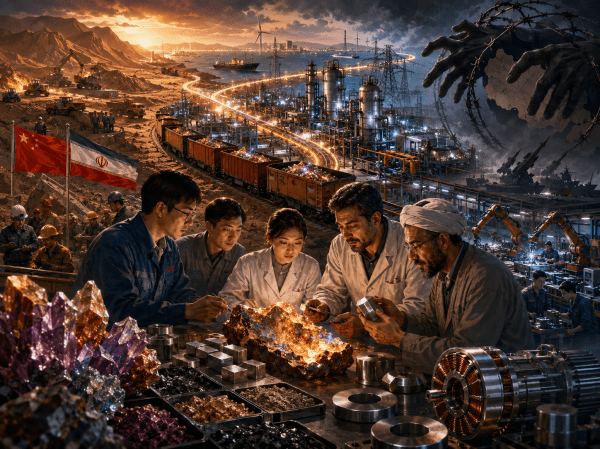
The narrative surrounding a modest scientific workshop between China and Iran is sensationalized into a geopolitical crisis, primarily through the lens of U.S. concerns. It's ironic: while Washington frantically condemns this cooperation, the real battle revolves around who controls the rare-earth supply chain. Both countries face sanctions that push them to create independent scientific and industrial pathways. The focus should pivot from mere diplomatic theatrics to whether this partnership enhances Iran's productive capacity or merely perpetuates dependency. Ultimately, this cooperative effort holds the potential to disrupt traditional power dynamics—unless it devolves into another avenue for exploitation under foreign dominance.
The Status Quo Has to Be Manufactured: America’s Pacific Primacy and the Rising Cost of Keeping It Alive
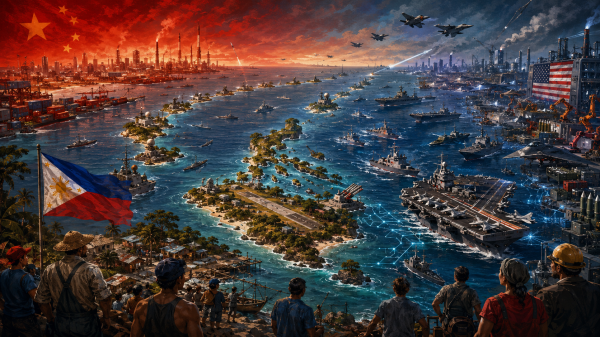
Elbridge Colby's assertion that America is the "apex predator" in military readiness disguises the troubling reality of dwindling U.S. military supremacy against a rising China. The narrative expertly choreographs U.S. responses to China's actions, framing Washington as a stabilizing force while ignoring the material consequences of its expansive military infrastructure and the burdens it places on allies like the Philippines. This contrived status quo sustains American dominance at an ever-increasing cost, presenting imperial ambitions as mere defense. The real struggle lies not in choosing a stronger predator, but in dismantling the systems that perpetuate this militarized hierarchy, exposing the true stakes of U.S. imperialism.
Tomorrow’s Russian Tank: How a Hypothetical War Rearms Europe Today
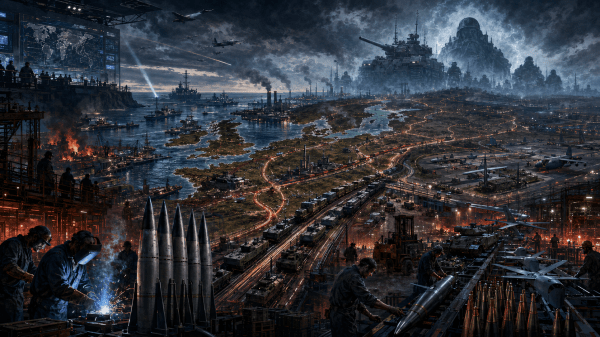
CNN warns that Russia could someday “test” NATO, but the military transformation supposedly justified by that future threat is already underway. Europe is being rearmed, civilian infrastructure reorganized for military mobility, and productive capacity redirected toward an expanding war economy as U.S. weapons stocks strain under commitments spanning Ukraine, Iran, Russia, and China. The deeper story is not a proven Russian timetable for invasion, but an American-centered imperial bloc confronting the rising cost of reproducing its military reach and hardening Europe as a Western Rear. What Russia could do tomorrow becomes the argument for what Europe must militarize today.
The Crime of Making Too Much: China and the Empire’s Monopoly on Abundance
The Economist's recent critique of China's industrial prowess reveals a deeper hypocrisy within Western narratives. While it acknowledges China's efficiency, it vilifies state-driven competition when it disrupts Western hegemony. The real issue is not overproduction but an imbalance of purchasing power, presenting an ugly tableau of warehouses filled with goods while people lack access. As China strives for self-reliance, the West's response is to impose tariffs and sanctions, prioritizing monopoly over equitable distribution. This conflict isn’t a mere economic dispute; it’s a struggle for who controls productive capacity. The question is whether to align production with human need or maintain the status quo of inequality.
The Sea Is Not Sam’s: How Empire Turns Asia’s Waters into a War Map
Deutsche Welle dresses militarization in the soft language of autonomy, access, and rules while burying the machinery of containment beneath diplomatic polish. The omitted facts reveal a region tied to China through trade, food security, diplomacy, and history even as U.S.-aligned military infrastructure tightens around it. The real story is not “middle power cooperation,” but... Continue Reading →
Obedience Without Justice: How ABC News Manufactures Consent for Military Compliance
The Quiet Propaganda Behind America’s “Explainer” Journalism on Illegal Orders By Prince Kapone | Weaponized Information |November 26, 2025 Obedience by Default: How ABC Teaches Soldiers to Trust the Chain of Command The ABC News piece, “Explainer: Can military members refuse orders?” by Chris Boccia, arrives dressed up as neutral civic education. It pretends to... Continue Reading →
Russia’s “Reckoning” or the West’s Delusion? How The Economist Manufactures Collapse to Comfort a Dying Empire
This essay tears the mask off The Economist’s collapse narrative and exposes it as imperial comfort food for a ruling class terrified of losing the world it once controlled. It then digs beneath the rubble of Western claims to recover the independent, Global South–verified facts that reveal the real architecture of the war. With those... Continue Reading →