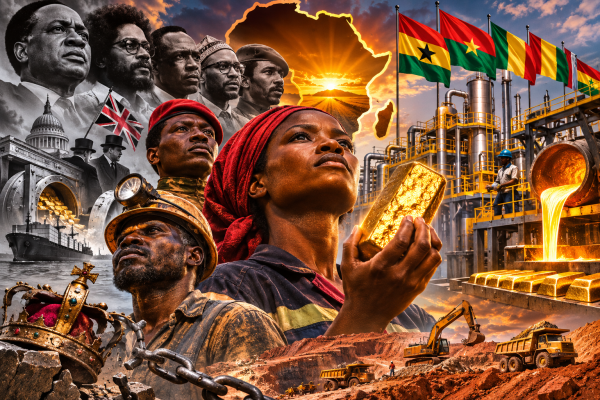
Reuters warns that West Africa's struggle to refine its own gold could produce excessive industrial capacity, but the economic conditions against which it measures African development are themselves products of colonial plunder and neocolonial extraction. From Burkina Faso's refinery and Mali's public mining enterprises to Ghana's reorganization of gold commerce and Guinea's struggle to retain... Continue Reading →
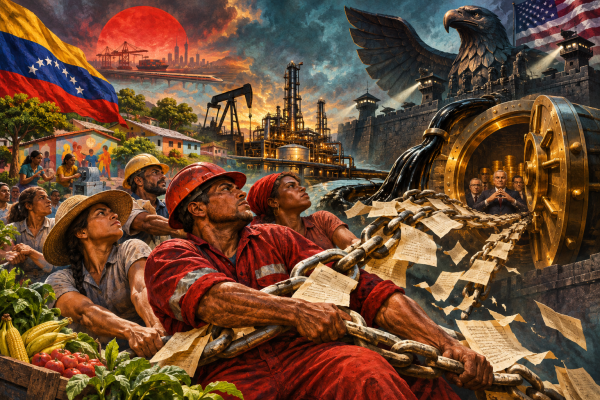
The Empire Wants Tomorrow’s Oil: Mortgaging Venezuela’s Future to Build Fortress America
While Reuters celebrates the renewed confidence of international bondholders, the historical relationship between Venezuela's indebtedness and Washington's economic siege goes largely unexplored. From financial sanctions and distressed-debt speculation to petroleum concessions and geopolitical restrictions on debt restructuring, the imperial state is assembling mechanisms through which the coercion of yesterday can become the financial command of... Continue Reading →
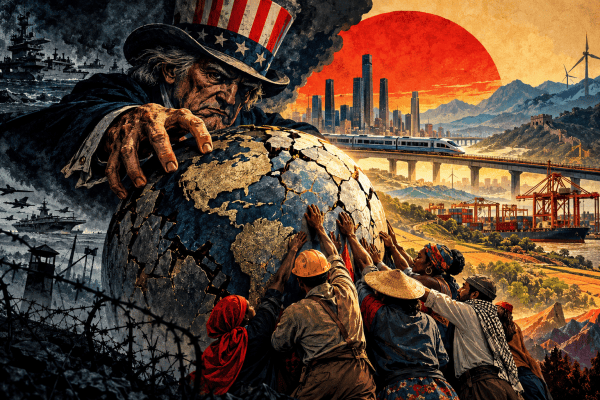
The Empire Lost Its Monopoly: Multipolarity, Class War, and the Fight to Own the Future
The imperialist façade is cracking as formerly colonized nations wield newfound agency, emboldened by China's socialist rise and BRICS collaboration. However, the narrative masks a grim reality: national sovereignty does not guarantee liberation from domestic exploiters. The struggle continues within, where local elites may replace imperial masters but retain the chains of economic subordination. This interplay reveals that power dynamics hinge on who decisively controls production and profits. As multipolarity expands possibilities, the essential question looms—will the working class finally seize genuine control over the fruits of their labor, or remain spectators in their own liberation? The era demands they reclaim agency—no more invitations.
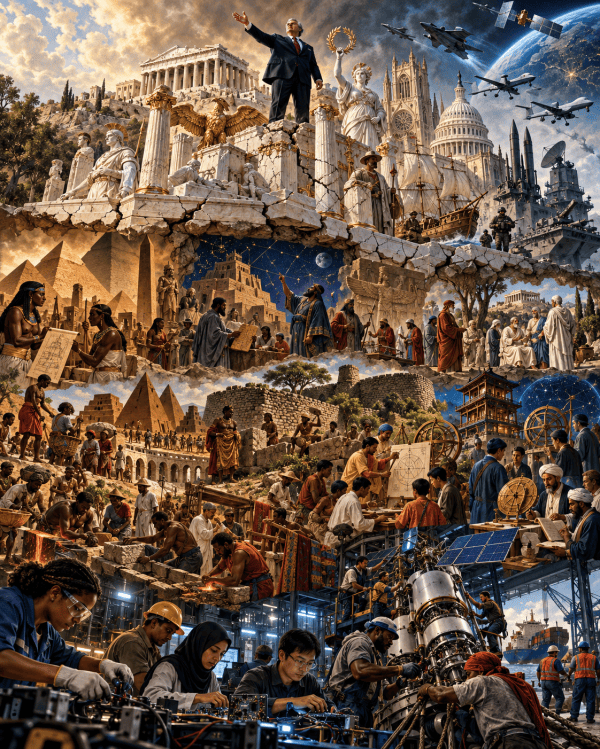
Humanity Built Civilization: Empire Claims the Title Deed
Marco Rubio's celebration of Western civilization conceals a history written through African and Asian scientific achievement, colonial conquest, capitalist exploitation, and revolutionary resistance. From ancient Greece to modern NATO, his manufactured civilizational inheritance transforms imperial domination into historical destiny while erasing the peoples whose labor built the world. Drawing on anti-colonial and Marxist scholarship, this investigation exposes how the political West was constructed through imperial rivalry, socialist revolutions, and struggles for national liberation. Beneath Rubio's mythology lies an American-led imperial bloc seeking renewed command over technology, finance, resources, and military power—and a continuing struggle to reclaim humanity's future.
History Against the Formula: August Nimtz, Cedric Robinson, and the Making of Revolutionary Universality
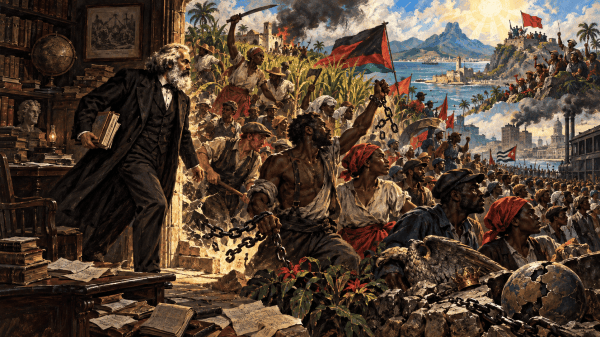
August Nimtz’s "Black Marxism: A Marxist Critique" challenges Cedric Robinson's assertion that Marxism and Black radicalism are distinct, arguing instead that Marx's historical materialism evolved through encounters with colonialism and Black liberation struggles. Nimtz argues that genuine internationalism requires oppressed groups to first forge autonomous political identities before uniting. Using Cuba as a case study, he shows how socialist transformation can materially alter racial dynamics yet acknowledges persistent inequalities. Ultimately, he posits that revolutionary potential arises not just from class position but from active struggle and organization, emphasizing that no class is born universally revolutionary and that political agency must be cultivated through history and struggle.
Walter Rodney’s Guyanese Working People: How Colonial Capital Made the Class It Had to Control
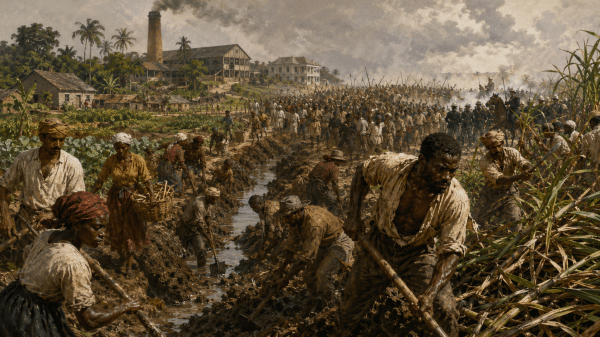
Walter Rodney begins with a colonial society physically reproduced by working people yet organized to deny those same people control over the labor, land, and material conditions that kept it alive. Emancipation shattered slavery’s legal form without resolving capital’s labor problem, forcing the struggle onto new terrain as workers used land, villages, mobility, and subsistence... Continue Reading →
The October Revolution: A Third World Reading by Walter Rodney
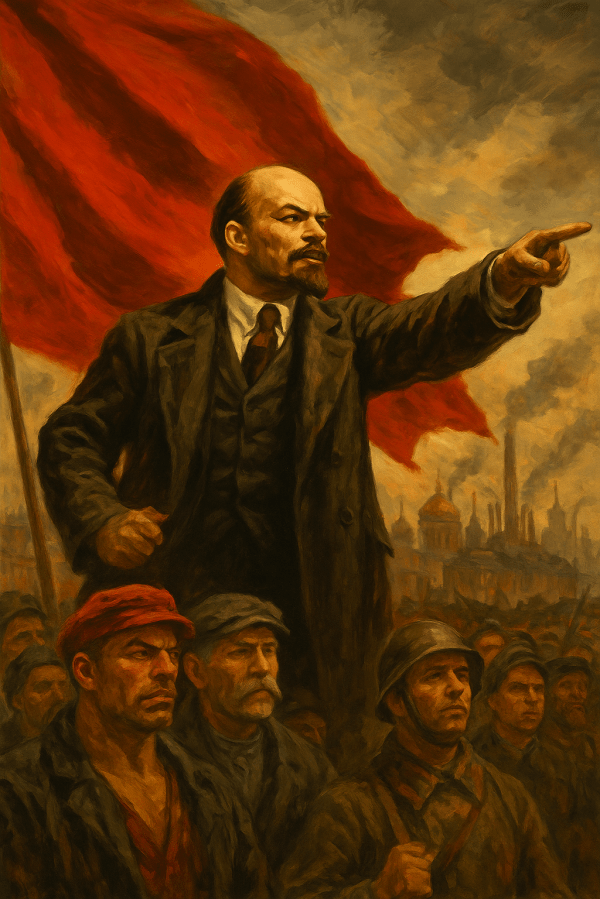
“Revisiting October through Walter Rodney’s Third World lens, this review dismantles Western Marxist fatalism and reclaims the Revolution as the weapon of the oppressed.” By Prince Kapone | Weaponized Information | Weaponized Intellects Book Review: October Revolution Series | October 25, 2025 October Is Not a Memory, It’s a MethodOne hundred and eight years after... Continue Reading →
“Walter Rodney Speaks”: A Revolutionary Autopsy of the Guerilla Intellectual (Part 2 of 2)
Missed Part I? Read the first installment of our review series: “Walter Rodney Speaks”: A Revolutionary Autopsy of the Guerilla Intellectual (Part 1 of 2) Book Review Series | Part II: The Science of Liberation in the Age of TechnofascismBy Prince Kapone | Weaponized Information | June 19, 2025Introduction to Part II: Revolutionary Clarity in... Continue Reading →
“Walter Rodney Speaks”: A Revolutionary Autopsy of the Guerilla Intellectual (Part 1 of 2)
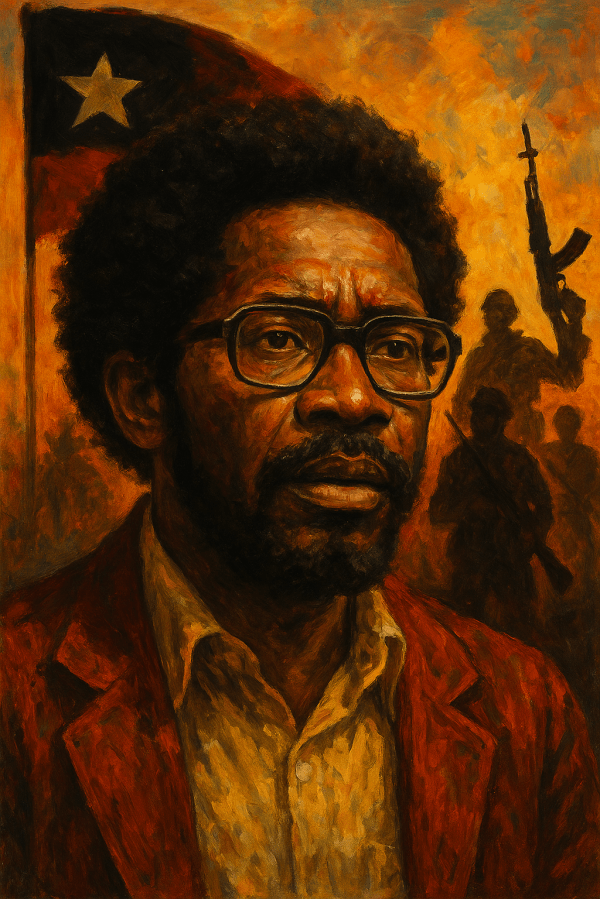
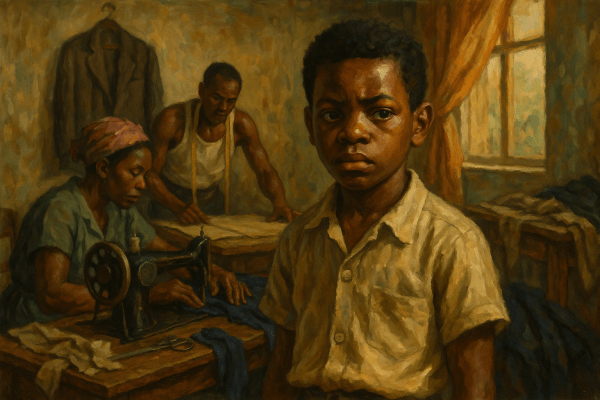
Book Review Series | Part I: The Making of a Guerilla IntellectualBy Prince Kapone | Weaponized Information | June 14, 2025I. Tailor’s Son in a Tailored World: The Fabric of a Colonial UpbringingWalter Rodney didn’t come from Harvard. He came from Bent Street—Guyana. From the home of a self-employed tailor and a seamstress. And in... Continue Reading →