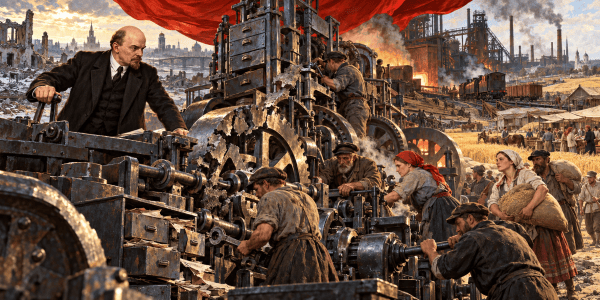
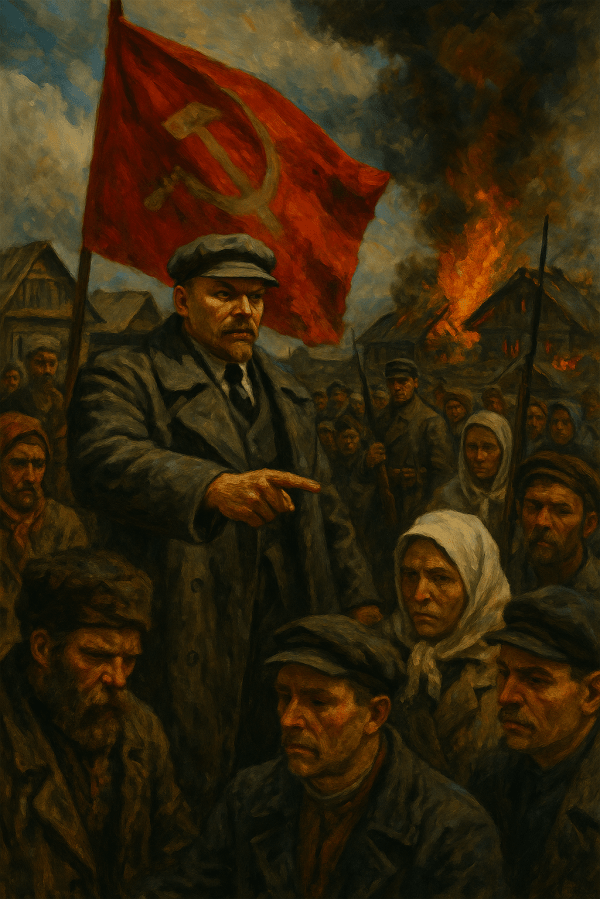
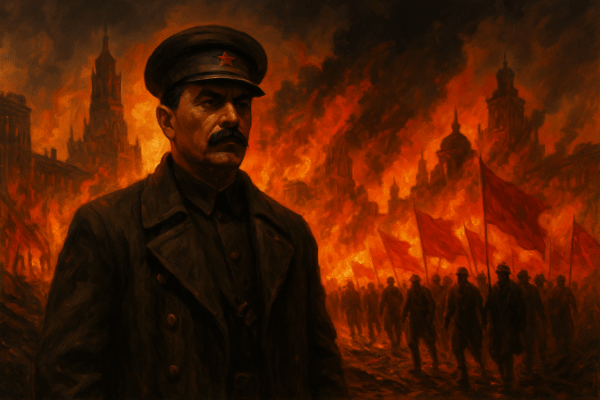
On March 27, 1922, Lenin laid bare the haunting reality: the very Communists who seized power found themselves ensnared by its apparatus. This stark confession at the Eleventh Party Congress revealed a party entangled in bureaucratic paralysis while popular hunger and dissatisfaction grew. Lenin's urgent demand for practical economic leadership served as a clarion call to reconnect with the peasant workforce crucial for reconstruction. He confronted the failure to actualize revolutionary ideals, asserting that maintaining authority required genuine engagement with people’s needs. In essence, he challenged the Bolshevik leadership: Could they transform power into effectiveness before disillusionment turned into revolt? The stakes were sky-high, a failure to adapt would be their undoing.
Big Brother, Meet the Working Class: Who Actually Rules Under Socialism?
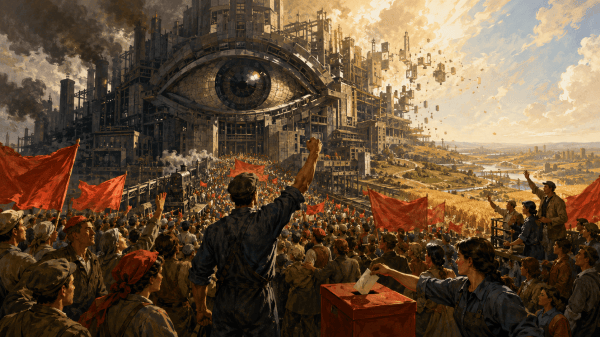
Capitalist democracy, while appearing politically equitable, safeguards bourgeois interests by leaving the means of production in elite hands. The proletarian revolution aims to dismantle this class dominance, yet it often gives rise to a new set of tensions within the ruling apparatus. Historical examples from Lenin's Soviet Union to Mao's China show that the transfer of power must be constantly defended against bureaucratic detachment. Yugoslavia's self-management experiment illustrates the struggle for genuine worker control, revealing that even radical reforms can’t bridge gaps between individual workplace democracy and broader economic coordination. Ultimately, socialism must evolve toward a society where its ruling structures diminish as proletarian power matures.
Peggy Noonan Calls Capitalism Organic: The Wall Street Journal Buries the Violence That Built It
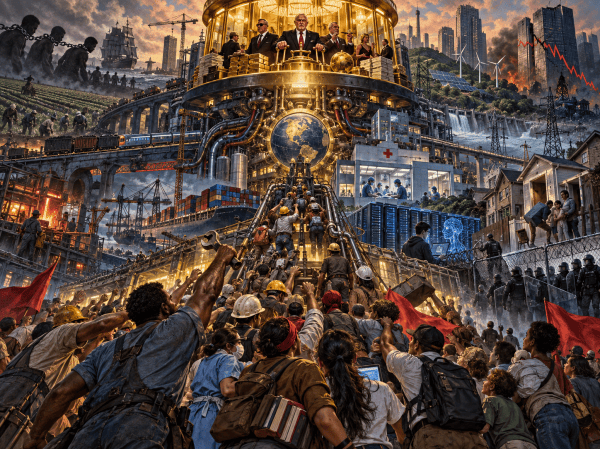
Peggy Noonan's alarm over socialism's surge reveals her flawed analysis: she blames the consciousness of the wounded instead of capitalism, which thrives on historical injustices like dispossession and slavery. As the capitalist structure crumbles under its contradictions—where collective production is shackled by private ownership—Noonan dismisses the urgency of socialism, painting it as a radical force aimed at destruction. Yet, socialism is rising not from whimsical ideology but out of necessity, as younger generations face economic precarity and disillusionment. The question isn’t whether capitalism is natural or just; it’s who truly controls the wealth and future built by the collective.
Socialism Without Revolution: Jacobin’s Market Fantasy Against the Socialist World
Bhaskar Sunkara’s market socialism is a bold yet flawed vision that naively overlooks the burdens of imperialism. He critiques past socialist models while proposing that worker-run firms can flourish within a system still embedded in capitalist exploitation. However, the reality is that these worker enterprises would still rely on the global hierarchy that upholds imperial advantages. A true socialist awakening must reject these inherited structures and demands an anti-imperialist framework instead. Without confronting the realities of colonial legacies and ensuring reparative relations, Sunkara’s proposal risks socializing the benefits of imperialism while maintaining its oppressive mechanisms intact.
From Yan’an to Shenzhen: How China Forged Socialism Through Concrete Contradiction
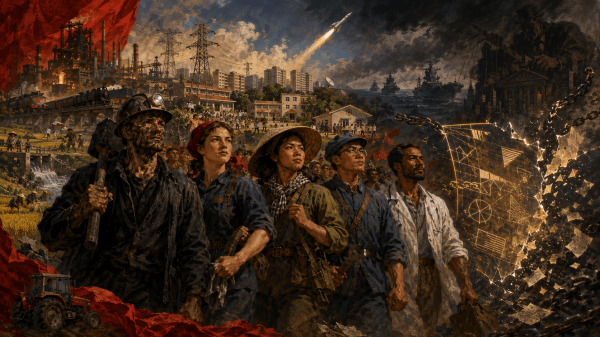
China’s revolutionary saga obliterates the Cold War illusion of socialist states as mere Soviet puppets. Through peasant uprisings and intricate political maneuvers, China redefined socialism amidst imperial oppression, transforming from a colonial victim to a technological titan without abandoning Communist rule. The narrative that constraints socialism to a Soviet mold collapses under China’s rich history of adaptation to its unique tumultuous reality. China’s evolution showcases socialism as a living pursuit aimed at sovereignty and rejuvenation, not dogmatic adherence. The experiences of struggle, experimentation, and resilience reflect a deep understanding: socialism thrives on continuous reimagining, not imitation.
From Alliance to Containment: How Anglo-American Power Engineered the Cold War
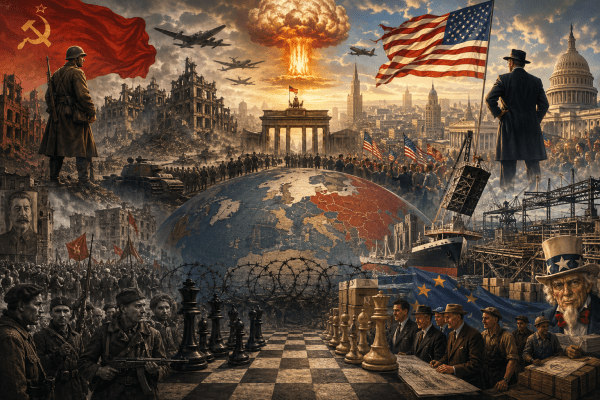
The essay provocatively dismantles the myth that the Cold War was merely a reaction to "Soviet aggression." Instead, it reveals it as America's calculated strategy to reinforce a capitalist world order post-World War II, driven by anxieties over rising leftist movements and anti-colonial uprisings. It highlights how the U.S. initiated a campaign of political warfare and economic reconstruction through the Marshall Plan, effectively shaping Europe and other regions under its imperial influence. To Washington, the real danger was not communism but the threat of genuine independence that challenged capitalist dominance. The Cold War was less about ideological battles and more about inter-imperialist struggles to determine global economic control.
Wall Street vs. the Soviets: Sutton’s Banker Puppet-Show and the Class War He Tries to Hide
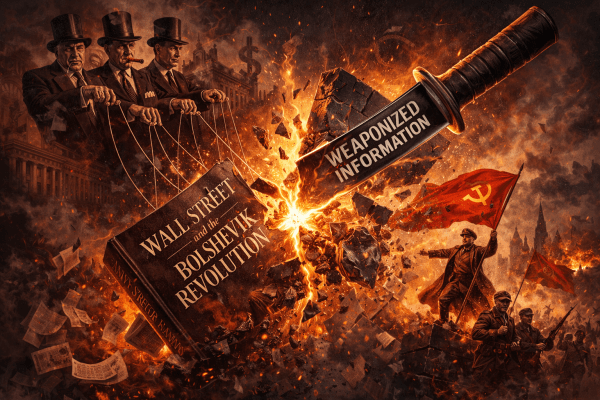
Sutton replaces workers, soldiers, and soviets with bankers and boardrooms, turning revolution into elite theater. Trotsky’s travel becomes “proof” of sponsorship, as bureaucracy and wartime chaos are rebranded as capitalist command. Forged documents linger as atmosphere while the real record—bank nationalization, debt repudiation, and trade monopoly—buries the thesis. The book ends where history begins: capital... Continue Reading →
Gramsci Disarmed: How Empire Turned a Communist Strategist into a Cultural Mascot
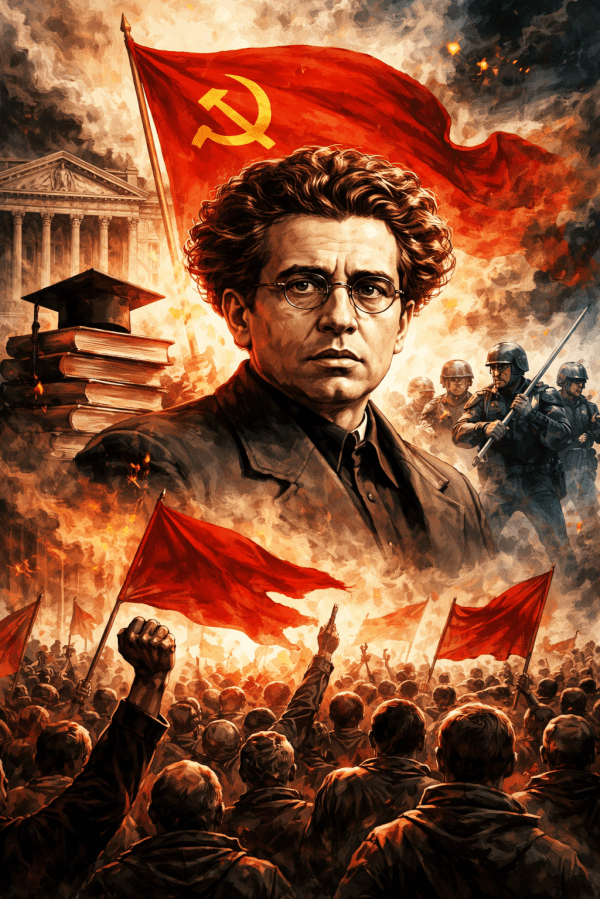
A polemical reconstruction of Antonio Gramsci as a Leninist revolutionary whose theory of hegemony was forged to solve the problem of power under advanced capitalism—and how imperial academia captured, fragmented, and neutralized that theory to manage dissent rather than overthrow domination.By Prince Kapone | Weaponized Information | December 22, 2025Gramsci in the Imperial Seminar RoomIn... Continue Reading →
Stalinism in a Siberian Province: Class War, Collectivization, and the Birth of a New Rural Order
A Weaponized Intellects Book Review of James Hughes’ Stalinism in a Russian Province: A Study of Collectivization and Dekulakization in Siberia By Prince Kapone | Weaponized Information | November 23, 2025 Where the Revolution Met Its Hardest Soil Siberia is where the myths melt, comrade. It's where the Western left’s soft, sentimental picture of socialism... Continue Reading →
Walking Through Fire: Stalin, Survival, and the Class War Inside the Soviet Revolution
A Weaponized Intellects review of The Road to Terror: Stalin and the Self-Destruction of the Bolsheviks, 1932–1939by J. Arch Getty and Oleg V. Naumov — a forensic excavation of how a besieged socialist project fought its enemies abroad, its contradictions within, and the limits of human endurance.By Prince Kapone | Weaponized Intellects — October Revolution... Continue Reading →