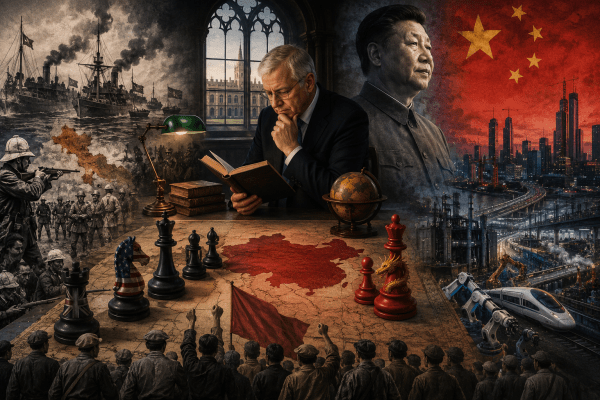
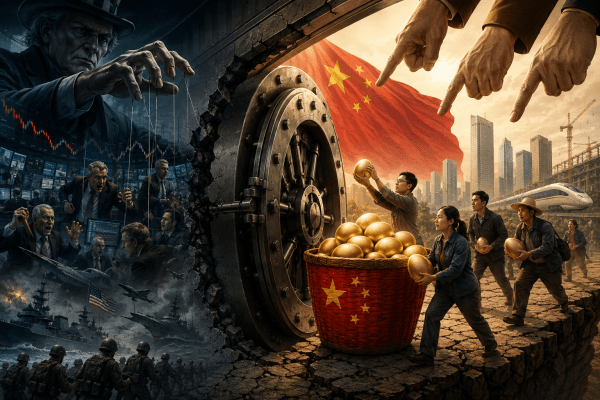
The New York Times portrays China's financial regulations as a morality tale of oppressed investors yearning for capital freedom, framing Beijing's restrictions on overseas investments as authoritarian repression. However, this narrative conveniently ignores China's struggle against capital flight amidst geopolitical tensions with the U.S. The real story is about defending national wealth from draining into imperial circuits while promoting domestic stability and development. This distortion of capital mobility as individual freedom obscures the broader implications of wealth dispersing into an adversarial financial system. The moral panic surrounding investor frustrations reveals a deeper conflict: the sovereignty of a nation versus the whims of financial capital.
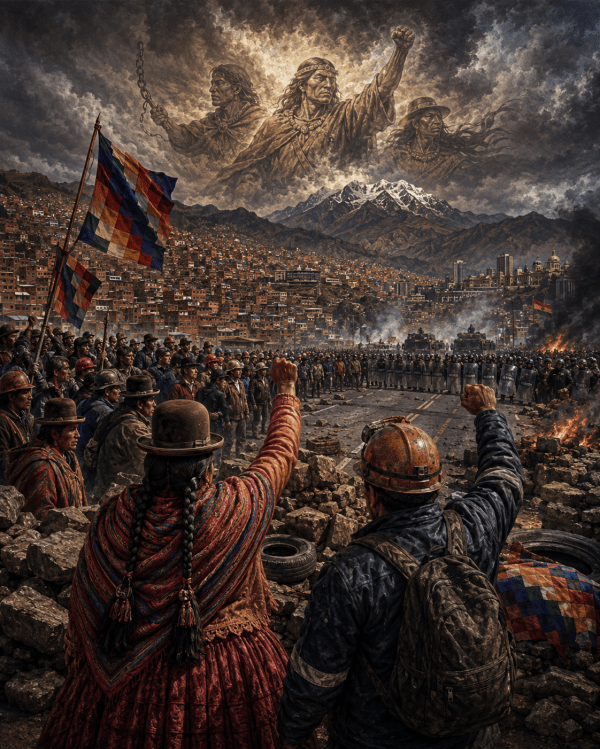
The Roads Remember Túpac Amaru: Jacobin Calls Popular Power a Vacuum
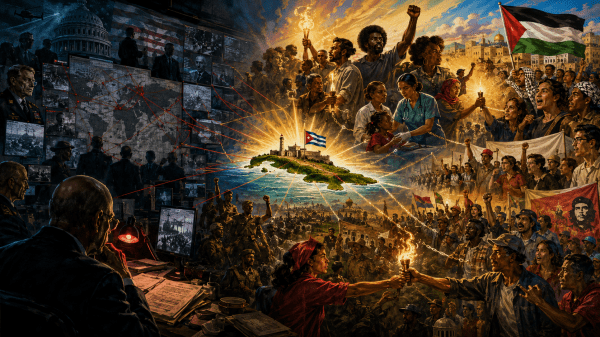
Bolivia is experiencing a seismic shift, as the indigenous and working-class masses rise against a government they see as complicit with imperial interests and corporate power. Jacobin's portrayal of this struggle as chaotic “political vacuum” fails to grasp the reality: the people are not absent from politics; they are reclaiming agency. While the ruling class laments blocked roads and instability, they ignore the genuine political force being forged by those occupying them—workers, campesinos, and indigenous communities asserting power where previously silenced. The barricades are not just obstacles; they symbolize resistance against commodification and repression, signaling a reawakening of history in the fight for sovereignty and justice.
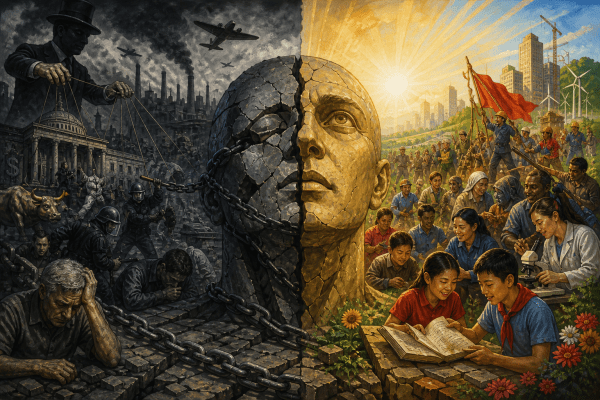
Failure According to Whom?: Rewriting the Metrics of Socialism
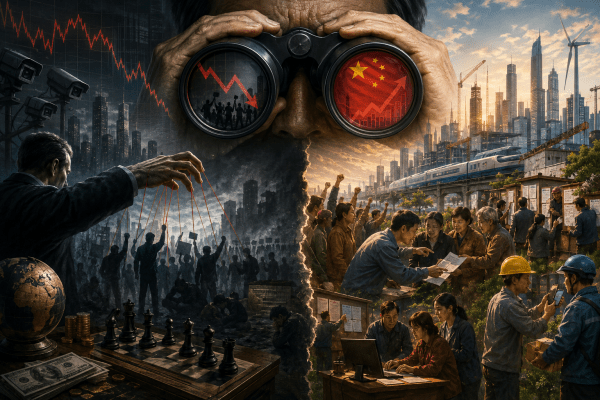
The pervasive claim that socialism has "failed" is an ideological construct rather than a factual statement. A closer analysis reveals that socialist systems, from the Soviet Union to China, achieved measurable gains in education, health, and economic development under dire conditions. This narrative of failure is not supported by historical evidence but rather is a product of a century-long ideological war against socialism. Capitalism, meanwhile, perpetuates crises, inequality, and social fragmentation, failing to meet human needs. The real question is not why socialism fails, but how it has transformed societies when confronted with immense challenges, challenging the ruling narrative that defines success so narrowly.
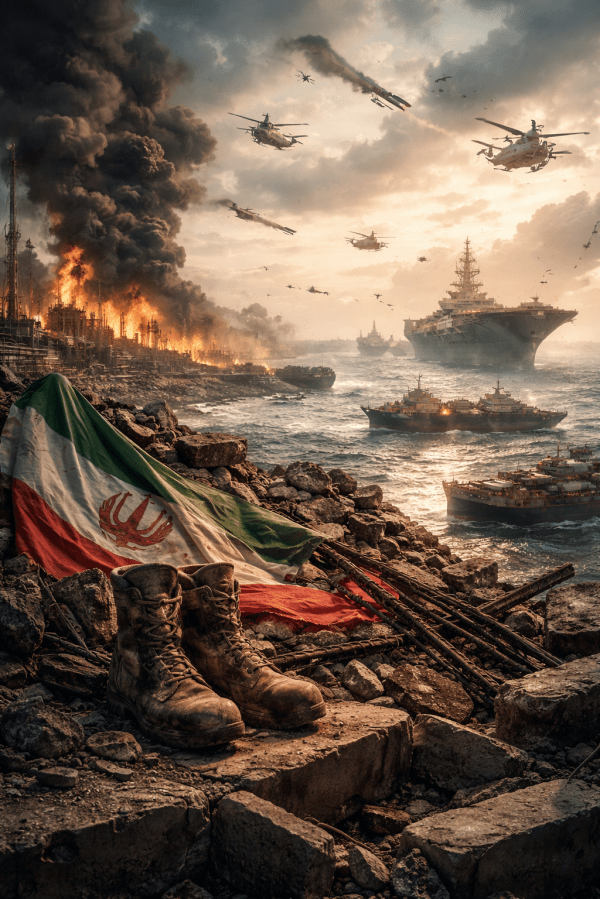
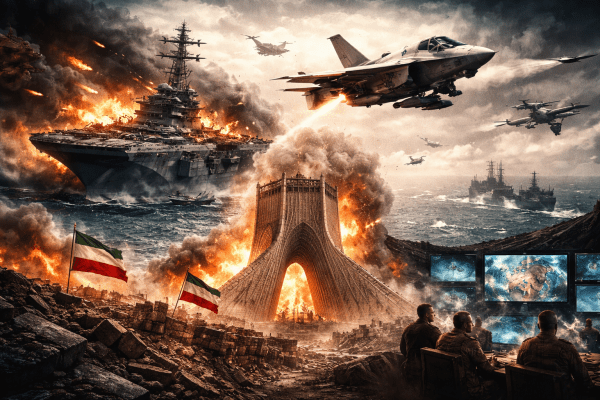
From Ceasefire Spectacle to Open Threat: How U.S. Power Reveals Its Limits in Iran and the Emerging Multipolar Order
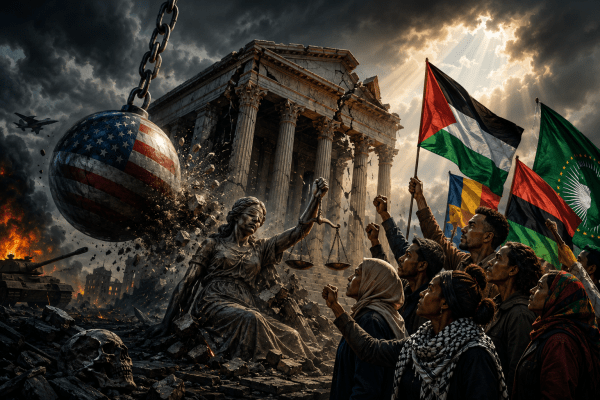
The media narrative frames the war through the language of objectives and outcomes, masking how imperial violence is normalized and depoliticized. A reconstruction of the facts reveals a deeper reality: sanctions, covert operations, chokepoint control, and historical intervention form the material architecture of this conflict. What emerges is not policy failure but a system in... Continue Reading →
Iran Under Fire, Empire Exposed: The U.S., Israel, and the New York Times’ War Narrative
The New York Times frames imperial vulnerability as logistical inconvenience, masking the political meaning of exposure. The reconstructed facts reveal a war fought across an integrated system of bases, airspace, and energy choke points from Hormuz to Kharg. The deeper contradiction shows an empire that can still project force but can no longer prevent that... Continue Reading →
The Big Payback: Settling Accounts with the Paid Piper of Western Marxism (Part 1)
A ruthless chapter-by-chapter assault on Herbert Marcuse’s Soviet Marxism: A Critical Analysis, exposing it not as some noble “immanent critique” of actually existing socialism, but as a polished work of Cold War Western Marxist sabotage—an effort to sever Marx from Lenin, dialectics from revolution, and theory from the hard, blood-soaked labor of building socialism under... Continue Reading →
When the Signal Becomes the Weapon: Empire, Media, and the New Discipline of Narrative
As the United States loses its monopoly over global storytelling, regulatory power, media concentration, and wartime pressure converge to manage a fractured information order—and reveal how narrative control adapts under imperial strain. By Prince Kapone | Weaponized Information | March 17, 2026 When Power Clears Its Throat and Calls It a Debate In Dominick Mastrangelo’s... Continue Reading →
From “Much Abuse” to World Domination: How the Los Angeles Times Manages the Memory of Conquest
This Weaponized Propaganda Excavation shows how the Los Angeles Times reduces colonial conquest to the language of diplomatic regret and historical moderation. It reconstructs the underlying reality of that conquest as a system of mass death, forced labor, and global resource extraction. It reframes this process as the foundation of the modern capitalist world economy... Continue Reading →
The Birth of Weaponized Information: How the Empire Lost Its Monopoly Over Truth
For a generation the American empire dominated not only the battlefield but the global narrative. Corporate media framed wars, justified sanctions, and explained imperial power to the world. But leaks, whistleblowers, digital networks, and rival media systems shattered that monopoly over reality. This essay traces the historical collapse of the imperial information order and the... Continue Reading →
When Empire Calls Its Own Gamble a Miscalculation
A Weaponized Propaganda Excavation of how the New York Times launders imperial war through the language of strategic error.By Prince Kapone | Weaponized Information | March 12, 2026The Tears of the ArsonistThere is a familiar ritual in the house organs of empire. First the bombs fall, then the panic sets in, and then some respectable... Continue Reading →