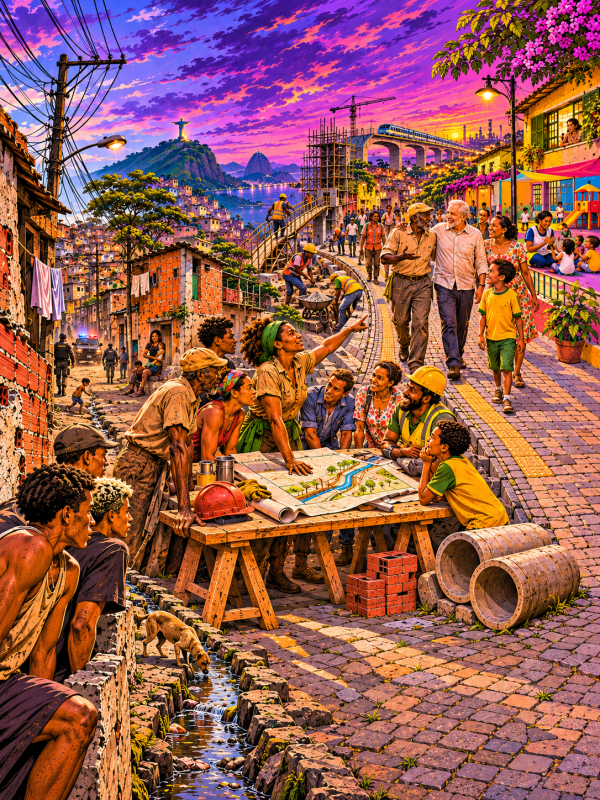
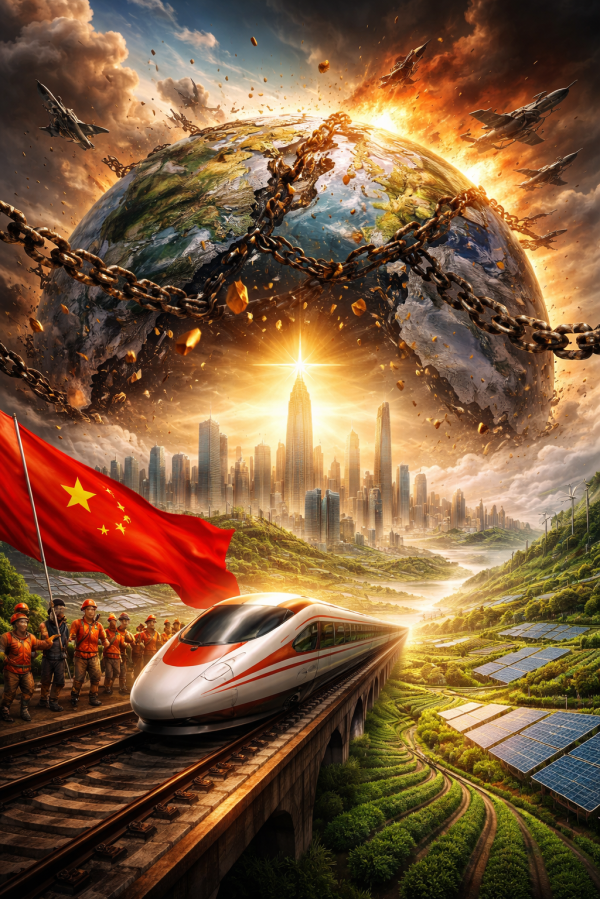
Lula’s reelection kept open a fight over who gets to set the terms in South America. Washington wants a hemisphere it can use as a secure base for U.S. power. Brazil has the factories, public banks and political reach to help its neighbors build an independent pole, and China’s industrial rise gives them more room... Continue Reading →
The Empire Doesn’t Need You, Stupid: Chris Hedges and the Limits of Knowing Better
Chris Hedges's "Empire of Illusion" tears apart a society that transforms pain into spectacle and subjugates human connection for profit. But rather than merely lamenting a lost America of democratic ideals, Hedges obscures the necessary power to instigate change. This review ignites crucial questions about the ability of the oppressed—workers, peasants, and colonized peoples—to reclaim agency over their lives. The corporate machinery thrives on exploiting unmet needs while convincing subjects to embrace responsibility for their plight. In this world, true solidarity can’t be given away to capital's whims; it must be reclaimed and repurposed to dismantle oppressive structures.
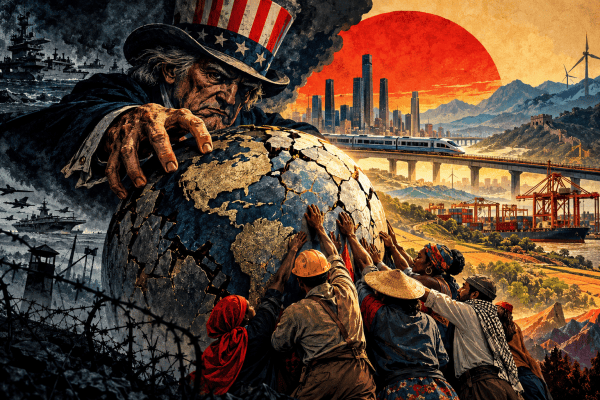
The Empire Lost Its Monopoly: Multipolarity, Class War, and the Fight to Own the Future
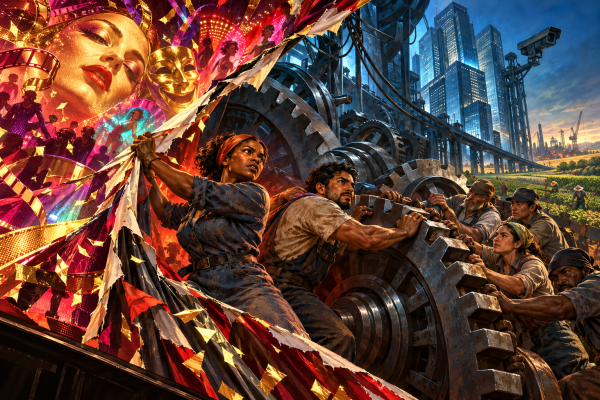
The imperialist façade is cracking as formerly colonized nations wield newfound agency, emboldened by China's socialist rise and BRICS collaboration. However, the narrative masks a grim reality: national sovereignty does not guarantee liberation from domestic exploiters. The struggle continues within, where local elites may replace imperial masters but retain the chains of economic subordination. This interplay reveals that power dynamics hinge on who decisively controls production and profits. As multipolarity expands possibilities, the essential question looms—will the working class finally seize genuine control over the fruits of their labor, or remain spectators in their own liberation? The era demands they reclaim agency—no more invitations.
Putin “Woos,” the West Robs: Reuters Writes Africa Out of Its Own Liberation
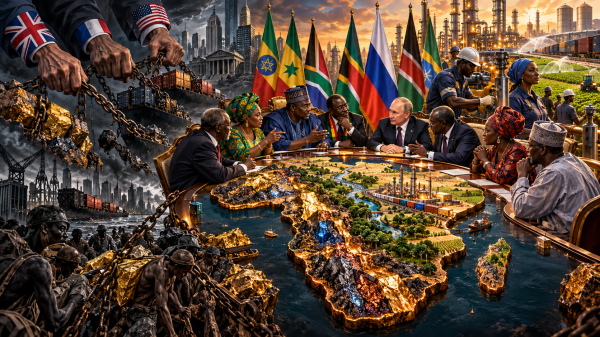
Putin's charm offensive in Moscow, showcased by forty-eight African delegations, hardly veils the reality that African leaders exist merely as props in a grand stage play. While Russia pitches economic promises, it's the West's narrative that dominates, portraying Africa as a passive recipient. Yet, beneath the political theater, African ambitions for self-sufficiency simmer, illustrated by the African Union's strong call for industrialization and local production. This counter-narrative reveals a continent striving to wrest control from neocolonial shackles, challenging a status quo predicated on dependency. The struggle isn’t merely for trade; it's a fierce reclamation of agency long denied. Africa’s narrative is reshaping, and the stakes are higher than ever.
The Revolution Held Power. Who Held the Machine?: Lenin’s Battle to Make the State Serve Its Makers
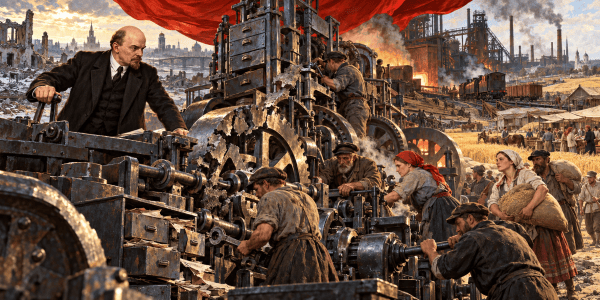
On March 27, 1922, Lenin laid bare the haunting reality: the very Communists who seized power found themselves ensnared by its apparatus. This stark confession at the Eleventh Party Congress revealed a party entangled in bureaucratic paralysis while popular hunger and dissatisfaction grew. Lenin's urgent demand for practical economic leadership served as a clarion call to reconnect with the peasant workforce crucial for reconstruction. He confronted the failure to actualize revolutionary ideals, asserting that maintaining authority required genuine engagement with people’s needs. In essence, he challenged the Bolshevik leadership: Could they transform power into effectiveness before disillusionment turned into revolt? The stakes were sky-high, a failure to adapt would be their undoing.
The Runway Is Lao: Washington Still Thinks It Owns the Sky
Eight small military jets at a joint Chinese-Lao training facility become a looming threat in The New York Times, while Laos’ sovereignty and revolutionary history disappear behind Washington’s geopolitical anxieties. Beneath the runway lies the legacy of American covert warfare, colonial devastation, and a socialist-rooted state struggling to build its productive and defensive capabilities. China’s cooperation offers genuine opportunities for national development while exposing contradictions involving debt, labor, land, and economic dependence. Weaponized Information excavates the imperial narrative to reveal the deeper struggle over material sovereignty, working-class interests, and the right of oppressed nations to determine their own future.
From Yan’an to Shenzhen: How China Forged Socialism Through Concrete Contradiction
China’s revolutionary saga obliterates the Cold War illusion of socialist states as mere Soviet puppets. Through peasant uprisings and intricate political maneuvers, China redefined socialism amidst imperial oppression, transforming from a colonial victim to a technological titan without abandoning Communist rule. The narrative that constraints socialism to a Soviet mold collapses under China’s rich history of adaptation to its unique tumultuous reality. China’s evolution showcases socialism as a living pursuit aimed at sovereignty and rejuvenation, not dogmatic adherence. The experiences of struggle, experimentation, and resilience reflect a deep understanding: socialism thrives on continuous reimagining, not imitation.
Manufacturing a “Xi Doctrine”: How Imperial Analysis Distorts China’s Development Strategy
A think tank narrative repackages China’s Five-Year Plan as a leader-driven doctrine, masking its institutional and historical character. The actual policy reveals a multi-dimensional strategy shaped by domestic priorities and external pressure. This transition reflects a deeper socialist development process unfolding through contradiction, not confusion. Across multiple fronts, emerging forces are beginning to resist the... Continue Reading →