Bolivia is ablaze, but The New York Times misses the mark, framing protests as mere chaos ignited by a presidential betrayal. The truth is far more profound: a collision of historical projects poised for supremacy. Behind the unrest lies a struggle against neocolonial forces, with President Paz's agrarian reforms threatening Indigenous and campesino sovereignty. The culprits are not just disenfranchised voters but a systematic push toward resource extraction and imperialism. The uprising is a collective cry not just for policy change but for self-determination, land rights, and a unified front against re-colonization. The narrative must shift from superficial crisis to deep-rooted rebellion.
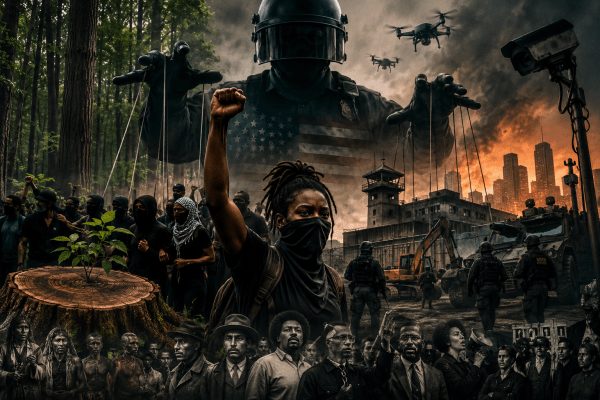
Technofascism: The Digital Leviathan and the War on Humanity
The United States isn’t gracefully unraveling; it’s morphing into a technofascist apparatus of control that leverages financial dominance, digital surveillance, and labor discipline. While the elite tout "innovation," they're repackaging colonial exploitation under the guise of progress, tightening their hold domestically and globally. Liberal analyses miss the subtleties of this shift, mistaking procedural forms for genuine democracy, while real power redistributes into unaccountable systems. As public trust wanes and crises mount, this infrastructure of power rapidly transforms governance into an invisible web of control, inching toward collective consciousness and organized resistance that could eventually dismantle the machinery of oppression.
Africa Against the World Market: Hosea Jaffe, Imperialism, and the Long Struggle for Liberation
A Weaponized Intellects review of A History of Africa that excavates Hosea Jaffe’s uncompromising analysis of colonialism, class formation, and imperial domination—situating his intervention within the liberation struggles of his time and assessing its enduring relevance for understanding Africa, the world system, and the unfinished project of revolutionary transformation today. By Prince Kapone | Weaponized... Continue Reading →
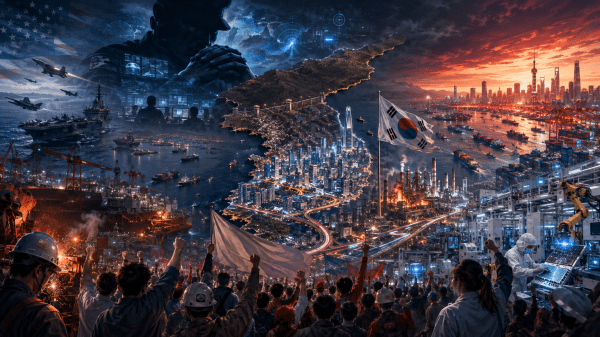
The Origins of the Korean War: From Colonial Rupture to Contained Revolution
This review reconstructs the Korean War not as a sudden conflict in 1950, but as the culmination of colonial transformation, revolutionary struggle, and imperial intervention between 1945 and 1947. Drawing on Bruce Cumings, it reveals how liberation opened a radical possibility that was contained, divided, and ultimately reshaped into two opposing systems—making war not accidental,... Continue Reading →
Song of Ariran: Born in Failure, Forged through War
This Weaponized Intellects Book Review treats Kim San’s life not as biography but as a weapon—tracing how colonial violence, exile, repression, and ideological struggle forged a revolutionary consciousness that rejects liberal illusion, exposes the limits of nationalism and adventurism, and affirms that only disciplined, mass-based anti-imperialist struggle can transform defeat into the foundation for victory.... Continue Reading →
You Can’t Bomb Your Way Out of Empire: The Colonial Contradiction, White Radicalism, and the Failure of the Weather Underground
A liberal memoir transforms a history of anti-imperialist rebellion into a story of family inheritance, masking the structural realities of empire and repression. Beneath that narrative lies a system defined by imperial war abroad and counterinsurgency at home, where dissent is managed, surveilled, and neutralized. The Weather Underground emerged from this contradiction, but its turn... Continue Reading →
John Horse and the Black Seminole War for Freedom
Long before emancipation was declared from Washington, enslaved Africans and Indigenous Seminoles built an armed republic in the Florida swamps. Their alliance waged the longest and most successful slave insurgency in U.S. history. The United States responded with invasion, removal, and counterrevolution. John Horse’s life exposes empire not as destiny, but as a structure contested... Continue Reading →
Marcus Garvey and the First Global Black Mass Movement
He turned a scattered people into a political community with a shared destiny. He transformed Black pride from sentiment into organized power. His movement terrified empire because it operated beyond white control. His legacy still shapes Black radical and internationalist struggle today. Prince Kapone | Weaponized Information | Black History Matters Series | February 2,... Continue Reading →
Bamako 2025: When the Sahel Put Sovereignty on Paper
The Second Session of the AES/CESS as a Turning Point in State Power, Regional Integration, and the Unfinished Question of Rupture By Prince Kapone | Weaponized Information | January 2, 2026 What Was Actually Decided in Bamako: Reading the Communiqué as a Political Act The second session of the College of Heads of State of... Continue Reading →
White Malice and the War on African Liberation
Susan Williams’ archival excavation of CIA counterrevolution reveals how U.S. neocolonialism strangled Pan-African socialism—and why the same imperial logic governs the world today By Prince Kapone | Weaponized Information | Weaponized Intellects Book Review | December 13, 2025 When Africa Tried to Unite and America Took It Personal Susan Williams opens White Malice in the... Continue Reading →