The Revolution Must Keep Making Revolutionaries: Fidel Castro and the Fight Against Becoming a Monument
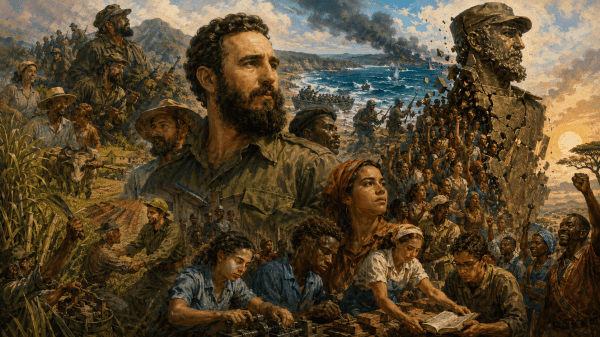
On the centenary of Fidel Castro's birth, his autobiography, My Life, acts as a provocative lens into the complexities of revolution. It dismantles the myth of the born revolutionary, showcasing instead how context, struggle, and learning forge warriors for change. Despite Cuba's successes, deep-rooted issues like racism and inequality persist, with Fidel warning that Cuba's most significant threat may not come from external forces but from within—its own inability to correct mistakes. As the Revolution ages, the pressing query remains: can it continually foster revolutionary consciousness amidst evolving contradictions or will it succumb to the complacency that often follows victory?

Surrender as Relief: Rubio’s War on Cuba’s Means of Survival

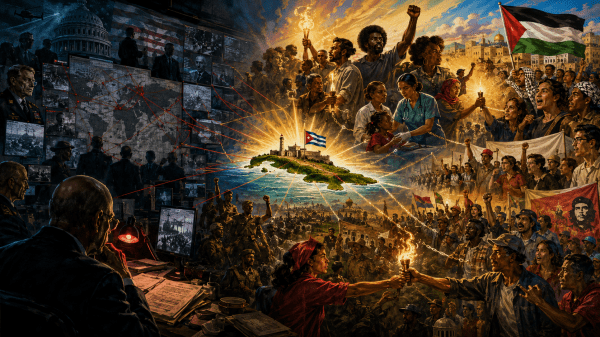
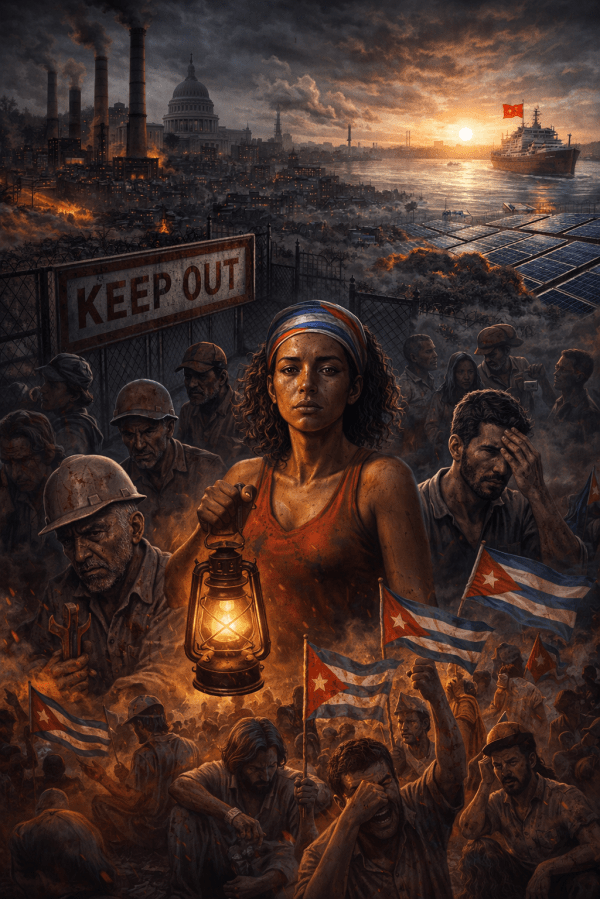
Marco Rubio’s new sanctions do not merely target Cuban military procurement. They strike the institutions, banking channels, suppliers, repair systems, and foreign relationships through which Cuba survives a blockade designed to manufacture deprivation and political surrender. Washington restricts fuel, finance, technology, and trade, then presents the resulting hardship as proof of socialist failure. As Cuba turns toward China, Russia, and other partners to preserve its sovereignty, those lifelines are recast as threats. Behind the language of security lies the old imperial objective: isolate the island, weaken its defenses, deepen popular suffering, and force the Cuban Revolution to kneel.

Wrong Map, Right Empire: Washington’s Blueprint for African Dependency

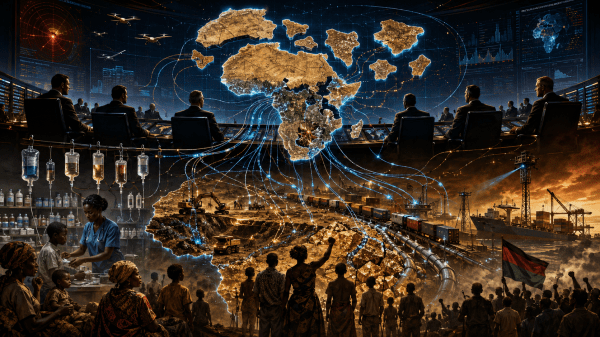
A State Department map mislabeled every country in Africa during a presentation on new U.S. health agreements. The blunder went viral as a joke about AI incompetence, but the deeper scandal was buried beneath the laughter. Washington may not know where African nations are on a map, yet it knows exactly how to reach their clinics, databases, laboratories, mineral corridors and security systems. Behind the humanitarian language lies a harder imperial architecture built on shrinking aid, conditional funding, data access, military cooperation and investment pressure. The map was wrong. The hierarchy was not.

The Empire Calls Resistance Subversion: Cuba and Washington’s War on Revolutionary Consciousness

The State Department's report conflates documented espionage with a sweeping indictment of social movements, branding students, revolutionaries, and dissenters as part of a conspiracy orchestrated from Cuba. This narrative denies local struggles against oppression, instead framing resistance as a foreign-directed plot, thus erasing historical context and the material origins of dissent. The document's loose connection between Cuba's influence and contemporary activism serves as a McCarthyite tool against American dissent. By equating genuine political engagement with espionage, it aims to squash revolutionary consciousness and reinforce the status quo, revealing the empire's fear that the oppressed might unite and resist independently.

The Foreign Enemy Fraud: From Russiagate’s Thought Police to Chinagate’s Electoral Cage

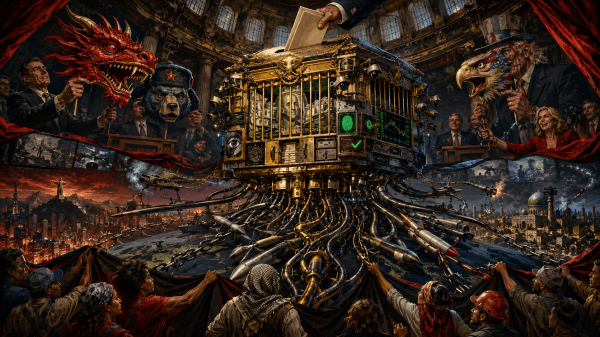
David Corn's resurrection of Russiagate in response to Trump's accusations of Chinagate exposes the absurdity of electoral politics in a billionaire-dominated America. By framing the discourse as a conflict between foreign adversaries—Russia or China—Corn obscures the true culprits: a corrupt ruling class manipulating the political system to protect its interests. Both narratives serve to distract the populace from the reality of a plutocracy masquerading as democracy. The ongoing chaos is but a struggle within the elite, each side reinforcing the structures of oppression while preventing real power from reaching the working class. True resistance demands unity against this imperial façade.

The Palestine Exception: Why Washington Is Trying to Break the ICC

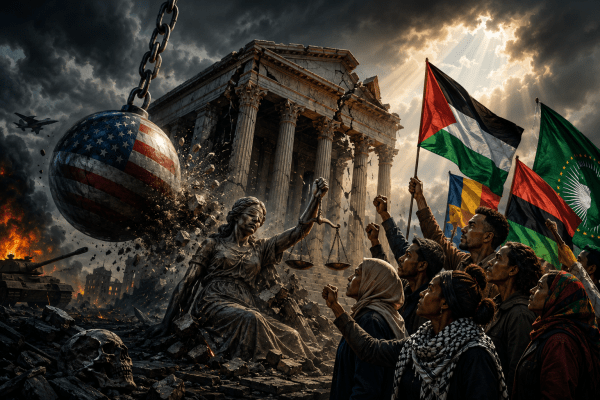
The Guardian's coverage of Marco Rubio's claim that the International Criminal Court (ICC) threatens U.S. sovereignty highlights the deeper issue of imperial exemption rather than genuine sovereignty. The U.S. has long opposed ICC jurisdiction that could implicate American or allied personnel, reacting strongly against Palestinian efforts to document crimes under occupation. The article critiques the liberal institutionalism of the response, noting a lack of representation for affected parties. It underscores that U.S. sanctions targeting Palestinian organizations and ICC officials are a means to maintain impunity. Oppressed nations seek accountability, using available legal systems to challenge the dominance of imperial powers and protect their sovereignty against external coercion.

The Viceroy’s Ledger: How Washington Seized Venezuela’s Present and Mortgaged Its Future

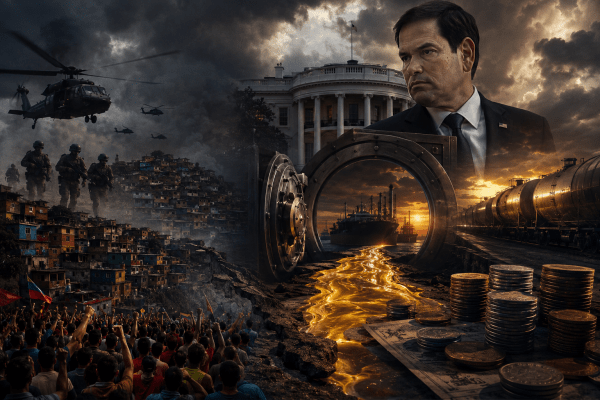
The New York Times paints Marco Rubio as Venezuela's imperial viceroy, wielding control over its government through military force, financial manipulation, and a façade of diplomacy. This orchestrated colonial domination, disguised as governance, reveals a grotesque power dynamic where a nation’s sovereignty is traded for political tapestries spun by Washington. While Rubio's grip tightens, the real resistance lies among Venezuelans and anti-imperialist allies in the U.S. They must dismantle U.S.-imposed sanctions and return Venezuela’s wealth to its people. The struggle against colonial rule continues, as the masses can't be merely passive subjects in the rewriting of their national story.

White Guilt or White Pride? The False Choice That Preserves Empire

“White guilt” shrinks a global system of power into a private mood. Liberal confession mourns history while preserving the machinery of dominance. Reactionary pride weaponizes heritage to harden bloc discipline under multipolar pressure. Beyond shame and nostalgia lies defection from empire and alignment with global liberation.By Prince Kapone | Weaponized Information | February 20, 2026History... Continue Reading →

Website Powered by WordPress.com.

Up ↑