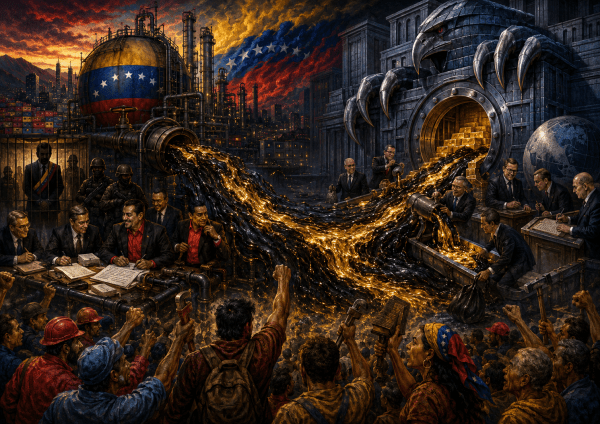
The betrayal of Pedro Binaggia, a Venezuelan informant for U.S. authorities, is just a microcosm of a much larger imperial drama. While Binaggia recorded evidence of a $1.2 billion oil fraud, he found the American government he served turned its back on him after extracting what it needed. This tale is framed as his personal tragedy but obscures the broader context of imperial overreach. The U.S. not only investigates and prosecutes alleged crimes but assumes control over Venezuela’s oil revenue, reducing a sovereign state to a pawn in a power game. The theft of national wealth is cleaned up by a facade of legality, while corrupted officials and foreign interests conspire in the shadows. It's a grim reminder: in this twisted narrative, the real crime lies in the extraction, not just the theft.
The Market Was Born with a Gun: Colonial Plunder, Neoliberal Rule, and the Worker-Peasant Road Beyond Capital
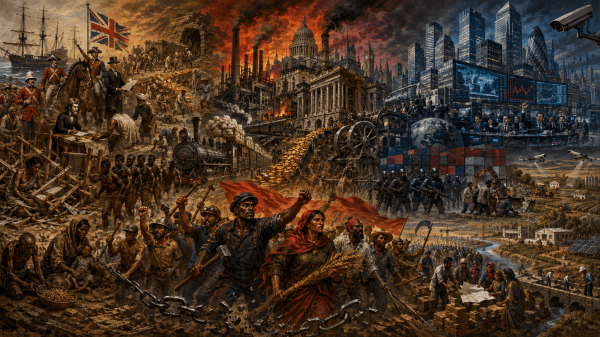
Utsa and Prabhat Patnaik’s groundbreaking analysis dismantles the myth that capitalism flourished independently within Europe, revealing a system intricately linked to colonial exploitation. They illustrate how colonialism not only financed European industrial growth but also perpetuated poverty and dependency in colonized nations. The authors articulate that capitalism's survival hinged on subjugating external economies. With the unraveling of colonial structures leading to depression and famine, they propose a radical rethinking of revolutionary potential through a worker-peasant alliance, emphasizing organized power as essential to dismantling capital's dominance. Ultimately, their work challenges the notion of capitalism's self-sufficiency, exposing its reliance on imperial mechanisms for survival.
Democracy With a Visa Stamp: Washington’s Election War on Brazil
Reuters exposed an alleged Trump administration attempt to enter Brazil and cast doubt on its 2026 election, but treated the affair as partisan misconduct rather than part of a wider imperial campaign. Tariffs structured around U.S. economic needs, sanctions against Brazilian judicial officials, terrorism designations and long-standing security ties reveal a coordinated effort to discipline Brazilian sovereignty. The confrontation also belongs to Washington’s imperialist recalibration: consolidating the American Pole as Brazil deepens economic and technological relations with China. The real struggle is over who governs Brazil—its people, or an empire determined to supervise its courts, elections and developmental future.
The New York Times’ China Guy: How Kevin Rudd Manufactures an Imperial Xi Jinping
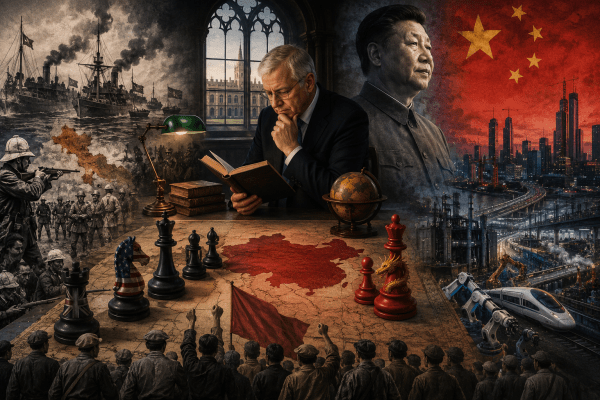
The New York Times promises to explain what Xi Jinping wants, but its interview with former Australian Prime Minister Kevin Rudd performs a far more revealing task: it manufactures imperial expertise while burying the history that produced modern China. Through credential laundering, great-man theory, the caricature of Marxism, and the erasure of colonialism, China is reduced to the psychology of one leader instead of understood as the product of revolution, socialist construction and a century-long struggle against imperial domination. This Weaponized Propaganda Excavation dismantles the interview piece by piece, exposing how liberal media transforms ideology into common sense while presenting it as objective analysis.
The Road, the Rifle and the Rice Field: Ibrahim Traoré’s War Against the Machinery of Dependence
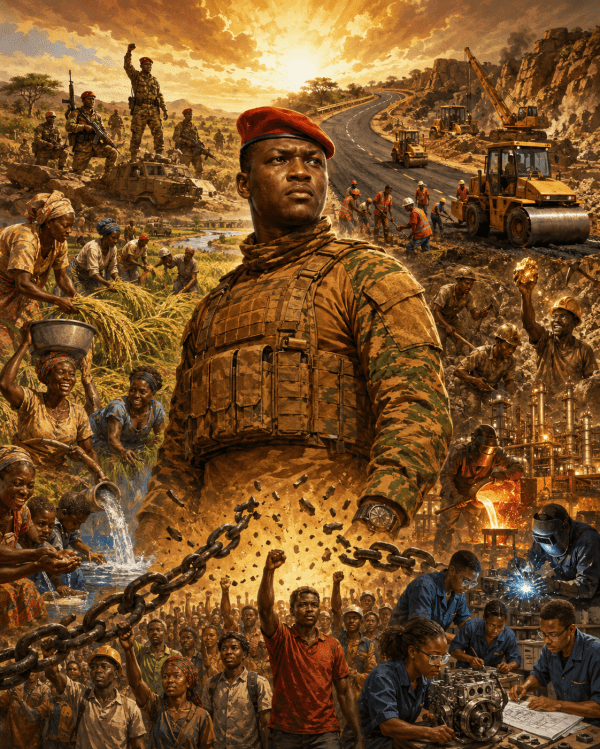
Ibrahim Traoré’s speech is more than a declaration of national resolve. It is a sustained confrontation with the machinery of African dependency: roads promised but never built, minerals exported without transformation, imported goods replacing productive capacity, universities producing credentials instead of machines, and local elites profiting from national weakness. Through the recurring question—“Are we cursed?”—Traoré rejects racial fatalism and insists that Africa’s condition has a history, a structure and beneficiaries. This intervention excavates the speech’s strongest contradictions while asking whether state-led sovereignty can become genuine popular power rather than another project administered above the people.
The Guardian’s Missing Clause: How Imperial Elections Became “Democracy” in Nicaragua
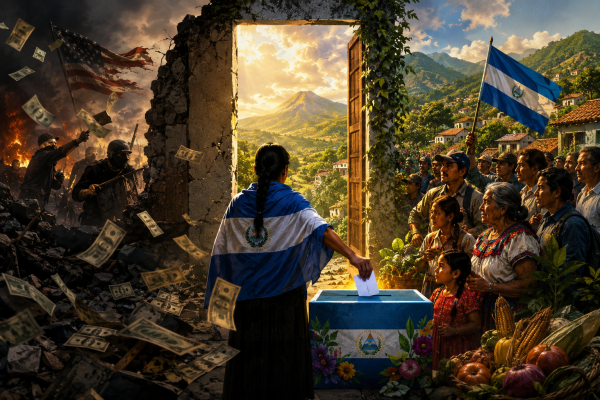
Daniel Ortega’s recent announcement that Nicaragua will cease future elections is portrayed by The Guardian as a blatant rejection of democracy, conveniently ignoring the historical context of imperial influences shaping Nicaraguan electoral politics. The claim that opposition parties are the embodiment of democracy is a façade; previous elections were tainted by U.S. interference, corporate financing, and foreign-imposed sanctions. Ortega's call to defend the Sandinista Revolution against imperial restoration isn’t about tyranny; it’s about reclaiming sovereignty from an electoral process manipulated by outside forces. Instead of clinging to an imperial framework, this moment presents an opportunity for Nicaragua to build a democracy rooted in popular power and authentic participation.
Un-American by Choice: W.E.B. Du Bois and the Revolution Liberal Memory Could Not Bury
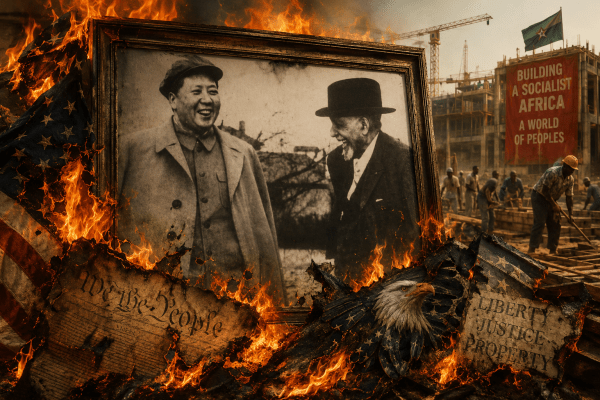
For generations, the American academy celebrated W.E.B. Du Bois while burying the revolutionary conclusions that defined the final decades of his life. In this Weaponized Intellects review of Bill V. Mullen's Un-American, we excavate the real Du Bois: communist, anti-imperialist, Pan-African internationalist and unapologetic ally of socialist revolution. Mullen powerfully restores Du Bois to the global struggle against capitalism and colonialism, yet retreats into familiar anti-Stalinist assumptions when revolution becomes embodied in the Soviet Union and the People's Republic of China. The result is both an indispensable recovery and a revealing ideological battleground over the meaning of socialism, state power and the unfinished project of world revolution.
Beyond Hegemony, Beyond Illusion: Samir Amin, Multipolarity, and the Unfinished Road to Socialism
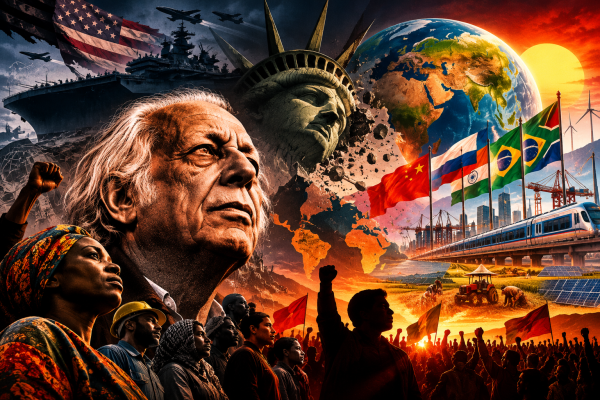
What happens when one of the twentieth century's greatest Marxist theorists is tested against the world that emerged after unipolarity began to fracture? This Weaponized Intellects review excavates Samir Amin's Beyond US Hegemony? as both a product of its historical moment and a living revolutionary framework, measuring its arguments against China's socialist transition, Russia's anti-hegemonic resurgence, the rise of BRICS, and Amin's own later theoretical development. The result is neither celebration nor dismissal, but a critical reconstruction that distinguishes multipolarity from socialism and argues that only organized popular power can transform the decline of empire into genuine human emancipation.
The Foreign Enemy Fraud: From Russiagate’s Thought Police to Chinagate’s Electoral Cage
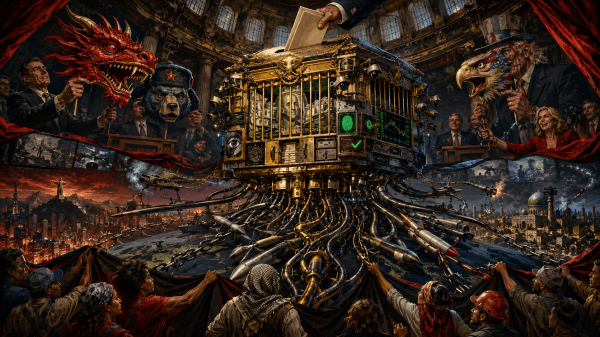
David Corn's resurrection of Russiagate in response to Trump's accusations of Chinagate exposes the absurdity of electoral politics in a billionaire-dominated America. By framing the discourse as a conflict between foreign adversaries—Russia or China—Corn obscures the true culprits: a corrupt ruling class manipulating the political system to protect its interests. Both narratives serve to distract the populace from the reality of a plutocracy masquerading as democracy. The ongoing chaos is but a struggle within the elite, each side reinforcing the structures of oppression while preventing real power from reaching the working class. True resistance demands unity against this imperial façade.
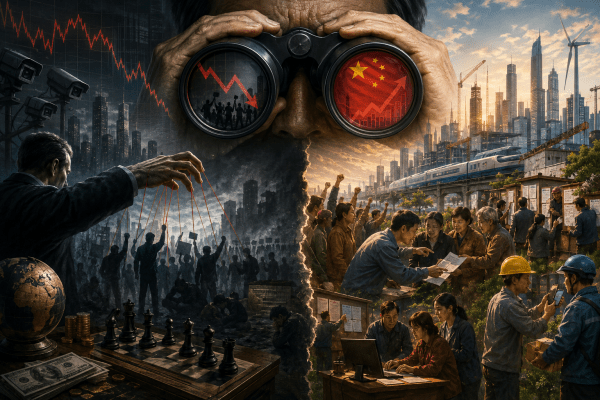
China’s Missing Protests: How Bloomberg Turns Workers’ Grievances into Investor Intelligence
Bloomberg turns a decline in documented protests into evidence of a hidden political crisis, relying on a US-backed monitoring project whose methods cannot support such sweeping conclusions. By collapsing wage disputes, housing conflicts, petitions, and local administrative complaints into the single category of “dissent,” the article strips Chinese grievances of their concrete class content. It also ignores the institutions through which millions of people pursue redress and reduces China’s political system to a Cold War caricature. The result is not a serious account of Chinese society, but investor intelligence: workers appear only as risks to accumulation, while the real struggle over socialism’s direction disappears.