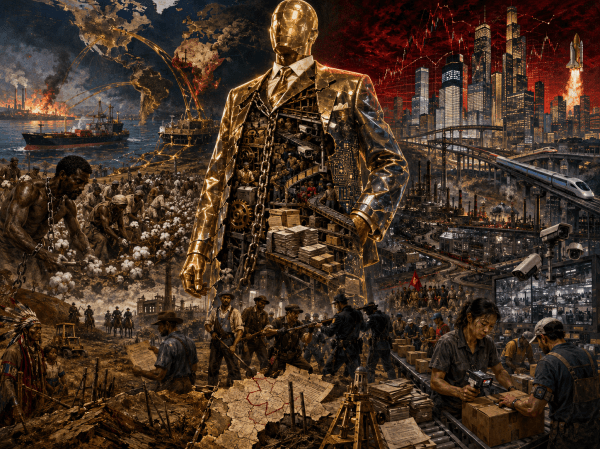
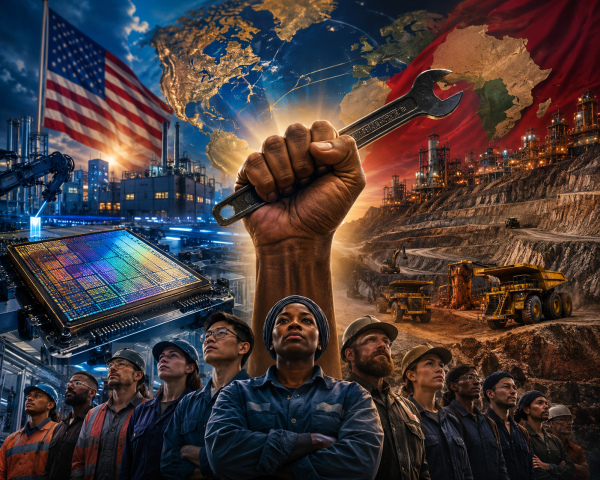
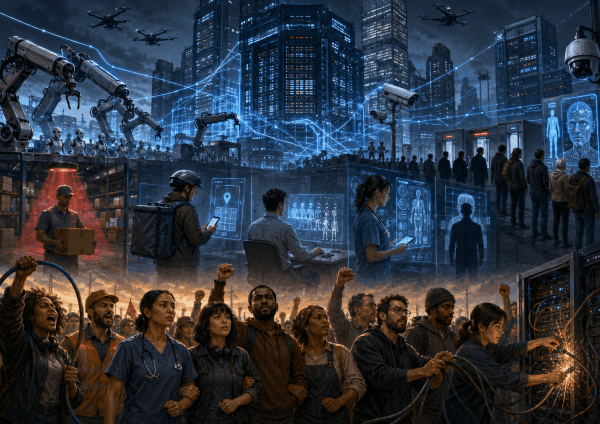
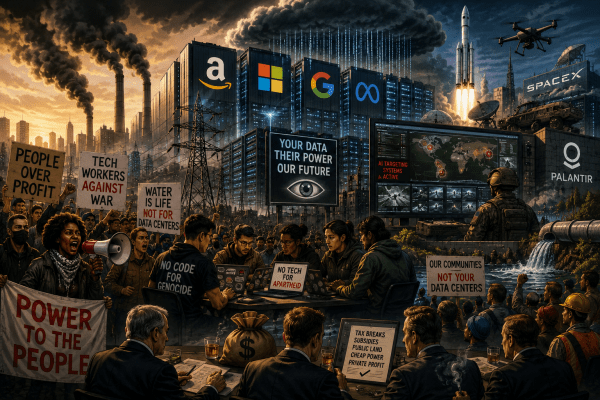
In Weaponized Intellects' scathing review of The Technological Republic, Karp and Zamiska unveil a chilling trajectory where Silicon Valley's crisis morphs into a blueprint for imperial tech dominance. They argue for an alliance between state power and engineering prowess to reinforce U.S. supremacy, shedding liberalism in favor of militaristic ingenuity. What transpires is a dissection of consumer capitalism’s futility, advocating for weaponized AI to restore glory. This critique masquerades as patriotic duty while advocating technofascism—a seamless marriage of capital and state. In rejecting this, the revolution must neither accept imperial myths nor a hollow liberalism, but fight for a world where tech serves humanity, not dominance.
Inside the House of Cards: How Empire Manages Crisis Through Memory, Civility, and Myth
Four former presidents gather under corporate media lights to present democracy as a shared moral inheritance, grounded in unity, civility, and participation. Beneath that performance lies a material history of deregulation, war, surveillance, and repression that produced the very crisis now being discussed. The interview reveals not reflection, but a ruling-class effort to manage legitimacy... Continue Reading →
The Machine Was Built to Watch You: How Bipartisan Power Engineered America’s Surveillance State
They tell you this is about Democrats failing to stand up to Trump, but that’s a lie—both parties built the spy machine together. The receipts show a straight line from the Patriot Act to Section 702, signed, funded, and protected by the same politicians now playing concerned. What we’re dealing with isn’t a policy debate—it’s... Continue Reading →
Guns Over Bread: How NPR Helps Normalize Technofascism in the Age of Trump
As military spending skyrockets, social programs are slashed under the guise of “budget priorities.” This isn’t just fiscal prudence; it’s a calculated betrayal. The old social contract is dead, replaced by a system where austerity and militarization reign, revealing an empire fraying at the edges, clinging to power through coercion.
Blackout and Blockade: Empire’s War on Cuba and the Cracks in the American Pole
As U.S. imperialism tightens its grip on the hemisphere through economic warfare, Cuba stands at the front line—where the struggle between domination and sovereign development, between imperial command and emerging multipolar possibility, is being fought in real time. By Prince Kapone | Weaponized Information | March 17, 2026 When a Siege Learns to Speak the... Continue Reading →
After the Empire — Before the Collapse
When Emmanuel Todd wrote After the Empire, Washington still believed it ruled a permanent unipolar world. Todd saw something different: an empire sustained less by production than by financial tribute and military spectacle. Two decades later the contradictions he described—economic dependency, micromilitarism, and ideological decay—have matured into the turbulent transition now reshaping global power.By Prince... Continue Reading →
When Empire Calls Its Own Gamble a Miscalculation
A Weaponized Propaganda Excavation of how the New York Times launders imperial war through the language of strategic error.By Prince Kapone | Weaponized Information | March 12, 2026The Tears of the ArsonistThere is a familiar ritual in the house organs of empire. First the bombs fall, then the panic sets in, and then some respectable... Continue Reading →
White Guilt or White Pride? The False Choice That Preserves Empire
“White guilt” shrinks a global system of power into a private mood. Liberal confession mourns history while preserving the machinery of dominance. Reactionary pride weaponizes heritage to harden bloc discipline under multipolar pressure. Beyond shame and nostalgia lies defection from empire and alignment with global liberation.By Prince Kapone | Weaponized Information | February 20, 2026History... Continue Reading →
Booming Balance Sheets, Breaking Backs: CNBC, Monopoly Capital, and the “Boomcession” Lie
Booming Balance Sheets, Breaking Backs: CNBC, Monopoly Capital, and the “Boomcession” LieSubhead:Corporate media reframes structural exploitation as a quirky economic paradox.The data reveal a class regime where profits surge while labor absorbs risk.Debt, housing, and hiring slowdowns expose how growth is captured upward and insecurity pushed downward.From tenant unions to debtors’ assemblies, working people are... Continue Reading →
Lutnick, Carney, and the Politics of Permission: How USMCA Discipline Turns Trade Into Obedience
A U.S. trade official scolds Canada for stepping outside its assigned lane, revealing how power speaks through “commentary.” The facts show a bounded policy shift unfolding inside an unstable trade and industrial landscape the story refuses to name. Placed in historical and imperial context, the outrage reads less as economics than as enforcement of hierarchy... Continue Reading →