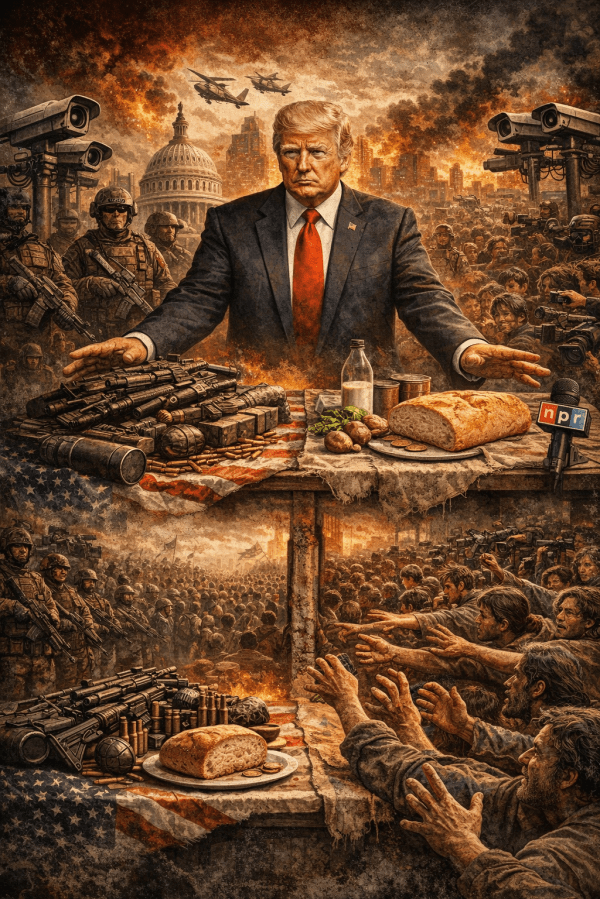
Bull Market, Broke People: The Stock Market’s Good News Is the Working Class’s Bad Joke

As markets soar, the majority of households are trapped in economic despair, cutting back on spending as essential prices rise and wages stagnate. The AP's analysis of "consumer confidence" reveals a grotesque class divide—where the wealthy thrive and the working class suffers under burdens of debt and inflation. This narrative cleverly masks the structural inequalities, framing economic distress as mere sentiment rather than a blatant symptom of a system rigged in favor of capital. The urgent call to action is clear: workers must unify and transform their economic plight into organized class power, recognizing that genuine change requires confrontational strategies, not empty optimism.

Code and Conquest: The Technological Republic and the Blueprint for a New Imperial Order

In Weaponized Intellects' scathing review of The Technological Republic, Karp and Zamiska unveil a chilling trajectory where Silicon Valley's crisis morphs into a blueprint for imperial tech dominance. They argue for an alliance between state power and engineering prowess to reinforce U.S. supremacy, shedding liberalism in favor of militaristic ingenuity. What transpires is a dissection of consumer capitalism’s futility, advocating for weaponized AI to restore glory. This critique masquerades as patriotic duty while advocating technofascism—a seamless marriage of capital and state. In rejecting this, the revolution must neither accept imperial myths nor a hollow liberalism, but fight for a world where tech serves humanity, not dominance.

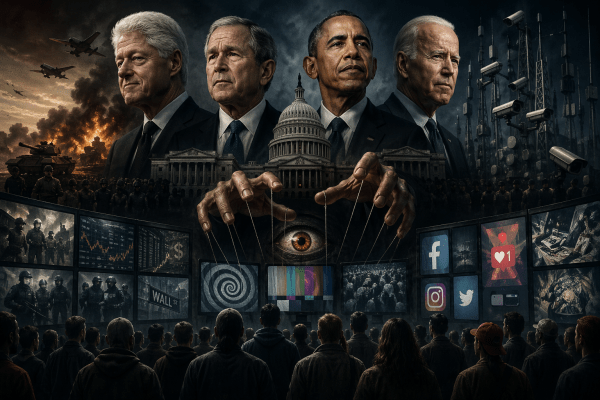
Inside the House of Cards: How Empire Manages Crisis Through Memory, Civility, and Myth

Four former presidents gather under corporate media lights to present democracy as a shared moral inheritance, grounded in unity, civility, and participation. Beneath that performance lies a material history of deregulation, war, surveillance, and repression that produced the very crisis now being discussed. The interview reveals not reflection, but a ruling-class effort to manage legitimacy... Continue Reading →

After the Empire — Before the Collapse

When Emmanuel Todd wrote After the Empire, Washington still believed it ruled a permanent unipolar world. Todd saw something different: an empire sustained less by production than by financial tribute and military spectacle. Two decades later the contradictions he described—economic dependency, micromilitarism, and ideological decay—have matured into the turbulent transition now reshaping global power.By Prince... Continue Reading →

White Guilt or White Pride? The False Choice That Preserves Empire

“White guilt” shrinks a global system of power into a private mood. Liberal confession mourns history while preserving the machinery of dominance. Reactionary pride weaponizes heritage to harden bloc discipline under multipolar pressure. Beyond shame and nostalgia lies defection from empire and alignment with global liberation.By Prince Kapone | Weaponized Information | February 20, 2026History... Continue Reading →

Booming Balance Sheets, Breaking Backs: CNBC, Monopoly Capital, and the “Boomcession” Lie

Booming Balance Sheets, Breaking Backs: CNBC, Monopoly Capital, and the “Boomcession” LieSubhead:Corporate media reframes structural exploitation as a quirky economic paradox.The data reveal a class regime where profits surge while labor absorbs risk.Debt, housing, and hiring slowdowns expose how growth is captured upward and insecurity pushed downward.From tenant unions to debtors’ assemblies, working people are... Continue Reading →

Website Powered by WordPress.com.

Up ↑