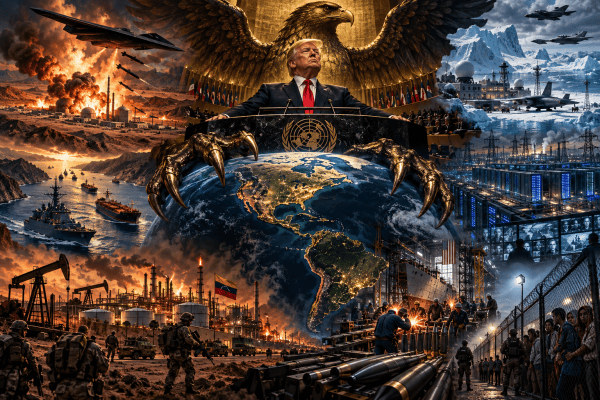
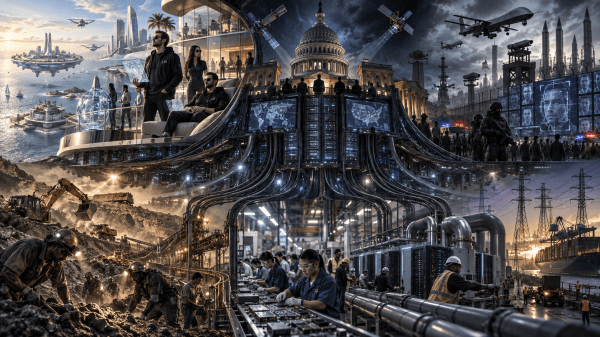
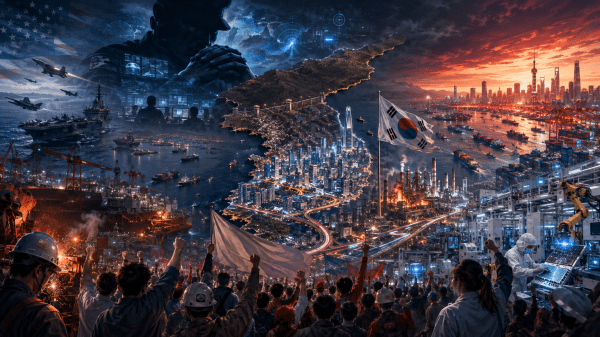
South Korea’s “miracle” didn’t fall from the fucking sky. It was built through war, U.S. occupation, anti-communist repression, Japanese capital, state-directed development, disciplined labor and a regional imperial order designed to make capitalism look victorious against socialism. But the contradiction is vicious: the same system built Korean industry strong enough to become indispensable, produced workers powerful enough to break dictatorship, and tied Korean accumulation into an Asian economy increasingly centered on China. Now Washington wants the miracle to keep taking orders—more weapons, more shipyards, more investment, more war preparation. The problem is South Korea ain’t the weak frontier state it used to be.
Sovereign Enough to Steal From: How American Law Turns Conquest Into Governance
Ward Churchill’s Perversions of Justice exposes the legal machinery through which Indigenous sovereignty is recognized just enough to legitimize treaties, land cessions, resource extraction and colonial administration—then restricted whenever it threatens settler possession or state power. Following that contradiction from conquest and property into uranium mining, blood quantum, AIM repression and U.S. imperial expansion, this review tests both Churchill’s strongest insights and his strategic limits. His final wager—that the colonizer’s own law can be weaponized to fracture legitimacy and withdraw consent—remains powerful. But the deeper revolutionary question is what turns that rupture into organized material counter-power.
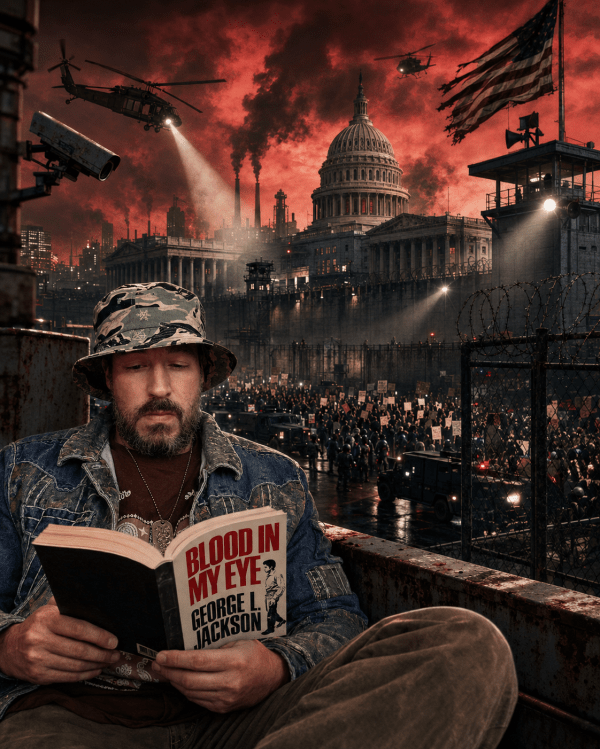
Democracy With a Gun to Your Head: George Jackson and the American Fascist Order
George Jackson wrote from inside the cage and exposed the system beyond it. In Blood in My Eye, prison, property, racial domination, monopoly capital, and imperial war appear not as separate problems but as parts of one American order. Jackson’s theory of secure fascism revealed how counterrevolution can rule through elections, reform, consumerism, surveillance, and controlled opposition as effectively as open terror. His strategic errors matter too: revolutionary potential is not consciousness, and militant initiative cannot substitute for organized mass power. This review recovers Jackson as a living weapon—one to be studied, sharpened, corrected, and returned to the struggle.
The Empire Calls Resistance Subversion: Cuba and Washington’s War on Revolutionary Consciousness
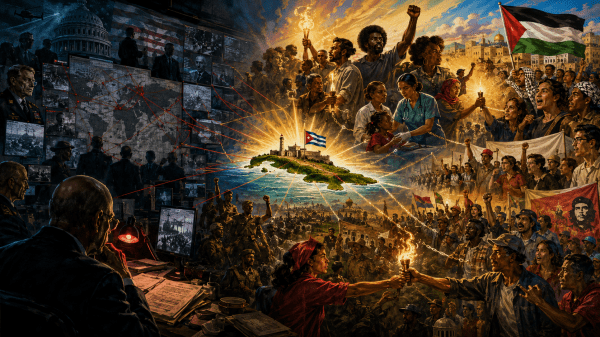
The State Department's report conflates documented espionage with a sweeping indictment of social movements, branding students, revolutionaries, and dissenters as part of a conspiracy orchestrated from Cuba. This narrative denies local struggles against oppression, instead framing resistance as a foreign-directed plot, thus erasing historical context and the material origins of dissent. The document's loose connection between Cuba's influence and contemporary activism serves as a McCarthyite tool against American dissent. By equating genuine political engagement with espionage, it aims to squash revolutionary consciousness and reinforce the status quo, revealing the empire's fear that the oppressed might unite and resist independently.
Un-American by Choice: W.E.B. Du Bois and the Revolution Liberal Memory Could Not Bury
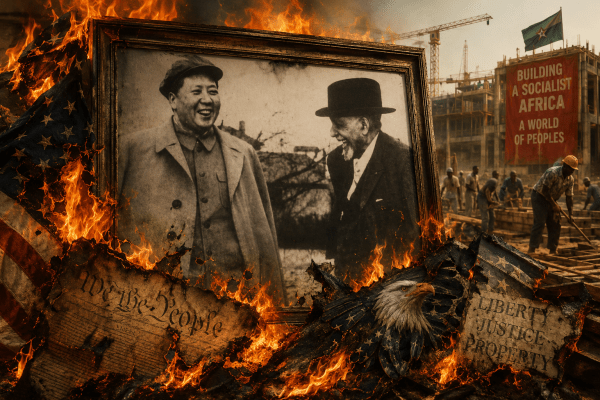
For generations, the American academy celebrated W.E.B. Du Bois while burying the revolutionary conclusions that defined the final decades of his life. In this Weaponized Intellects review of Bill V. Mullen's Un-American, we excavate the real Du Bois: communist, anti-imperialist, Pan-African internationalist and unapologetic ally of socialist revolution. Mullen powerfully restores Du Bois to the global struggle against capitalism and colonialism, yet retreats into familiar anti-Stalinist assumptions when revolution becomes embodied in the Soviet Union and the People's Republic of China. The result is both an indispensable recovery and a revealing ideological battleground over the meaning of socialism, state power and the unfinished project of world revolution.
The Rose That Grew From Concrete: Tupac Shakur, Revolutionary Memory, and the Industry That Sold It Back
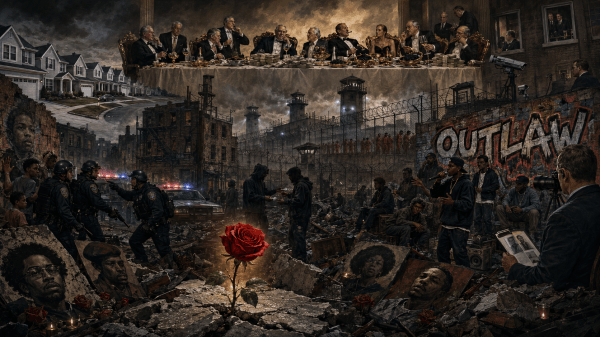
Dean Van Nguyen's "Words for My Comrades" passionately reclaims Tupac Shakur as a pivotal voice in the Black revolutionary movement, tracing his roots back to the powerful yet fragmented legacy left by the Panthers. While capitalism commodifies Tupac's image, the essence of his revolutionary spirit remains alive, urging listeners to confront issues of systemic oppression and identity. Van Nguyen illuminates the contradictions in Tupac's life, linking them to a larger inheritance shaped by state repression and cultural rebellion. Ultimately, Tupac's significance lies not in providing a finished political framework but in sparking inquiry into collective struggle and revolutionary continuity, creating pathways toward genuine transformation.
One Colony, Two Ships: How Liberal History Splits What Capitalism Built
James Traub's exploration of America's dual origins through the Mayflower and the White Lion is dangerously simplistic. He perpetuates a narrative of moral dichotomy, ignoring the harsh reality that both journeys fueled a settler-capitalist machine built on land theft and enslavement. The framing minimizes Indigenous dispossession and reduces oppressed voices to mere historical subjects. This liberal attempt at reconciliation fails to confront the brutal interdependence between North and South, leaving unchallenged the systemic inequities rooted in conquest and exploitation. Rather than embracing a flawed myth of unity, America must confront its history to dismantle the ongoing consequences of its oppressive foundations.
They Called It Ego: Jacobin, Chris Smalls, and the Policing of Black Anti-Imperialist Labor
Chris Smalls, once heralded as a labor hero, now finds himself a casualty of overblown ego in the eyes of Jacobin. Yet, this portrayal dangerously obscures a deeper truth: his evolution from solely confronting Amazon to advocating for Palestinian and Cuban solidarity reveals an unsettling fear among the respectable Left. They're comfortable with labor militancy as long as it remains contained and domesticated; once it branches into anti-imperialism, they recoil. Smalls symbolizes a challenge to the status quo, an unfiltered confrontation with empire that threatens to redefine labor politics as an international struggle. In essence, the fear of a Black worker embracing a global perspective exposes the fragile backbone of contemporary Leftist thought.
Census of Collapse: Trump, Technofascism, and the War Against Reality
The Trump regime's assault on federal datasets is a calculated effort to erase reality, obscuring critical information on hunger, pollution, maternal health, and climate disasters. By dismantling public data, the ruling class suppresses the very tools citizens need to challenge systemic failures. Expert narratives dominate discourse, overshadowing the voices of the oppressed who suffer and resist. This isn't just bureaucratic negligence; it's a deliberate strategy to manage perception amidst a crumbling empire. As the regime erases statistics, communities are disarmed and rendered invisible, making the struggle for public knowledge essential to resistance against state control. The battle for data is a battle for truth.
The Devil’s Republic: Illuminati Panic and the Hidden Architecture of American Repression
The American ruling elite has a long history of morphing political dissent into a narrative of demonic threat, consolidating their power through fear tactics akin to those seen during the Illuminati panic of the 18th century. This episode illuminated how conspiracy theories, fueled by elite anxieties, have criminalized immigrants and suppressed dissent. The manipulation of societal fears allows the state to transform opposition into an existential threat, justifying repression and surveillance. Today's conspiracism, though often dismissed as irrational, reveals a deeper urgency: a misdirected anger at real systemic injustices commodified into scapegoating narratives, obscuring the true architecture of capitalist power while paralyzing collective political action.