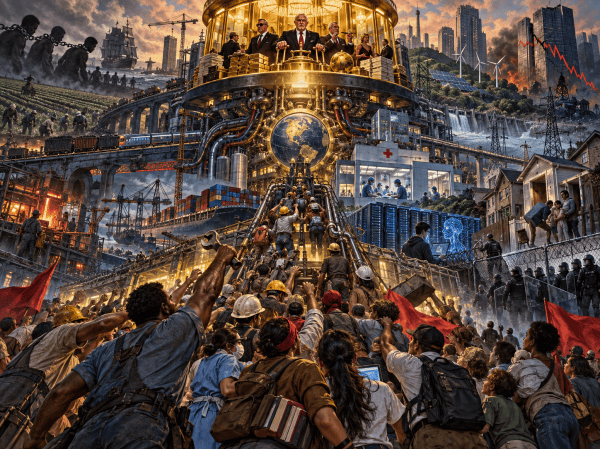
Peggy Noonan's alarm over socialism's surge reveals her flawed analysis: she blames the consciousness of the wounded instead of capitalism, which thrives on historical injustices like dispossession and slavery. As the capitalist structure crumbles under its contradictions—where collective production is shackled by private ownership—Noonan dismisses the urgency of socialism, painting it as a radical force aimed at destruction. Yet, socialism is rising not from whimsical ideology but out of necessity, as younger generations face economic precarity and disillusionment. The question isn’t whether capitalism is natural or just; it’s who truly controls the wealth and future built by the collective.
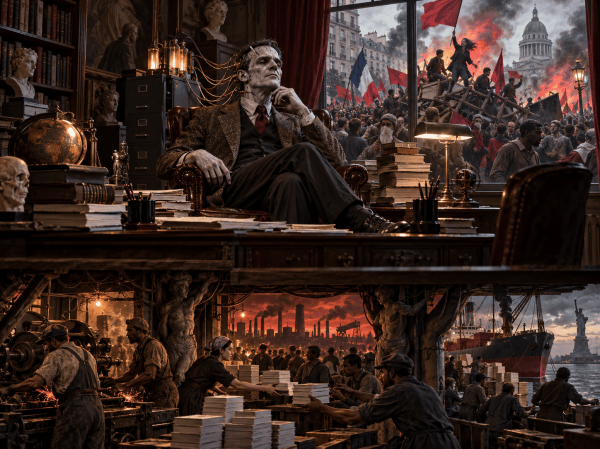
The Corpse Got Tenure: French Theory’s American Afterlife
Requiem for French Theory asks a question academia prefers to leave buried: how did a heterogeneous group of French thinkers become a unified radical canon in the United States? Monville and Rockhill trace the foundations, universities, publishers and Cold War institutions that helped make French Theory travel, but the deeper story is more dialectical than conspiracy. Foucault, Derrida, Deleuze and others confronted real contradictions and produced genuine insights even as their work was selectively reproduced, professionalized and detached from mass struggle. The lesson reaches Marxism itself: revolutionary theory needs more than correct ideas. It needs its own means of intellectual production.
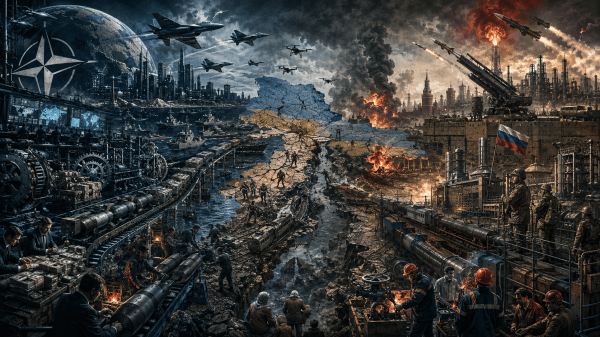
Primacy Produced the Resistance: How the Atlantic Order Turned Russian Sovereignty Into a Threat
The Economist’s recent piece on Putin frames him as a cornered gangster, obscuring the complex geopolitical history that shapes the current conflict in Ukraine. It reduces a crisis rooted in thirty-five years of U.S.-led strategy, NATO expansion, and Russia's own capitalist evolution to Putin’s psychological profile. This overlooks how pre-existing economic and military pressures prepared the battlefield for escalation. By ignoring this context, the narrative becomes dangerously simplistic, presenting Russia's actions as mere reactions to outside threats, not as part of a larger historical clash of powers. The truth? This war is as much about systemic tensions as individual leaders.
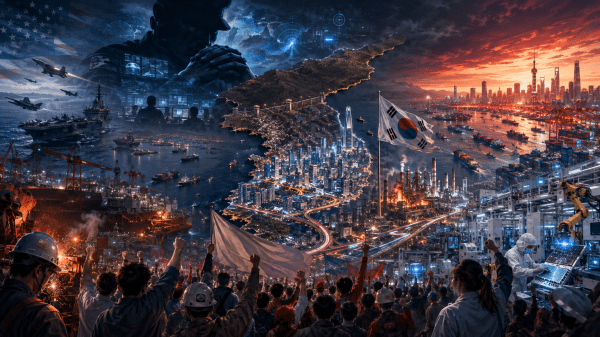
The Miracle Was Supposed to Take Orders: South Korea and the Contradiction of American Power
South Korea’s “miracle” didn’t fall from the fucking sky. It was built through war, U.S. occupation, anti-communist repression, Japanese capital, state-directed development, disciplined labor and a regional imperial order designed to make capitalism look victorious against socialism. But the contradiction is vicious: the same system built Korean industry strong enough to become indispensable, produced workers powerful enough to break dictatorship, and tied Korean accumulation into an Asian economy increasingly centered on China. Now Washington wants the miracle to keep taking orders—more weapons, more shipyards, more investment, more war preparation. The problem is South Korea ain’t the weak frontier state it used to be.
From Alliance to Containment: How Anglo-American Power Engineered the Cold War
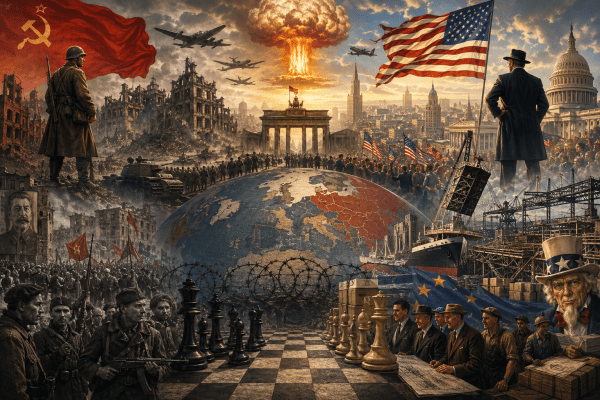
The essay provocatively dismantles the myth that the Cold War was merely a reaction to "Soviet aggression." Instead, it reveals it as America's calculated strategy to reinforce a capitalist world order post-World War II, driven by anxieties over rising leftist movements and anti-colonial uprisings. It highlights how the U.S. initiated a campaign of political warfare and economic reconstruction through the Marshall Plan, effectively shaping Europe and other regions under its imperial influence. To Washington, the real danger was not communism but the threat of genuine independence that challenged capitalist dominance. The Cold War was less about ideological battles and more about inter-imperialist struggles to determine global economic control.
Failure According to Whom?: Rewriting the Metrics of Socialism
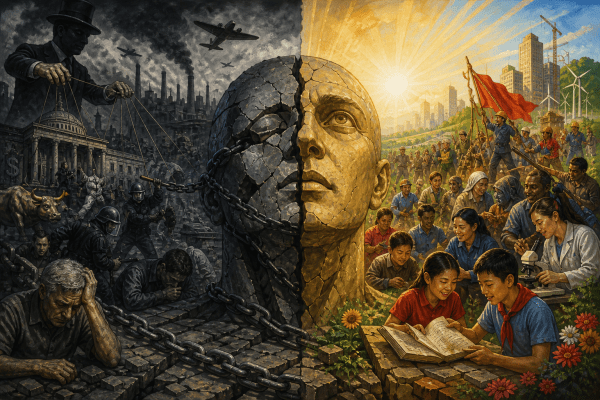
The pervasive claim that socialism has "failed" is an ideological construct rather than a factual statement. A closer analysis reveals that socialist systems, from the Soviet Union to China, achieved measurable gains in education, health, and economic development under dire conditions. This narrative of failure is not supported by historical evidence but rather is a product of a century-long ideological war against socialism. Capitalism, meanwhile, perpetuates crises, inequality, and social fragmentation, failing to meet human needs. The real question is not why socialism fails, but how it has transformed societies when confronted with immense challenges, challenging the ruling narrative that defines success so narrowly.
Russiagate and the Liberal Technofascist Coup
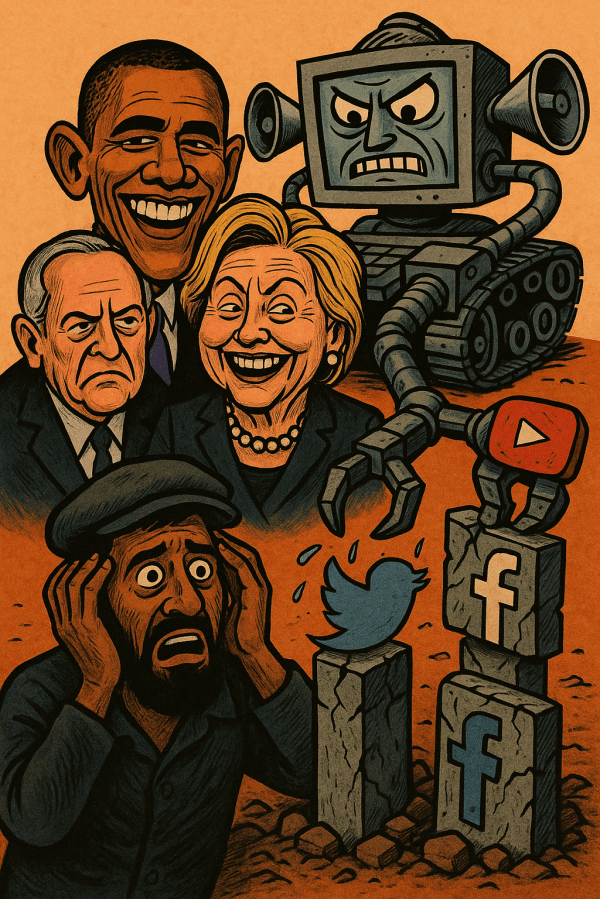
How the White Ruling Class Used a Manufactured Crisis to Cement Algorithmic Control and Suppress DissentBy Prince Kapone | Weaponized Information | July 22, 2025Who Built the Lie?Russiagate was never a scandal. It was a strategy. A full-spectrum psychological operation masked as patriotism, manufactured by a collapsing empire to reassert control over its own population.... Continue Reading →
Weaponized Insight (No. 1): Multipolarity Moves in Shadows
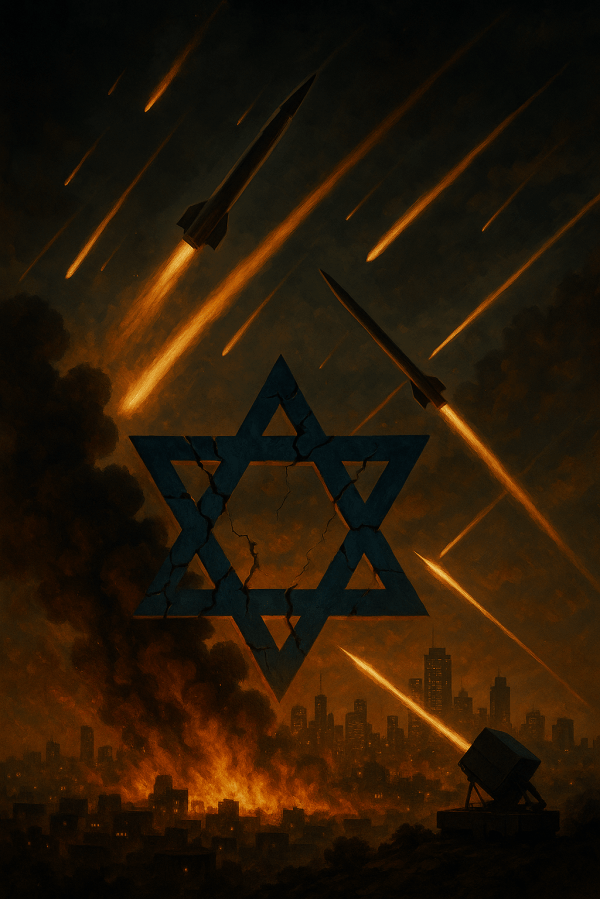
Iran’s Strategic Depth and the Civilizational War Now UnderwayBy Prince Kapone | Weaponized Information | June 14, 2025I. The Contradiction: Spectacle vs. StructureIn a spectacular twist, The Guardian opens its account of the escalating conflict between Israel and Iran with a headline screaming: “Iranian missiles have rained down on Tel Aviv”. Notice how the narrative... Continue Reading →
Redlines: June 4, 2025
Redlines – June 4, 2025 Daily Dispatches from the Frontlines of Empire: Exposing Capitalist Crisis, Imperialist Recalibration, and the Global Struggle for Liberation AFRICA Namibia Courts Western Energy Investors in Bid for “Green Powerhouse” Status Namibia is being hailed as the continent’s next renewable energy “leader” after launching a new round of hydrogen and solar... Continue Reading →
Red Autumn: The Korean War and the Highest Form of Proletarian Internationalism
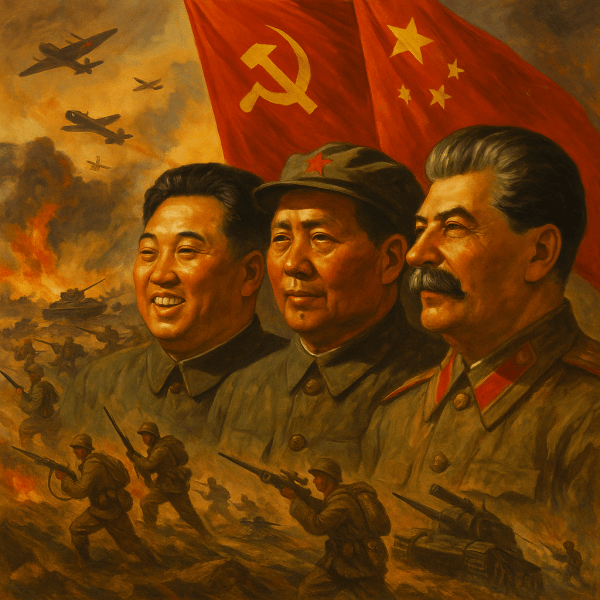
This is not the story of a Cold War chess match or a border conflict spun out of control. This is the story of a revolutionary people defending their land and their future against the most brutal empire in human history—and winning. Korea did not collapse. It stood, with the full force of China and... Continue Reading →