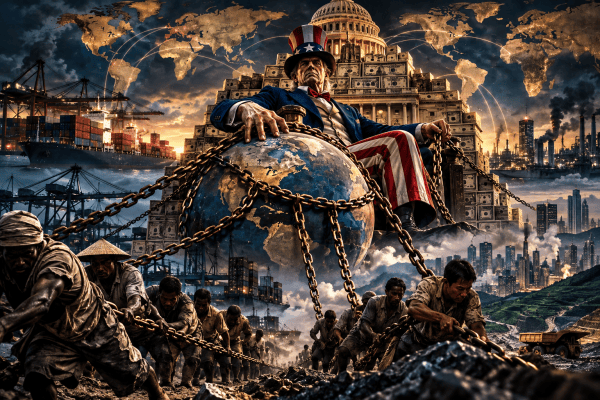
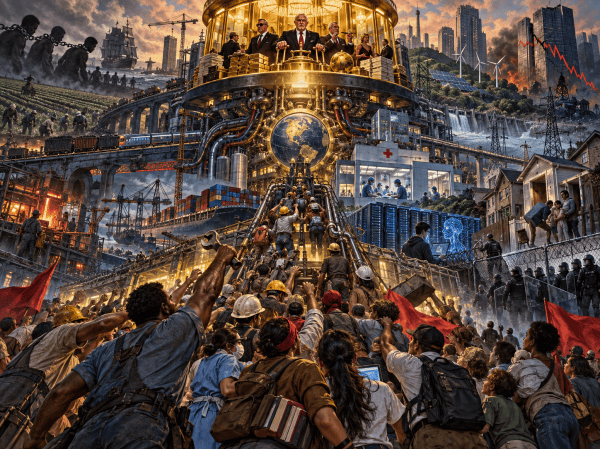
Michael Hudson's "Super Imperialism" reveals capitalism's peculiar twist: the U.S. transitioned from a great creditor to a dominant debtor, utilizing its debts as leverage in a world where power dynamics are shifting. Post-World War I, American financial institutions crafted a system that exploited other nations through debt, claiming to promote development while actually enforcing dependency. The contradiction lies in the U.S. controlling the world's currency even as its productive supremacy fades. As the global landscape evolves, the implications of dollar dominance become increasingly tenuous, demanding us to confront a crucial question—who ultimately commands the productive forces that money can influence but not generate?
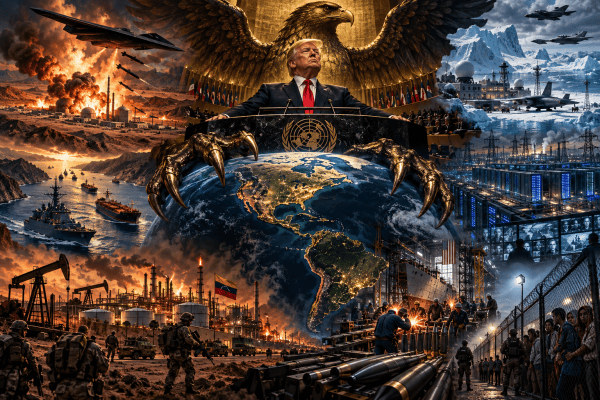
The Golden Age Needs a Gunboat: Trump’s UN Speech and the Rising Cost of American Command
Trump's United Nations address declares America’s resurgence, yet it reveals an empire grappling with an escalating need for military force and economic coercion to maintain supremacy. His speech elevates military spending, sanctions, and immigration enforcement as signs of strength while ignoring the underlying contradictions—an empire that once commanded effortlessly now relies heavily on intimidation. The reality is that the U.S. must work harder to enforce its will both abroad and domestically as competition grows and global power dynamics shift. Instead of showcasing dominance, Trump's rhetoric underscores a declining ability to produce consent, exposing the fragility of American imperialism. The mask of effortless domination is slipping.
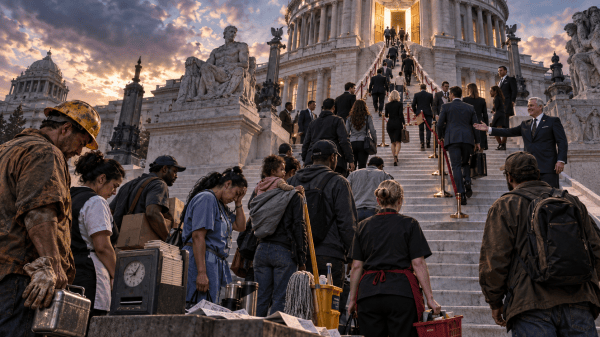
The Door Is Open, the Staircase Narrows: How Democracy Filters Out the Working Class
Bloomberg uncovered a brutal democratic fact: working people make up most of the labor force, yet barely appear in legislatures. This essay follows the worker beyond that statistic and shows how the disappearance happens—through inflexible work schedules, lost wages, primary elections, party recruitment, professional political careers, and repeated institutional filtering before voters ever reach the ballot. The problem isn’t that workers lack ambition or governing ability. It’s that formal political equality rests on a social order that distributes time, money, networks, and political experience by class. If workers are to enter politics in force, organization has to change who gets produced as a political leader.
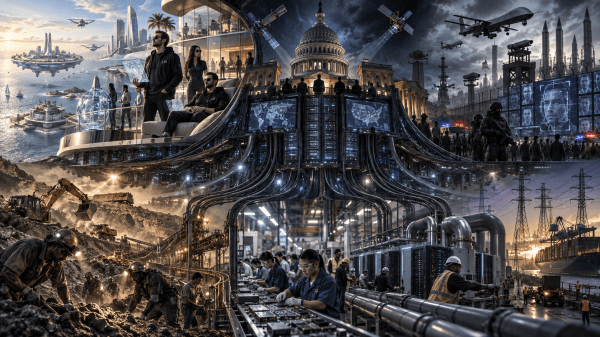
The Nerd Reich Wanted to Exit the State: Then Capital Learned It Needed the Machinery
Gil Durán's "The Nerd Reich" provocatively dissects the tech elite's evolution from libertarian ideals to an authoritarian grasp on power. Far from escaping state oversight, Silicon Valley's billionaires, like Peter Thiel, reveal a dark shift: they now seek to enhance governmental control while championing the illusion of individual freedom. Durán labels this new reality "tech fascism," where technology conglomerates and capital intertwine with state apparatus. As these technocrats consolidate power, a crucial question emerges: can humanity reclaim technologically wielded potential, or will it remain enslaved by elite ownership? This critical inquiry forebodes a future dominated by private interests rather than collective governance.
Peggy Noonan Calls Capitalism Organic: The Wall Street Journal Buries the Violence That Built It
Peggy Noonan's alarm over socialism's surge reveals her flawed analysis: she blames the consciousness of the wounded instead of capitalism, which thrives on historical injustices like dispossession and slavery. As the capitalist structure crumbles under its contradictions—where collective production is shackled by private ownership—Noonan dismisses the urgency of socialism, painting it as a radical force aimed at destruction. Yet, socialism is rising not from whimsical ideology but out of necessity, as younger generations face economic precarity and disillusionment. The question isn’t whether capitalism is natural or just; it’s who truly controls the wealth and future built by the collective.
The Worker Becomes Optional: The Wage Still Demands Your Life
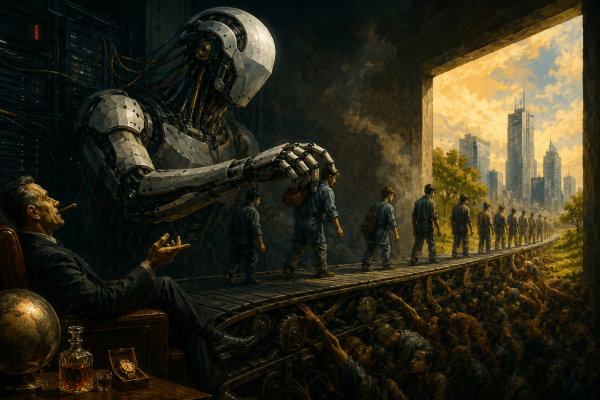
Bill Gates has finally acknowledged a truth that capitalists prefer to ignore: as AI and automation advance, corporations can reduce their reliance on human workers, yet those workers still need jobs to survive. This dystopian paradox manifests as corporations accumulate vast fixed capital while employing fewer people, leading to increasing labor insecurities. The state, ostensibly aiding automation's growth, is simultaneously crafting systems to manage this emerging class of excess workers. Gates proposes measures to protect jobs, but under capitalism, preserving employment becomes essential simply for survival, distorting the very essence of technological progress into a means of perpetuating exploitation rather than liberating humanity from labor.
The Gate Opens, the Ground Hardens: Proportional Representation and the Fight Over Political Power
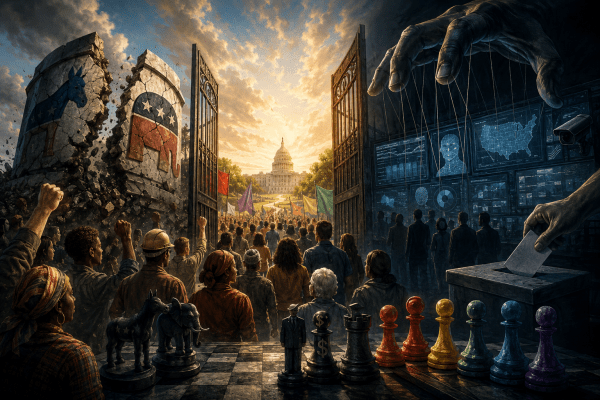
Americans are losing faith in the two-party cage faster than the political system can manufacture consent for it, yet NPR narrows that crisis of legitimacy into a problem of electoral design. Proportional representation could genuinely break part of the machinery that converts millions of politically dissatisfied people into wasted votes, but the racial history of... Continue Reading →