NATO 3.0: The Empire Rebrands Its Launchpads

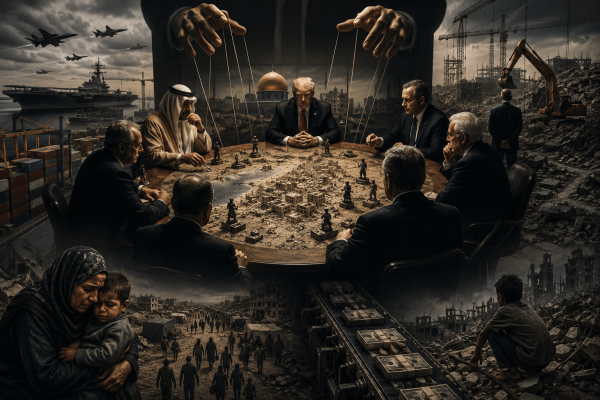
NBC’s coverage of Pete Hegseth's outburst in Brussels starkly reveals a deeper imperial narrative: NATO is a glorified framework for U.S. militarism, demanding European complicity. Instead of a cooperative alliance, it illustrates a machinery of war where access to land and resources is treated as a given entitlement. The jargon of "burden-sharing" and "NATO 3.0" drapes the insistence on militarized obedience in a veneer of unity. The article neglects dissenting voices, such as the European populations and their rights, instead framing hesitation as irresponsibility. This is not a mere operational adjustment; it’s a clarion call to recognize and resist the underlying realities of imperialism masquerading as alliance-building.

Starve the Island, Blame the System: Cuba and the Logic of Imperial Warfare

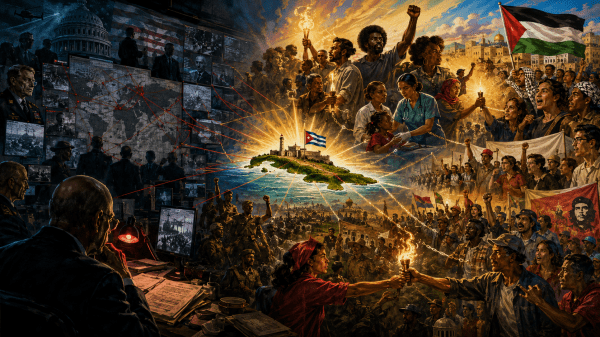
The Associated Press's portrayal of Cuba's economic reforms as an admission of socialism's failure belies the truth: these changes emerge from a relentless siege engineered by U.S. imperialism. While Cuba navigates fuel shortages and food insecurity, it confronts an economic warfare strategy designed to instigate hunger and political capitulation. The AP article obscures the genuine reform efforts by presenting them as a retreat from ideology, framing Washington as a reasonable negotiator rather than an aggressive adversary. Cuba's struggle isn't merely to reform; it's a fierce fight for sovereignty against an oppressive narrative that seeks to suffocate its revolutionary spirit.

Marx in the Witness Box: How Jacobin Turns a Chinese Worker’s Wounds Against the Revolution

Jacobin's critique of Chinese worker Xiao Hai's memoir misrepresents the entire Chinese Revolution as a failed experiment based on exploitation. While Xiao Hai's story merits recognition, the narrative frames the factory's plight as representative of the whole nation, ignoring China's transformation from a colonial past into a sovereign socialist state. The real conflict lies not between the state and its workers, but rather over how the fruits of development serve the people's dignity versus capital's control. Exploitation exists, but it's the state that counters this with public power, proving not every wound validates Western perspectives of failure. Thus, the critique deflects from recognizing China's unique developmental trajectory amid global capitalism's inequities.

The Throne Was Always Cracked: Radhika Desai and the Myth of American Hegemony

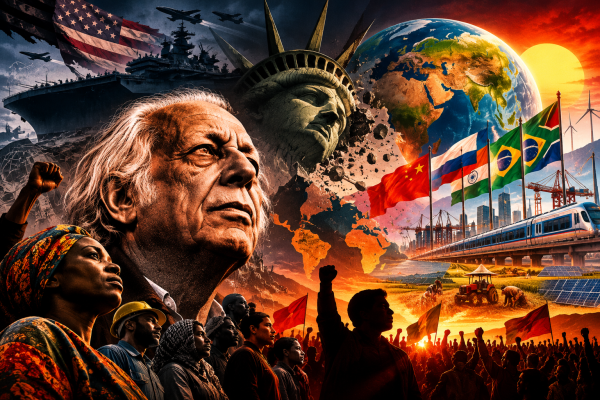
Radhika Desai’s Geopolitical Economy obliterates the illusion of a stable, American-led world, revealing that capitalism thrives on conflict, not unity. The book exposes capitalism’s instability, punctuated by crises that merely reshift the burdens onto workers and debtor nations. Desai argues for a multipolar world not as a peaceful transition to a new hegemon, but as a rupture from monopolistic control, fostering opportunities for sovereign development and socialist planning. However, liberation demands that working people reclaim the means of production and governance. The narrative warns against complacency; the emerging multipolarity is ripe for struggle, shaping the future based on who wields power over resources and development.

Keeping to the Socialist Path: Laos, China, and the Machinery of South-South Development

The June 2026 Laos-China state visit unfolded as a significant convergence between two socialist nations navigating their intertwined ambitions amid a capitalist-imperialist world. Rather than surrendering to the narrative of a “debt trap,” Laos and China embraced a collaboration marked by political intent, evidenced in thirty-two agreements across sectors like agriculture and technology. This partnership aims to transform Laos into a self-sufficient state, guided by its revolutionary history. The imperial media, however, conveniently ignored this cooperation, as it undermines their narrative of helpless nations. Laos, now reclaiming agency, is no longer portrayed as a mere victim but as a sovereign actor defining its path to development.

Hands Off Tanzania: The West Discovers Democracy When Africa Stops Asking Permission

Tanzania's diplomatic dance with Russia unveils a stark reality: while Western media narrows the narrative to a disobedient state seeking validation from imperial powers, the true story is a nation striving for sovereignty and survival. President Hassan’s trip, framed as a scandal by Western outlets, masks the pressing needs of food security, trade, and military cooperation. The West frames Africa’s foreign policy through its lens, yet Tanzania’s pursuit of diverse partnerships challenges this monopoly. This isn’t merely about a president’s reputation; it’s about a country's right to self-determination. The true scandal? Tanzania’s defiance shakes colonial chains, invoking both anxiety and resentment from its former overseers.

Capitalism After the Robbery: Adam Smith, the Wealth of Nations, and the Clean Alibi of Bourgeois Political Economy

Adam Smith’s The Wealth of Nations is a twisted tale masquerading as a free-market manifesto, one that defies the naive faith bestowed upon it by neoliberals. It exposes capitalism's fundamental contradictions, revealing how labor produces wealth while class divides it unjustly. Smith acknowledges the state's crucial role in maintaining this order, contradicting the myth of an autonomous market. He scrutinizes colonialism and monopoly yet ultimately upholds capitalist structures. Historical materialism challenges his framework, demanding accountability from the beneficiaries of this exploitation. As we dissect Smith's insights, we unearth his omissions, seeking a world where labor governs—transforming capitalism's alibi into an indictment of its foundation.

The World Was Not Discovered: Genocide, Slavery, and the Birth of Capitalist Empire

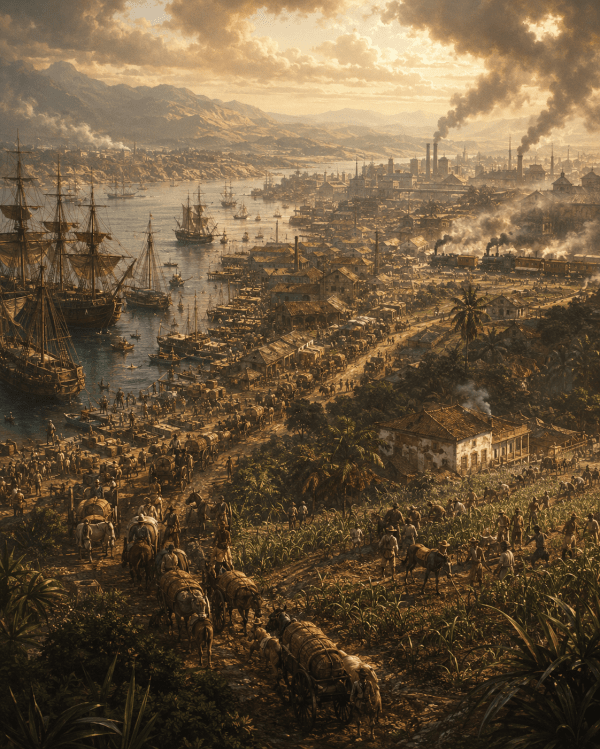
History is often told from the perspective of conquerors, romanticizing imperialism as a noble endeavor of “discovery.” However, this narrative ignores the vibrant, complex societies that existed long before European arrival; civilizations rich in culture and knowledge prepared to resist. The so-called “Age of Discovery” merely facilitated violent conquest, genocide, and exploitation. Colonialism and capitalism are intertwined, with wealth extracted through enslavement and land theft, while underdevelopment in colonized regions resulted from this systematic violence. Today, the consequences of colonialism persist, as neo-colonial strategies manipulate economies and suppress sovereignty. To reclaim the future, societies must confront this history, recognize the pain of oppression, and organize for a just world, free from the chains of empire.

Bull Market, Broke People: The Stock Market’s Good News Is the Working Class’s Bad Joke

As markets soar, the majority of households are trapped in economic despair, cutting back on spending as essential prices rise and wages stagnate. The AP's analysis of "consumer confidence" reveals a grotesque class divide—where the wealthy thrive and the working class suffers under burdens of debt and inflation. This narrative cleverly masks the structural inequalities, framing economic distress as mere sentiment rather than a blatant symptom of a system rigged in favor of capital. The urgent call to action is clear: workers must unify and transform their economic plight into organized class power, recognizing that genuine change requires confrontational strategies, not empty optimism.

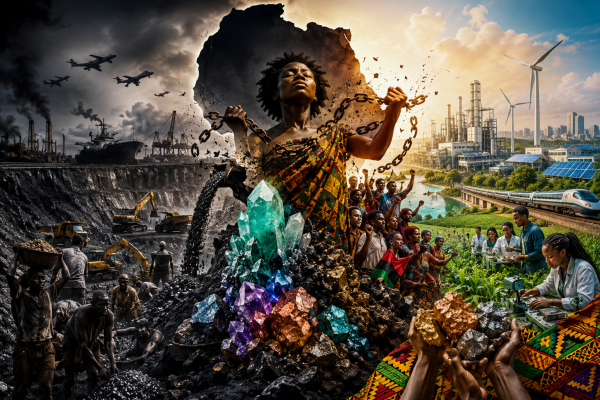
Black Gold, Broken Chains: The AES, China, and the Sahel’s Revolt Against Empire

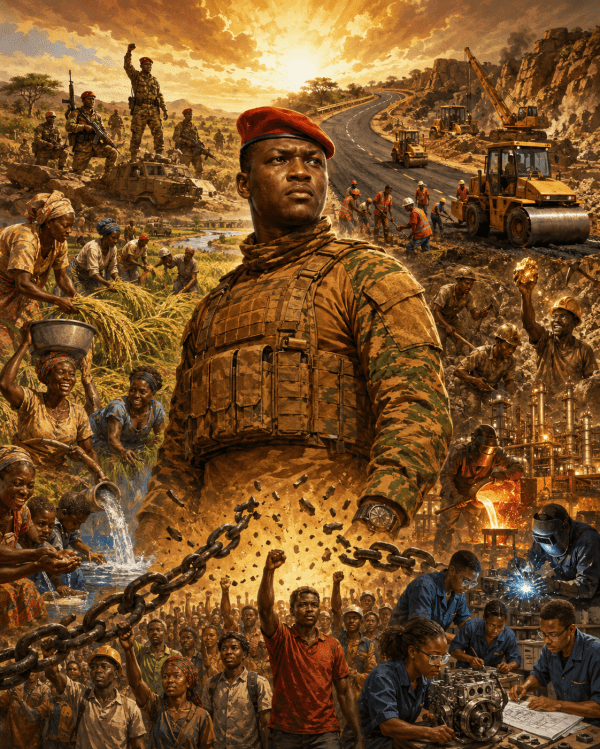
The recent oil agreements between Niger and Chinese firms aren't just another business deal; they expose a seismic shift in Africa's political landscape. As Western powers cling to outdated neocolonial frameworks, Niger is bargaining fiercely for sovereignty over its vast resources, rejecting mere extraction in favor of local control. This isn't a clean break; it’s messy and contradictory, revealing the power struggle over who governs the circulatory systems of wealth. The Sahel countries are navigating a new reality where they challenge traditional dependency and assert their agency. History is shifting beneath our feet—can Africa carve out a new path, or will old patterns reassert themselves?

Website Powered by WordPress.com.

Up ↑