When the Shield Became the Target: The Iran War and the Mecca Pact Beyond Washington

The Times of India packages Saudi money, Turkish military power and Pakistan’s nuclear arsenal into the spectacle of an emerging “Islamic NATO,” while burying the war and contradictions that made the agreement intelligible. Beneath the headline lies an older architecture of military cooperation, energy dependence and regional hedging accelerated by a U.S.-Israeli war that devastated... Continue Reading →

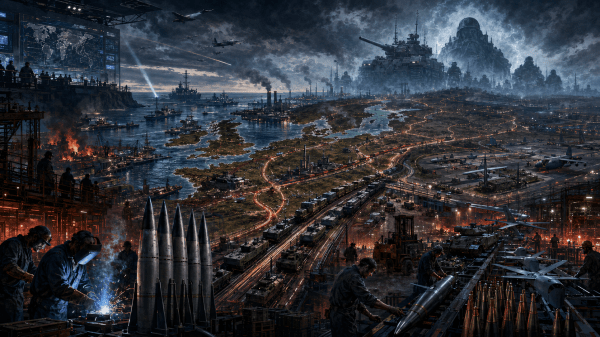
Tomorrow’s Russian Tank: How a Hypothetical War Rearms Europe Today

CNN warns that Russia could someday “test” NATO, but the military transformation supposedly justified by that future threat is already underway. Europe is being rearmed, civilian infrastructure reorganized for military mobility, and productive capacity redirected toward an expanding war economy as U.S. weapons stocks strain under commitments spanning Ukraine, Iran, Russia, and China. The deeper story is not a proven Russian timetable for invasion, but an American-centered imperial bloc confronting the rising cost of reproducing its military reach and hardening Europe as a Western Rear. What Russia could do tomorrow becomes the argument for what Europe must militarize today.

Factories for the Fortress, Austerity for the People: America’s Imperial Reconstruction

The so-called manufacturing rebound lauded by CNBC is a deceptive mirage masking an imperial crisis. Beneath flashy growth numbers lie the ruins of a deindustrialized America, where financial extraction and reliance on foreign inputs have left vital sectors like semiconductors and military production at risk. Tariffs inflate costs, wars disrupt essential supply chains, and the resulting economic strain is shifted onto workers and marginalized communities. Capital demands industry without meaningful investment in labor or infrastructure, turning factories into fortresses of control rather than engines of prosperity. This isn't a renaissance; it's an imperial scramble desperately attempting to reclaim dominance amid its own financial decay.

The Crime of Making Too Much: China and the Empire’s Monopoly on Abundance

The Economist's recent critique of China's industrial prowess reveals a deeper hypocrisy within Western narratives. While it acknowledges China's efficiency, it vilifies state-driven competition when it disrupts Western hegemony. The real issue is not overproduction but an imbalance of purchasing power, presenting an ugly tableau of warehouses filled with goods while people lack access. As China strives for self-reliance, the West's response is to impose tariffs and sanctions, prioritizing monopoly over equitable distribution. This conflict isn’t a mere economic dispute; it’s a struggle for who controls productive capacity. The question is whether to align production with human need or maintain the status quo of inequality.

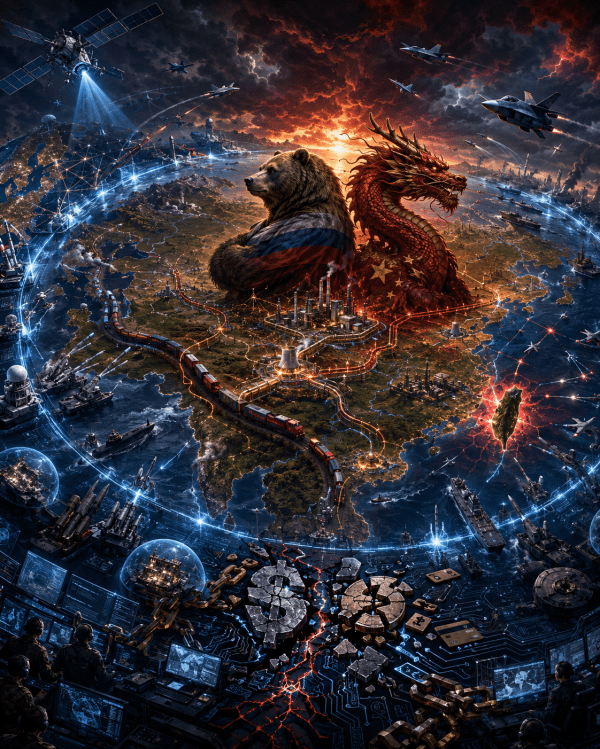
NATO’s Self-Fulfilling Prophecy; How Encirclement Forged the Russia–China Alliance

DER SPIEGEL's investigation into military cooperation between Russia and China is more than just a mere report; it's an embodiment of the West's narrative that casts these nations as the new "axis of evil." This framing is less about honesty and more about justifying aggressive military posturing and sanctions against perceived threats. The true danger lies not in an orientation towards war, but in an imperial system that, in its quest for domination, fuels the very alliances it fears. The article critiques this perspective, urging a grassroots movement to challenge militarism and push for a redirection of resources towards societal needs instead of war machinery.

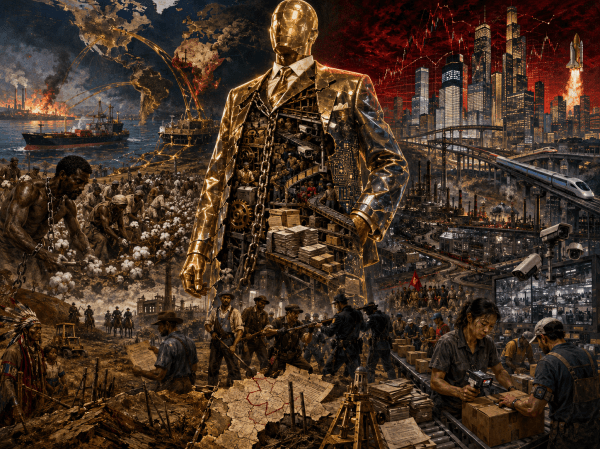
The Billionaire Is a Receipt: America’s Stolen Ledger of Wealth

The Wall Street Journal tells a fairy tale in which billionaires create wealth while workers, enslaved people, Indigenous nations, Black farmers, public institutions, and the Global South disappear from the ledger. This excavation restores the buried history beneath American fortunes: conquest, slavery, land theft, union-breaking, financial extraction, digital surveillance, and unequal exchange. The real divide is not between innovators and envious socialists, but between the masses who collectively produce social wealth and the minority whose property claims grant them command over it. The answer is organization—from the shop floor to the wider struggle for collective control over humanity’s abundance.

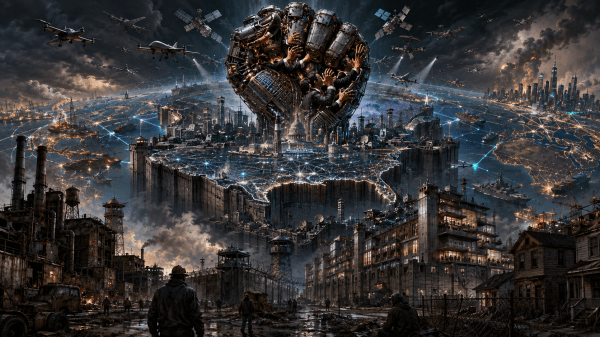
The Divided Empire: Prashad, Buze and the Contradiction Between Hyper-Imperial Unity and Capitalist Rivalry

In a time when U.S.-led imperialism tightens its grip, nuanced debates emerge about the new American Pole—a daunting fusion of military, financial, and technological power that suppresses dissent while promising security. Vijay Prashad argues for a hyper-imperialism consolidating state control and aggressiveness against external defiance, while Özcan Buze highlights lingering national rivalries within the empire’s core. As cities devolve into ghost towns stripped of industry and sovereignty is commodified, the left is urged to unite struggles for worker power, national liberation, and social ownership. The empire’s contradictions must fuel a revolutionary response—a call to dismantle the machinery that perpetuates exploitation, rather than aspiring for a mere return to past privileges.

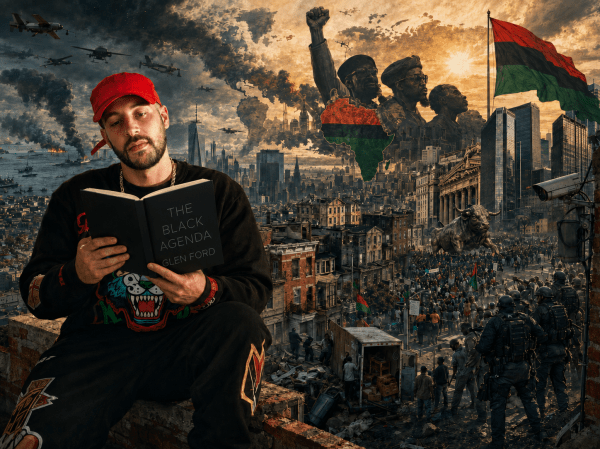
The Revolution Will Not Be Managed: Glen Ford, the Black Agenda, and the Missing Vehicle

Glen Ford's incisive critique shatters the myth of American progress, revealing how conquest and exploitation are cloaked as success. He dissects the deceptive practices of the Black misleadership class and the Democratic Party, showing how they perpetuate capitalist interests while masquerading as champions of Black liberation. Ford demands a radical rethinking of power and accountability, advocating for community control and reparations, emphasizing that true self-determination lies in empowering marginalized voices. Amidst the pandemic and civil unrest, Ford’s legacy calls for a revolutionary movement capable of dismantling systemic oppression rather than settling for token representation. The fight is not just for visibility; it’s for genuine power.

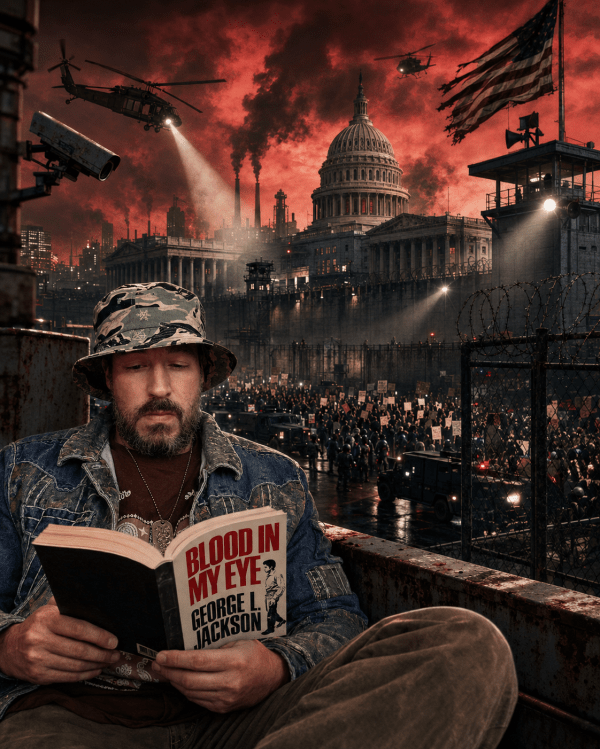
Democracy With a Gun to Your Head: George Jackson and the American Fascist Order

George Jackson wrote from inside the cage and exposed the system beyond it. In Blood in My Eye, prison, property, racial domination, monopoly capital, and imperial war appear not as separate problems but as parts of one American order. Jackson’s theory of secure fascism revealed how counterrevolution can rule through elections, reform, consumerism, surveillance, and controlled opposition as effectively as open terror. His strategic errors matter too: revolutionary potential is not consciousness, and militant initiative cannot substitute for organized mass power. This review recovers Jackson as a living weapon—one to be studied, sharpened, corrected, and returned to the struggle.

The Dream on Layaway: How Capital Repossessed American Adulthood

The "Great Postponement" isn't just about delayed dreams; it signals a devastating structural collapse for young adults trapped in a never-ending cycle of dependency and disempowerment. Despite holding jobs, many remain shackled to their parents' homes, unable to participate fully in adulthood due to spiraling rents and crippling inequality. The system deliberately obscures the true nature of this crisis, homogenizing individual struggles into mere statistics while upholding a status quo drenched in inherited privilege and racial disparity. The solution lies in organizing tenant unions and collective action—because waiting for change is no longer an option. The American Dream is not postponed; it's been stolen.

Website Powered by WordPress.com.

Up ↑