Françafrique 2.0: Macron, Multipolarity, and the Quiet Reassembly of Empire

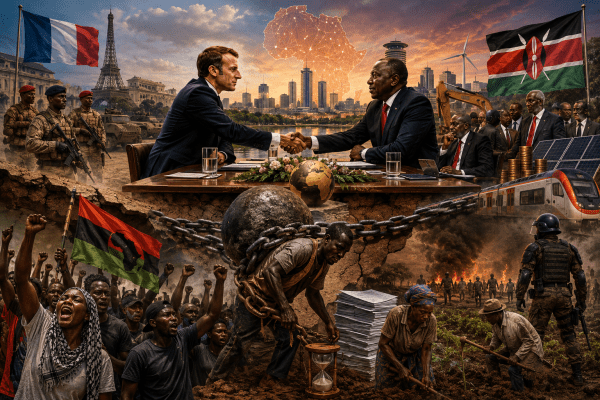
French President Emmanuel Macron's interruption at a Nairobi summit starkly reveals the hypocrisy behind France's so-called partnership with Africa. Masked in the rhetoric of mutual respect and development lies an insidious struggle for neocolonial influence amid a backdrop of declining French authority. As African nations increasingly assert sovereignty, aiming to break free from debt and military dependency, Macron's actions embody centuries of colonial entitlement. While Paris attempts to rebrand its influence through climate and technological initiatives, a new wave of Pan-African movements challenges these narratives, demanding genuine autonomy over the façade of partnership. The true legacy of imperialism endures, evolving but never vanishing.

Grand Theft América: Cartels, Capital, and the CIA’s Hemispheric War

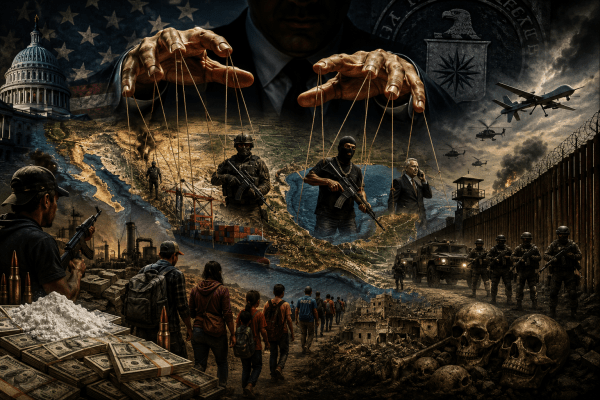
CNN's report on secret CIA operations in Mexico reveals a troubling narrative that frames U.S. intervention as a necessary counter-terror effort against cartels, while obscuring deeper issues of imperial influence. The article reflects how imperial media sanitizes violent operations, portraying them as essential for security. These actions are linked to a broader strategy of militarization and economic dependency, threatening Mexican sovereignty and democracy. The framing of cartels as terrorist organizations facilitates increased U.S. oversight and intervention. The need for organized anti-imperialist resistance is urgent, as declining U.S. hegemony conditions responses to crises under the guise of safety and necessity.

Great Satan at the Strait: Iran, International Law, and the Collapse of the “Rules-Based Order”

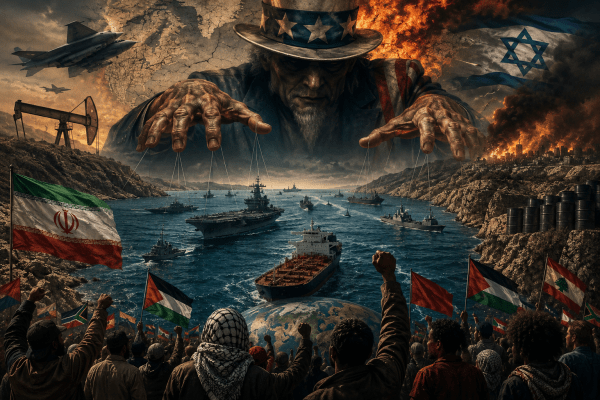
In a tale of diplomacy that sounds more like a sitcom plot, the Associated Press managed to frame U.S.-Israeli power plays as polite conversation while depicting Iran’s resistance as a chaotic tantrum. Imagine a landlord demanding rent while simultaneously hammering a "peace" sign into the wall—classic! The article promotes a narrative where blocking a nation is just “maritime security,” leaving readers to wonder if the actual level of aggression got lost in translation. Amid drones and oil price panic, the main issue lurking around like an unwelcome relative is whether nations can truly be sovereign or if they must politely obey the empire’s whims. It's a comedy of imperial contradictions, where legality bends more than a yoga instructor under pressure!

From Alliance to Containment: How Anglo-American Power Engineered the Cold War

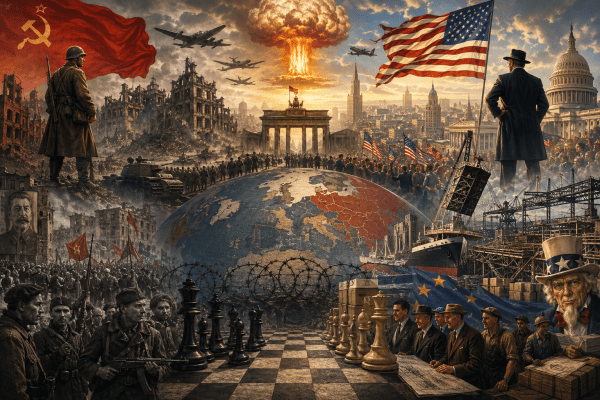
The essay provocatively dismantles the myth that the Cold War was merely a reaction to "Soviet aggression." Instead, it reveals it as America's calculated strategy to reinforce a capitalist world order post-World War II, driven by anxieties over rising leftist movements and anti-colonial uprisings. It highlights how the U.S. initiated a campaign of political warfare and economic reconstruction through the Marshall Plan, effectively shaping Europe and other regions under its imperial influence. To Washington, the real danger was not communism but the threat of genuine independence that challenged capitalist dominance. The Cold War was less about ideological battles and more about inter-imperialist struggles to determine global economic control.

Françafrique Forward: Macron, Ruto, and the Nairobi Trap of Imperial Recalibration

The Africa Forward Summit in Nairobi is nothing more than a polished façade for France's enduring imperial ambitions in Africa, cleverly cloaked in the language of innovation and partnership. While hailed as a diplomatic reset as it moves outside Francophone Africa for the first time, the summit simply signals France’s desperation to regain footholds after being ousted from the Sahel. As Kenya grapples with its own debt crisis, the summit reflects a deeper reality: a struggle for sovereignty masked by corporate rhetoric. Opposing forces are mobilizing against this repackaging of imperialism, unearthing the true narrative of resistance against old empires in new guises.

Census of Collapse: Trump, Technofascism, and the War Against Reality

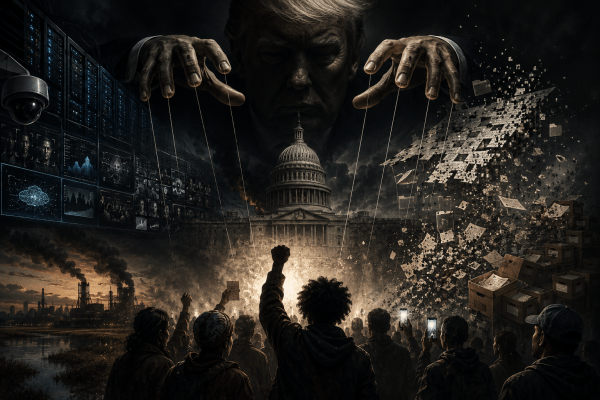
The Trump regime's assault on federal datasets is a calculated effort to erase reality, obscuring critical information on hunger, pollution, maternal health, and climate disasters. By dismantling public data, the ruling class suppresses the very tools citizens need to challenge systemic failures. Expert narratives dominate discourse, overshadowing the voices of the oppressed who suffer and resist. This isn't just bureaucratic negligence; it's a deliberate strategy to manage perception amidst a crumbling empire. As the regime erases statistics, communities are disarmed and rendered invisible, making the struggle for public knowledge essential to resistance against state control. The battle for data is a battle for truth.

The Corridors of Defiance: How the War on Iran Accelerated the Multipolar Reorganization of Western Asia

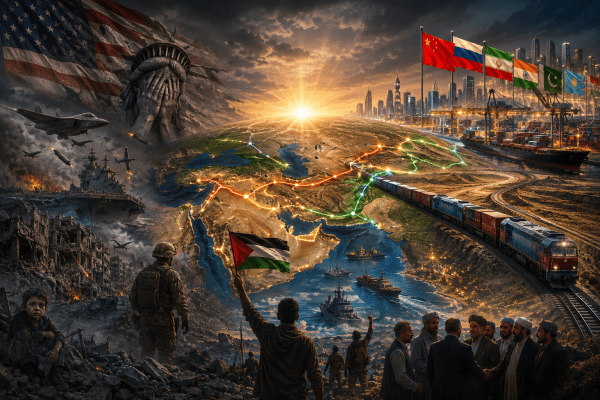
The 2026 U.S.-Israeli assault on Iran was a strategic miscalculation, intended to reassert imperial dominance in Western Asia but instead revealing the fragility of Atlantic hegemony. As the old security architecture eroded, alternative infrastructures and regional alliances emerged, facilitating trade and cooperation beyond Western control. The ongoing crises connected Gaza, Yemen, and the vital sea lanes, illustrating that military aggression has backfired, prompting regional states to recalibrate and seek resilience against imperialism. This war exposed a transformative geopolitical landscape, where logistics and diplomatic maneuvers are increasingly driven by necessity, carving out a multipolar future and undermining the sheer authority once held by the empire.

Empire’s Digital Panic: China, Xinjiang, and the War Over Who Controls the Future

The Associated Press investigation reveals a shocking truth: Silicon Valley's complicity in building the surveillance apparatus that the West now demonizes in China. While framing China as a "digital police state," the report subtly shields the very imperial system enabling such technologies. It highlights a deeper confrontation—one where the U.S. grapples with losing its monopoly on development and technology. As the New Cold War intensifies, the true danger emerges: not the surveillance itself, but the realization that a socialist-oriented state can achieve modernization and stability without Western control. The empire's fear lies in losing its grip over a future it desperately seeks to define and dominate.

The Devil’s Republic: Illuminati Panic and the Hidden Architecture of American Repression

The American ruling elite has a long history of morphing political dissent into a narrative of demonic threat, consolidating their power through fear tactics akin to those seen during the Illuminati panic of the 18th century. This episode illuminated how conspiracy theories, fueled by elite anxieties, have criminalized immigrants and suppressed dissent. The manipulation of societal fears allows the state to transform opposition into an existential threat, justifying repression and surveillance. Today's conspiracism, though often dismissed as irrational, reveals a deeper urgency: a misdirected anger at real systemic injustices commodified into scapegoating narratives, obscuring the true architecture of capitalist power while paralyzing collective political action.

Failure According to Whom?: Rewriting the Metrics of Socialism

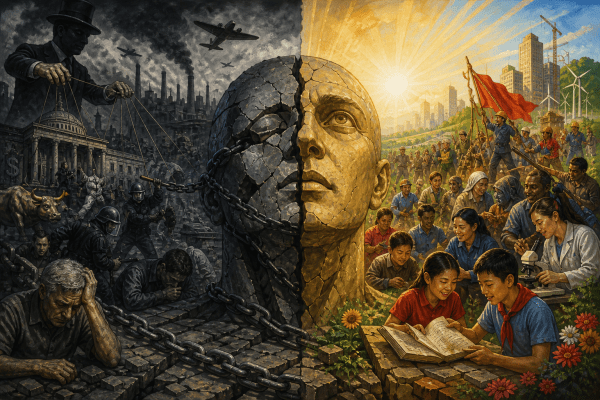
The pervasive claim that socialism has "failed" is an ideological construct rather than a factual statement. A closer analysis reveals that socialist systems, from the Soviet Union to China, achieved measurable gains in education, health, and economic development under dire conditions. This narrative of failure is not supported by historical evidence but rather is a product of a century-long ideological war against socialism. Capitalism, meanwhile, perpetuates crises, inequality, and social fragmentation, failing to meet human needs. The real question is not why socialism fails, but how it has transformed societies when confronted with immense challenges, challenging the ruling narrative that defines success so narrowly.

Website Powered by WordPress.com.

Up ↑