How the American Pole escalated from sanctions to abduction—and why sovereignty survived the attempt at decapitation
The Day the Monroe Doctrine Spoke in Plain English
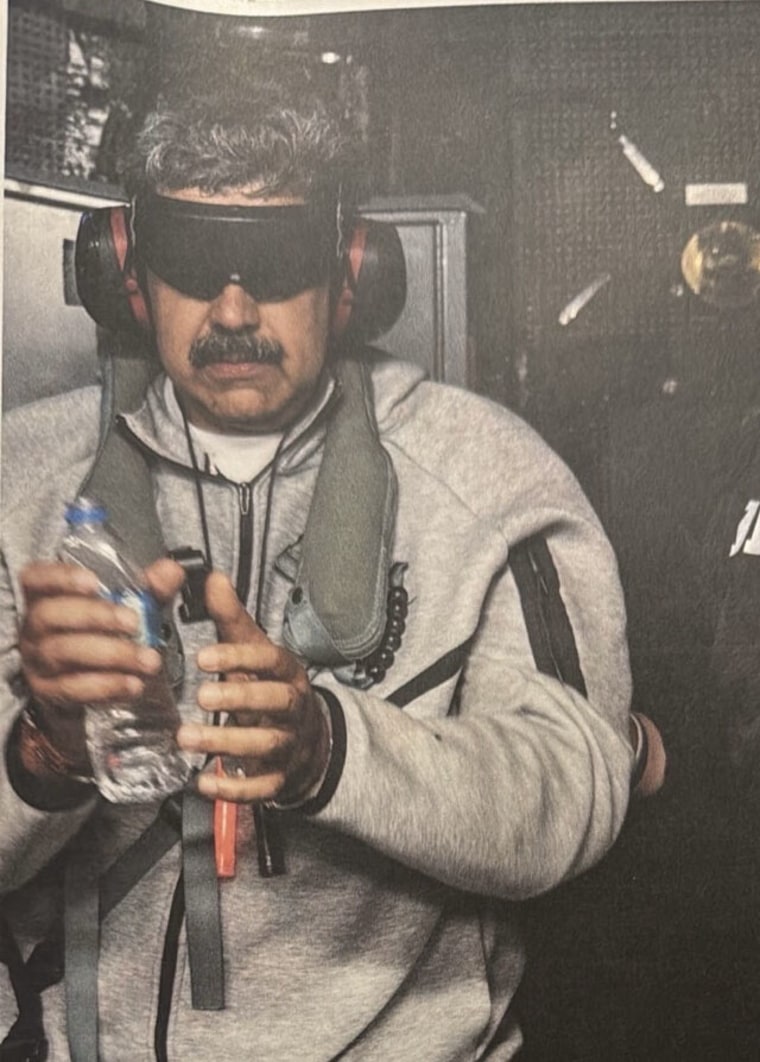
There are moments when empire stops dressing itself up. The usual costumes—“democracy promotion,” “human rights,” “counter-narcotics,” “regional stability”—fall off, and what remains is the hard, naked grammar of domination. That is the political meaning of what has unfolded around Venezuela: an operation described across multiple reports as a direct U.S. assault on Venezuelan targets and the kidnapping of President Nicolás Maduro, followed by public statements from the Trump regime that amount to something even more revealing than the action itself—an open claim that Washington intends to govern Venezuela.
Let us be clear about what that means, before the propaganda fog thickens. If a foreign power captures the head of state of another country by force, that is not “law enforcement.” If it strikes a country’s territory and announces its intention to administer that country’s political future, that is not “supporting democracy.” It is aggression. It is invasion by another name. It is the return of colonial rule—no longer whispered through proxies and NGOs, but spoken aloud, with the smirk of a landlord walking into a tenant’s home and informing them the lease is over because the landlord has decided it is.
This is precisely why the event cannot be understood as an isolated incident, a rogue escalation, or a television spectacle. It must be read inside the framework the U.S. ruling class has already laid out in its own doctrine. The 2025 National Security Strategy is not a neutral policy document—it is a confession written in bureaucratic prose. It tells us the empire is contracting: the fantasy of uncontested planetary supremacy has collided with multipolar reality, with China’s industrial weight, Russia’s refusal to disappear, and a Global South that increasingly treats U.S. commands as negotiable. In that context, the strategy pivots toward a colder, older solution: lock down the hemisphere, consolidate the backyard, and convert Latin America into a disciplined command space for the long war to come.
That is what we have been calling the American Pole: Fortress America, updated for the age of digital control and imperial panic. It is not simply a foreign policy orientation; it is a system of regional management. The hemisphere becomes a logistics platform, a resource vault, a buffer zone, and a policing theater. Sovereign governments are sorted into two categories: those that obey, and those that must be made into examples. The first are rewarded with weapons, loans, and praise. The second are criminalized, sanctioned, isolated, and—when necessary—attacked.
Venezuela sits at the center of this sorting process because it represents the kind of refusal that the American Pole cannot tolerate. Not because it is flawless, not because it is pure, but because it has survived. It has endured sanctions, sabotage, asset theft, diplomatic strangulation, coup theatrics, and mercenary adventures—and still the state remains standing, still the armed forces have not been peeled away from the sovereignty project, still popular forces exist that understand, in their bones, what imperial domination looks like. In imperial logic, survival becomes provocation. A government that does not collapse on schedule becomes an insult. So the empire escalates.
The significance of the Trump regime’s rhetoric—reported widely and echoed in the president’s own public posture—is that it collapses the distance between what Washington does and what it claims to be. For years, U.S. power relied on plausible deniability: the chaos was accidental, the suffering unfortunate, the coups regrettable, the sanctions “targeted,” the invasions “humanitarian.” Now the mask slips further. When the president of the United States announces that Washington will govern Venezuela, he is not making a policy nuance. He is stating the premise of the American Pole in its most honest form: the hemisphere is ours, and sovereignty is conditional.
This is also why the operation cannot be reduced to one man, one raid, or one press conference. It is a demonstration. It is meant to be seen. It is meant to tell every government in the region—and beyond the region—that if you resist the imperial blueprint, your legality will be revoked, your leaders will be hunted like fugitives, and your country will be treated as an administrative problem to be solved by force. In other words, it is not only Venezuela being targeted. It is the idea of sovereign defiance itself.
The empire wants the people of the United States to see this as “security,” to imagine that their own misery at home is being defended by violence abroad. But the working class does not eat “security.” It eats food. It pays rent. It stands in hospital waiting rooms. Meanwhile the empire spends its declining legitimacy like loose change, trying to purchase obedience with fear. This is the technofascist rhythm of late imperialism: a ruling class that cannot deliver prosperity manufactures enemies; a state that cannot persuade escalates coercion; a system that has lost global consent tries to compensate with hemispheric control.
So Part I must begin where all honest analysis begins: naming the act for what it is. If these reports and the regime’s own posture reflect reality, then the United States has committed an open act of aggression against Venezuela and paired it with an explicit claim to administer Venezuelan political life. That is colonialism without perfume. And it is the clearest signal yet that the American Pole is no longer an emerging formation on paper—it is becoming a governing method in practice.
Twenty-Five Years of Siege, Written in Sanctions and Sabotage
To understand the present escalation, we have to stop treating it like a sudden storm. Venezuela did not wake up one morning and become a “crisis.” Venezuela was made into a crisis—patiently, methodically, across administrations, across parties, across the shifting costumes of U.S. empire. From the first election of Hugo Chávez in 1998 to the tightening chokehold under Trump 2.0, the pattern has been consistent: punish any attempt to redirect national wealth toward the poor, break any government that refuses subordination, and make sovereignty itself feel like an unaffordable luxury.
Chávez’s original crime was simple and unforgivable in the eyes of Washington: he took the Monroe Doctrine seriously enough to reject it. He asserted control over oil policy, used state capacity to expand social programs, and spoke openly about Latin American unity outside U.S. command. In any other country, that would be called politics. In the imperial center, it was treated as heresy. Almost immediately, the relationship shifted from diplomacy to containment. A new Venezuelan project was born—imperfect, contradictory, but real—and the U.S. response was not to compete politically, but to apply pressure until the project broke.
The early years revealed the empire’s preferred methods: destabilize, then call the destabilization proof that the government is illegitimate. The 2002 coup attempt—brief, chaotic, and ultimately reversed by popular mobilization and loyalist sectors of the military—became a warning shot in two directions. It warned Venezuela that Washington would tolerate unconstitutional outcomes so long as they served imperial interests. And it warned the region that the old toolbox had not been retired. What failed in April 2002 did not disappear; it evolved. After that, the United States did what it often does when a blunt instrument misses its target: it switched to a slower weapon.
That slower weapon was economic and financial war. It does not arrive with tanks first; it arrives with paperwork. Executive orders, banking restrictions, asset freezes, the quiet terror of being cut off from the arteries of global finance. Over time, this becomes a siege economy: trade becomes harder, imports become scarce, currency becomes brittle, investment becomes impossible, and the state is forced into permanent emergency management. The point is not merely to “punish leaders.” The point is to punish the social base—to make daily life so difficult that political exhaustion becomes a substitute for regime change.
By 2015, the siege was formalized into doctrine. Washington declared Venezuela a national emergency threat—an absurd claim on its face, but an important one politically because it opened the legal gates for a wider sanctions architecture. After that, the machinery accelerated: sectoral sanctions, restrictions on state financing, pressure on oil sales, and eventually the kind of sanctions that do not merely constrain a government but attempt to immobilize an entire economy. In plain language: a country whose principal revenue is oil was targeted at the point where revenue becomes oxygen. You do not do that to promote democracy. You do that to suffocate.
When Nicolás Maduro assumed the presidency after Chávez’s death in 2013, the empire saw an opportunity: transition periods are when states are most vulnerable. Political tensions inside Venezuela sharpened, and U.S. policy sharpened with them. Washington did not become aggressive because Venezuela had become “authoritarian.” Washington became aggressive because it believed the Bolivarian project could finally be broken. The sanctions intensified, the diplomatic isolation widened, and the media narrative hardened into a single monotonous refrain: Venezuela is a failed state, Venezuela is a dictatorship, Venezuela is a threat. This is how siege warfare is sold to distant audiences—by transforming a complex society into a cartoon that deserves whatever happens to it.
The 2019 period was the theatrical high point of indirect rule: the recognition of an alternative “interim” authority, the attempt to manufacture legitimacy from outside the country, the expectation that the state apparatus would flip if Washington simply declared it so. That effort exposed something crucial: foreign recognition cannot substitute for domestic power. A government can be denied diplomatic recognition and still govern. A parallel authority can be recognized in Washington and still be a phantom in Caracas. The Guaidó operation did not succeed in breaking the state. It did succeed in normalizing an extraordinary principle: that the United States can designate leadership in another country and call it democracy.
When that failed, the toolbox expanded again. The siege did not remain economic. It became kinetic at the edges: sabotage allegations, mercenary theater, and the kind of adventurism that always appears when a powerful state convinces itself that history must comply. The 2020 episode known as Operation Gideon—an ill-fated incursion involving dissident forces and U.S.-linked contractors—was not significant because it was competent. It was significant because it revealed the continuity between policy and clandestine appetite. The empire kept testing the perimeter: what can we attempt, what will we be allowed to deny, how far can we push without paying an unbearable price?
Alongside this, the juridical war intensified. U.S. indictments and reward offers were deployed not as neutral legal instruments but as political weapons—turning the head of a sovereign government into a wanted fugitive in the empire’s own courts. This is not the rule of law; it is the law of rule. It is an older imperial technique updated for modern optics: treat your enemy not as a political adversary but as a criminal, so that any action taken against them can be framed as “justice” rather than intervention.
Through all of this, Venezuela did not collapse. It suffered—deeply. It was battered, distorted, forced into improvisations that produced their own contradictions. But it did not fold into U.S. command. And that stubborn fact is what brings us to the present. What we are witnessing now is not a departure from the past quarter-century. It is the past quarter-century reaching its logical edge. The empire tried to overthrow Venezuela through coups. It tried to starve it through sanctions. It tried to replace it through manufactured legitimacy. It tried to criminalize it through lawfare. And now, confronted with endurance, it escalates toward open administration.
This is what the long siege was preparing for: not a humanitarian outcome, not democratic flourishing, but the normalization of the idea that sovereignty in the hemisphere is conditional—revocable by Washington when the American Pole requires it. Venezuela is not merely being attacked. It is being used as a stage on which the empire rehearses a broader doctrine: that in an age of multipolarity, it will compensate for declining global authority by tightening its grip at home—starting with the hemisphere it has always treated as property.
From Courtroom to Battlefield: Narco-Lawfare as Imperial Method
The charge of “narco-trafficking” did not emerge because new evidence suddenly surfaced. It emerged because the empire ran out of softer instruments. When coups fail, when sanctions fail, when parallel governments collapse under the weight of their own artificiality, the United States reaches for a weapon it knows how to dress up as neutral: law. Not law as a social contract, but law as an extension of war by other means. This is what we are witnessing now—juridical warfare elevated into a governing doctrine, deployed extrajudicially across borders, stripped of any pretense of universality.
The accusation against Venezuela has always been political in origin and selective in application. The U.S. does not prosecute narcotrafficking as a global crime; it prosecutes it as a loyalty test. States that align with Washington’s security architecture are treated as “partners,” regardless of how deeply cartels penetrate their institutions. States that assert sovereignty are reclassified as criminal enterprises. The distinction has nothing to do with cocaine flows and everything to do with geopolitical obedience. This is why the same empire that indicted Venezuela for “narco-terrorism” shielded regimes whose leaders were later convicted in U.S. courts for moving hundreds of tons of drugs—once their usefulness had expired.
In material terms, the narrative collapses immediately. Venezuela is not a major producer of cocaine. It does not anchor the core processing chains. Its role in transit has always been marginal, shaped by geography and displacement effects caused by interdiction elsewhere—especially in Colombia, the single largest cocaine producer in the world and a long-standing U.S. military partner. If narcotrafficking were the real concern, the center of gravity would look very different. But empires do not indict where the problem is largest; they indict where resistance is strongest.
What Washington has constructed is not a criminal case but a propaganda scaffold. Defectors facing charges are elevated into witnesses. Intelligence claims are recycled as evidence. Media repetition substitutes for proof. Over time, accusation becomes atmosphere. And once the atmosphere is thick enough, extraordinary actions can be sold as routine enforcement. This is how the empire launders aggression through legality—by transforming political conflict into a question of policing, and policing into a license for intervention.
The deeper danger lies not in the specifics of the charge, but in the precedent it sets. A head of state is no longer treated as a political actor subject to international law, but as a fugitive subject to unilateral arrest. Jurisdiction is no longer territorial or consensual; it is imperial. The United States claims the right to reach anywhere, seize anyone, and justify it afterward by citing its own courts. This is not law enforcement. It is planetary extrajudiciality—the suspension of sovereignty under the guise of justice.
This method has a history. The drug war has long served as the empire’s moral alibi, a flexible language that can be activated when other narratives lose credibility. During the Cold War, “communism” played this role. After 9/11, “terrorism” inherited it. Today, “narco-terrorism” fuses both: criminality without politics, violence without context, enemies without rights. It allows the empire to say, with a straight face, that it is not intervening in another country’s affairs—it is merely enforcing the law. Its law. Everywhere.
Within the framework of the 2025 National Security Strategy, this makes perfect sense. The American Pole requires mechanisms that bypass diplomacy and neutralize resistance quickly. Sanctions weaken economies. Information warfare fractures legitimacy. Lawfare delegitimizes leadership. Together, they form a pipeline from accusation to administration. Once a government is criminalized, its removal becomes a technical problem rather than a political crime. This is how the empire prepares the hemisphere for direct management without calling it colonialism.
But here is the contradiction the empire cannot erase: lawfare does not confer power on the ground. Courts in New York do not command territory in Caracas. Indictments do not move armies or govern populations. What they do is signal intent—to allies, to adversaries, to the Global South. They announce that sovereignty is conditional, that legality flows outward from Washington, and that any state refusing alignment may find itself reclassified overnight from “government” to “gang.”
The narco-trafficking narrative, then, is not a misunderstanding to be corrected. It is a weapon to be disarmed. It exists to justify actions that would otherwise be recognized for what they are: acts of aggression, violations of international law, and rehearsals for a hemispheric order in which the United States governs not by consent, but by criminal designation. Venezuela is not on trial. Sovereignty is.
A President in Chains, a State Still Standing
The spectacle is meant to do the work of reality. A president seized, paraded, spoken of as if the state itself has been decapitated. This is how empire teaches its audience to confuse theater with power. But sovereignty does not evaporate when a leader is taken. Governments are not held together by a single body; they are held together by institutions, territory, armed forces, administrative continuity, and—most decisively—the organized consent or compliance of the population. By every serious measure, the Venezuelan state still exists, still governs, and still exercises effective control over its territory.
This is the contradiction Washington cannot manage with press conferences. The kidnapping of a head of state was intended to produce collapse. It was meant to trigger a vacuum—panic in the barracks, fractures in the ministries, paralysis in the streets. Instead, what followed was continuity under emergency conditions. The ministries continued to function. The armed forces reaffirmed the constitutional order. Popular organizations mobilized in defense of sovereignty. The state did not dissolve into chaos because it was never reducible to one man.
This is precisely why the empire prefers to personalize politics when it intervenes. By turning a government into a villain and a president into a criminal, it hopes to sever the link between the state and the people, to suggest that removing the figure will automatically remove the structure. But history teaches the opposite lesson. States forged under siege—especially those born from mass political movements—often develop redundancies precisely because they expect decapitation attempts. Venezuela’s experience over the last quarter-century has been one long tutorial in surviving them.
Legally, the situation exposes another imperial fiction. A kidnapped president does not cease to be president. There has been no constitutional process inside Venezuela declaring an absence, no transfer of power legitimated by domestic institutions, no recognition by the organs that actually govern the country*. What exists instead is a unilateral assertion by a foreign power that its actions have redefined Venezuelan legality. That assertion has no standing beyond the empire’s own echo chamber.
In practical terms, the Venezuelan government continues to issue orders, manage territory, collect revenues, and maintain security. Embassies still answer to Caracas. Military commands still operate under the same chain of command. Social programs—imperfect, strained, but real—still function. This is not symbolism; it is governance. And governance, not recognition from Washington, is what defines a state in international reality.
The empire understands this, which is why the kidnapping is only one move in a larger sequence. It is not meant to resolve the question of power; it is meant to intensify it. By seizing the president while the state endures, Washington creates a dangerous ambiguity it hopes to exploit: Who speaks for Venezuela? Who signs? Who negotiates? Who is “legitimate”? This manufactured uncertainty is not a bug—it is the strategy. It is how external actors try to pry open internal fractures without having to occupy the territory outright.
Yet ambiguity cuts both ways. The longer the state continues to function, the more naked the aggression becomes. What was supposed to look like law enforcement begins to look like hostage-taking. What was framed as justice begins to resemble administration by force. And the global audience—especially in the Global South—understands this intuitively. They have seen this movie before. They know the difference between constitutional transition and imperial abduction.
This moment therefore clarifies something essential: the American Pole is not built on stability, but on managed disruption. It does not require the immediate collapse of sovereign states; it requires only enough chaos to justify supervision, enough pressure to force concessions, enough fear to discipline others watching from the sidelines. Venezuela’s continued existence as a functioning state is not an inconvenience to this strategy—it is a test case. Can the empire govern around sovereignty when it cannot abolish it outright?
For now, the answer is unresolved. A president has been taken, but the republic remains. And in that gap—between spectacle and structure—lies the real battlefield of the coming period. Not whether Venezuela exists, but whether the world will accept the idea that a state can be ruled from the outside simply because its leader has been placed in chains.
A Message Written in Force: What This Act Is Meant to Teach the World
Empires do not act only to change facts on the ground; they act to shape expectations in the minds of others. What has been done to Venezuela is not intended to be read narrowly, as a bilateral dispute or an isolated escalation. It is a communiqué—delivered not through diplomats but through force—addressed to every government in the hemisphere and far beyond it. The message is blunt: sovereignty is conditional, leadership is provisional, and resistance will be personalized, criminalized, and punished wherever Washington decides its interests are at stake.
This is how declining empires compensate for shrinking authority. When persuasion fails and legitimacy thins, spectacle becomes instruction. The seizure of a head of state is meant to linger in the political imagination of others—to sit in the back of cabinet rooms in Bogotá, Mexico City, Brasília, La Paz, Pretoria, and Jakarta. It is meant to introduce a calculation into every sovereign decision: what happens if we go too far, trade too freely, align too openly, refuse too directly? Fear, in this sense, becomes a governing instrument.
The 2025 National Security Strategy makes this logic explicit in everything but name. The Western Hemisphere is declared the core security zone of the United States, a space where external rivals will not be tolerated and internal deviation will be corrected. What we are witnessing is that doctrine being operationalized. Not through invasion in the classical sense, but through calibrated violations designed to test reactions, establish precedent, and normalize the extraordinary. Once a line is crossed without consequence, it becomes a new baseline.
International law is not being ignored accidentally; it is being deliberately subordinated. The prohibition against the seizure of heads of state, the principles of non-intervention, the norms of sovereign equality—these are treated as optional constraints that apply only when they align with imperial objectives. This is not hypocrisy; it is hierarchy. The law is not abolished. It is re-ranked. Those at the top decide when it applies and to whom.
The signal is especially clear to governments experimenting with multipolar alignment. Trade with China, infrastructure deals outside Western finance, energy policy independent of U.S. preferences, refusal to host bases or intelligence platforms—these choices are being reframed as security threats. Venezuela is not being punished for what it has done, but for what it represents: proof that a country can survive outside the empire’s preferred architecture. That example, more than any shipment of oil or any speech at the UN, is what Washington seeks to erase.
Yet signals can misfire. Power that relies increasingly on intimidation risks revealing its own limits. Every state in the Global South understands that if a president can be seized today, then treaties, assurances, and “partnerships” tomorrow are worth less than they appear. The act meant to discipline may instead accelerate hedging—diversification of alliances, deeper South–South coordination, quiet preparation for a world in which U.S. guarantees are indistinguishable from threats.
There is also a domestic audience for this message. The American population is being taught to see extraterritorial force as normal governance, criminalization as foreign policy, and empire as law enforcement writ large. This is part of the internal work of the American Pole: preparing the settler core to accept that domination abroad and discipline at home are two sides of the same project. What can be done to others, it is implied, can be done in different forms internally if order requires it.
The risk for the empire is that coercion clarifies rather than confuses. When the mask drops, alignment becomes a moral and political choice rather than a technical one. The kidnapping of a president does not merely warn sovereign powers; it forces them to decide whether a world governed by such acts is one they are willing to help normalize. History suggests that empires often misjudge this moment—mistaking silence for consent, caution for submission.
What has occurred, then, is not simply an attack on Venezuela. It is a stress test of the global order in transition. The United States is probing how far it can go in asserting hemispheric command in a multipolar world. The response—or lack of one—will shape the next phase of imperial recalibration. And whatever the outcome, one truth has already been established beyond recall: the age of polite denials is over. Power is speaking more directly now, and the world is being asked, unmistakably, whether it will listen—or resist.
From Venezuela Outward: How the American Pole Expands Without Asking
What has unfolded in Venezuela is not the endpoint of a campaign; it is the opening of a wider chapter. Empires do not rehearse power once. They generalize it. The seizure of a president, the normalization of extrajudicial lawfare, the attempt to govern around an intact state—these are not Venezuelan-specific tactics. They are modular. They are meant to be portable. And once they are tested in one theater, they are refined for the next.
This is where the logic of the American Pole comes fully into focus. The hemisphere is not being governed through treaties or consensus but through calibrated domination—pressure applied unevenly, force deployed selectively, legality rewritten case by case. Some states are designated pillars and rewarded for obedience. Others are marked as examples. The difference is not ideology, corruption, or human rights. It is alignment. In this system, sovereignty is no longer a right; it is a status that can be suspended.
The threats directed—openly or implicitly—at Colombia, Mexico, Cuba, and others are not rhetorical excess. They are boundary markers. They tell regional governments how far they may drift before discipline follows. A president who questions the drug war, who reorients trade, who refuses basing agreements, who seeks multipolar partnerships is no longer treated as a political counterpart. They become a risk variable to be managed. Venezuela is the demonstration model for that management.
The empire’s planners understand something clearly: they cannot roll back multipolarity globally, but they can attempt to fence it out of the hemisphere. That is the wager. Control the Caribbean basin, dominate continental supply chains, police political deviation, and the United States can negotiate its global decline from a position of regional command. This is not retreat. It is consolidation. And consolidation, historically, is often more violent than expansion.
Yet consolidation generates its own contradictions. The more force is used to impose order, the more visible the coercion becomes. The more visible the coercion, the harder it is to sustain the fiction of partnership. Governments may comply publicly while hedging privately. Militaries may cooperate tactically while calculating long-term autonomy. Popular movements—workers, campesinos, Indigenous communities—draw their own conclusions about who benefits from a hemispheric order built on fear.
Venezuela’s continued existence as a governing state under siege therefore matters far beyond its borders. It disrupts the script. It shows that decapitation does not automatically equal submission, that sanctions do not automatically equal surrender, that criminalization does not automatically dissolve legitimacy. Every day the state functions is a quiet rebuke to the doctrine being tested upon it.
For the Global South, the lesson is equally stark. The international system is entering a phase where rules are enforced hierarchically, not universally. Neutrality offers diminishing protection. Silence does not guarantee safety. The choice is not between confrontation and comfort, but between managed subordination and organized sovereignty. Venezuela has been pushed into that choice by force. Others are being nudged toward it by warning.
History rarely announces itself with clarity, but this moment comes close. The American Pole is no longer a theory; it is an operating practice. It governs by exception, expands by precedent, and secures itself by demonstrating what it is willing to do. Whether this project hardens into a durable hemispheric order or fractures under its own coercive weight will depend not on Washington alone, but on how others respond—individually, regionally, collectively.
One thing, however, is already clear. The era in which U.S. power could pretend to be benign is over. What replaces it is more naked, more brittle, and more dangerous. Venezuela is not the last page of this story. It is the chapter heading. And the struggle unfolding there will echo wherever sovereignty still insists on being more than a permission slip issued by empire.
Sovereignty Under Kidnapping Conditions
Strip away the spectacle and the contradiction stands naked. An empire claims the right to rule beyond its borders, to seize a president, to declare authority where it has none. Yet the state it sought to decapitate still governs. Ministries function. Territory remains administered. Armed forces obey constitutional command. Popular forces mobilize. What was meant to look like the end of sovereignty has instead exposed its material core. Power does not reside in press conferences or indictments. It resides in control, organization, and the ability to reproduce political life under pressure.
This is the unresolved fact Washington cannot narrate away. The kidnapping of a head of state did not produce collapse; it produced clarity. The empire has crossed from indirect domination into open assertion, from managed interference into overt colonial behavior. The language of partnership has fallen away. What remains is administration by force, legality rewritten as convenience, and sovereignty treated as a privilege that can be revoked. This is not a deviation from the system. It is the system, entering a more honest phase.
Historically, this moment belongs to a familiar pattern. When empires lose the ability to universalize their rule, they regionalize it. When legitimacy erodes, coercion compensates. When decline sets in, the mask drops. The return of open colonial practices—kidnapping, extrajudicial seizure, rule by exception—is not proof of strength but of contraction. The American Pole is being built not because the United States is ascendant, but because it is cornered.
Venezuela is not an anomaly in this story; it is the warning flare. What has been done there is meant to condition the hemisphere, to teach governments and peoples alike that sovereignty now comes with kidnapping conditions attached. Align, or risk reclassification. Obey, or face criminalization. Survive, if you can. This is the world the empire is attempting to normalize.
But normalization is not inevitability. The state still governs. The people still exist. The contradiction remains unresolved. And that unresolved contradiction is precisely where history moves. Empires rely on confusion. They depend on fragmentation. They advance by convincing each target that it stands alone. Against this, Weaponized Information insists on something simpler and more dangerous.
Clarity is defense. Organization is survival. Multipolar sovereignty is no longer an abstraction debated in policy journals; it is a material necessity forged under siege. The future of the hemisphere will not be decided by those who claim the right to rule it, but by those who refuse to disappear when that claim is enforced by force. Under kidnapping conditions, sovereignty reveals its real meaning: not permission, but persistence.
*Since the time of writing, Venezuela’s Constitutional Chamber of the Supreme Court issued an order instructing Vice President Delcy Rodríguez to temporarily assume the duties of Acting President to ensure administrative continuity, citing the material and physical impossibility of President Nicolás Maduro executing his functions due to his detention abroad. The ruling did not declare a permanent absence from office, nor did it negate Maduro’s status as the legitimate president under Venezuelan law. Rodríguez publicly characterized the detention as an illegal kidnapping and reaffirmed that Maduro remains Venezuela’s constitutional head of state.
[Source: Reuters]
 Weaponized Information
Considering Trump has been seizing oil tankers with the following rhetoric.
“We’re going to keep it… maybe we’ll sell it, maybe we’ll keep it”, he said.
“Maybe we’ll use it in the strategic reserves. We’re keeping it, we’re keeping the ships also.”
Trump seems to have confused the Pirate Code https://en.wikipedia.org/wiki/Pirate_code with the Munroe Doctrine.
LikeLike