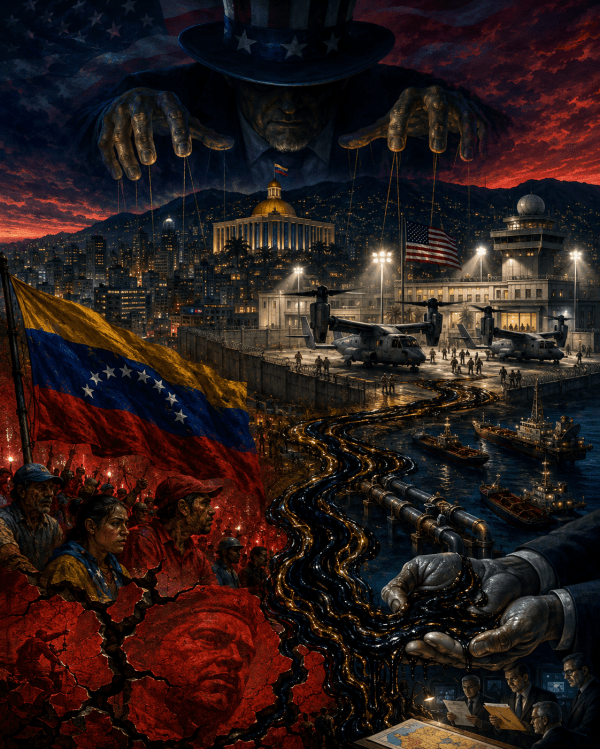
The Associated Press spins Venezuela’s crisis as a mere internal drama of political division, subtly masking the U.S. military’s pivotal role in toppling Maduro. Behind the façade of Chavismo's weakening loyalties lies imperial coercion—an acting government subservient to Washington. The narrative portrays disarray but downplays U.S. oversight of oil sales and military drills, normalizing foreign occupation while disguising it as internal strife. By framing this as a crisis of governance, the AP shifts attention from the imperial machinery at work, thereby sidestepping critical questions of sovereignty and resistance. The real story is not betrayal; it's exploitation under the guise of reform.
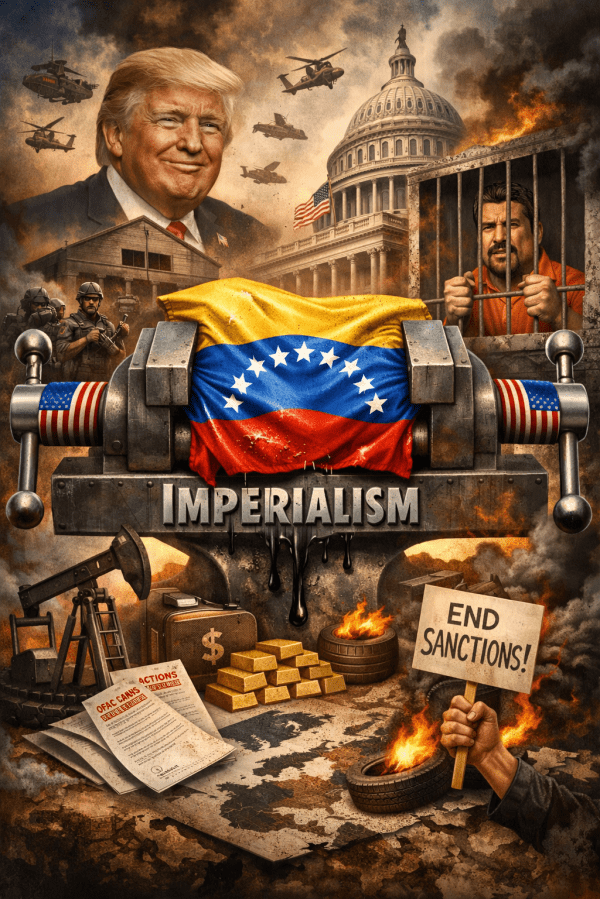
Venezuela in the Imperial Vise: The Intercept, Trump’s “Perfect Scenario,” and the Forced Reconstruction of the Bolivarian State
The Intercept’s account of Trump’s Venezuela “success” exposes colonial features of the new order, but still stops short of naming the imperial body on the table. Beneath the language of reform and normalization lies a forced recalibration: oil, minerals, law, diplomacy, and public finance are being reorganized under duress while the Bolivarian state struggles to... Continue Reading →
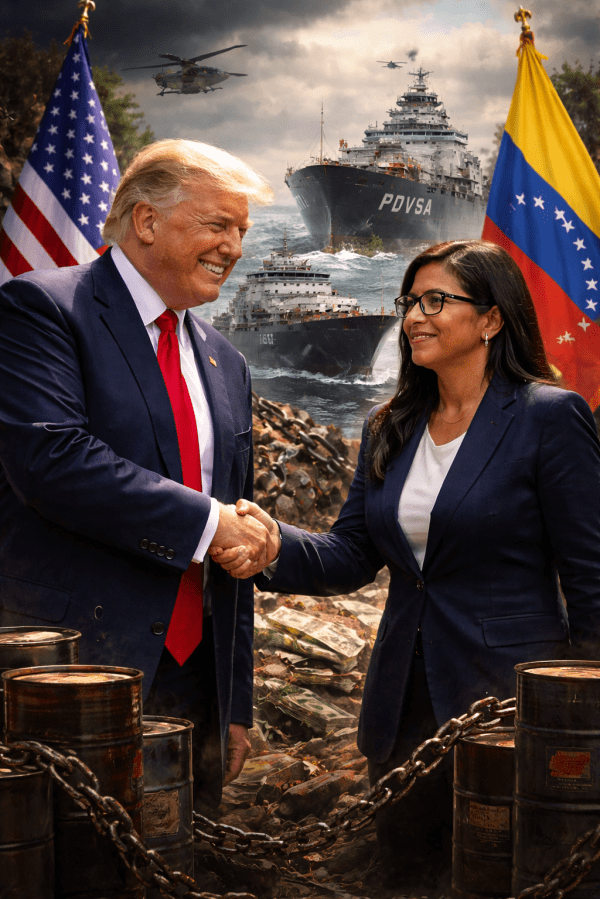
When Empire Smiles, Check Your Pockets: The Myth of a Trump–Rodríguez “Reset”
CNN wants the reader to see a new partnership forming in Caracas: a phone call, oil talk, CIA photo-ops, deportations back on schedule. But under siege, smiles are signals—and “warming relations” often means the empire believes it has found a manager, not a partner. We excavate the story’s framing and then trace the concrete leverage... Continue Reading →
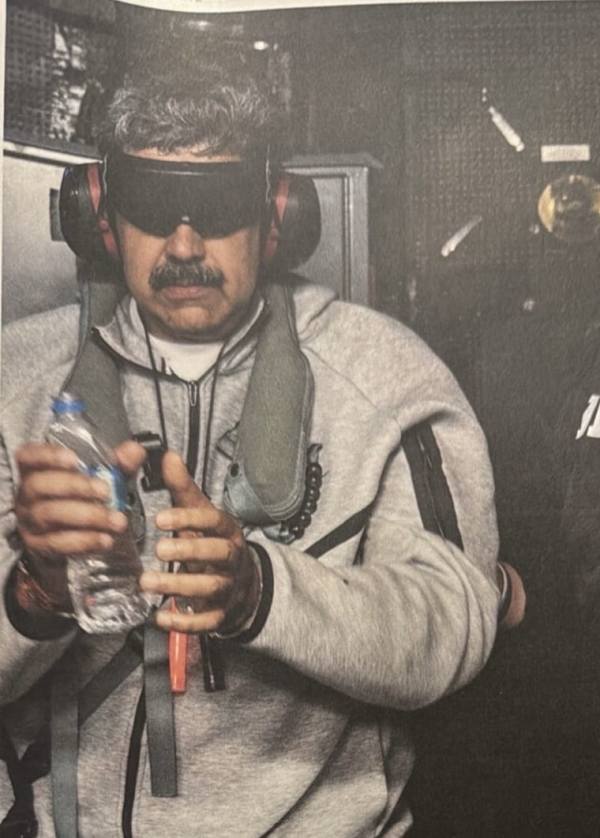
From Sanctions to Shackles: The Kidnapping of President Maduro and the Consolidation of the American Pole
How the American Pole escalated from sanctions to abduction—and why sovereignty survived the attempt at decapitation By Prince Kapone | Weaponized Information | January 3, 2026The Day the Monroe Doctrine Spoke in Plain EnglishThere are moments when empire stops dressing itself up. The usual costumes—“democracy promotion,” “human rights,” “counter-narcotics,” “regional stability”—fall off, and what remains... Continue Reading →