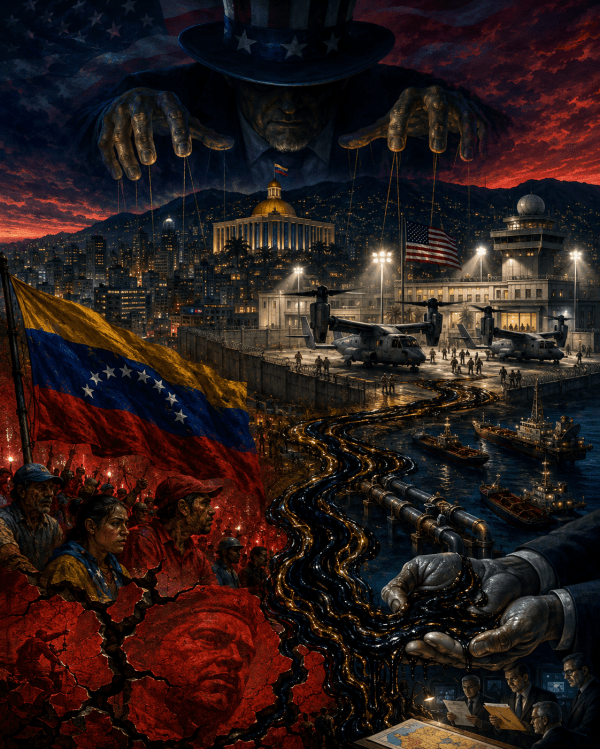
The Deed Stays in Caracas: How Washington Commands Oil It Doesn’t Own

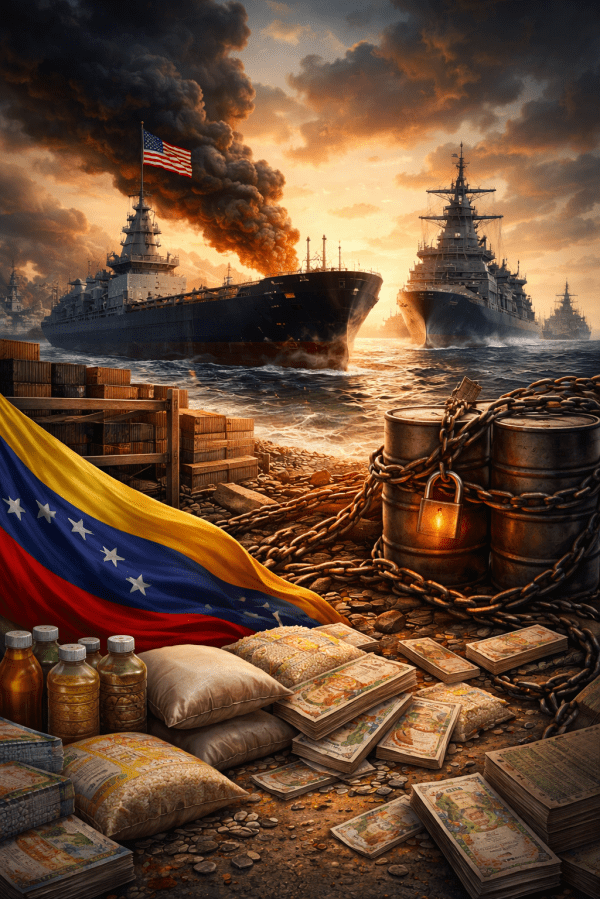
Delcy Rodríguez's shocking pivot from anti-imperialist rhetoric to endorsing U.S. oil agreements is less a political betrayal and more an unveiling of Venezuela's fractured sovereignty. The narrative is explosive: as Washington tightens its grip, national ownership of oil assets becomes a hollow claim, with real power shifting to private capital and American influence. The illusion of control is shattered—Venezuelans are left to wrestle with a new reality where contracts dictate who profits from their resources. The stakes are high, as demands for transparency and public scrutiny grow louder; will the oil wealth truly benefit the people, or simply reinforce the power structures in play?

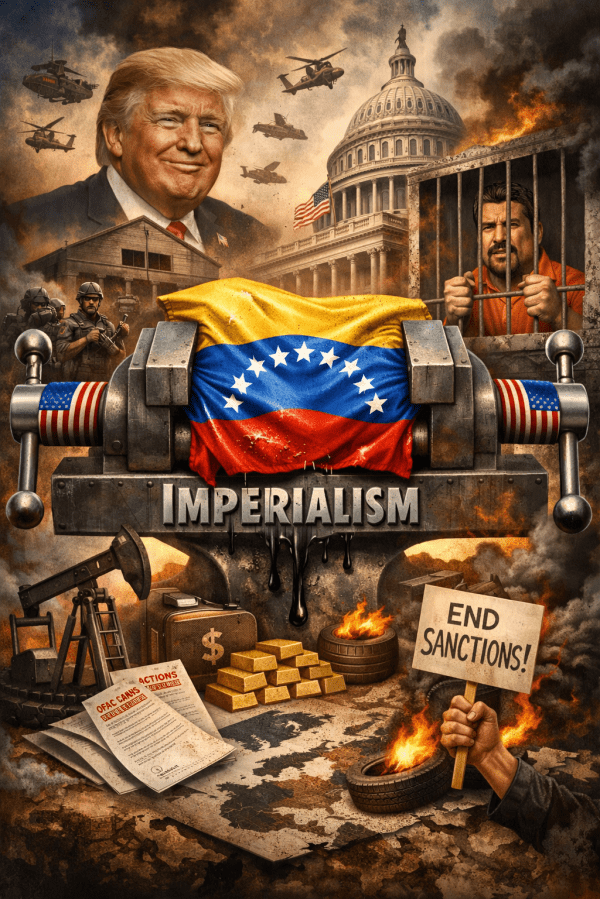
The Viceroy’s Ledger: How Washington Seized Venezuela’s Present and Mortgaged Its Future

The New York Times paints Marco Rubio as Venezuela's imperial viceroy, wielding control over its government through military force, financial manipulation, and a façade of diplomacy. This orchestrated colonial domination, disguised as governance, reveals a grotesque power dynamic where a nation’s sovereignty is traded for political tapestries spun by Washington. While Rubio's grip tightens, the real resistance lies among Venezuelans and anti-imperialist allies in the U.S. They must dismantle U.S.-imposed sanctions and return Venezuela’s wealth to its people. The struggle against colonial rule continues, as the masses can't be merely passive subjects in the rewriting of their national story.

The Embassy Government: How AP Turns Venezuela’s Capture Into a Chavista Crack-Up

The Associated Press spins Venezuela’s crisis as a mere internal drama of political division, subtly masking the U.S. military’s pivotal role in toppling Maduro. Behind the façade of Chavismo's weakening loyalties lies imperial coercion—an acting government subservient to Washington. The narrative portrays disarray but downplays U.S. oversight of oil sales and military drills, normalizing foreign occupation while disguising it as internal strife. By framing this as a crisis of governance, the AP shifts attention from the imperial machinery at work, thereby sidestepping critical questions of sovereignty and resistance. The real story is not betrayal; it's exploitation under the guise of reform.

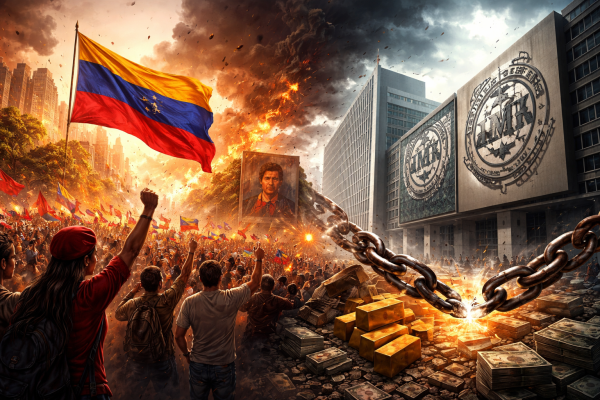
Reopening the Cage: Bretton Woods Returns to a Country That Refused to Kneel

The article presents IMF and World Bank re-engagement as routine normalization, masking a political event shaped by years of institutional blockade and external pressure. Beneath that surface lies a struggle over sovereignty, where constitutional legitimacy, sanctions, and anti-neoliberal memory redefine what “recognition” actually means. The return of global finance collides with a still-living project of... Continue Reading →

Venezuela in the Imperial Vise: The Intercept, Trump’s “Perfect Scenario,” and the Forced Reconstruction of the Bolivarian State

The Intercept’s account of Trump’s Venezuela “success” exposes colonial features of the new order, but still stops short of naming the imperial body on the table. Beneath the language of reform and normalization lies a forced recalibration: oil, minerals, law, diplomacy, and public finance are being reorganized under duress while the Bolivarian state struggles to... Continue Reading →

Understanding the Venezuelan Revolution: Power, Rupture, and the Discipline of Governing Under Siege

A Weaponized Intellects excavation of Understanding the Venezuelan Revolution: Hugo Chávez Talks to Marta Harnecker, tracing how popular rupture collides with institutions, empire, class power, and the unfinished task of building a revolution that can survive its own victories By Prince Kapone | Weaponized Information | January 18, 2026 A Revolution That Refuses the Script... Continue Reading →

Fortress America and the Oil Ultimatum: Venezuela, Hyper-Imperialism, and the Open Consolidation of the American Pole

This essay argues that Trump 2.0 marks the open phase of U.S. hyper-imperialism, where coercion replaces consent and hemispheric dominance is enforced without disguise. Using Venezuela as the central case, it traces how leader abduction, naval encirclement, oil custodianship, and legal warfare form a consolidated strategy to subordinate sovereign states to the American Pole under... Continue Reading →

When Empire Kidnaps and the Left Blinks: Alex Callinicos, Venezuela, and the Politics of Conditional Anti-Imperialism

In his January 6, 2026 article in Socialist Worker, Alex Callinicos condemns the U.S. seizure of Venezuela’s president as a brutal assertion of hemispheric dominance, while simultaneously advancing a line that blames the Bolivarian process itself for its vulnerability. This essay takes Callinicos’ argument seriously—and then dismantles it—showing how a rhetoric of anti-imperialism can reproduce... Continue Reading →

From Sanctions to Shackles: The Kidnapping of President Maduro and the Consolidation of the American Pole

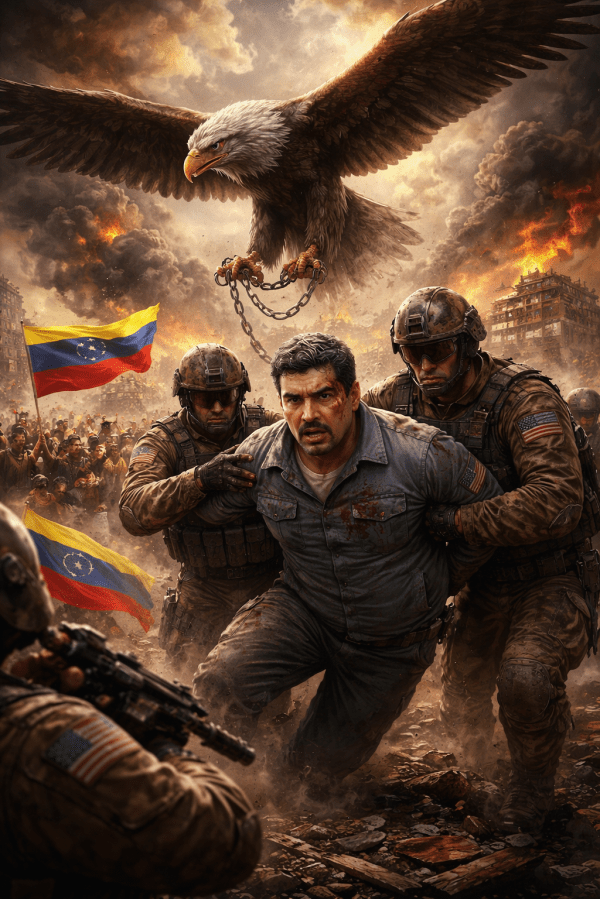
How the American Pole escalated from sanctions to abduction—and why sovereignty survived the attempt at decapitation By Prince Kapone | Weaponized Information | January 3, 2026The Day the Monroe Doctrine Spoke in Plain EnglishThere are moments when empire stops dressing itself up. The usual costumes—“democracy promotion,” “human rights,” “counter-narcotics,” “regional stability”—fall off, and what remains... Continue Reading →

Website Powered by WordPress.com.

Up ↑