By Prince Kapone | Weaponized Information | April 25, 2025
“The colonizer, who fabricated the colonized subject, tends to glorify the fragmented, distorted version of himself reflected in the broken mirror of conquest.” – Frantz Fanon
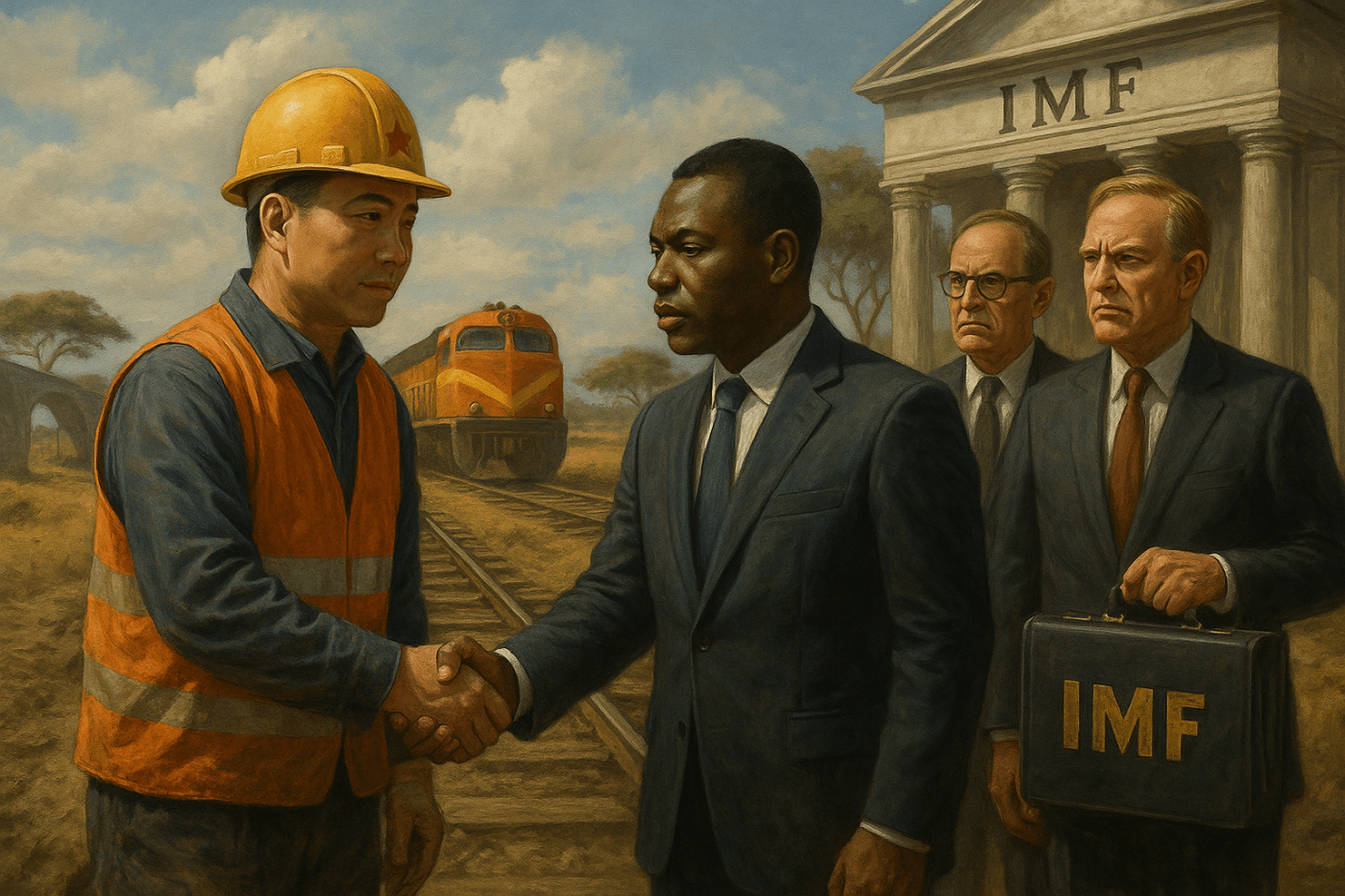
Can Europe Compete in Africa’s New Great Game? is not so much an article as it is a death rattle—the last gasping breath of a colonial ruling class that refuses to acknowledge its global decline. Cloaked in the polite euphemisms of “investment” and “geopolitical strategy,” what the piece reveals is that Europe’s old guard is waking up to the hard truth: the era of unilateral imperial dominance over Africa is over. And it’s China—armed not with gunboats but with infrastructure deals, low-interest loans, and mutual development projects—that’s calling checkmate.
But let’s not get confused by Western liberal guilt disguised as strategic anxiety. When Europe complains about “losing ground” in Africa, what they really mean is that African states are increasingly rejecting the colonial terms dictated by the IMF, the World Bank, and EU trade regimes—tools of the Washington-Brussels Consensus engineered to perpetuate underdevelopment and extract surplus under the cover of humanitarianism1.
And while some analysts feign concern about a ‘new scramble,’ they conveniently ignore that Europe’s own foreign direct investment—mainly in extractives and finance—has been double that of China’s total stock in Africa, and yet delivers far less in roads, schools, and jobs2.
Let’s be clear: Chinese investment is not perfect. It is uneven, sometimes exploitative, and frequently ignores labor and environmental regulations. But it is not imperialist in the Leninist sense. China does not impose structural adjustment programs or demand political subordination as a prerequisite for development. Its strategy—rightly or wrongly—has been described as “flexigemony,” characterized not by the deployment of gunboats but by reciprocal state-to-state negotiations, barter-based contracts like “oil-for-infrastructure” deals, and growing South-South solidarity3.
In this context, China represents a relative alternative to the vampire capitalism of the West, not a mirror of it.
Consider the numbers: Chinese FDI in Africa has grown at an annual rate of 53%, while the United States plodded along at 14%4. And while Western outlets hand-wring over so-called “Chinese neocolonialism,” the IMF and EU remain the main culprits behind Africa’s perpetual debt cycle and industrial anemia5. It was European-imposed privatization and deregulation that gutted local manufacturing, while Chinese capital—flawed though it may be—actually built physical infrastructure: highways, railways, and energy systems that serve people, not just capital6.
As Weaponized Information, we extend unconditional solidarity with all efforts by African nations to break free from the iron grip of Western finance capital. We recognize that within the constraints of the imperialist-dominated world system, alliances with rising multipolar powers like China offer leverage, not liberation—but that leverage matters in a world still governed by monopoly capital and neo-colonial dependency. As long as the West cries “imperialism!” every time someone else plays their game better, we will keep calling it what it is: a desperate tantrum from an empire in decline.
European imperialism built railways to extract. China, despite its contradictions, is building railways to connect. And that is the difference between an empire and an alternative. Even a flawed one.
 Weaponized Information
Leave a comment