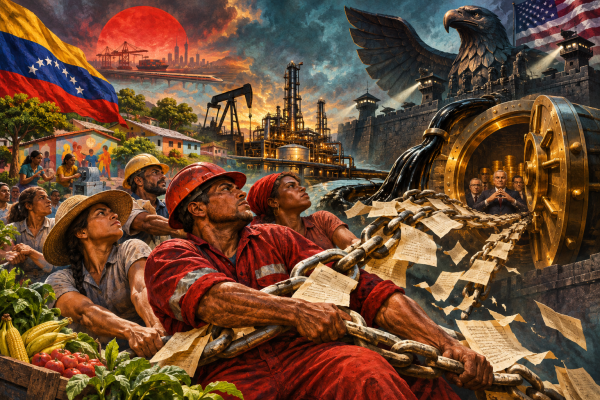
While Reuters celebrates the renewed confidence of international bondholders, the historical relationship between Venezuela's indebtedness and Washington's economic siege goes largely unexplored. From financial sanctions and distressed-debt speculation to petroleum concessions and geopolitical restrictions on debt restructuring, the imperial state is assembling mechanisms through which the coercion of yesterday can become the financial command of... Continue Reading →
Put the General in Charge of Peace: How Abu Dhabi Put NATO’s Power on the Table
When Russia forced the terms of European security onto the table at Abu Dhabi, two Atlanticist columnists had a hell of an answer: put NATO’s commander in charge of the peace talks. Washington built that alliance’s power while capitalist restoration weakened Russia, and now it wants European treasuries to carry more of the cost while... Continue Reading →
The Boss Has Gone Rogue: Hayek’s Bastards and the Freedom to Rule You
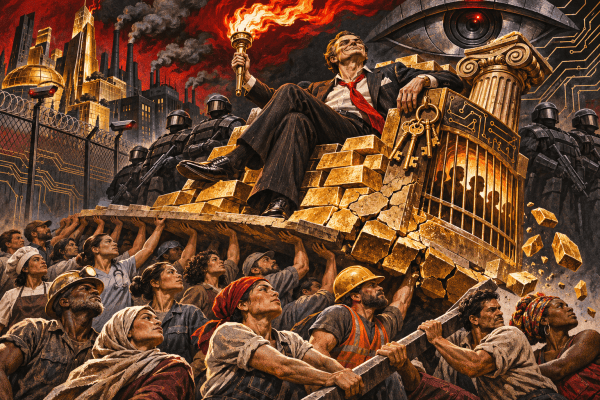
In Hayek’s Bastards, Quinn Slobodian follows the thinkers, patrons, and political operators who turned capitalist command into a cause dressed as rebellion. Race, IQ, and evolutionary stories make dispossession look deserved, while borders and private communities separate useful labor from the right to challenge its conditions. Gold promises shelter from collective demands, and the self-appointed... Continue Reading →
The Collector Wants a Halo: Britain’s Debt Rescue and the Labor Behind the Ledger
Britain steps forward to rescue indebted countries with the creditor’s authority tucked safely beneath its humanitarian robes. Behind the promises of relief, contracts and lending conditions turn claims on future labor into pressure on wages, hospitals, and household budgets. London invokes slavery while keeping the discussion of justice seated at the repayment table. Breaking that... Continue Reading →
The Empire Lost Its Monopoly: Multipolarity, Class War, and the Fight to Own the Future
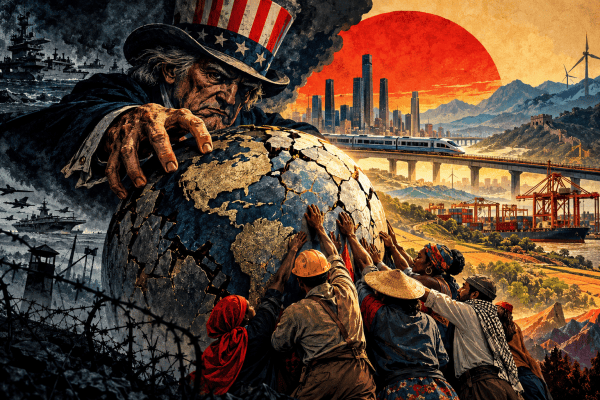
The imperialist façade is cracking as formerly colonized nations wield newfound agency, emboldened by China's socialist rise and BRICS collaboration. However, the narrative masks a grim reality: national sovereignty does not guarantee liberation from domestic exploiters. The struggle continues within, where local elites may replace imperial masters but retain the chains of economic subordination. This interplay reveals that power dynamics hinge on who decisively controls production and profits. As multipolarity expands possibilities, the essential question looms—will the working class finally seize genuine control over the fruits of their labor, or remain spectators in their own liberation? The era demands they reclaim agency—no more invitations.
The Deed Stays in Caracas: How Washington Commands Oil It Doesn’t Own
Delcy Rodríguez's shocking pivot from anti-imperialist rhetoric to endorsing U.S. oil agreements is less a political betrayal and more an unveiling of Venezuela's fractured sovereignty. The narrative is explosive: as Washington tightens its grip, national ownership of oil assets becomes a hollow claim, with real power shifting to private capital and American influence. The illusion of control is shattered—Venezuelans are left to wrestle with a new reality where contracts dictate who profits from their resources. The stakes are high, as demands for transparency and public scrutiny grow louder; will the oil wealth truly benefit the people, or simply reinforce the power structures in play?
Kyle Bass vs. East Texas: How Capital, Courts, and Media Conspire to Drain the Commons
A Dallas financier eyes 16 billion gallons a year from the Carrizo-Wilcox Aquifer. Residents sound the alarm, but Texas law protects the pump, not the people. The media neutralizes outrage with polite technocracy. This is water war by paperwork—and the empire calls it development. By Prince Kapone | Weaponized Information July 30, 2025 The Law... Continue Reading →