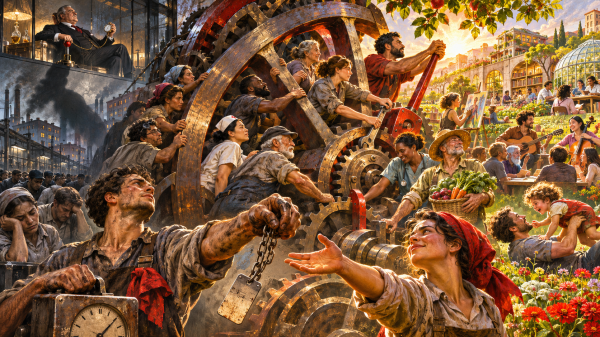
Capitalism has pulled off one hell of an ideological trick: organizing human life around competition, wage dependence and private accumulation, then presenting the behavior produced by those conditions as proof that its own existence is inevitable. Drawing upon evolutionary biology, anthropology, political economy and the historical experience of socialist revolutions, this essay dismantles the fiction... Continue Reading →
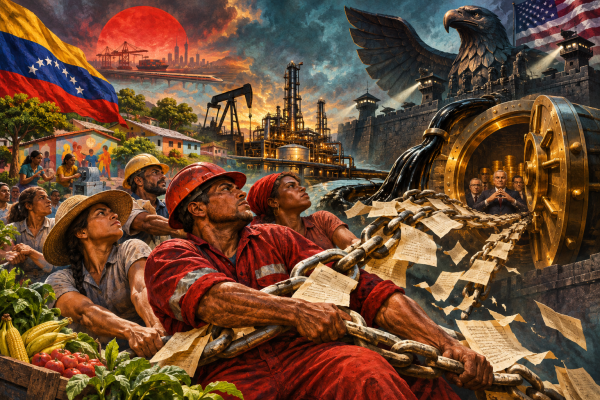
The Empire Wants Tomorrow’s Oil: Mortgaging Venezuela’s Future to Build Fortress America
While Reuters celebrates the renewed confidence of international bondholders, the historical relationship between Venezuela's indebtedness and Washington's economic siege goes largely unexplored. From financial sanctions and distressed-debt speculation to petroleum concessions and geopolitical restrictions on debt restructuring, the imperial state is assembling mechanisms through which the coercion of yesterday can become the financial command of... Continue Reading →
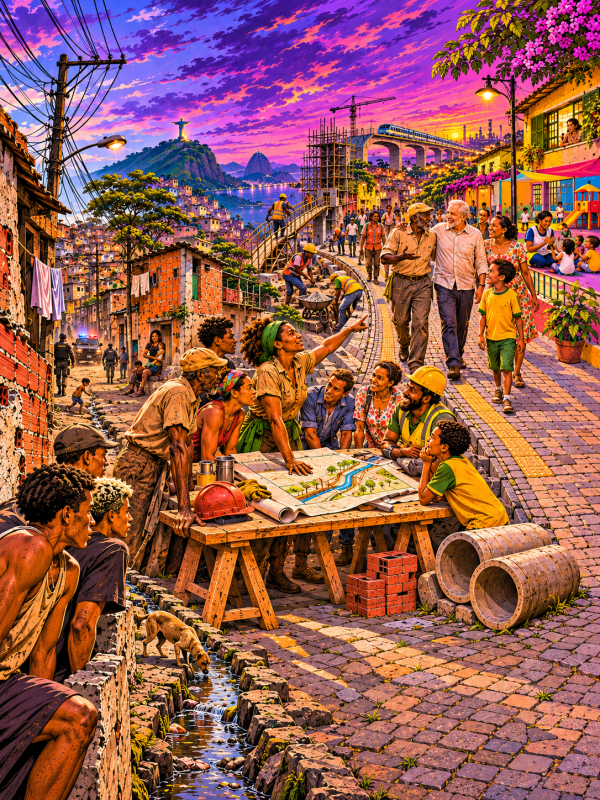
From City of God to Lulaland: Who Calls the Shots in Uncle Sam’s Backyard?
Lula’s reelection kept open a fight over who gets to set the terms in South America. Washington wants a hemisphere it can use as a secure base for U.S. power. Brazil has the factories, public banks and political reach to help its neighbors build an independent pole, and China’s industrial rise gives them more room... Continue Reading →
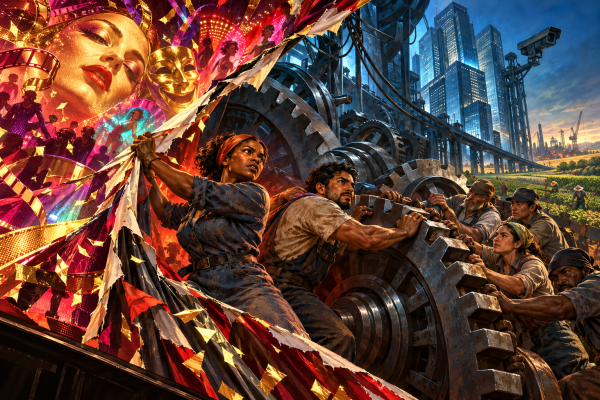
The Empire Doesn’t Need You, Stupid: Chris Hedges and the Limits of Knowing Better
Chris Hedges's "Empire of Illusion" tears apart a society that transforms pain into spectacle and subjugates human connection for profit. But rather than merely lamenting a lost America of democratic ideals, Hedges obscures the necessary power to instigate change. This review ignites crucial questions about the ability of the oppressed—workers, peasants, and colonized peoples—to reclaim agency over their lives. The corporate machinery thrives on exploiting unmet needs while convincing subjects to embrace responsibility for their plight. In this world, true solidarity can’t be given away to capital's whims; it must be reclaimed and repurposed to dismantle oppressive structures.
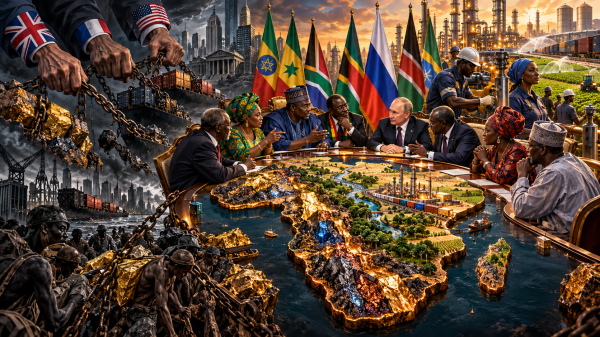
Putin “Woos,” the West Robs: Reuters Writes Africa Out of Its Own Liberation
Putin's charm offensive in Moscow, showcased by forty-eight African delegations, hardly veils the reality that African leaders exist merely as props in a grand stage play. While Russia pitches economic promises, it's the West's narrative that dominates, portraying Africa as a passive recipient. Yet, beneath the political theater, African ambitions for self-sufficiency simmer, illustrated by the African Union's strong call for industrialization and local production. This counter-narrative reveals a continent striving to wrest control from neocolonial shackles, challenging a status quo predicated on dependency. The struggle isn’t merely for trade; it's a fierce reclamation of agency long denied. Africa’s narrative is reshaping, and the stakes are higher than ever.
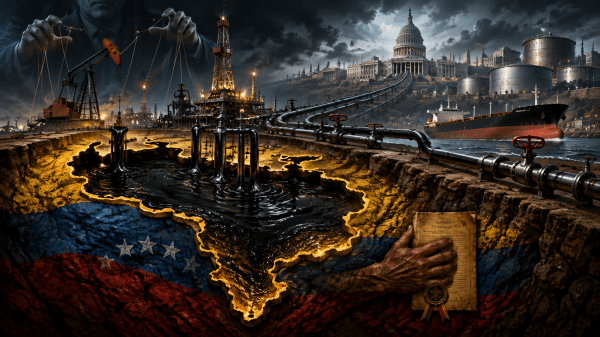
The Deed Stays in Caracas: How Washington Commands Oil It Doesn’t Own
Delcy Rodríguez's shocking pivot from anti-imperialist rhetoric to endorsing U.S. oil agreements is less a political betrayal and more an unveiling of Venezuela's fractured sovereignty. The narrative is explosive: as Washington tightens its grip, national ownership of oil assets becomes a hollow claim, with real power shifting to private capital and American influence. The illusion of control is shattered—Venezuelans are left to wrestle with a new reality where contracts dictate who profits from their resources. The stakes are high, as demands for transparency and public scrutiny grow louder; will the oil wealth truly benefit the people, or simply reinforce the power structures in play?
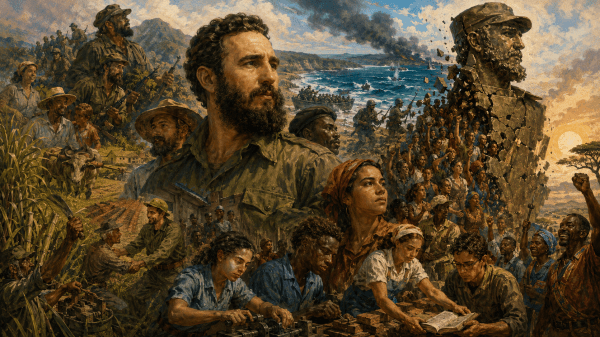
The Revolution Must Keep Making Revolutionaries: Fidel Castro and the Fight Against Becoming a Monument
On the centenary of Fidel Castro's birth, his autobiography, My Life, acts as a provocative lens into the complexities of revolution. It dismantles the myth of the born revolutionary, showcasing instead how context, struggle, and learning forge warriors for change. Despite Cuba's successes, deep-rooted issues like racism and inequality persist, with Fidel warning that Cuba's most significant threat may not come from external forces but from within—its own inability to correct mistakes. As the Revolution ages, the pressing query remains: can it continually foster revolutionary consciousness amidst evolving contradictions or will it succumb to the complacency that often follows victory?