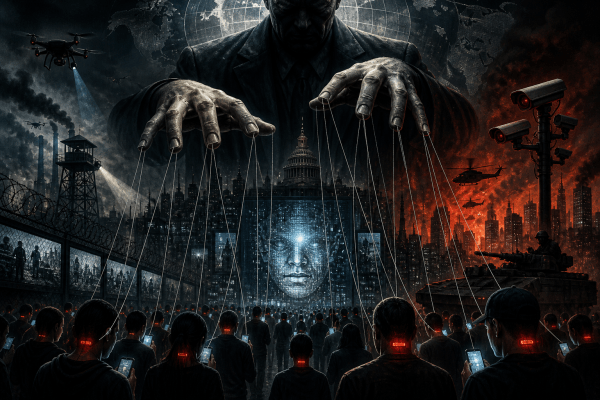
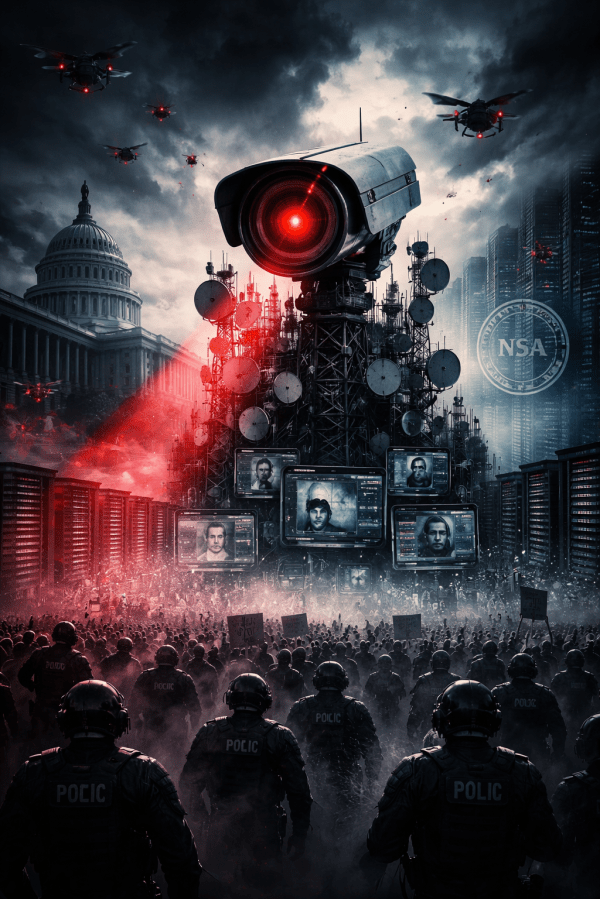
The Associated Press investigation reveals a shocking truth: Silicon Valley's complicity in building the surveillance apparatus that the West now demonizes in China. While framing China as a "digital police state," the report subtly shields the very imperial system enabling such technologies. It highlights a deeper confrontation—one where the U.S. grapples with losing its monopoly on development and technology. As the New Cold War intensifies, the true danger emerges: not the surveillance itself, but the realization that a socialist-oriented state can achieve modernization and stability without Western control. The empire's fear lies in losing its grip over a future it desperately seeks to define and dominate.
Technofascism: The Digital Leviathan and the War on Humanity
The United States isn’t gracefully unraveling; it’s morphing into a technofascist apparatus of control that leverages financial dominance, digital surveillance, and labor discipline. While the elite tout "innovation," they're repackaging colonial exploitation under the guise of progress, tightening their hold domestically and globally. Liberal analyses miss the subtleties of this shift, mistaking procedural forms for genuine democracy, while real power redistributes into unaccountable systems. As public trust wanes and crises mount, this infrastructure of power rapidly transforms governance into an invisible web of control, inching toward collective consciousness and organized resistance that could eventually dismantle the machinery of oppression.
Code and Conquest: The Technological Republic and the Blueprint for a New Imperial Order
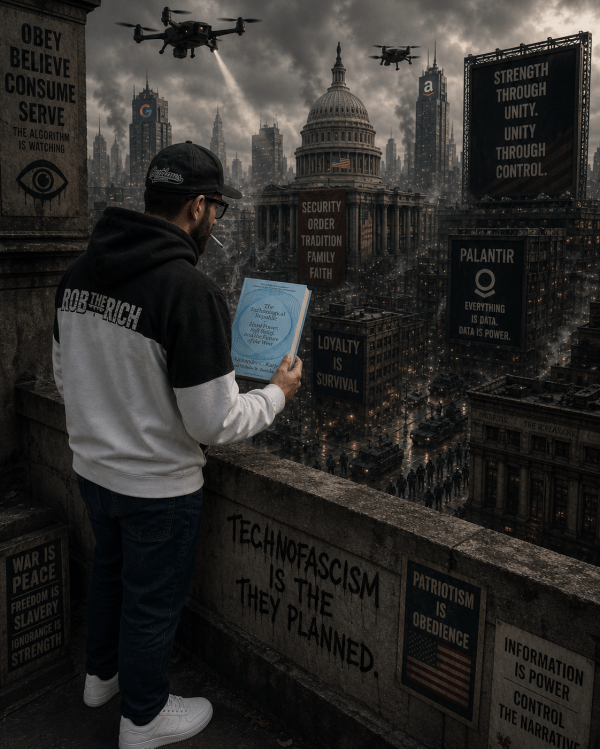
In Weaponized Intellects' scathing review of The Technological Republic, Karp and Zamiska unveil a chilling trajectory where Silicon Valley's crisis morphs into a blueprint for imperial tech dominance. They argue for an alliance between state power and engineering prowess to reinforce U.S. supremacy, shedding liberalism in favor of militaristic ingenuity. What transpires is a dissection of consumer capitalism’s futility, advocating for weaponized AI to restore glory. This critique masquerades as patriotic duty while advocating technofascism—a seamless marriage of capital and state. In rejecting this, the revolution must neither accept imperial myths nor a hollow liberalism, but fight for a world where tech serves humanity, not dominance.
Palantir and the Digital Leviathan: Silicon Power, State Violence, and the Technofascist War on Humanity
Palantir's recent manifesto is more than corporate bravado; it reveals an unsettling convergence of warfare, surveillance, and governance. The media's alarmism obscures a deeper truth: Palantir stands as a linchpin in an expansive control apparatus, integrating deportation, military actions, and state surveillance into a seamless framework of power. Critics timidly label this brewing authoritarianism but fail to pinpoint the machinery at work. As anti-immigrant systems and military strategies fuse, resistance is evolving. It’s time to unite disparate struggles against this creeping technofascism, transforming scattered dissent into a powerful, coordinated force ready to dismantle the system that seeks to dominate us all.
Inside the House of Cards: How Empire Manages Crisis Through Memory, Civility, and Myth
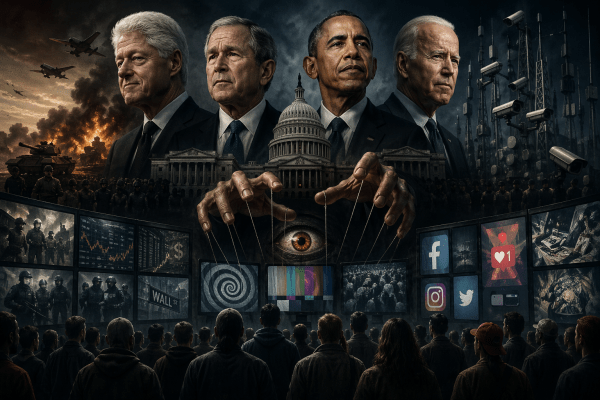
Four former presidents gather under corporate media lights to present democracy as a shared moral inheritance, grounded in unity, civility, and participation. Beneath that performance lies a material history of deregulation, war, surveillance, and repression that produced the very crisis now being discussed. The interview reveals not reflection, but a ruling-class effort to manage legitimacy... Continue Reading →
The Machine Was Built to Watch You: How Bipartisan Power Engineered America’s Surveillance State
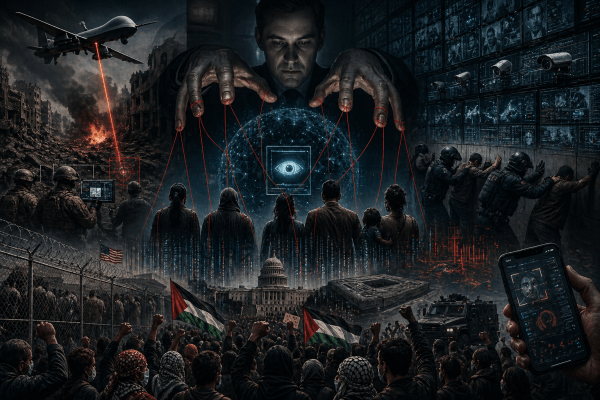
They tell you this is about Democrats failing to stand up to Trump, but that’s a lie—both parties built the spy machine together. The receipts show a straight line from the Patriot Act to Section 702, signed, funded, and protected by the same politicians now playing concerned. What we’re dealing with isn’t a policy debate—it’s... Continue Reading →
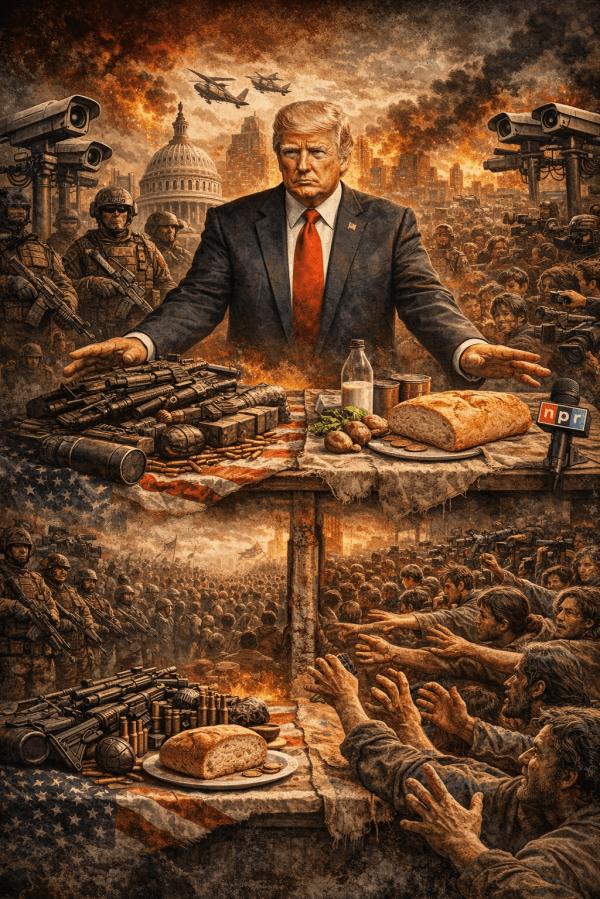
Guns Over Bread: How NPR Helps Normalize Technofascism in the Age of Trump
As military spending skyrockets, social programs are slashed under the guise of “budget priorities.” This isn’t just fiscal prudence; it’s a calculated betrayal. The old social contract is dead, replaced by a system where austerity and militarization reign, revealing an empire fraying at the edges, clinging to power through coercion.
When the Signal Becomes the Weapon: Empire, Media, and the New Discipline of Narrative
As the United States loses its monopoly over global storytelling, regulatory power, media concentration, and wartime pressure converge to manage a fractured information order—and reveal how narrative control adapts under imperial strain. By Prince Kapone | Weaponized Information | March 17, 2026 When Power Clears Its Throat and Calls It a Debate In Dominick Mastrangelo’s... Continue Reading →
Empire Recruits, China Consolidates: The CIA Video and the Crisis of Unipolar Power
A CIA recruitment campaign is framed as opportunity while containment intensifies. Behind the video lies a shattered U.S. intelligence network and a decade of Chinese military reform. Export controls and Indo-Pacific encirclement reveal a deeper structural recalibration. As multipolarity widens the field, the real struggle is over who shapes the emerging order.By: Prince Kapone |... Continue Reading →
Dope, Dollars, and Domination: A People’s History of Narco-Imperialism and the Making of the American Empire
The Drug War Isn’t a War — It’s the Operating System of U.S. Empire. From opium clippers to CIA proxy armies, from Panama’s offshore laundromat to Colombia’s paramilitaries and Mexico’s neoliberal narco-state, narcotics have long served as the financial engine, covert budget, social-control mechanism, and geopolitical scaffolding of the American Pole. By Prince Kapone |... Continue Reading →