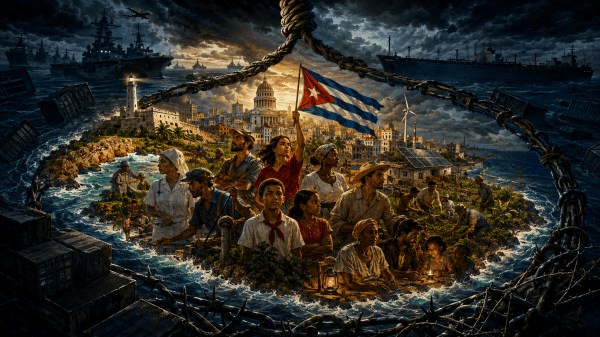
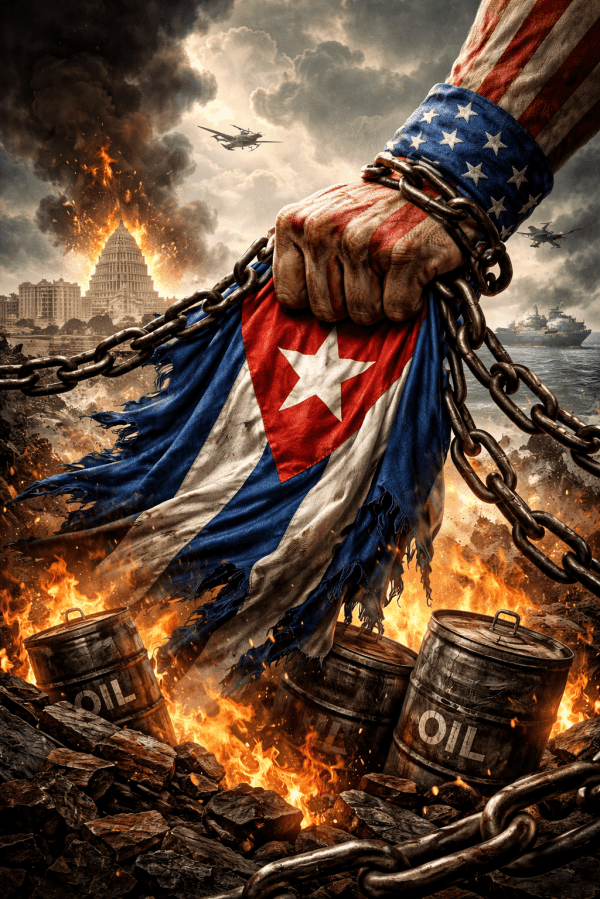
The Associated Press's portrayal of Cuba's economic reforms as an admission of socialism's failure belies the truth: these changes emerge from a relentless siege engineered by U.S. imperialism. While Cuba navigates fuel shortages and food insecurity, it confronts an economic warfare strategy designed to instigate hunger and political capitulation. The AP article obscures the genuine reform efforts by presenting them as a retreat from ideology, framing Washington as a reasonable negotiator rather than an aggressive adversary. Cuba's struggle isn't merely to reform; it's a fierce fight for sovereignty against an oppressive narrative that seeks to suffocate its revolutionary spirit.
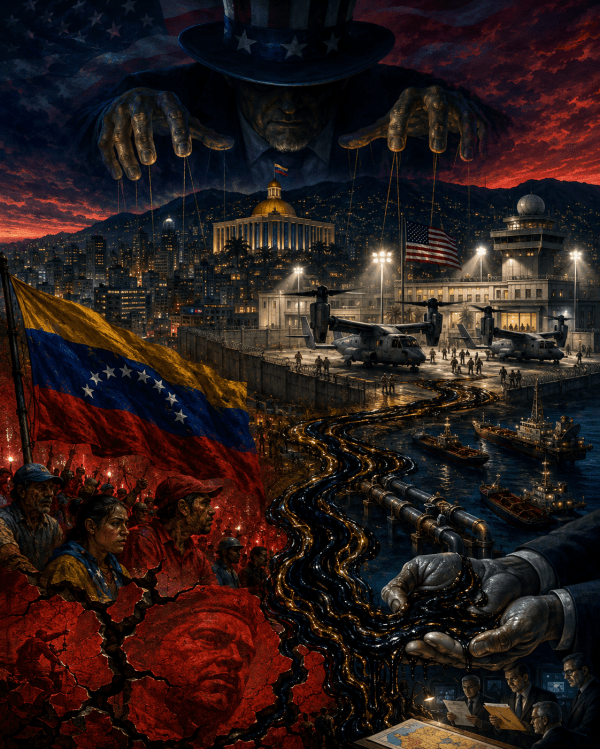
The Embassy Government: How AP Turns Venezuela’s Capture Into a Chavista Crack-Up
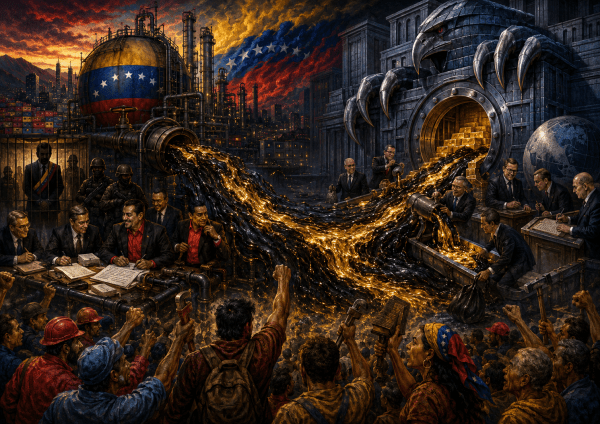
The Associated Press spins Venezuela’s crisis as a mere internal drama of political division, subtly masking the U.S. military’s pivotal role in toppling Maduro. Behind the façade of Chavismo's weakening loyalties lies imperial coercion—an acting government subservient to Washington. The narrative portrays disarray but downplays U.S. oversight of oil sales and military drills, normalizing foreign occupation while disguising it as internal strife. By framing this as a crisis of governance, the AP shifts attention from the imperial machinery at work, thereby sidestepping critical questions of sovereignty and resistance. The real story is not betrayal; it's exploitation under the guise of reform.
Starve the Island, Blame the Victim: How Empire Turns Siege into “Defiance”
The New York Times repackages economic warfare as diplomatic tension, presenting Cuba’s resistance as irrational defiance rather than a response to material coercion. A reconstruction of the facts reveals a deliberate strategy of energy strangulation, financial restriction, and calibrated pressure designed to destabilize Cuban society from within. When these conditions are placed back at the... Continue Reading →
The Gazafication of Cuba: Economic War and the Genocidal Siege on Sovereignty
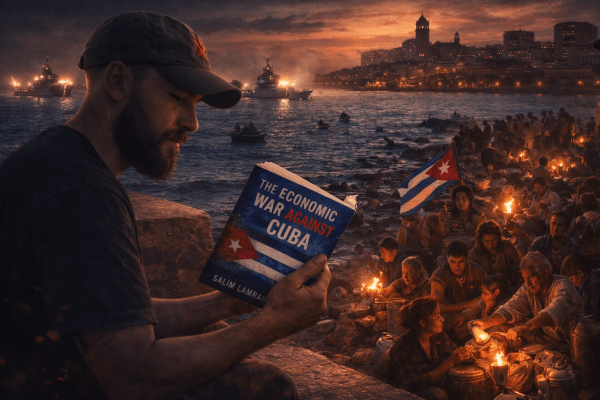
This review of The Economic War Against Cuba by Salim Lamrani excavates the historical architecture of the U.S. blockade and reinterprets it through the present conjuncture, revealing it not as a failed Cold War relic but as an evolving system of imperial economic warfare. Moving from trade embargo to extraterritorial coercion to full-spectrum energy siege,... Continue Reading →
NBC’s Cuba Narrative and the Siege It Refuses to See
NBC’s coverage frames Cuba’s economic adjustment as a dramatic crisis, but a close reading of the article reveals the narrative techniques and framing devices used to construct that impression. Beneath the headline lies a far denser economic terrain shaped by sanctions, energy shortages, inflation, and the long search for productive stability under siege. When these... Continue Reading →
Understanding the Venezuelan Revolution: Power, Rupture, and the Discipline of Governing Under Siege
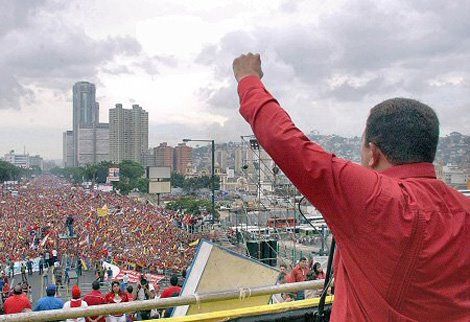
A Weaponized Intellects excavation of Understanding the Venezuelan Revolution: Hugo Chávez Talks to Marta Harnecker, tracing how popular rupture collides with institutions, empire, class power, and the unfinished task of building a revolution that can survive its own victories By Prince Kapone | Weaponized Information | January 18, 2026 A Revolution That Refuses the Script... Continue Reading →
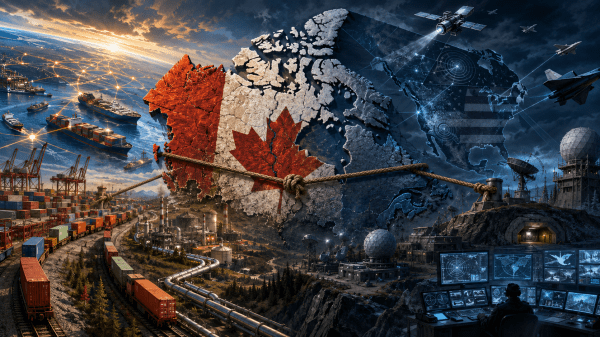
Community or Command: China, the American Pole, and the Battle for Latin America
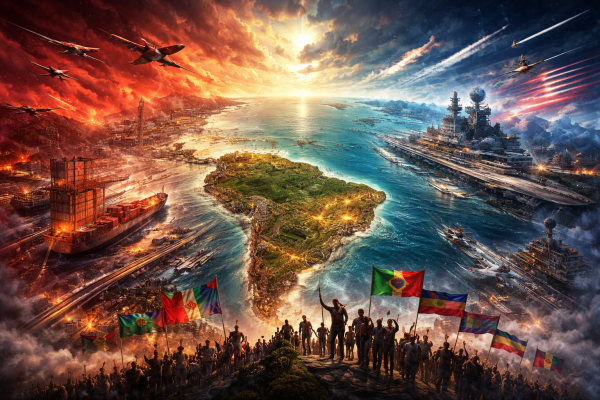
The Hemisphere at the Breaking Point There are moments when states stop improvising and start publishing doctrine. Not press statements, not campaign slogans, but documents meant to harden intentions into policy and turn instinct into structure. Late 2025 was one of those moments. Within weeks of each other, two texts appeared that quietly announced Latin... Continue Reading →
Bolivia at the Crossroads: How the American Pole Rewrites a Nation
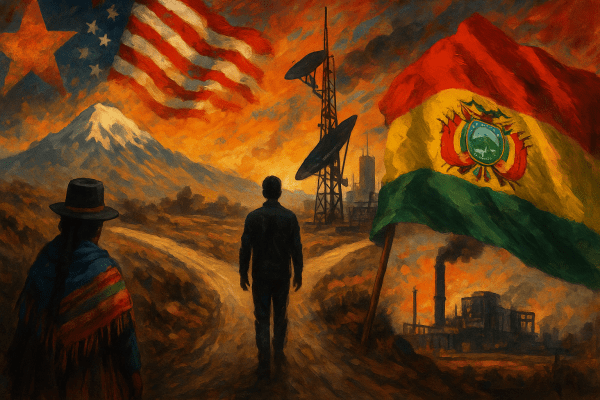
Bolivia’s new conservative regime is celebrated as a technocratic correction, but the real story is its narrative construction. Beneath the headlines lies a deeper terrain of facts: collapsing reserves, foreign penetration, and the return of suspended U.S. agencies. Placed in context, these moves reveal a comprador restoration wired directly into the architecture of the American... Continue Reading →
Santa Marta Rises: The III Social Summit and the Struggle for a Sovereign Hemisphere
A Weaponized Information Report on the III Cumbre Social de los Pueblos de América Latina y el Caribe — Where the peoples of the continent gathered to defend the Zone of Peace, advance desdollarization, secure food sovereignty, and confront the ongoing imperial restructuring of the United States. By Prince Kapone | Weaponized Information | November... Continue Reading →