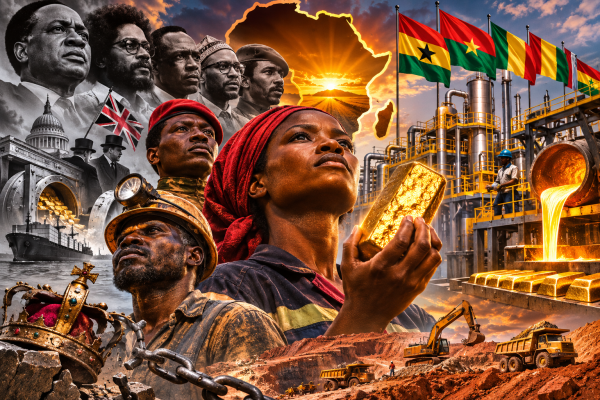
Reuters warns that West Africa's struggle to refine its own gold could produce excessive industrial capacity, but the economic conditions against which it measures African development are themselves products of colonial plunder and neocolonial extraction. From Burkina Faso's refinery and Mali's public mining enterprises to Ghana's reorganization of gold commerce and Guinea's struggle to retain... Continue Reading →
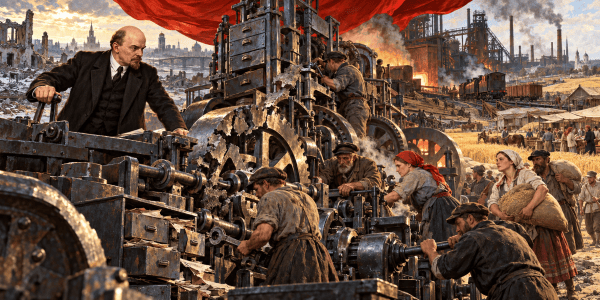
The Revolution Held Power. Who Held the Machine?: Lenin’s Battle to Make the State Serve Its Makers
On March 27, 1922, Lenin laid bare the haunting reality: the very Communists who seized power found themselves ensnared by its apparatus. This stark confession at the Eleventh Party Congress revealed a party entangled in bureaucratic paralysis while popular hunger and dissatisfaction grew. Lenin's urgent demand for practical economic leadership served as a clarion call to reconnect with the peasant workforce crucial for reconstruction. He confronted the failure to actualize revolutionary ideals, asserting that maintaining authority required genuine engagement with people’s needs. In essence, he challenged the Bolshevik leadership: Could they transform power into effectiveness before disillusionment turned into revolt? The stakes were sky-high, a failure to adapt would be their undoing.
No Annexation Required: Greenland Gets a Seat Inside Washington’s Arctic Wall
Forget the surface-level headlines; the Greenland agreement is a complex chess game, far beyond Trump's land-grab fantasies. The U.S. and Denmark superficially box Greenland into negotiations, overshadowing its own quest for agency and self-determination in the face of imperial maneuvering. As the Arctic transforms into a geopolitical battleground against rising powers like China and Russia, Greenland finds itself asserting its rights while navigating the treacherous waters of dependency. The true question isn't merely who controls the territory but whether Greenland can leverage its newfound strategic significance into genuine autonomy and prosperity over its resources, contracts, and future.
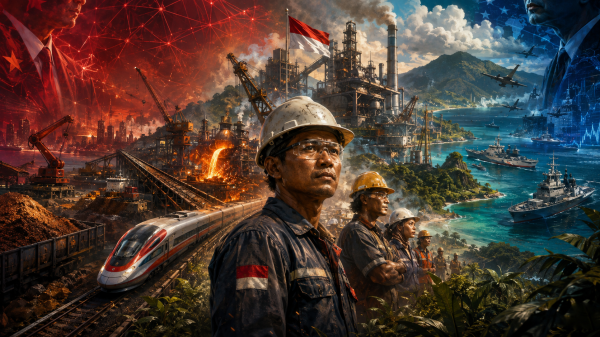
Sovereignty Built on Foreign Steel: Indonesia’s Industrial Rise and the Fight Over Who Commands It
Indonesia is ensnared in a web of foreign capital and corporate power, straddling the interests of Beijing and Washington while striving for autonomy. Its dependency on Chinese investment for industrial growth is creating complex struggles over resource control and worker rights. While the state seeks to regulate foreign involvement in its burgeoning industries, genuine sovereignty hinges on who truly reaps the benefits. Rhetoric about maintaining balance belies a troubling reality: as the nation builds industrial capacity, the power dynamics increasingly favor foreign interests, leaving local workers and communities grappling for their rightful share in this economic transformation.
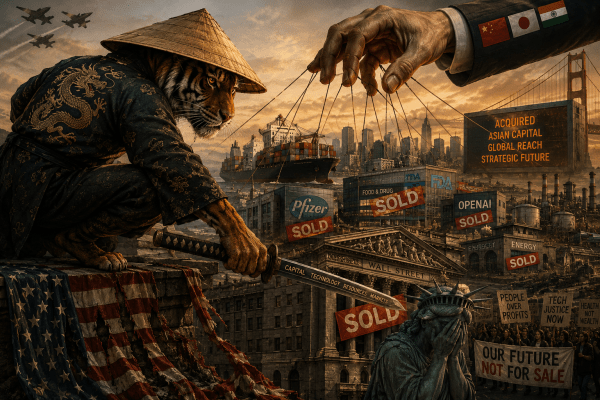
Crouching Tiger, Hidden Shareholder: The Empire Goes on the Auction Block
What if the façade of Asian firms acquiring American assets is merely a veneer masking a broader crisis of imperial power? The Asia Times' portrayal presents a triumphant narrative of capital flows, yet ignores the brutal realities behind ownership transitions. As firms like Sun Pharma and Mitsubishi grasp at American infrastructure, the underlying forces of deindustrialization, labor exploitation, and geopolitical tensions are left unexamined. This isn't progress—it's a manipulation of perception. The real question remains: who controls these vital resources? Without a radical reimagining of ownership, the future remains shackled to elite interests, while workers are forced to celebrate their own dispossession.