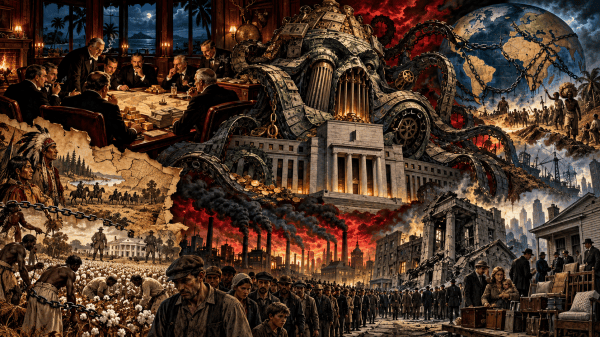
G. Edward Griffin's "The Creature from Jekyll Island" attempts to unmask a so-called conspiracy by banking elites undermining capitalism. Yet, beneath his theories lies an unsettling truth: Griffin exposes the inherent flaws of capitalism while futilely attempting to defend it. His narrative highlights systemic financial abuses and government collusion, ultimately diverting the anger away from the capitalist system itself and scapegoating collectivism instead. By romanticizing a nonexistent capitalist golden age, he veils the violent realities of dispossession and exploitation that built America. Instead of dismantling the oppressive structures underpinning capitalist domination, Griffin's solution ironically calls for a purer capitalism, perpetuating the very cycles of exploitation he critiques.
The Creature Was Capitalism: G. Edward Griffin, Jekyll Island, and the Federal Reserve