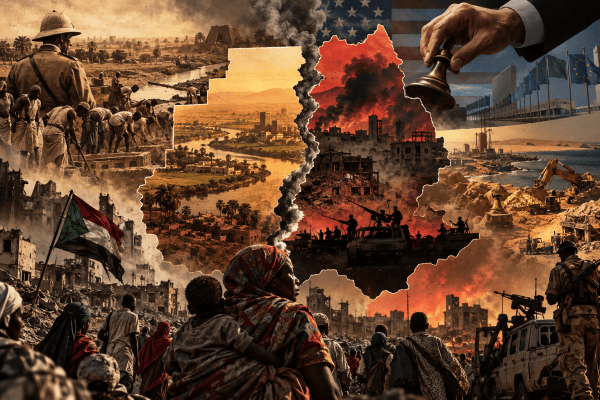
The War Built the Border: Sudan’s Partition Before the Ceasefire This essay argues that Sudan’s threatened partition didn’t begin with Washington’s latest ceasefire proposal. It traces the crisis through British colonial extraction, unequal development, Western creditor power, military accumulation, and the unfinished struggle opened by the December Revolution. As SAF and RSF turned on each other, war hardened front lines into rival economies, institutions, and systems of rule. The ceasefire therefore confronts a division already being built rather than creating it from nothing. Beneath the armies and foreign diplomacy, Sudanese civilian networks continue defending another basis for sovereignty rooted in the people who keep the country alive.
The Empire Built the Exit: Canada, Europe, and the Roads Around Fortress America
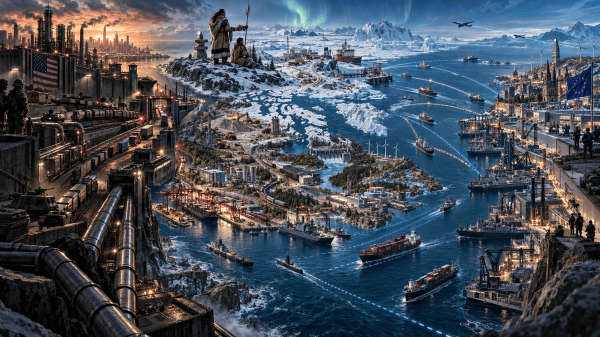
The New York Times' report on Canada's potential "associate membership" in the EU presents a simplistic narrative of geopolitical shifts. Yet, the truth is far more complex and gritty. Canada and Europe have long cultivated ties in defense and industry, reacting to escalating U.S. pressures that threaten their autonomy. As Washington tightens its grip, Canada seeks alternatives—not merely new collaborators but also a platform to reclaim control over its resources and industrial capabilities. The relationship is riddled with contradictions, as Indigenous rights and labor demands challenge who truly holds power in this emerging landscape. The gears of change are in motion, but the question lingers: who will govern this uncharted territory?
The Rear Grew Teeth: Europe Rearms the Empire and Builds the Means to Defy It
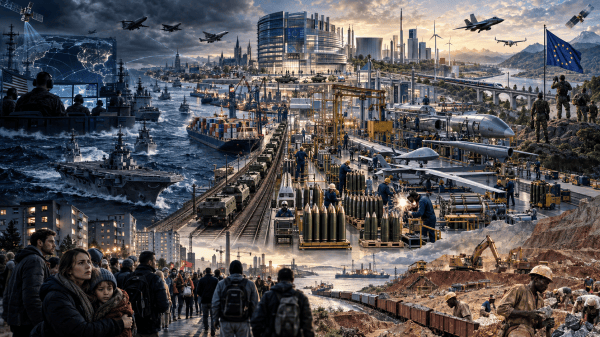
Europe stands at a crossroads, teetering between aspiration and disillusionment. While citizens envision a unified continent brimming with strength, their faith in existing structures crumbles under the weight of slow responses and dependency on America. With rising defense spending and manufacturing capacities, the stakes are high: will this newfound power serve the elite monopolies or empower the working class? The far-right feeds on feelings of decline, masking deeper questions about control and ownership. The real issue isn't a lack of imagination but the dire need for command: who controls Europe’s burgeoning power? The fight for true sovereignty—socially and politically—has only just begun.
Tomorrow’s Russian Tank: How a Hypothetical War Rearms Europe Today
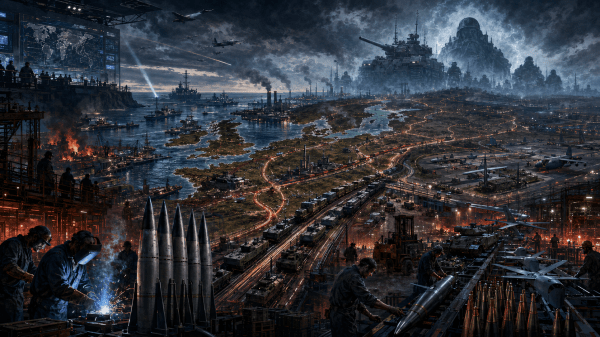
CNN warns that Russia could someday “test” NATO, but the military transformation supposedly justified by that future threat is already underway. Europe is being rearmed, civilian infrastructure reorganized for military mobility, and productive capacity redirected toward an expanding war economy as U.S. weapons stocks strain under commitments spanning Ukraine, Iran, Russia, and China. The deeper story is not a proven Russian timetable for invasion, but an American-centered imperial bloc confronting the rising cost of reproducing its military reach and hardening Europe as a Western Rear. What Russia could do tomorrow becomes the argument for what Europe must militarize today.
The Crime of Making Too Much: China and the Empire’s Monopoly on Abundance
The Economist's recent critique of China's industrial prowess reveals a deeper hypocrisy within Western narratives. While it acknowledges China's efficiency, it vilifies state-driven competition when it disrupts Western hegemony. The real issue is not overproduction but an imbalance of purchasing power, presenting an ugly tableau of warehouses filled with goods while people lack access. As China strives for self-reliance, the West's response is to impose tariffs and sanctions, prioritizing monopoly over equitable distribution. This conflict isn’t a mere economic dispute; it’s a struggle for who controls productive capacity. The question is whether to align production with human need or maintain the status quo of inequality.