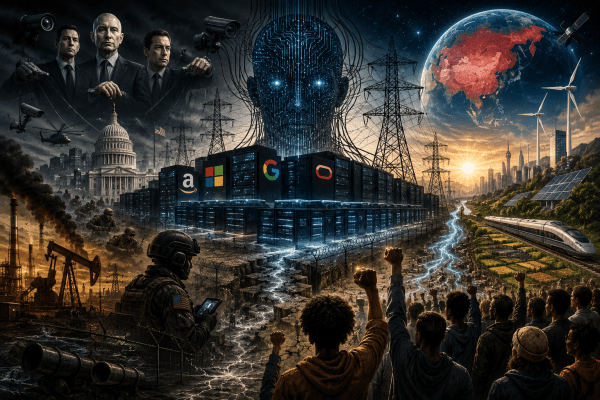
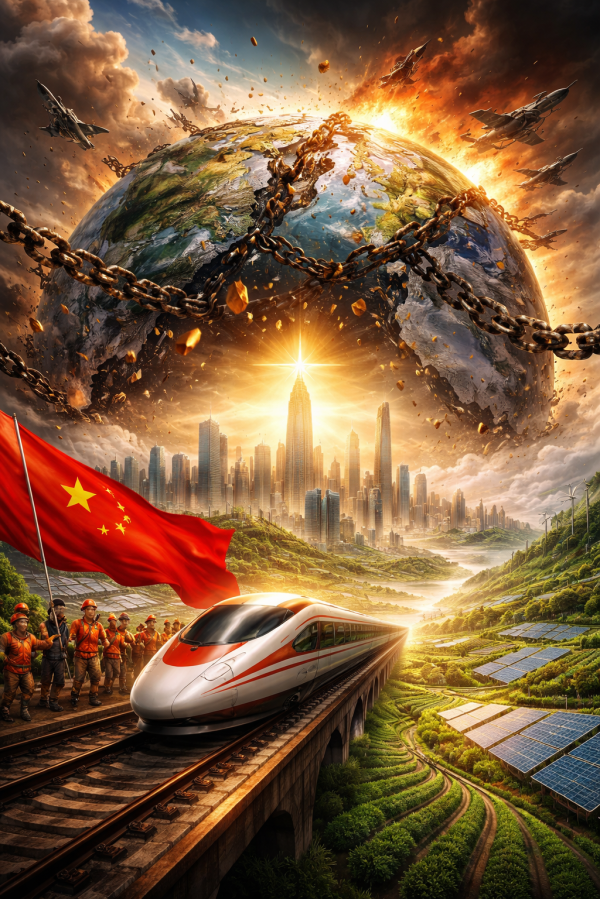
The Harvard policy brief on AI and the electric grid inadvertently exposes the contradictions of a decaying American empire desperate to maintain technological supremacy through monopolistic control. Beneath the façade of innovation lies a stark energy crisis, with the rising demand from AI data centers straining an already fragile grid. As the U.S. grapples with fragmented privatization while competing against China’s centralized planning, the notion of the “clean cloud” is shattered by its heavy reliance on fossil fuels and depleted resources. This crisis symbolizes an empire’s struggle, revealing a society entangled in a web of profiteering that prioritizes corporate gain over public need, leaving ordinary citizens to pay the price for elite ambition.
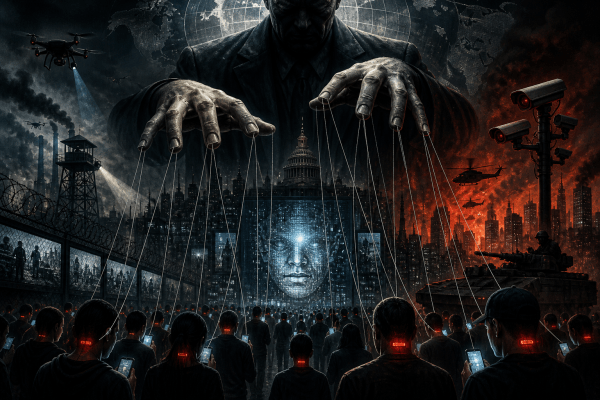
Technofascism: The Digital Leviathan and the War on Humanity
The United States isn’t gracefully unraveling; it’s morphing into a technofascist apparatus of control that leverages financial dominance, digital surveillance, and labor discipline. While the elite tout "innovation," they're repackaging colonial exploitation under the guise of progress, tightening their hold domestically and globally. Liberal analyses miss the subtleties of this shift, mistaking procedural forms for genuine democracy, while real power redistributes into unaccountable systems. As public trust wanes and crises mount, this infrastructure of power rapidly transforms governance into an invisible web of control, inching toward collective consciousness and organized resistance that could eventually dismantle the machinery of oppression.
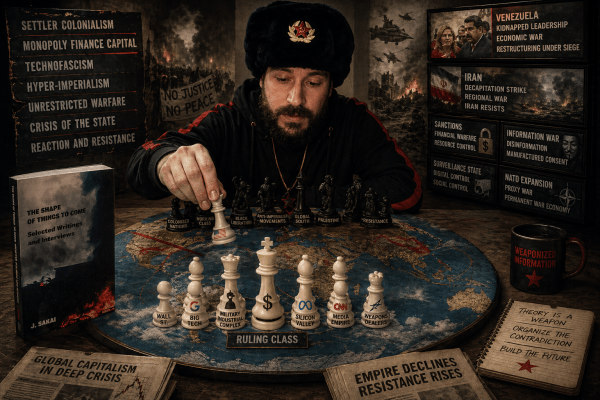
Settlers in the Wreckage: J. Sakai, Technofascism, and the War for the Future
J. Sakai’s interviews force the U.S. left to confront the settler-colonial foundations it has spent generations avoiding. His analysis exposes the myth of the revolutionary white proletariat, the collapse of liberal illusions, and the expansion of war into every domain of life. But Weaponized Information pushes further, grounding his insights in monopoly finance capital, technofascism,... Continue Reading →
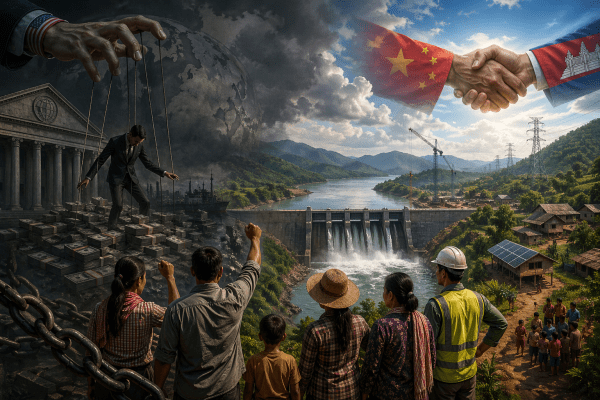
Concrete and Control: Imperial Media vs Sovereign Development in the China–Cambodia Energy Nexus
This essay excavates how Western energy media transforms a Cambodian hydropower project into a geopolitical morality play, recoding sovereign development as “Chinese influence.” It reconstructs the material reality beneath that narrative: fuel dependence, state planning, bilateral agreements, regional grid integration, and the political economy of infrastructure. It then reframes the project as a node in... Continue Reading →
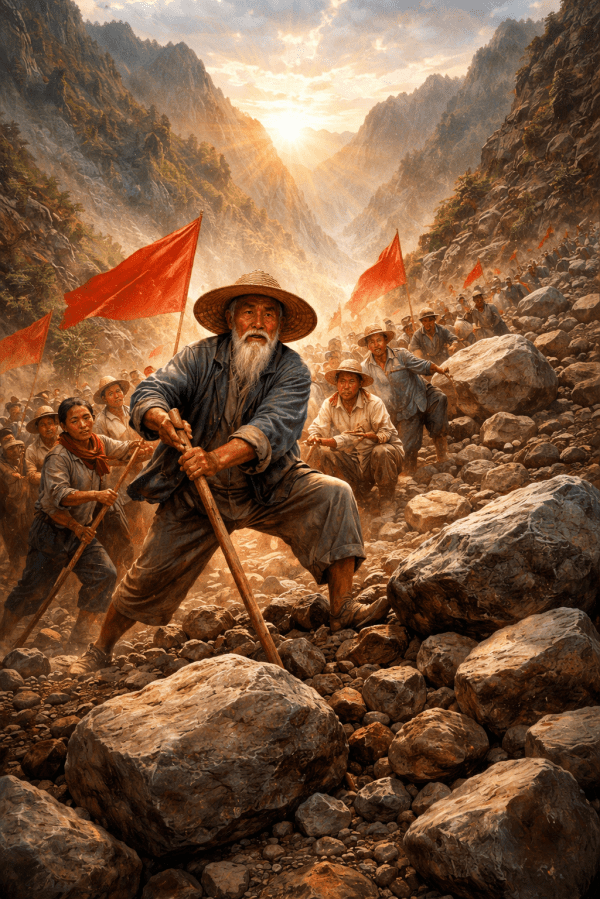
The Fool Who Moved the Mountains Still Walks Among Us: China’s Long March to Socialism and the Emergence of the Multipolar World Order
From Mao’s seizure of sovereignty to Xi’s effort to discipline capital, China’s modern history is neither a fall from revolutionary purity nor a smooth ascent into capitalism, but a protracted socialist struggle through contradiction. Each phase of development generated new class forces, new dangers, and new strategic adjustments, as the Party-state sought to preserve political... Continue Reading →
Manufacturing a “Xi Doctrine”: How Imperial Analysis Distorts China’s Development Strategy
A think tank narrative repackages China’s Five-Year Plan as a leader-driven doctrine, masking its institutional and historical character. The actual policy reveals a multi-dimensional strategy shaped by domestic priorities and external pressure. This transition reflects a deeper socialist development process unfolding through contradiction, not confusion. Across multiple fronts, emerging forces are beginning to resist the... Continue Reading →
The Mandate of Heaven: Empire, Civilization, and the War Over History’s Future
The ancient Chinese concept of the Mandate of Heaven was never superstition — it was a theory of political legitimacy rooted in material life, popular welfare, and historical judgment. This essay revives that framework as a weapon of analysis, comparing a United States empire that rules through coercion, sanctions, and decline management with a Chinese... Continue Reading →
Markets, Mandarins, and the Managed Decline of Empire
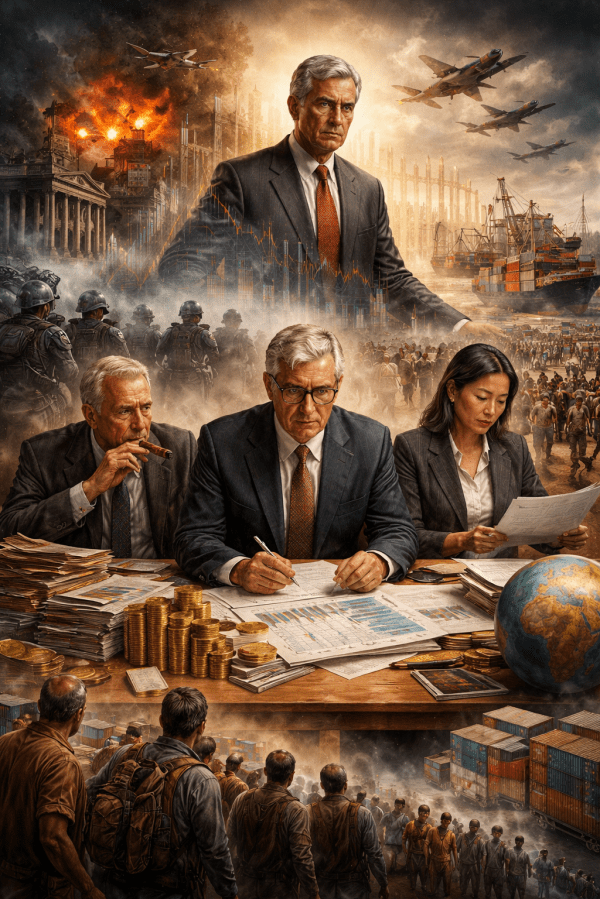
Experts speak so capital can rule without consent. Facts reveal an imperial system under strain, not a neutral economy at risk. Monetary discipline, tariffs, and militarization form a single strategy of control. The task before the people is organization, not faith in forecasters.By Prince Kapone | Weaponized InformationJanuary 6, 2026How the Economy Is Ventriloquized Through... Continue Reading →
Capital Never Rests: Karl Marx’s Capital, Volume II and the Circulation of Exploitation
This review of Capital, Volume II is the second installment in our Weaponized Intellects reconstruction of Marx’s trilogy. If you haven’t read the first review—where we follow Marx from the commodity to surplus-value, machinery, accumulation, and the so-called primitive accumulation—start there: Capital as Crime Scene: How Marx Dissects the Social Machinery of Exploitation . Time... Continue Reading →
The Quiet Return of the Gun: Japan, the United States, and the Quiet Normalization of War
An Associated Press report presents Japan’s remilitarization as reluctant self-defense rather than a political choice shaped by power. Beneath the calm language, constitutional erosion and alliance discipline are reframed as common sense. Placed in historical and geopolitical context, Japan’s military buildup appears as a reassignment of roles within a U.S.-led imperial order in crisis. Against... Continue Reading →