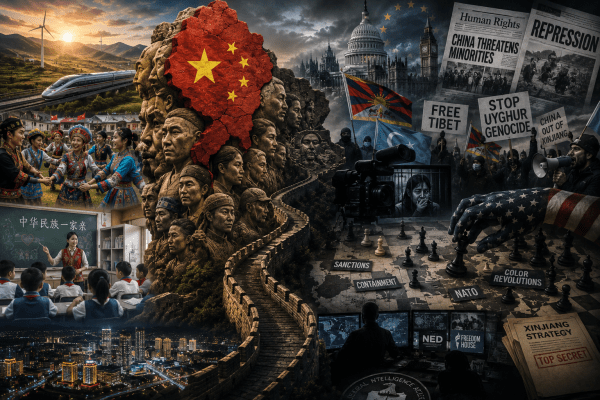
The New York Times frames China’s ethnic unity law as a blatant act of repression against minorities, echoing a Cold War moral narrative. Yet, this interpretation overlooks the historical and political complexities faced by a socialist state trying to maintain unity amidst the legacies of imperialism and foreign interference. The law seeks to counteract separatism and assert national sovereignty, but critics argue it risks bureaucratic assimilation of diverse ethnic identities. Ultimately, the struggle over the national question lies not in simplistic moral judgments, but in addressing imperialism's manipulative strategies while safeguarding genuine autonomy and cultural integrity within China's socialist framework.
From Yan’an to Shenzhen: How China Forged Socialism Through Concrete Contradiction
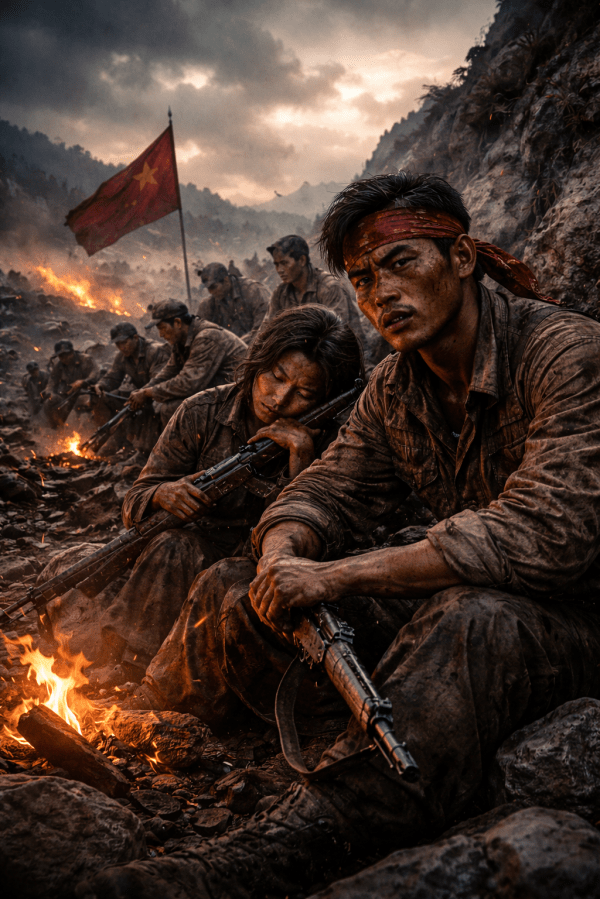
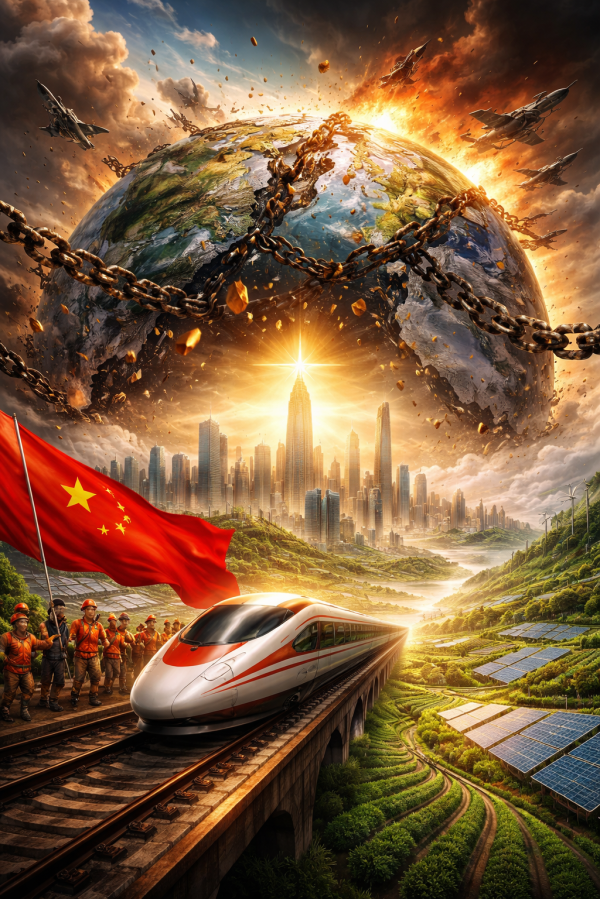
China’s revolutionary saga obliterates the Cold War illusion of socialist states as mere Soviet puppets. Through peasant uprisings and intricate political maneuvers, China redefined socialism amidst imperial oppression, transforming from a colonial victim to a technological titan without abandoning Communist rule. The narrative that constraints socialism to a Soviet mold collapses under China’s rich history of adaptation to its unique tumultuous reality. China’s evolution showcases socialism as a living pursuit aimed at sovereignty and rejuvenation, not dogmatic adherence. The experiences of struggle, experimentation, and resilience reflect a deep understanding: socialism thrives on continuous reimagining, not imitation.
The Wound They Refuse to Heal: Taiwan, Empire, and the War Against Chinese Sovereignty
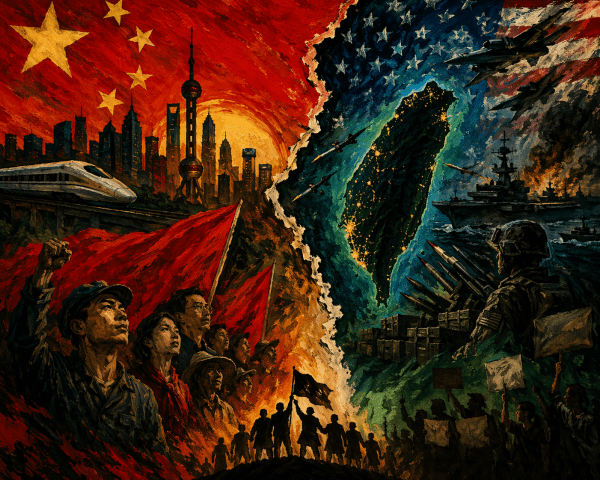
Reuters doesn’t just report events—it organizes reality through an imperial lens that disciplines how China is seen and understood. Beneath the surface, the Taiwan question reveals a dense structure of civil war legacy, U.S. militarization, legal contradictions, and economic interdependence. The truth is not “cross-strait tension,” but an unfinished revolutionary contradiction weaponized by empire to... Continue Reading →
Song of Ariran: Born in Failure, Forged through War
This Weaponized Intellects Book Review treats Kim San’s life not as biography but as a weapon—tracing how colonial violence, exile, repression, and ideological struggle forged a revolutionary consciousness that rejects liberal illusion, exposes the limits of nationalism and adventurism, and affirms that only disciplined, mass-based anti-imperialist struggle can transform defeat into the foundation for victory.... Continue Reading →
Manufacturing a “Xi Doctrine”: How Imperial Analysis Distorts China’s Development Strategy
A think tank narrative repackages China’s Five-Year Plan as a leader-driven doctrine, masking its institutional and historical character. The actual policy reveals a multi-dimensional strategy shaped by domestic priorities and external pressure. This transition reflects a deeper socialist development process unfolding through contradiction, not confusion. Across multiple fronts, emerging forces are beginning to resist the... Continue Reading →
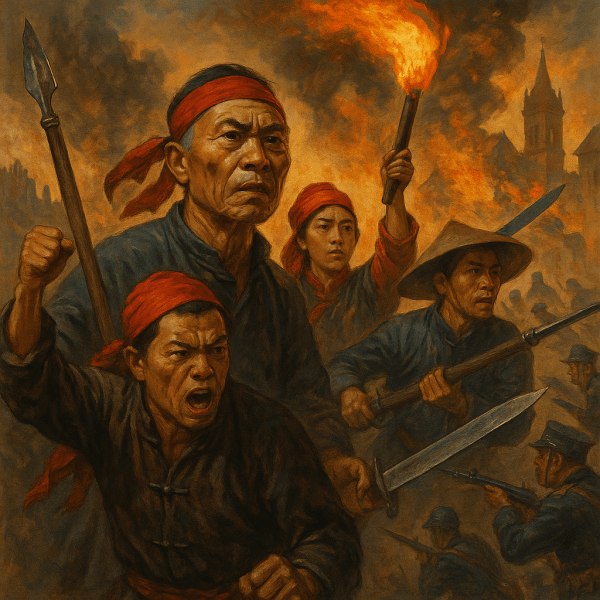
Fists Against the World: The Boxer Rebellion and the War for China’s Soul
Read the previous essays in this series:Silver Against the Dragon: China, the World Market, and the Long Prelude to the Opium War Primitive Accumulation by Narcotic: The Opium Wars and the Forcible Integration of China into the World Market The Heavenly Commune: Taiping Rebellion and the Spectre of Peasant Communism From the ashes of the... Continue Reading →
Calm Is Not Surrender: Xi–Trump, Strategic Patience, and the Long War Against Empire
This was not a reset. It was not a détente. It was the empire asking for time, and a rising world civilization choosing not to rush. The United States performs strength to hide its decline. China exercises restraint because history is moving in its direction. By Prince Kapone | Weaponized Information | November 1, 2025... Continue Reading →
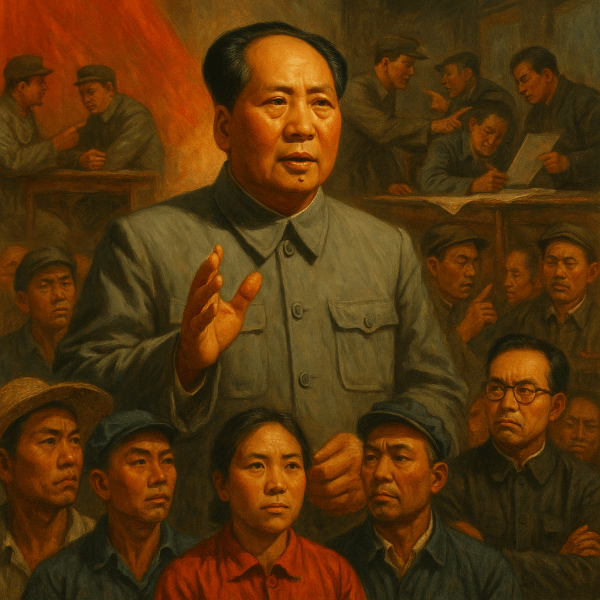
Hankow 1958: Mao’s Checklist Against Bureaucratic Decay
From Chengtu’s questions to Hankow’s battlefield, Mao sharpened the class line, armed the masses with democracy, and struck at the overlord style that threatened to hollow out the revolution.Weaponized Statecraft Series | Mao in Hankow, 1958By Prince Kapone | Weaponized Information | September 14, 2025From Chengtu’s Questions to Hankow’s BattlefieldApril 1958, Hankow. Weeks after forcing... Continue Reading →
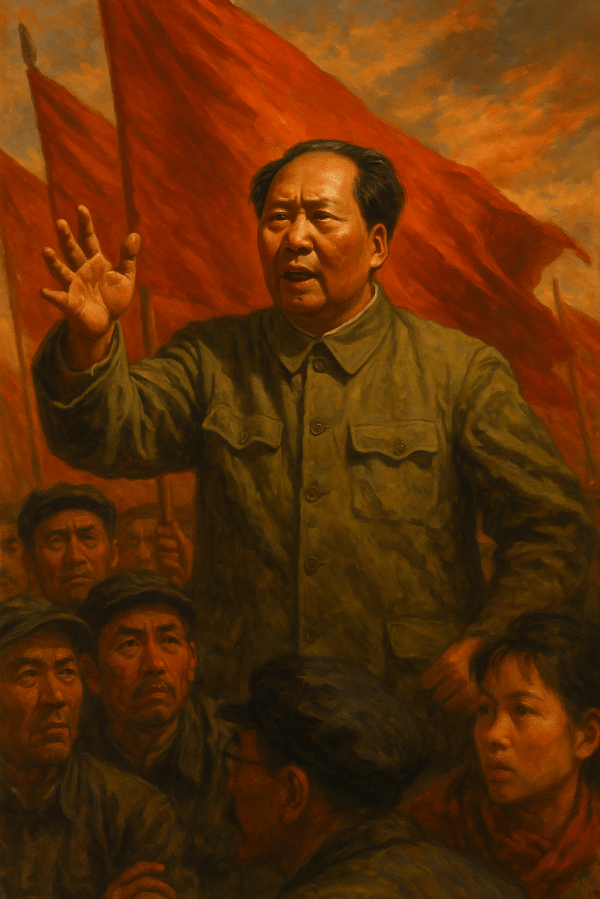
Mao at Chengtu: Fighting Brain Rot, Forging Creative Revolution
In March 1958, weeks after issuing his Sixty Points on Working Methods in Nanning, Mao gathered Party leaders at Chengtu. If Nanning warned against bureaucratic drift in the wake of victory, Chengtu waged ideological war against dogmatism, empty boasting, and the paralysis of thought. Here Mao demanded investigation over imitation, mass critique over silence, and... Continue Reading →
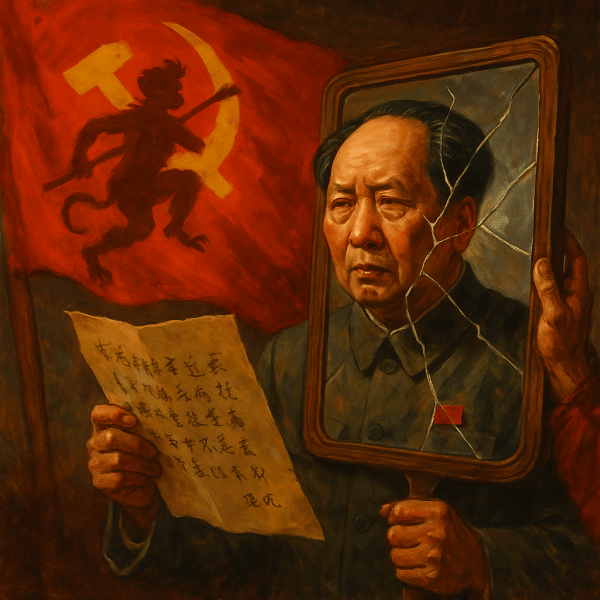
The Monkey King and Chaos Under Heaven: Mao Zedong’s Letter to Jiang Qing (1966)
Weaponized Statecraft Series | Mao Zedong’s Letter to Jiang Qing, July 1966By Prince Kapone | Weaponized InformationSeptember 5, 2025Cave, Clouds, and the Coming Storm July 1966. Mao Zedong isn’t on some retreat to rest his bones; he’s holed up “in a cave in the West,” scribbling, reading, watching. From there he moves to the “land... Continue Reading →