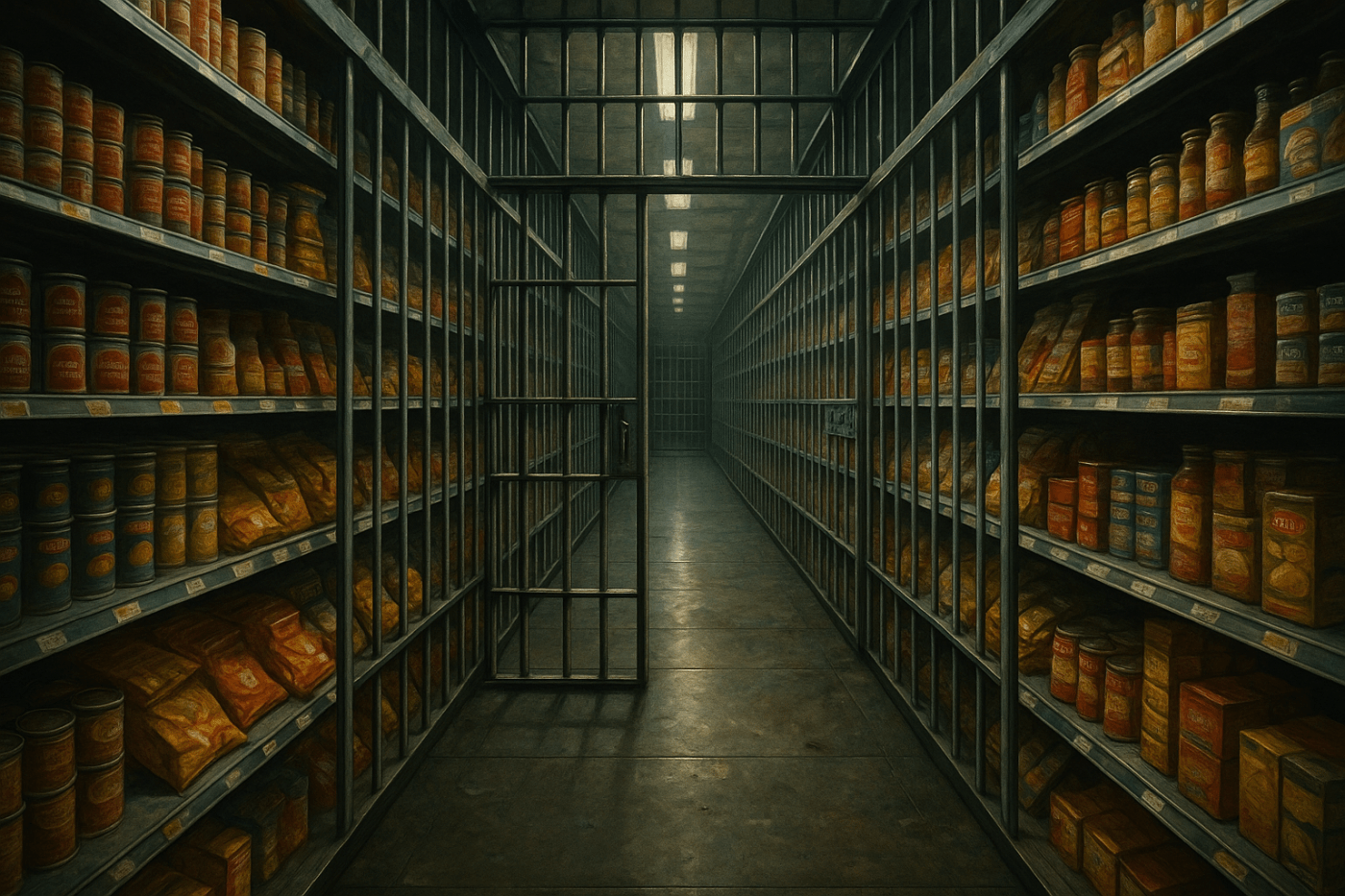
Food is not scarce. Hunger is enforced. The fight over SNAP is not about budgets—it is about power, sovereignty, and who has the right to live.
Food Is a Human Right — But the U.S. Treats It as a Weapon
Across most of the world, the question of whether people have the right to eat has already been answered. Article 11 of the International Covenant on Economic, Social and Cultural Rights declares access to adequate food a basic human right. Not a commodity, not a charity, not a reward for good behavior. A right. The covenant requires governments to ensure that every person has reliable, dignified access to food—regardless of income, employment, or social status.
The United States signed this treaty in 1977—but refused to ratify it. That refusal is not a footnote. It is a declaration of national ideology. The U.S. will acknowledge food as a right in theory, as long as it is never forced to recognize it in practice. To ratify the treaty would mean admitting that hunger is a political failure, not a personal one. It would mean that people are entitled to live—not merely to survive. And the architects of this system cannot permit that.
In the United States, access to food is not determined by human need. It is determined by class power and racial hierarchy. Food is distributed the way land, housing, and life itself are distributed here: through markets designed to reward the wealthy, punish the poor, and preserve the colonial order. If you have money, the supermarket welcomes you. If you don’t, hunger becomes your sentence. The state does not deny food because it lacks food—it denies food because hunger is useful.
Hunger disciplines. Hunger makes workers accept any wage, any schedule, any indignity. Hunger makes the unemployed beg. Hunger makes children quiet. Hunger is the invisible baton that keeps the poor in line. And so, when the state offers “assistance,” it is not out of mercy. It is out of strategy. Programs like SNAP are designed to administer survival—to manage desperation without eliminating it, to keep the poor alive enough to work, but too precarious to resist.
This is why the fight over SNAP is not a budget fight. It is a power struggle. The question on the table is not how much the state can “afford.” The question is whether human beings will have the right to live outside the permission of capital. Whether life will belong to people, or remain property of the market. Whether the state maintains the authority to say who eats and who hungers. Whether the poor will remain dependent subjects—or become a political force capable of governing themselves.
Food is a human right. The U.S. government knows this. It simply refuses to accept it. Because the moment the poor do not have to beg for food, they will no longer have to beg for power.
Welfare as Counterinsurgency: The State Feeds Only to Control
The ruling class tells a comforting story about social welfare in the United States: that the government, moved by compassion, stepped in to lessen suffering and support those “down on their luck.” But the real history has no such softness. Welfare in the U.S. was not born from care—it was born from fear. Fear of rebellion. Fear of strikes. Fear of the poor organizing themselves. Fear, above all, of Black liberation.
The New Deal is remembered as the great social contract, a time when the state reached out to lift millions from poverty. But that story leaves out who was lifted, and who was left to drown. While white workers were integrated into stable wages, homeownership, and social security, Black sharecroppers, Indigenous nations, Mexican and Filipino farmworkers, and the incarcerated were structurally excluded. Relief was designed not to liberate labor from exploitation, but to stabilize it—to bring the white working class into the project of empire. The state bought loyalty. It did not distribute justice.
By the 1960s, the contradiction burst. From Watts to Harlem to Detroit, the U.S. witnessed urban uprisings that rattled the foundation of the settler empire. Black, Puerto Rican, Chicano, and Indigenous communities did not ask for reform—they demanded sovereignty and power. The Johnson administration responded with what it called the “Great Society.” The streets called it something different: pacification. Money flowed, but not to transform the conditions that produced revolt. It flowed to manage revolt. Caseworkers replaced organizers. Means-testing replaced solidarity. Welfare became the velvet glove over the iron fist of policing and prisons.
And then came the Panthers. The Black Panther Party’s Free Breakfast Program fed tens of thousands of children every morning, no paperwork, no surveillance, no means-testing, no humiliation. They showed that the people could feed themselves—without the state, without the market, without permission. That terrified the U.S. government more than any gun ever could. The FBI, in its own words, called the Panthers’ breakfast program “the greatest threat to internal security” because it demonstrated that the poor could solve their own hunger, and in doing so, loosen the state’s grip on life itself.
So the state responded as it always has when confronted with autonomous Black political power: infiltration, raids, assassinations, prison. COINTELPRO did not target breakfast because it was radical charity. It targeted breakfast because it was dual power. Because it proved that hunger is not inevitable, only engineered. Because it showed that community self-reliance is the seed of self-governance. The message from the state was unmistakable: you may eat, but only if we are the ones feeding you.
SNAP emerges in this lineage—not as a social safety net, but as a counterinsurgency strategy. It did not replace hunger; it replaced the politics of confronting hunger. It ensured that the poor would be fed just enough to survive, but never enough to challenge the system that makes them poor. It transformed food from a basis of solidarity into a bureaucratic ration, dispensed through surveillance and controlled access. Welfare was not meant to end hunger. It was meant to contain those who hunger.
The struggle over SNAP is not about efficiency, or budgets, or administrative reform. It is about who holds power over the stomach of the poor. The state fears the day we remember that we can feed one another without it. That day is the beginning of revolution.
The Pacification Economy: Hunger, Dependency, and the Performance of Care
To understand SNAP, we have to strip it of the sentimental dressing that liberals wrap around it like a church shawl. They call it compassion. They call it a safety net. They call it proof that America still has a heart. But when you trace the actual movement of money, power, and control, SNAP reveals itself for what it truly is: a pacification machine in the heart of empire. A ration card with a barcode. A leash disguised as a lifeline.
Every month, nearly eight billion dollars in SNAP benefits are loaded onto electronic cards and spent at the same handful of corporate grocery chains—Walmart, Kroger, Target, Publix, Amazon. It is treated as aid to the poor, but the poor are the conduit, not the beneficiaries. The money passes through their hands on its way to where it has always been destined to go: the vaults of monopoly retail capital. SNAP is not a public food program. It is a public revenue guarantee for corporate grocers and the asset management firms that own them—BlackRock, Vanguard, State Street. The hungry are merely the delivery system.
And the state knows this. It has always known this. That is why there is never a serious risk of SNAP disappearing entirely, only of it becoming tighter, more conditional, more disciplinary. Because SNAP is not designed to liberate the poor—it is designed to manage them. To keep them fed enough to work, tired enough to comply, and isolated enough to never imagine feeding one another outside of structures the ruling class controls. It is hunger with supervision. It is relief with citizenship attached. It is survival on the condition of obedience.
This is why every attempt by the oppressed to feed themselves outside the market is met with state violence. When the Black Panther Party fed children breakfast without asking the state for permission, the FBI declared the program a threat to national security. Not because pancakes are dangerous, but because self-reliance is the seed of insurrection. When you can feed yourself, you are less afraid. When you can feed your neighbor, you become a threat. So the state offers food only in forms it can measure, track, govern, and revoke.
SNAP is not kindness. SNAP is a political technology of dependency, a system that keeps the poor alive just long enough to prevent revolt, but never long enough to build power. It is the velvet glove covering the iron hand. The performance of care that hides the architecture of hunger.
Guns, Cages, and Bread Rations: The Priorities of a Dying Empire
The politicians tell us there is not enough money to guarantee food. They say the budget is strained. They say the economy cannot sustain the “burden” of feeding the poor. But the same politicians sign military budgets with twelve zeroes and do not blink. They fund drones and missiles and bases that circle the globe like a steel noose. They build prisons large enough to swallow entire cities. They militarize police forces so thoroughly that a patrol officer carries more firepower than soldiers in some nations’ armies. And then they turn to the hungry and say, “We regret to inform you, the pantry is bare.”
SNAP costs this country less than a tenth of its war budget. Less than a third of what it spends on police and prisons. Less than the corporate tax breaks that are renewed without debate every fiscal cycle. Hunger is not an economic problem in the United States—it is a policy choice. The empire does not suffer from scarcity; it manufactures scarcity to discipline those it fears. Food is abundant. Wealth is overflowing. What is rationed is dignity.
This is the moral core of American capitalism: it is always cheaper to punish the poor than to free them. The state will pay any amount to contain the people it refuses to care for. It will fund prisons to cage the hungry, but not programs to feed them. It will surveil a mother’s grocery purchases but not guarantee her child a full refrigerator. It will send armored vehicles to poor neighborhoods before it sends fresh produce. This is not inefficiency. This is strategy.
Every dollar cut from SNAP is not saved—it is reassigned. It becomes a subsidy to police budgets, a recruitment bonus for the military, a contract for a defense firm, a tax shield for a corporation, a dividend for a shareholder. Austerity for the poor is always abundance for the ruling class. The hunger of the many feeds the security of the few.
So when they come for SNAP under the banner of “fiscal responsibility,” understand what they are really saying: We prefer you hungry. Hunger makes workers compliant. Hunger makes citizens quiet. Hunger makes entire classes of people easier to govern. Hunger is not an accident of this system. Hunger is one of its instruments.
The Myth of the Parasite: Who Works, Who Eats, and Who Steals
No lie has served the American ruling class more reliably than the myth that the poor are parasites. It is a story told over kitchen tables, cable news panels, campaign rallies, and corporate boardrooms. It tells the comfortable that they are righteous, and the suffering that they are to blame. It explains hunger as a moral failure rather than a manufactured condition. It turns solidarity into suspicion. And it keeps the class that produces the wealth of this country ashamed to claim what it has already earned.
But step back from the mythology and look at the lives behind the numbers. The majority of people on SNAP are children, elders, disabled people, or workers whose wages are too low to live on. Half of all families with children on SNAP are already working for a wage. Millions more cycle on and off the program depending on season, shift schedules, layoffs, or medical emergencies. People do not turn to SNAP because they are unwilling to work. People turn to SNAP because work in this country does not pay enough to live. Poverty is not the absence of labor. It is the theft of its value.
The charge of “fraud” is another favorite weapon, thrown like a stone at the hungry to justify their hunger. But the state’s own numbers expose the lie. The rate of intentional benefit trafficking in SNAP is less than two percent. Compare that to the crimes of capital: wage theft steals more from workers every year than burglary, armed robbery, and property crime combined. Corporate tax evasion drains hundreds of billions. Price-gouging on groceries alone has added record markups since the pandemic. But the poor are the ones treated like thieves for trying to eat.
This is the inversion at the core of American capitalism: the people who produce everything are called takers, and the people who produce nothing are called job creators. The mother buying cereal with an EBT card is scrutinized. The billionaire who pays himself through shell companies and offshore accounts is celebrated for his ingenuity. The man working two jobs and still needing food assistance is told to work harder. The corporation paying starvation wages while receiving SNAP-fueled revenue is praised for “providing jobs.” The robber calls the robbed a criminal, and the world nods along.
It is time to name the real parasites. They are not the poor, the unemployed, the single mothers, the warehouse workers, the elders, the chronically ill, the undocumented, or the unhoused. The real parasites are the corporations that refuse to pay living wages and then collect guaranteed profits from the food benefits their workers depend on. The real parasites are the shareholders who siphon value from every checkout lane while never stocking a shelf or unloading a truck. The real parasites are the landlords who raise rents faster than wages can keep up, forcing people to choose between groceries and shelter. The real parasites are the police who exist not to prevent crime but to preserve property. The real parasites are the politicians who profit from suffering while preaching responsibility.
The poor are not living off the government. The government is living off the poor.
The truth is simple enough to terrify those who benefit from the lie: the working class does not need the ruling class in order to live. But the ruling class cannot survive a day without the labor, obedience, and hunger of the working class. That is why they must produce shame. Shame keeps us isolated. Shame keeps our heads down. Shame keeps us convinced that the system is natural, inevitable, invincible.
But shame can be broken. And once it breaks, the world that relies on it breaks with it.
The Real Parasites: Corporate Monopolies and the Lords of the Checkout Line
If SNAP is the lifeline for millions of working-class and colonized people, then we must ask: who sits on the other end of the rope? Who receives the money after the groceries are scanned, bagged, and carried home? Who profits from hunger at scale? The answer is not a mystery buried in ledgers or policy memos. It is printed on every sanitized shelf label, every store aisle sign, every grocery delivery truck rolling through the suburbs. The beneficiaries are the corporate food monopolies—and behind them, the financial empires that own everything.
Four corporations dominate more than 80% of the grocery market in the United States: Walmart, Kroger, Costco, and Amazon (via Whole Foods). SNAP is not a subsidy for the poor. It is a guaranteed revenue stream for these firms. In many towns, Walmart alone captures one dollar of every three SNAP dollars spent. Some rural counties have no other grocery store at all. Hunger is not just a market—it is a captive market.
And who owns Walmart? Who owns Kroger? Who owns the companies that package canned beans, ship frozen chicken, and manufacture baby formula? The same small handful of financial giants: BlackRock. Vanguard. State Street. Their names do not appear on storefronts or cereal boxes. They do not stock shelves, sweep floors, or unload freight pallets at 4:30 in the morning. They sit in glass towers and move capital like chess pieces. And the people who labor, who sweat, who wait in line with grocery carts—they are the pawns expected to stay in place.
In a healthy society, food feeds people. In this society, food feeds shareholder portfolios. A person cannot simply eat. They must transact through layers of capitalist ownership. The bread aisle becomes a balance sheet. The freezer section an investment vehicle. The checkout scanner a tool of wealth extraction. Hunger itself becomes a business model.
Once you see this, the political strategy behind the attacks on SNAP becomes visible. The ruling class is not trying to eliminate SNAP because it “costs too much.” The ruling class is trying to tighten SNAP—to make the benefits smaller, the requirements harsher, the eligibility thinner—so that the poor remain dependent on the corporate food pipeline but never secure within it. Hunger must remain close enough to feel. A threat. A leash. A lesson.
Because the moment the poor no longer fear hunger, the ruling class loses its oldest weapon.
This is why every attempt to build food autonomy—from community gardens to tribal agricultural sovereignty to the Black Panther Free Breakfast Program—has been met with surveillance, criminalization, and state repression. It is not because these projects are dangerous in themselves. It is because they are proof that the working class and the colonized can feed themselves outside the capitalist system. That is the nightmare scenario for an empire held together by scarcity and fear.
If we can feed ourselves, we can free ourselves.
SNAP is not “the safety net.” It is the net the ruling class casts to keep us in reach. A rationing scheme that keeps life running on just enough calories to work, just enough hope to endure, and just enough fear to stay obedient. And every dollar that enters the EBT system exits as profit for the firms that lobby to keep wages low and food prices high.
The parasite is not the hungry mother feeding her children.
The parasite is the boardroom deciding how much her children’s hunger will be worth this quarter.
The Shutdown and the End of the Bargain
When the government shut down and SNAP benefits fell into uncertainty, it was not treated as a national emergency. There were no primetime addresses, no trembling hands in Congress, no CEOs urging resolution for the sake of families who needed to eat. The only people who panicked were the people who buy groceries one week at a time. That should tell us everything. Hunger is only a crisis for those who experience it. For those who govern, hunger is a tool.
The shutdown did not reveal a failure of the system. It revealed the system’s intention. For decades, the American state maintained a thin social safety net—not out of compassion, but out of strategy. Welfare helped stabilize the labor force. It dampened rebellion. It softened the sharp edges of exploitation. But that was during the era of imperial expansion, when the wealth of the Global South flooded into this country and the ruling class could afford to buy social peace. That era is over.
The United States is no longer a rising empire—it is a declining one. And when an empire declines, the ruling class does not become more generous. It becomes more vicious. The old social contract—work hard, obey the law, and you will not starve—is being torn up in real time. Not because the state is broke, but because the ruling class has decided it no longer needs to pretend. The state is being pared down to its core function: defending property by any means necessary.
Look at what remains fully funded even in a shutdown. The Pentagon does not close. The police do not go home. The prisons do not shutter. The surveillance agencies do not pause their monitoring. The drones do not return to base. Only the parts of government that allow the poor to survive are thrown into crisis. And that crisis is not accidental—it is a message. The food in your kitchen is conditional. Your survival is conditional. Your life is conditional.
A government shutdown is not just a budgeting dispute. It is a stress test. It measures how far hunger can be pushed before people push back. It teaches the working class to live in a state of permanent precarity, never certain, never secure, always one missed paycheck away from collapse. It is not that the state cannot afford to feed people. It is that feeding people is no longer seen as politically necessary.
And this is where Trump enters—not as the origin of the crisis, but as its executioner. The ruling class did not choose him because he was wise, or disciplined, or capable of governance. They chose him because he is indifferent to suffering. Because he can watch millions go hungry and call it efficiency. Because he can destroy the remnants of the welfare state without apology. Because cruelty is not a flaw in his character—it is his function.
The shift underway is not a policy argument. It is a transformation of the state itself. Social programs are not being “reformed.” They are being dismantled. Public goods are not being “restructured.” They are being abandoned. The poor are not being “encouraged to work.” They are being told: you will eat only to the extent that your hunger serves capital.
This is the end of the old bargain. The United States no longer promises stability. It promises discipline. It promises order. It promises force. It promises hunger.
When a government tells you it can no longer afford to feed the people, it is telling you it has already decided to rule by fear.
Food Sovereignty Is the Front Line of Anti-Fascism
If hunger is the weapon, then the struggle for food must be the front line of resistance. The ruling class understands this — they always have. They understand that a people who can feed themselves cannot be governed by fear. They understand that a people who produce together learn to think together. They understand that when the kitchen becomes collective, the world becomes possible. That is why every state that fears its population goes first for the land, then for the seeds, then for the water, then for the gardens, and finally for the kitchens.
We have been taught to believe that food is something bought, not something made; that hunger is a personal failure rather than a political condition; that eating is an individual act rather than a collective right. But look to our own history and you will see the opposite written plainly. The enslaved grew hidden gardens. The sharecroppers planted in the margins. The Panthers fed children before school. Every movement that has threatened the empire has fed people. Every empire that has feared its collapse has starved them.
When we speak of food sovereignty, we are not speaking of farmers’ markets or boutique organic diets. We are speaking of whether the working class and the colonized will have the means to survive outside the systems that exploit them. We are speaking of land held in common. We are speaking of community gardens where the police do not dictate who belongs. We are speaking of cooperative kitchens where the meal is not a charity but a right. We are speaking of unionized food workers who control distribution, pricing, and surplus. We are speaking of the ancient knowledge of cultivation married to the modern science of agroecology, held in the hands of the people rather than corporations.
This is not nostalgia. This is strategy.
The ruling class is already building its future: vertical farms owned by venture capital, genetically patented seeds controlled by agribusiness, surveillance-driven grocery delivery monopolized by data firms, and militarized food logistics run through cloud infrastructure. They are preparing for a world of scarcity — one they themselves are manufacturing — and they plan to survive it by rationing life through profit.
So we must build ours. Not after the revolution. Not at the moment of collapse. Now. Because revolutions are not simply moments of uprising — they are the slow construction of the world that will replace the one that falls. Food sovereignty is not only how the people live during the struggle — it is how the struggle lives through the people.
This is why every attempt at collective autonomy is treated as a threat. It is why community fridges are raided. It is why gardens are bulldozed. It is why mutual aid groups are surveilled. It is why houseless encampments are destroyed. The state is not afraid of chaos — it produces chaos daily. The state is afraid of self-organization. It is afraid of the moment the people feed themselves and realize they no longer need permission to live.
Hunger is how the ruling class governs. Feeding each other is how we learn to stop being governed.
To fight technofascism, we must rebuild what empire has stolen: the ability of people to nourish one another without passing through the market, the corporation, or the state. We must treat every garden as a barricade, every kitchen as an organizing space, every shared meal as a lesson in the world to come. Because the question is not whether people will eat. The question is who controls the conditions of eating.
Food sovereignty is not charity. It is political power. It is the foundation upon which every durable liberation movement has stood. And it is how we will stand, too — together, fed, unafraid.
The Question Is Power
We have now stripped away the polite language, the policy briefs, the press releases, and the patriotic slogans. What remains is the truth. Hunger in the United States is not a natural condition. It is not the result of scarcity. It is not even the byproduct of neglect. It is a governing strategy. A technique of rule. A management system for a population that the ruling class fears and despises.
SNAP is not simply a welfare program. It is a rationing mechanism that keeps the working class and the colonized from rising in fury, while funneling public money into the mouths of corporate monopolies. It is a pressure valve that releases just enough steam to prevent the engine from exploding. But every valve, if leaned on too hard, begins to crack. And the state knows this. That is why it is preparing to replace food provision with militarized policing, digital surveillance, and logistical control. In other words: technofascism.
The rulers of this country have resolved that they will not feed the people. They will police the people. They will not nourish life. They will administer survival. They will not distribute bread. They will distribute punishment.
And yet, even now, the future is not theirs. Because the future has never belonged to the powerful. The future has always belonged to those who can imagine the world after the storm. To those who can see the barricade in the garden, the insurrection in the shared meal, the revolution in the refusal to starve quietly. To those who understand, deeply and without apology, that the right to food is the right to live, and the right to live is the right to fight.
We are not here to beg the state to honor what it has already betrayed. We are not here to ask capital to show mercy. We are not here to plead for a kinder ration. We are here to make the ration irrelevant.
The question is not whether the old order will fall. It is already falling. The question is whether we will be organized when it hits the ground.
So let us organize. Let us plant gardens in the cracks of empire. Let us build cooperative kitchens, tenant unions, seed networks, community farms, mutual aid supply lines, and neighborhood defense. Let us turn food into a weapon of solidarity, not scarcity. Let us turn the act of feeding one another into the foundation of dual power.
The ruling class understands that food is life. They intend to own that life. We intend to reclaim it.
To end hunger is not a matter of reform. It is a matter of power. And power, when it finally returns to the people who create the world by their labor, will overturn the order that has starved us for generations. That day is not guaranteed. But it is possible. And the possibility lives in our hands, in our soil, in our kitchens, and in our willingness to fight for one another.
History has entered the season of hunger. But it is also planting season. And we are the ones who decide what grows.
 Weaponized Information
Leave a comment