The U.S. state is vigorously fortifying its military and technological apparatus while systematically withdrawing social support through food assistance and healthcare, showcasing a disturbing trend of technofascist consolidation. As military might is acknowledged in orbit and social benefits dwindle, the ruling order exacerbates class divisions, demanding increased legitimacy from a population now subjected to strict classification and conditionality. Political expression faces barriers in increasingly privatized venues, reflecting a tactical alliance between state interests and tech monopolies. This ominous shift marks a historical reckoning: the state is reallocating its substantial resources toward military supremacy at the expense of everyday security, creating a precarious societal structure poised for conflict.
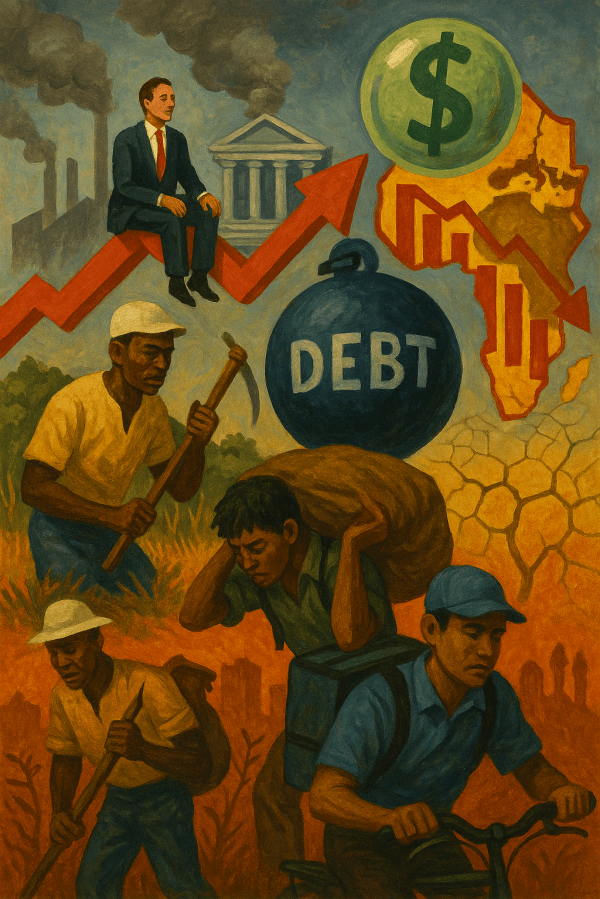
The Collateral of Empire: Debt, Power, and the Future
America's staggering $81.9 trillion debt is more than just a number; it's a complex web of financial claims overshadowing the real economic landscape. The nation's ability to issue dollars grants it a unique power, allowing it to leverage future incomes to accommodate debt—while the average worker grapples with mortgages, credit cards, and student loans. This contradictory system—where public power fuels private finance—disguises the inequality at play. As lenders profit, households struggle, further entrenching societal divides. The U.S. isn’t just a massive debtor; it’s a realm where debt serves as both a lifeline and a constraint, revealing the capitalist dance between ownership and obligation.
The Dream on Layaway: How Capital Repossessed American Adulthood
The "Great Postponement" isn't just about delayed dreams; it signals a devastating structural collapse for young adults trapped in a never-ending cycle of dependency and disempowerment. Despite holding jobs, many remain shackled to their parents' homes, unable to participate fully in adulthood due to spiraling rents and crippling inequality. The system deliberately obscures the true nature of this crisis, homogenizing individual struggles into mere statistics while upholding a status quo drenched in inherited privilege and racial disparity. The solution lies in organizing tenant unions and collective action—because waiting for change is no longer an option. The American Dream is not postponed; it's been stolen.
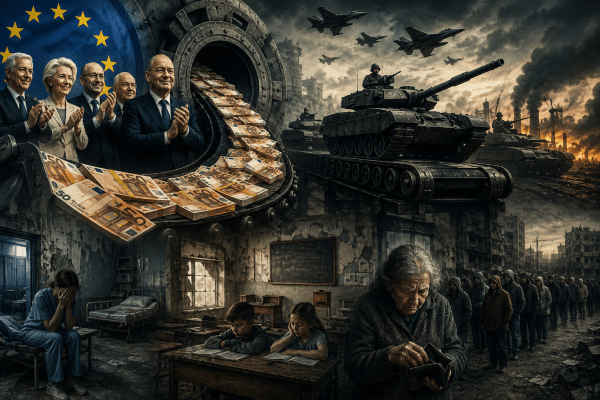
The Arsenal Is Late: Europe’s Ruling Class Discovers There Is Always Money for War
Deutsche Welle cleverly disguises Europe's urgent rearmament as a procurement issue, distracting from the stark reality of militarization overtaking public life. The article's real message isn't about the delays in weapon delivery, but rather the easing of governmental budgets for defense while essential services wither under austerity. It reveals an empire tightening its grip under NATO's command, where social welfare takes a back seat to military expenditure. This narrative won't invite questions about people's needs, but rather about how to improve efficiency in arms production. The specter looms: the increasing normalization of a military-first economy must be resisted, as it's not merely about security, but the reorganization of society around war.
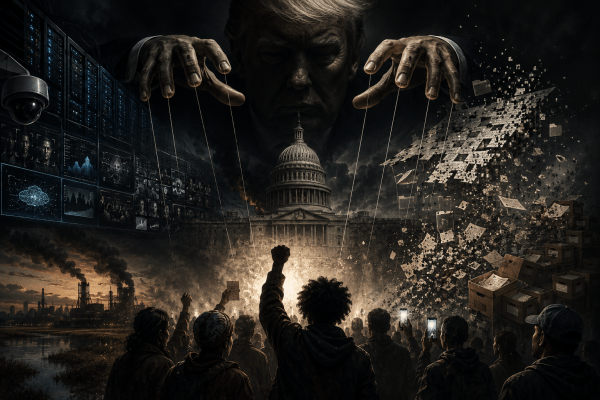
Census of Collapse: Trump, Technofascism, and the War Against Reality
The Trump regime's assault on federal datasets is a calculated effort to erase reality, obscuring critical information on hunger, pollution, maternal health, and climate disasters. By dismantling public data, the ruling class suppresses the very tools citizens need to challenge systemic failures. Expert narratives dominate discourse, overshadowing the voices of the oppressed who suffer and resist. This isn't just bureaucratic negligence; it's a deliberate strategy to manage perception amidst a crumbling empire. As the regime erases statistics, communities are disarmed and rendered invisible, making the struggle for public knowledge essential to resistance against state control. The battle for data is a battle for truth.
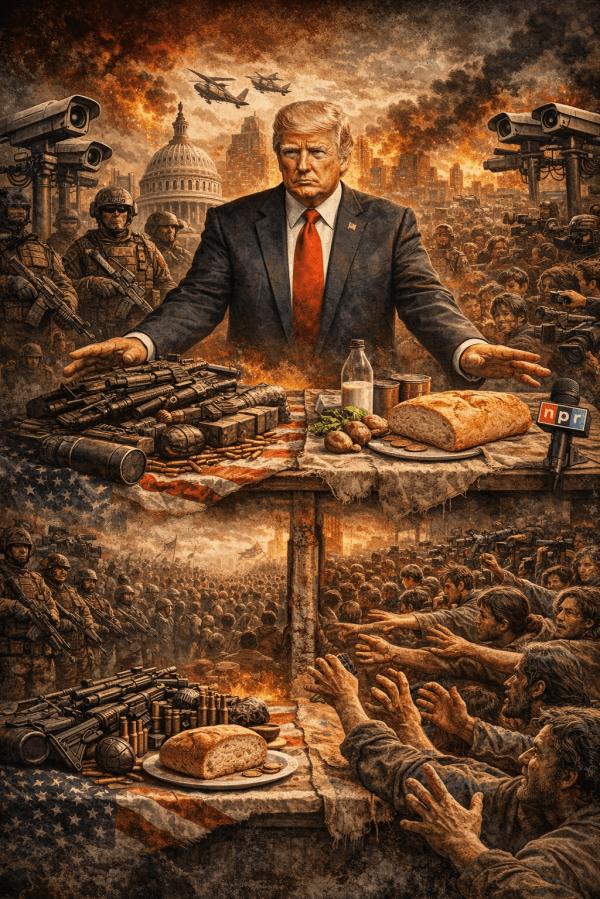
Guns Over Bread: How NPR Helps Normalize Technofascism in the Age of Trump
As military spending skyrockets, social programs are slashed under the guise of “budget priorities.” This isn’t just fiscal prudence; it’s a calculated betrayal. The old social contract is dead, replaced by a system where austerity and militarization reign, revealing an empire fraying at the edges, clinging to power through coercion.
Trump, the Plutocrats, and the Scrap Heap of Democracy: Technofascism and the Breaking of the Settler Deal
This essay shows how liberal media turns raw power into a moral drama and calls it analysis. It lays out the hard record beneath the story—colonial foundations, security buildup, and institutional force. It names Trump 2.0 for what it is: a technofascist turn driven by imperial decline and class retreat. It argues that when consent... Continue Reading →
The Economist, the Ruling Class, and the Managed Decline of the West
The Economist’s 2026 outlook presents a world of “manageable risks” and “resilient markets,” but behind the technocratic polish lies a deeper reality: an imperial economy held together by tariffs, debt, financial coercion, and speculative bubbles, whose costs are offloaded onto workers and the Global South. This essay excavates the propaganda, exposes the suppressed material foundations,... Continue Reading →
The Empire’s Talent Problem: Trump, CNN, and the Ideology of Imperial Incompetence
Beneath the polite chatter about “skills gaps” and “foreign talent” lies a deeper confession: the U.S. empire has exhausted its capacity to reproduce itself. What CNN calls competitiveness is the final stage of imperial dependency—a system that must now import the very labor it once destroyed. By Prince Kapone | Weaponized Information | November 12,... Continue Reading →
Honoring the Dead by Fighting for the Living
The only way to truly honor veterans is to end the wars that make them. Every folded flag, every corporate parade, every empty thank-you hides a system that sends the poor to kill and die for the profits of the rich. This essay tears the mask off imperial patriotism and calls for revolutionary remembrance—where gratitude... Continue Reading →