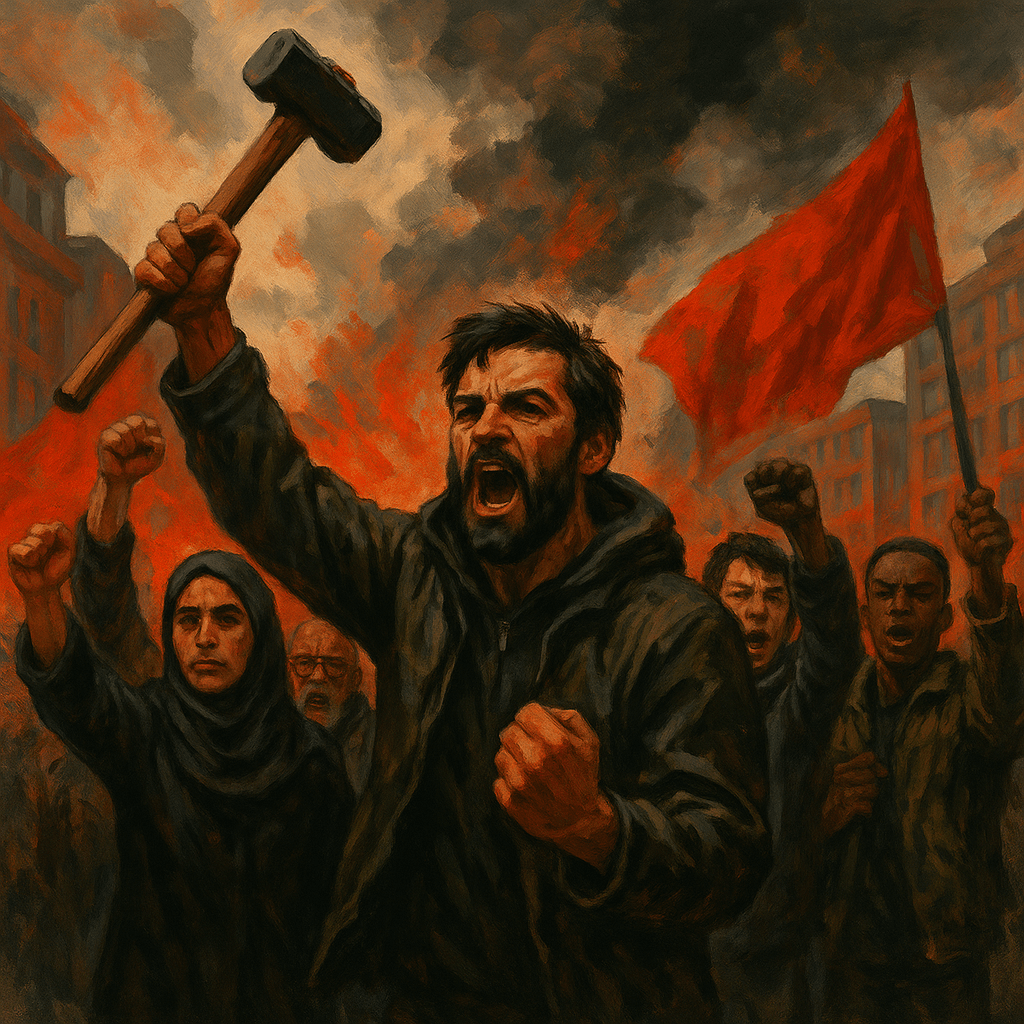
They say pause the war—we say watch their hands. NATO’s 30-day “ceasefire” proposal isn’t about peace. It’s about buying time, salvaging losses, and resetting the board. Behind every imperial truce lies a logistical trap.
By Prince Kapone | Weaponized Information | May 10, 2025
“Peace” on a Timer: The Psyop Beneath the Ceasefire
The Reuters article reporting Russia’s rejection of a Western-backed “ceasefire” doesn’t read like journalism—it reads like imperial stenography with a humanitarian mask. A faceless dispatch framed as a plea for peace, but timed with military precision to serve empire’s logistical needs. It doesn’t interrogate power. It launders it—softly, cleanly, with the language of “de-escalation” and “stability.” But behind every phrase lies a strategy: stabilize the narrative, not the war.
Reuters, long embedded in the imperialist media apparatus, operates not as an information outlet but as a relay station for NATO’s psychological operations. Its boardroom ties to transatlantic capital and historic proximity to British intelligence aren’t incidental—they are structural. Its editorial compass always swings toward the Pentagon’s pole. What’s omitted in its reporting is always more telling than what’s printed.
The article gives voice to a “Western-backed declaration” but never specifies the architects: not Antony Blinken, not the Atlantic Council, not the Pentagon planners who have built this war from the ground up. It names no names, assigns no interests. Instead, it presents the ceasefire proposal as an act of disinterested benevolence. No mention of Jens Stoltenberg’s recent call for rearmament. No nod to Raytheon’s quarterly surge. No whisper of Ukraine’s fascist battalions using past ceasefires to regroup, retrain, and redeploy. The empire speaks through omission.
Let’s be brutally clear: this 30-day ceasefire was not conceived in Geneva’s peace chambers. It was forged in the think tanks of D.C., London, and Brussels—designed to stall Russian advances just long enough for NATO weapons to restock, propaganda to regroup, and diplomatic flak to be launched against Moscow. The proposal emerged precisely when Russia gained momentum across multiple fronts, and Ukraine’s military—hollowed out by years of attrition and technofascist proxy rule—faced collapse. This isn’t peace. It’s pause as tactic.
The narrative deployment is surgical. The article frames Russia’s rejection as “aggressive,” “unilateral,” and “escalatory”—a nation obstinately refusing peace. But this framing erases the actual structure of the war: that the U.S. and its vassals sabotaged the Minsk Accords, that they’ve funded and armed Nazi-aligned formations inside Ukraine, and that “ceasefire” has repeatedly meant “breathing room” for empire’s logistics. In cognitive warfare, this is known as moral reframing: transform the aggressor into the peacemaker, and the resistor into the war criminal.
And so we are told to mourn a peace that never existed. A ceasefire not for the people, but for the project. Not to protect lives, but to protect NATO’s map. Not to resolve contradictions, but to reset them. This is the propaganda of pacification: weaponizing humanitarian language to blunt anti-imperialist clarity, obscure the imperialist recalibration underway, and rebrand geopolitical failure as peacemaking wisdom.
But the people of Donetsk, of Lugansk, of Mariupol—those who have bled and buried under NATO’s proxy shelling—know better. They remember every “pause” that led to a drone. Every truce that birthed a massacre. Every handshake that concealed a blade.
Reuters can’t report that. So we will. Because in the war for truth, every fake ceasefire is an act of war—and every act of excavation is resistance.
Logistics of a Lie: Ceasefires, Crisis, and Imperialist Recalibration
The Reuters article presents a simple sequence: a ceasefire proposal, Russia’s rejection, and a chorus of Western disappointment. But peel back the framing and what remains is the skeleton of imperial strategy. The 30-day pause was never about humanitarian relief. It was a tactical intermission proposed at the precise moment Russia regained initiative in the Donbass theater and Ukraine’s military began to fragment. The fact that this proposal came not from neutral parties, but from NATO-aligned governments, is not incidental—it’s essential.
This is not the first time “peace” was used to regroup empire’s logistics. During the Vietnam War, U.S. ceasefire initiatives were floated not to halt combat, but to reinforce supply lines and reposition forces. In Palestine, every temporary truce has been exploited by Zionist forces to demolish homes, encircle territory, and sabotage resistance infrastructure. The Korean War “armistice” still functions as a strategic freeze—allowing the U.S. to maintain its occupation of the peninsula under the cover of an unresolved conflict. This is not negotiation. It is counterinsurgency.
What makes this latest episode especially revealing is the timing. The Western war machine has entered a moment of exhaustion. Ukraine’s manpower is depleted. U.S. aid packages are stalling in Congress. European stockpiles are drying up. And popular resistance to war spending is growing in both the Global North and South. In this context, the ceasefire functions not as a de-escalation but a logistical recalibration—a temporary withdrawal to preserve assets, avoid further defeats, and regain narrative control.
This is the logic of hyper-imperialism in decline. No longer able to secure total victory, the empire now fights for delay. It fights to manage collapse. And the ceasefire, stripped of its moral varnish, is simply an imperial stalling tactic. A pressure release valve. A mask for retreat.
At the center of this strategy is cognitive warfare: the manipulation of language to turn imperial losses into moral victories. “De-escalation” is what the U.S. calls it when its client states are losing. “Peace” is what it calls its attempts to freeze the frontlines it can no longer expand. And “stability” is what it offers when sovereignty slips from its grip. This is the inverse dialectic of empire—it rebrands its failures as benevolence and sells retreat as diplomacy.
The ceasefire proposal also served an ideological function within Europe. As dissent grows—against NATO spending, economic decline, and energy chaos—the empire needs a new narrative to hold the European core together. The promise of a “peace process,” however shallow, gives liberal governments cover. It buys time for technocrats to regroup. It offers illusion where coherence has collapsed.
Meanwhile, in Ukraine itself, the ceasefire operates as a survival tactic for a comprador regime running out of options. With its battlefield command fractured, its legitimacy in free fall, and its working class bleeding in the trenches, Zelensky’s regime needs a pause—if only to negotiate new terms of surrender to the West’s next phase of economic partition. The minerals-for-reconstruction scam, brokered by Trump and BlackRock, depends on such a pause. The ceasefire, in this sense, is not an end to war—it is its financial continuation by other means.
The facts are simple: Russia rejected the ceasefire. The West called it a missed opportunity. But in reality, Moscow understood the offer for what it was: a Trojan horse on a 30-day timer, designed to reorganize imperial logistics, reposition proxy forces, and prepare the next stage of counterinsurgency. The Kremlin did not reject peace—it rejected imperial delay disguised as diplomacy.
Imperial Truce, Revolutionary Clarity: The Ceasefire as Counterinsurgency
The ceasefire proposal was not diplomacy—it was doctrine. A textbook case of imperialist recalibration, aimed at salvaging NATO’s crumbling position while diffusing antiwar dissent with the language of peace. In revolutionary terms, this wasn’t a negotiation. It was a strategic smokescreen—a cover operation to stabilize proxy regimes, regroup military assets, and rescue collapsing narratives before they shattered under material contradiction.
This is what the imperialists call a “pause.” But to us, it’s counterinsurgency. The kind refined from Algiers to Gaza, from Baghdad to Bogota: declare a ceasefire, reframe the war as complex, blame all sides, and use the breathing room to reassert control. In Ukraine, this means rotating fresh weapons, reactivating fascist battalions, and preparing the financial expropriation of the western regions through “reconstruction” deals brokered by BlackRock and JPMorgan Chase.
And what of peace? Peace under what terms? Peace for whom? For the colonized people of Donbass who were shelled during every past ceasefire? For the working class of Europe forced to heat their homes with overpriced U.S. LNG while watching their economies collapse? For the miners and pensioners of Ukraine conscripted into trench warfare so empire could squeeze one last proxy from a burnt-out buffer zone? No. This is not peace. This is pacification—colonial pacification by diplomatic means.
Russia’s rejection of the ceasefire was not belligerence. It was strategic clarity. To accept a NATO-crafted pause under present conditions would have been to commit geopolitical suicide. Not just militarily—but ideologically. Because once you accept empire’s frame, you fight on empire’s terrain. And this terrain was rigged from the start.
To be clear: there is no symmetry here. This is not a “conflict between two sides.” It is a war of recolonization disguised as partnership. A war driven by NATO encirclement, comprador sabotage, and the strategic use of fascist shock troops to impose neoliberal servitude on a fractured nation. The ceasefire does not resolve this contradiction—it freezes it. And in freezing it, it preserves the imperial scaffolding under new rhetoric.
What the empire calls “peace,” we recognize as preparation. What it brands as “de-escalation,” we see as the prelude to escalation—under the management of banks, NGOs, and militarized technocrats. In this sense, the ceasefire isn’t a policy. It’s an ideology. One designed to neutralize popular resistance, redirect class anger, and uphold unipolar supremacy under the guise of benevolence.
Real peace will not come from imperial diplomats or photo-op negotiations. It will come from the dismantling of NATO. From the retreat of U.S. bases. From the collapse of sanctions architecture, arms monopolies, and settler-finance occupations. It will come when the colonized are no longer dictated to by empire’s proxies, and when the working classes of Europe and Ukraine break with the suicidal logic of transatlantic dependency.
The ceasefire is not a bridge to peace. It is the empire’s last ditch to hold the line.
Beyond the Truce: Building the Anti-Imperialist Peace Front
We reject the empire’s peace. Not because we oppose the end of war, but because we know what kind of war this is. This isn’t war between equals—it’s the final phase of trilateral imperialism, now mutated into a dying U.S.-led bloc seeking to sabotage multipolarity at all costs. And this ceasefire? It’s not a bridge—it’s a trap. A logistical pause to rearm NATO’s proxies, stabilize comprador regimes, and redirect imperial decline into war-profiteering and narrative management.
That’s why we declare total ideological and material unity with the anti-NATO resistance—not only in Donetsk or Crimea, but in D.C., Berlin, Kinshasa, and Caracas. The battle against NATO is global. Its weapons kill from Gaza to Kharkiv, from Haiti to Somalia. Its propaganda normalizes fascism in Ukraine while demonizing resistance in the Global South. Its entire structure must be dismantled—not reformed, not “rethought,” but destroyed.
And that requires action. Real, tactical, insurgent action. We propose the following strategic fronts for immediate mobilization:
- Disrupt the weapons flow: Organize blockades, labor strikes, and port actions targeting arms shipments to Ukraine. Follow the lead of Belgian dockworkers and UK train unions who refused to move NATO cargo.
- Expose the psyop: Build independent media counter-campaigns against the ceasefire narrative. Host forums, publish WPEs, and confront liberal NGO and media figures laundering imperialism in “peace” language.
- Agitate within the imperial core: Form anti-war blocs inside unions, tenant organizations, and student groups. Connect inflation, militarization, and austerity directly to U.S.-EU war policy.
- Uplift revolutionary internationalism: Amplify the voices of Donbass workers, Russian communists, and Eastern European anti-fascists who resist both NATO and comprador capital. Break the West’s media blockade with translation brigades and digital solidarity cells.
- Refuse NGO pacification: Reject ceasefire language that isolates Ukraine from Palestine, Congo, Sudan, and Yemen. The empire wages war across continents. Our resistance must do the same.
There is no imperial truce that leads to justice. There is no NATO peace that does not bleed. We say: break the ceasefire narrative. Expose it. Sabotage it. Replace it with an anti-imperialist vision of peace—one built not on the ruins of a “rules-based order,” but on anti-imperialist sovereignty, socialist planning, and revolutionary rupture.
To the workers of Europe: your enemy is not in Moscow or Donetsk. It’s in Frankfurt, Brussels, and D.C.—where the war is budgeted, the lies are printed, and the gas prices are dictated. Strike against war profiteers. Seize the means of communication. Build a peace movement that doesn’t beg, but fights.
And to the peoples of Ukraine—those in the occupied east, and those conscripted by the west—know this: the empire abandoned you. The resistance will not. We don’t just want this war to end. We want the system that caused it buried.
Peace is not a truce. It is the demolition of imperialism. And every revolutionary must carry a sledgehammer.
 Weaponized Information
Leave a comment