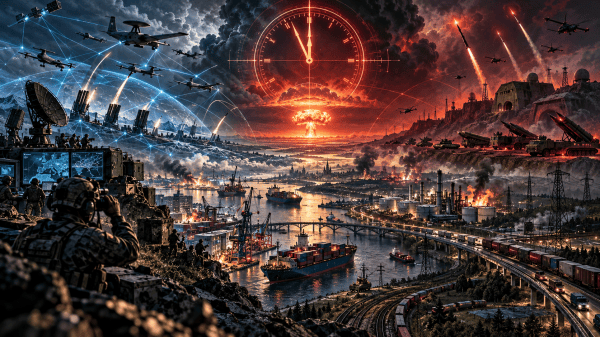
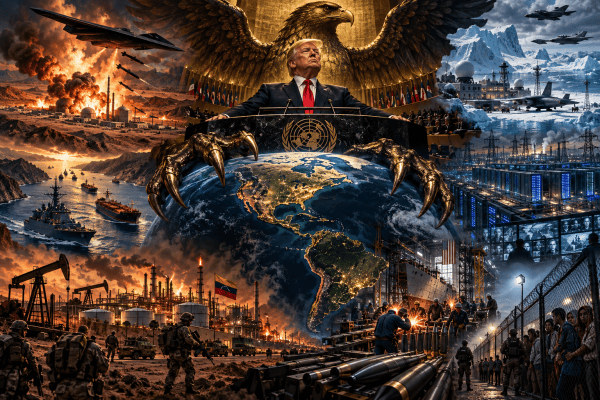
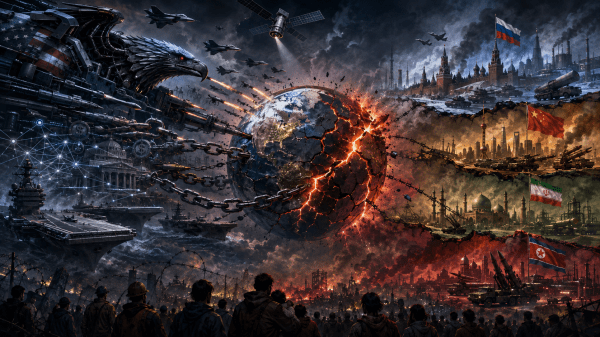
Trump’s threat to cut trade with Spain was not a diplomatic feud. It was imperial discipline. TIME reported the spectacle, but the real story sits beneath the headline: Spain refused to let Rota, Morón, and its airspace become automatic instruments of the U.S. war on Iran, while rejecting NATO’s demand to raise military spending to 5 percent of GDP. Washington’s response exposed the alliance for what it is: a command system that turns allied territory into launchpads, public budgets into war tribute, and dissent into a target for economic coercion.
The Arsenal Is Late: Europe’s Ruling Class Discovers There Is Always Money for War
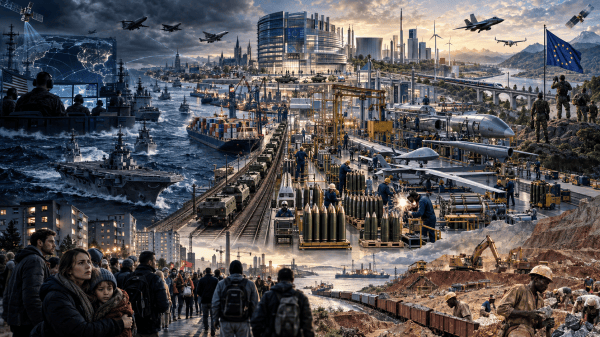
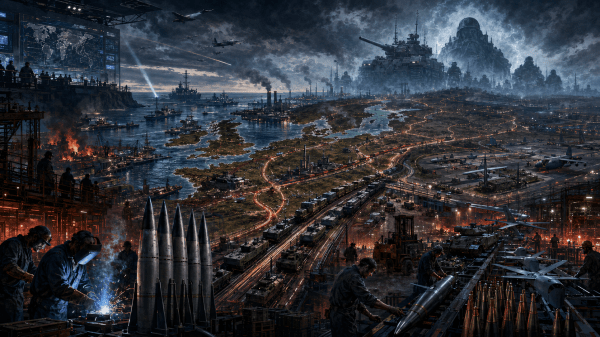
Deutsche Welle cleverly disguises Europe's urgent rearmament as a procurement issue, distracting from the stark reality of militarization overtaking public life. The article's real message isn't about the delays in weapon delivery, but rather the easing of governmental budgets for defense while essential services wither under austerity. It reveals an empire tightening its grip under NATO's command, where social welfare takes a back seat to military expenditure. This narrative won't invite questions about people's needs, but rather about how to improve efficiency in arms production. The specter looms: the increasing normalization of a military-first economy must be resisted, as it's not merely about security, but the reorganization of society around war.
NATO 3.0: The Empire Rebrands Its Launchpads
NBC’s coverage of Pete Hegseth's outburst in Brussels starkly reveals a deeper imperial narrative: NATO is a glorified framework for U.S. militarism, demanding European complicity. Instead of a cooperative alliance, it illustrates a machinery of war where access to land and resources is treated as a given entitlement. The jargon of "burden-sharing" and "NATO 3.0" drapes the insistence on militarized obedience in a veneer of unity. The article neglects dissenting voices, such as the European populations and their rights, instead framing hesitation as irresponsibility. This is not a mere operational adjustment; it’s a clarion call to recognize and resist the underlying realities of imperialism masquerading as alliance-building.
Washington’s War, Ukraine’s Graveyard: The Proxy Conflict Trump Now Pretends to Mediate
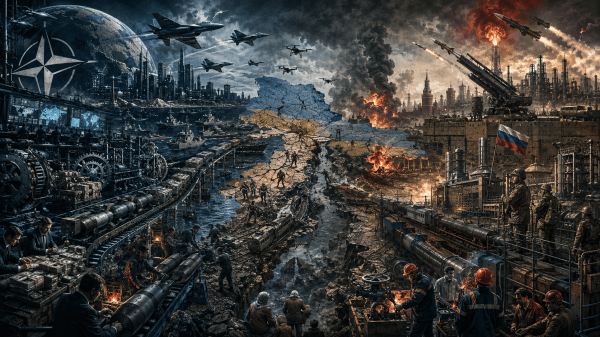
The Guardian’s narrative on the Ukraine war kicks off in February 2022, conveniently disregarding the chaotic political landscape, foreign meddling, and the violent rise of armed nationalists that preceded it. The buried history illustrates the overthrow of an elected government and NATO's strategic maneuvers pushing Ukraine to the frontline against Russia. The article reduces years of tragedy to a phone call between Trump, Putin, and Zelenskyy, framing diplomacy as mere spectacle. The real implications? The global working class must rise against this imperialist agenda, demanding peace and refusing to perpetuate a conflict that is less about nations and more about power plays and puppetry.
Tripwires of Empire: The Gulf Monarchies, the U.S.-Israel War on Iran, and the Crisis of Imperial Security
This essay begins by excavating how The Guardian recasts a U.S.-Israeli war and its aftermath into a fear narrative centered on Iran while muting the imperial structure behind the violence. It then reconstructs the real terrain: Gulf militarization, sanctions on Iran, strategic chokepoints, regional recalibration, and the diplomatic and economic relations the article leaves in... Continue Reading →
Carney, NATO, and the War Contractors: How Canada’s “Sovereignty” Pivot Deepens the Military Bloc
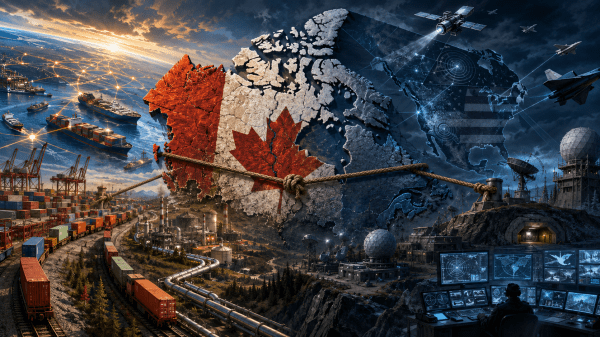
The New York Times sells a procurement shift as national independence. The numbers reveal a structural escalation anchored in NATO and continental integration. The pivot redistributes contracts while entrenching a war-oriented political economy. Workers and movements face a choice: defend the arms budget or reorganize production itself.By Prince Kapone | Weaponized Information | February 16,... Continue Reading →
Greenland and the Architecture of Fortress America
How U.S. Homeland Defense, Arctic Chokepoints, and Critical Minerals Are Converging into a New Territorial Imperial ProjectBy Prince Kapone | Weaponized Information | January 11, 2026Greenland Was Never a Joke — It Was a Map of Empire Speaking Out LoudWhen Trump first floated the idea of the United States “acquiring” Greenland, plenty of people laughed... Continue Reading →
Trump, Greenland, and the Return of Territorial Empire
An empire tries to blame one man for what its strategy requires. The Arctic is revealed as a military node, an extractive frontier, and a colonial question. Beneath alliance etiquette, imperial authority demands control, not cooperation. From Greenland to the Global South, resistance exposes the system speaking plainly. By Prince Kapone | Weaponized Information |... Continue Reading →
Europe’s Generals and Europe’s People: War Readiness as a Ruling-Class Project
Military elites recast war as an unavoidable condition rather than a political choice. Selective facts and strategic silences transform militarization into common sense. “Preparedness” emerges as a method of social discipline under imperial strain. Working people confront a system demanding sacrifice while offering no future. By Prince Kapone | Weaponized Information | January 1, 2026... Continue Reading →
Europe Wants Soldiers, Not Solutions: Germany’s Draft and the Return of the War Economy
CNN dresses Germany’s new conscription regime as common sense, but its language reveals an empire preparing its young for war. Beneath the talking points lies a material crisis: collapsing legitimacy, labor shortages, and NATO’s hunger for bodies. Germany’s rearmament only makes sense when placed within Europe’s deeper imperial recalibration toward austerity and militarized governance. The... Continue Reading →